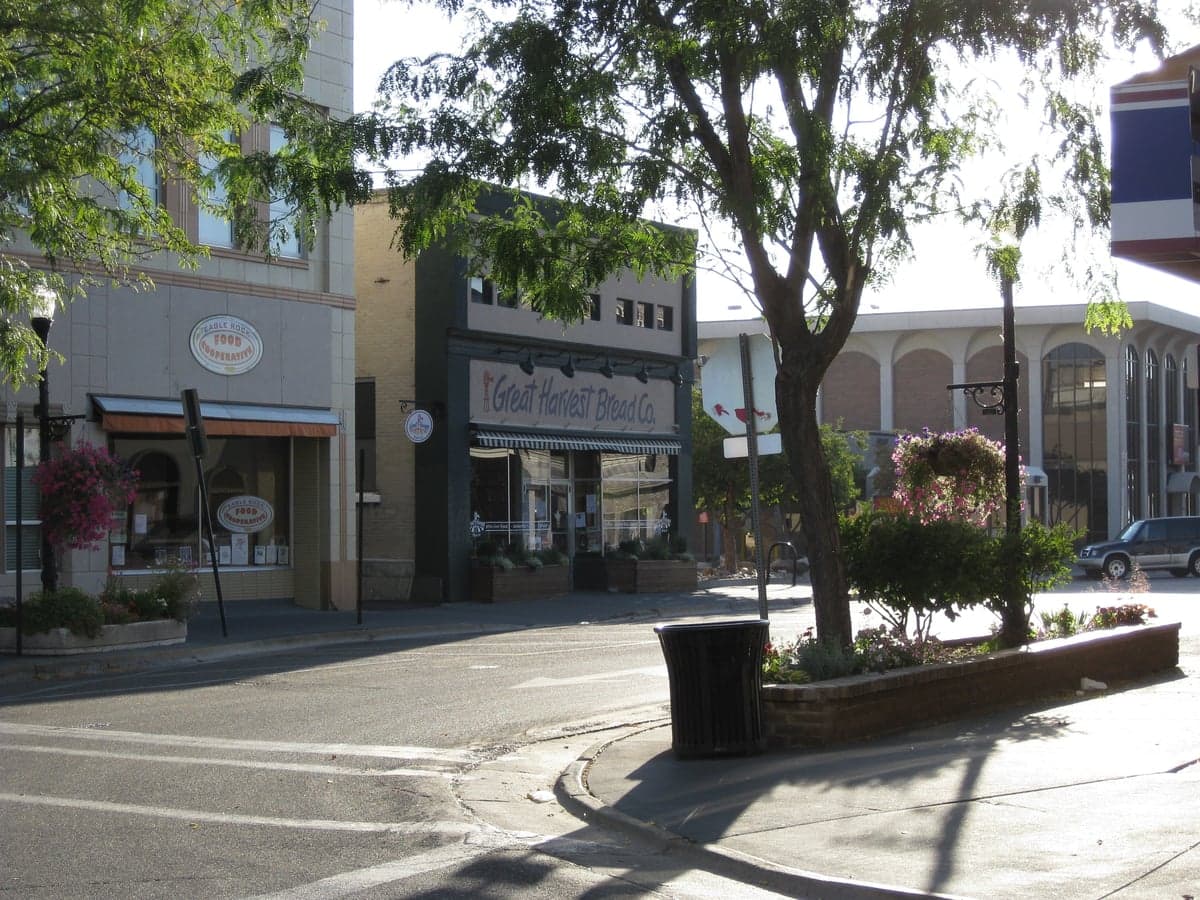
Photo: Wikipedia
Quality of Life in Idaho Falls, ID
Above-average quality of iife. The area offers a reasonable cost of living, decent mobility, and a mix of neighborhood amenities.
What does Quality of Life tell us?
Quality of Life blends cost of living, nearby amenities, socioeconomic signals, and neighborhood character. City-level scores represent the whole municipality; individual neighborhoods can differ.
What does this tell us?
Quality of Life blends cost of living, nearby amenities, socioeconomic signals, and neighborhood character. City-level scores represent the whole municipality; individual neighborhoods can differ.
Cost of Living
6% below national average
The Real Cost of Living in Idaho Falls, ID for 2026
| Tier | Individual | Family (4) |
|---|---|---|
| Survival | $16k | $30k |
| Comfortable | $58k | $85k |
| Luxury | $119k+ | $185k+ |
| Elite (Top 5%) | $140k+ | $218k+ |
82%
The Area Signal
A metric tracking the socioeconomic signals of the area.


Hobbies
Explore the areaGroceries
5 within 10 miles
Gas
0 within 10 miles
Hospital
3 within 20 miles
Airport
SLC — Salt Lake City International
Post Office
USPS — Idaho Falls, ID
Critical Amenities
Quality-of-Life Analysis
Idaho Falls presents a quality of life defined by relative affluence and a family-oriented, outdoors-driven demographic. The city’s cost of living index of 94 (100 = U.S. average) and a median home value of $298,600 attract a mix of young professionals, growing families, and retirees seeking a slower pace without sacrificing economic opportunity. The population skews younger than the national median, with a strong presence of workers in healthcare, energy research at the Idaho National Laboratory, and regional trade, creating a stable, middle-to-upper-middle-class community.
Cost of living, housing affordability, and how it compares to nearby areas
Idaho Falls is notably more affordable than the booming resort towns to its west and north. While median home values in Boise have surged past $450,000 and Jackson Hole, Wyoming, routinely exceeds $1 million, Idaho Falls’ median home value of $298,600 remains accessible for many dual-income households. The median rent of $992 is roughly 15% below the national average, making it one of the more budget-friendly rental markets in the Mountain West. The average commute of just over 18 minutes is significantly shorter than the national average of 26 minutes, reducing transportation costs and freeing up time for family and recreation. Compared to nearby Rexburg (median home value ~$275,000) or Pocatello (~$240,000), Idaho Falls offers a slightly higher price point but compensates with a larger job market and more robust retail and dining options. Property taxes in Bonneville County are moderate, typically around 0.7% of assessed value, which keeps monthly carrying costs lower than in many Western states.
What daily life is like: amenities, schools, and local rhythm
Daily life in Idaho Falls revolves around the Snake River Greenbelt, a 5-mile paved trail system that connects downtown to parks, the Idaho Falls Zoo, and the historic Colonial Theater. The city’s school system, Idaho Falls School District 91, includes several elementary schools with strong parent-teacher associations and a high school graduation rate near 90%. For families, the presence of the Museum of Idaho and the Willard Arts Center provides cultural enrichment uncommon in a city of this size. The local rhythm is distinctly seasonal: summer brings the Idaho Falls Spud Kings hockey games and the Eastern Idaho State Fair, while winter shifts focus to nearby ski resorts like Kelly Canyon (30 minutes east) and snowmobiling in the Caribou-Targhee National Forest. The city’s healthcare infrastructure is anchored by Idaho Falls Community Hospital and Eastern Idaho Regional Medical Center, which serve as regional referral centers for a multi-county area. Grocery and retail options are concentrated along the Hitt Road and 17th Street corridors, with a Costco, WinCo, and several local farm stands providing everyday needs.
Idaho Falls is best suited for people who value a predictable, safe environment with easy access to world-class outdoor recreation. Families with school-age children will find the short commutes and affordable housing a major draw, while remote workers and retirees benefit from the low cost of living and reliable internet infrastructure. Those seeking a vibrant nightlife or a dense urban core may find the city too quiet, but for anyone prioritizing a balanced, nature-integrated lifestyle with a strong sense of community, Idaho Falls delivers a quality of life that consistently ranks among the best in the Intermountain West.

Crime in Idaho Falls, ID
Lower crime rates than 76% of comparable U.S. locations.
Violent CrimeViolent Crime Analysis
Property CrimeProperty Crime Analysis
Crime Analysis
Idaho Falls presents a mixed safety profile for prospective residents. While its violent crime rate of 293.8 per 100,000 residents is slightly below the national average, its property crime rate of 945.3 per 100,000 is notably higher than both the state and national averages, making property theft and vehicle break-ins the most common public safety concerns. The city benefits from a generally conservative local government and judicial philosophy, which tends to prioritize public safety and victim rights over offender-centric policies, a contrast to trends seen in many larger, more liberal metro areas.
Crime in context
When compared to the rest of Idaho, Idaho Falls' violent crime rate is roughly on par with the state average, but its property crime rate is significantly elevated. For context, the national violent crime rate sits near 380 per 100,000, placing Idaho Falls in a relatively safer position for violent offenses. However, the property crime rate of 945.3 per 100,000 exceeds the national average of approximately 1,950 per 100,000, meaning it is actually lower than the national figure—a common point of confusion. The key takeaway is that while violent crime is not a dominant issue, residents face a moderate risk of theft, burglary, and vandalism. This is a stark contrast to large metropolitan areas with progressive district attorneys, where softer-on-crime policies can lead to higher recidivism and more brazen property crimes, a dynamic less prevalent in Idaho Falls' more traditional justice system.
What residents experience
Daily life in Idaho Falls for most residents does not involve frequent encounters with violent crime. The most common complaints reported to local police involve theft from vehicles, shoplifting, and occasional residential burglaries, particularly in areas near major thoroughfares or commercial corridors. The Bonneville County Sheriff's Office and Idaho Falls Police Department maintain a visible presence, and community policing efforts are active. The local judiciary, reflecting the area's conservative values, generally imposes stricter sentences and holds offenders accountable, which acts as a deterrent and helps keep repeat offenders off the streets. This stands in direct opposition to the approach in many liberal jurisdictions, where progressive prosecutors may decline to charge certain crimes or push for lenient sentences, a practice that often results in more criminals returning to the community and reoffending.
Neighborhood-level variation is notable. Areas closer to the downtown core and along the Yellowstone Highway corridor see higher rates of property crime, while newer subdivisions on the city's south and west sides, such as those near Snake River Landing, report significantly fewer incidents. Gated communities and neighborhoods with active homeowners' associations tend to have the lowest crime rates. Prospective residents should check local crime mapping tools for specific street-level data, but the overall trend is that violent crime is concentrated in a few specific pockets, while property crime is a broader, though manageable, concern across the city.
* Values derived from national, state, county, city and local statistics and may differ in a specific area. Last updated: 2026-04-19T08:08:27.000Z
Narrative content on this page is AI-generated and may contain mistakes. Verify any details that matter before acting on them.
ReloMaps may earn a commission from affiliate links at no extra cost to you.

