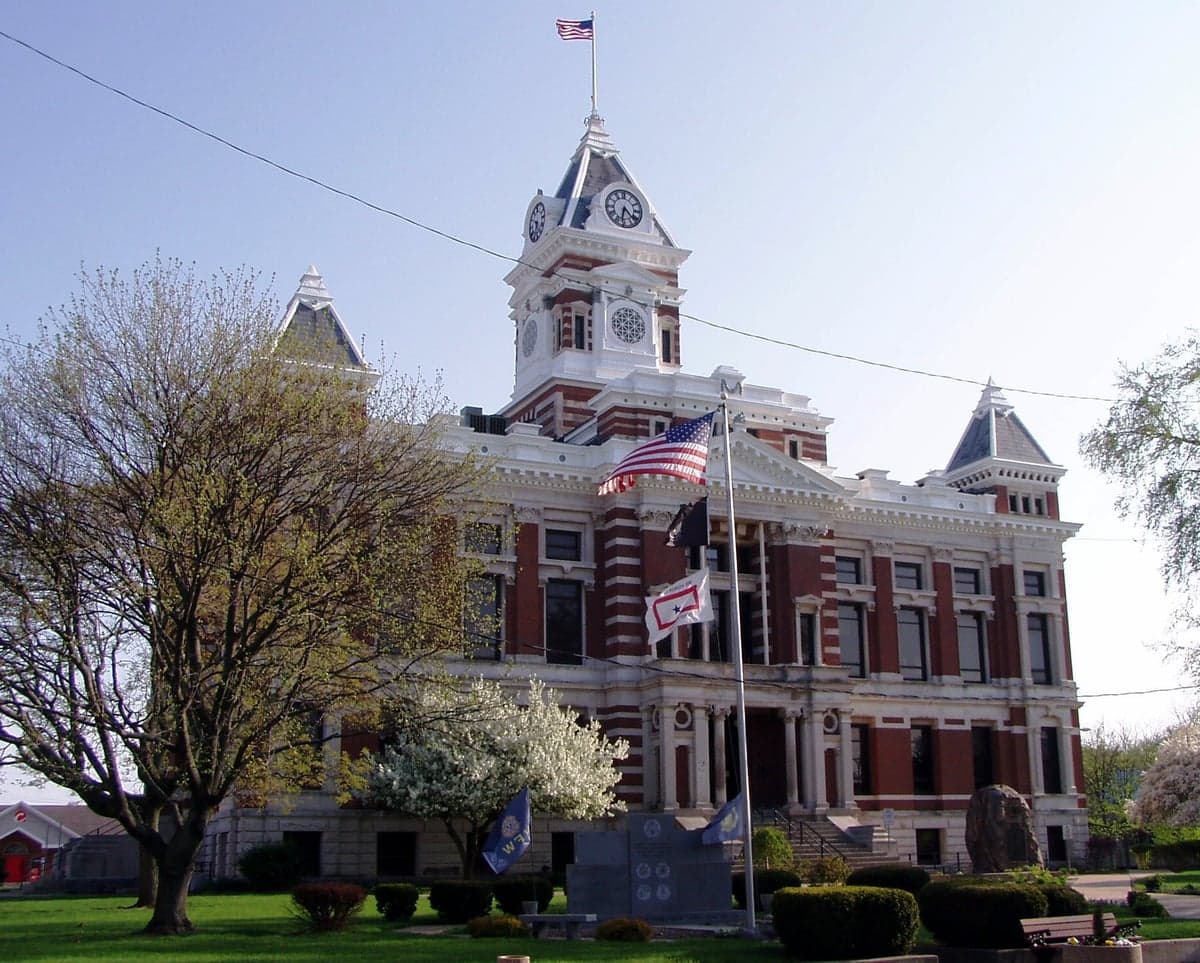
Photo: Wikipedia
Demographics of Johnson County
Affluence Level in Johnson County
A middle-class area roughly in line with national averages across income, home values, education, and employment.
People of Johnson County
Johnson County, Indiana, today is a predominantly white, family-oriented suburban expanse of 163,983 residents, anchored by the county seat of Franklin and the rapidly growing city of Greenwood. Its character is defined by a blend of historic small-town roots and modern commuter culture, with a population that is 84.9% white, 4.1% Hispanic, 3.0% Black, 2.7% Indian (subcontinent), and 1.9% East/Southeast Asian. The county’s identity is shaped by its relatively low foreign-born population of 2.6% and a college-educated rate of 33.3%, reflecting a community that has grown steadily through domestic migration from the Midwest and, more recently, from other parts of the United States.
Settlement & growth (pre-1960)
Before American settlement, the land that is now Johnson County was inhabited by the Miami and Delaware (Lenape) nations, who used the area for hunting and seasonal camps. The first permanent American settlers arrived in the 1820s, following the end of the War of 1812 and the opening of the Indiana Territory. These were primarily Scots-Irish and English farmers from Kentucky, Tennessee, and Ohio, drawn by the promise of cheap, fertile land in the newly formed county (established in 1823). The earliest settlements clustered around the county seat, Franklin, founded in 1823, and the town of Edinburgh, platted in 1822 along the Driftwood River.
Throughout the 19th century, the population remained overwhelmingly native-born and rural. A small number of German immigrants arrived in the 1840s and 1850s, settling in and around Franklin and the village of Whiteland, where they worked as farmers and craftsmen. The arrival of the railroad in the 1850s spurred modest growth, connecting Johnson County to Indianapolis and enabling the shipment of grain and livestock. The county’s population grew slowly but steadily, reaching 20,000 by 1900. The early 20th century saw little new immigration; the county remained a quiet agricultural area, with Franklin serving as the commercial and governmental hub.
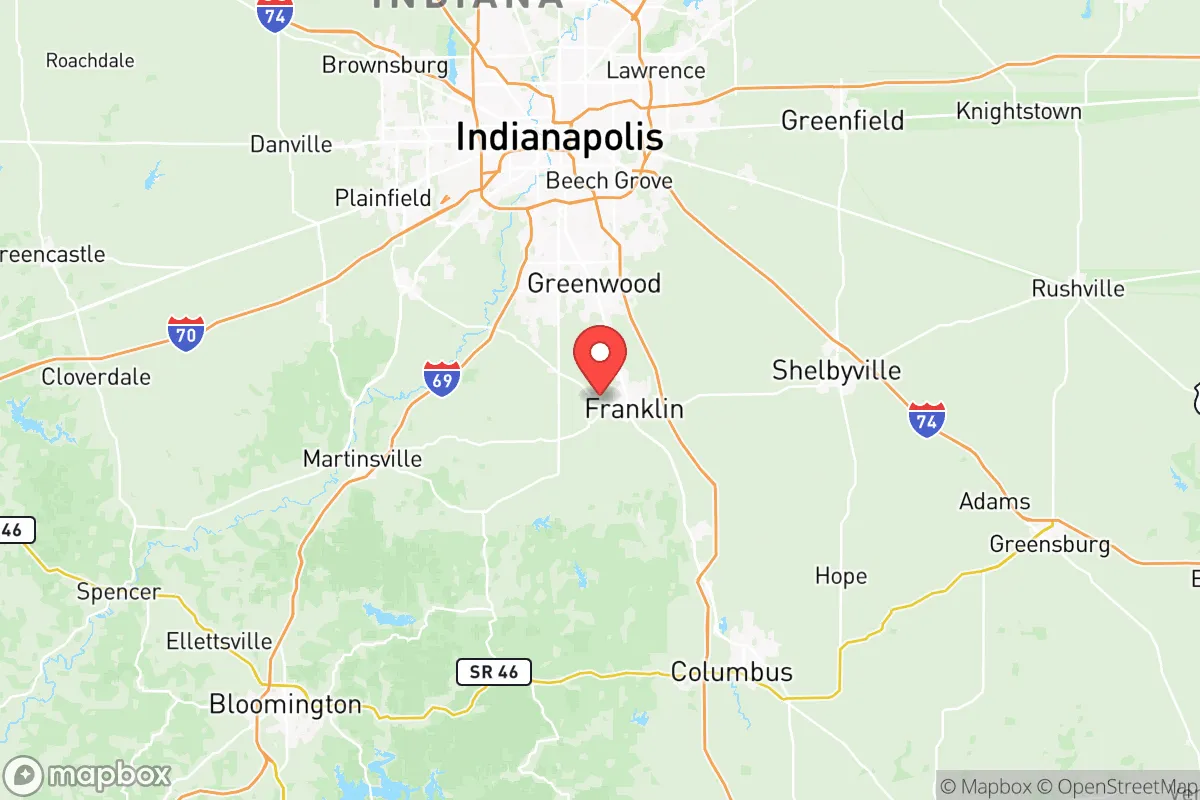
The post-World War II era brought the first major demographic shift. The construction of Interstate 65 in the 1950s and 1960s transformed Johnson County from a rural backwater into a viable commuter suburb of Indianapolis, located just 20 miles to the north. This triggered a wave of domestic migration, primarily white families from Indianapolis and other parts of the Midwest, seeking newer housing and lower taxes. The town of Greenwood, which had been a small farming community, began its rapid expansion, annexing land and building subdivisions. By 1960, the county’s population had risen to 43,000, still overwhelmingly white and native-born.
Modern era (post-1965)
The 1965 Hart-Cellar Act had a limited direct impact on Johnson County, as the area did not become a primary destination for post-1965 immigrants. Instead, the county’s modern growth has been driven almost entirely by domestic migration. The most significant trend has been the continued suburbanization of the Indianapolis metropolitan area, which accelerated in the 1980s and 1990s. Greenwood became the county’s population center, growing from 11,000 in 1970 to over 60,000 today. This growth was fueled by white middle-class families moving from Marion County (Indianapolis) and other parts of the Rust Belt, attracted by new housing developments, good schools, and a lower cost of living.
The Hispanic population, now 4.1% of the county, began to grow in the 1990s and 2000s, primarily through domestic migration from other parts of the United States, as well as some direct immigration from Mexico and Central America. This community is concentrated in Franklin and Edinburgh, where they work in manufacturing, construction, and agriculture. The Black population, at 3.0%, has grown more slowly, largely through migration from Indianapolis and other Midwestern cities, with a notable presence in Greenwood and Franklin.
The most distinctive modern demographic shift is the growth of the Indian (subcontinent) population, now 2.7% of the county. This community is almost entirely a product of post-2000 migration, driven by the expansion of the technology and healthcare sectors in the Indianapolis region. Many Indian families have settled in Greenwood, drawn by its excellent schools and proximity to tech jobs in Indianapolis and the suburban office parks along the I-65 corridor. The East/Southeast Asian population, at 1.9%, includes a mix of Chinese, Korean, and Vietnamese families, also concentrated in Greenwood and the newer subdivisions near the county’s northern border with Marion County.
The future
Johnson County is likely to continue its trajectory of steady, suburban growth, driven by domestic migration from the Midwest and, to a lesser extent, from coastal states. The county is not homogenizing into a single cultural bloc; rather, it is tribalizing into distinct enclaves. The older, established white population remains dominant in the historic towns of Franklin and Edinburgh, while newer, more diverse subdivisions in Greenwood and the unincorporated areas near the I-65 corridor are attracting a mix of white, Indian, and East/Southeast Asian families. The Hispanic and Black communities are likely to grow slowly, but will remain smaller shares of the total population.
The Indian and East/Southeast Asian communities are expected to continue growing, as the Indianapolis region’s tech and healthcare sectors expand. These groups are assimilating economically but maintaining distinct cultural identities, with Indian families often clustering in specific school districts and neighborhoods. The foreign-born population, while still low at 2.6%, will likely rise to 4-5% over the next decade, driven primarily by Asian and Indian immigration. The county’s cultural identity is being reshaped by this in-migration, but the dominant character remains that of a conservative-leaning, family-oriented Midwestern suburb.
For someone moving in now, Johnson County offers a stable, growing community with good schools and a low cost of living, but with a population that is becoming more diverse, particularly in its northern suburbs. The county is not experiencing the rapid demographic transformation seen in some Sun Belt or coastal suburbs, but it is slowly evolving from a historically white, rural area into a more varied, suburban landscape. The key question for new residents is whether they are seeking the traditional, small-town feel of Franklin or Edinburgh, or the newer, more diverse and fast-paced environment of Greenwood and the I-65 corridor.

* Values derived from national, state, county, city and local statistics and may differ in a specific area. Last updated: 2026-06-06T07:39:54.000Z
Narrative content on this page is AI-generated and may contain mistakes. Verify any details that matter before acting on them.
ReloMaps may earn a commission from affiliate links at no extra cost to you.

