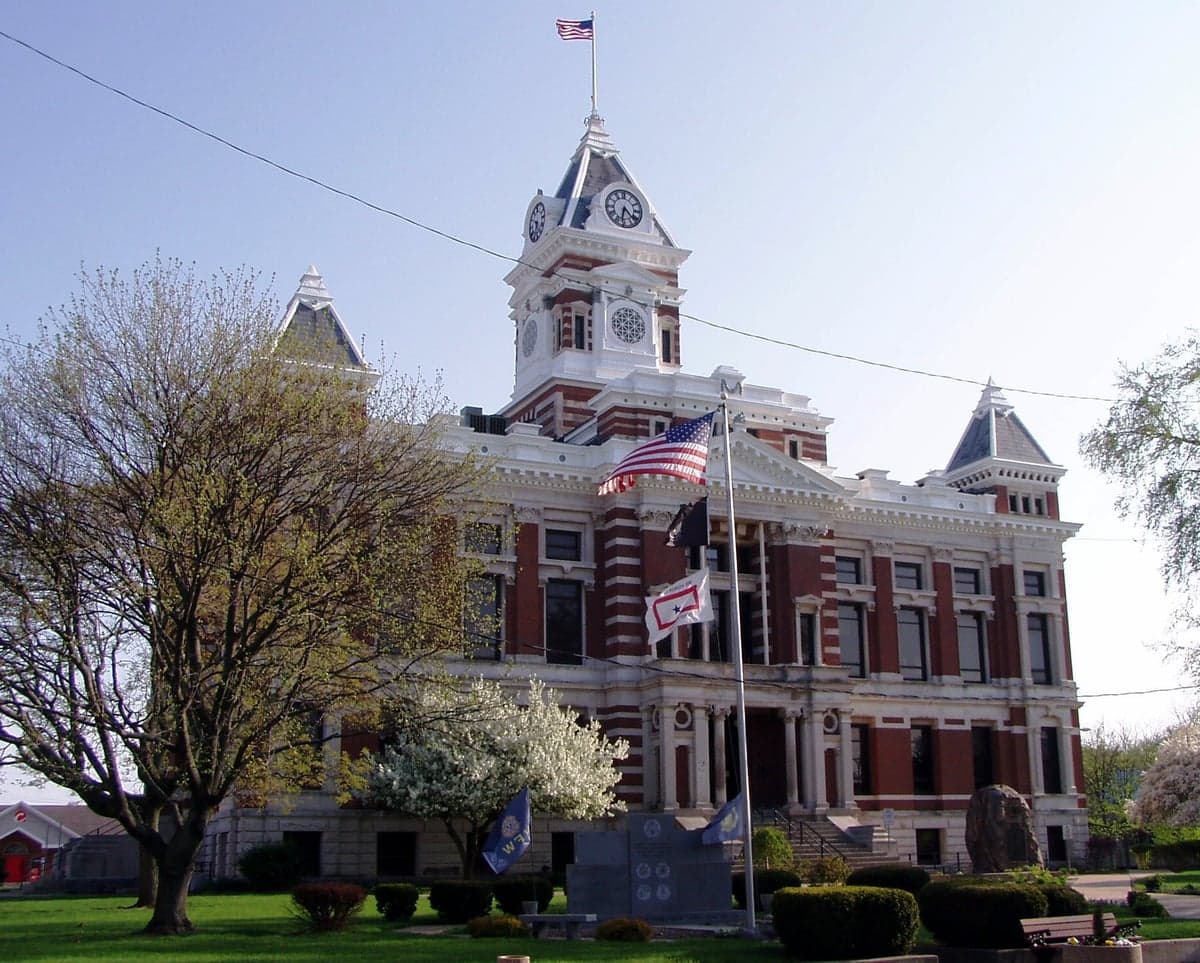
Photo: Wikipedia
Political ClimatePolitical Climate in Johnson County
Showing district-level results — no local-only data available.
Local Political AnalysisPolitical Analysis of Johnson County
Johnson County has long been a reliably conservative stronghold, with a Cook PVI of R+16 that reflects deep-rooted Republican values across most of its communities. I've lived here for decades, and the political landscape is honest about its priorities: limited government, personal responsibility, and a healthy skepticism of federal overreach. But don't think it's a monolith. Franklin, the county seat, leans heavily red—you'll see a lot of Trump signs and a strong local GOP presence. Edinburgh, down south, is similar, with a rural, traditional vibe. The real divergence comes in Greenwood, where the northern precincts near Marion County have started to tilt purple—spillover from Indianapolis's progressive politics. Those swing precincts around the I-65 corridor and newer subdivisions are the ones that make local elections worth watching. Overall, though, the county has held firm, and many of us are paying close attention to any signs of a leftward shift.
How it compares
Indiana as a whole carries a PVI of R+9, so Johnson County is a full seven points redder—that's significant. Statewide races often tighten because of Marion County's heavy blue vote and a few other urban pockets, but Johnson County stays a dependable source of conservative margins. In recent gubernatorial and Senate contests, the county has consistently outperformed the state's average Republican vote share by 8–10 percentage points. For someone moving here from a blue state, that gap is a relief: you're leaving the progressive experiments behind. But the comparison also highlights a risk. As the state legislative map gets redrawn and the Indianapolis metro expands, Johnson County's conservative character could face erosion. The northern Greenwood precincts are already less reliable than they were twenty years ago—some of those neighborhoods voted for governor candidates who talk about expanding government programs. That's a red flag for anyone who values staying out of the government's way.
What this means for residents
For everyday life, the county's conservative tilt translates into lower taxes and fewer regulations than you'd find in nearby Marion County or even some suburbs of Chicago. Property taxes here are manageable, and the county government tends to be responsive to residents who push back against unnecessary red tape—whether it's about zoning, business permits, or school policies. The school boards in Franklin and Center Grove have generally resisted the kind of curriculum overhauls and equity-focused policies that are creeping into districts elsewhere. That said, you need to stay engaged. There are pockets in Greenwood where homeowners' associations and local city councils have quietly adopted policies that restrict property use or push environmental mandates that go beyond sensible conservation. The long-term concern is that the progressive drift from Indy could eventually influence countywide elections. If you're serious about preserving personal freedoms—like deciding what happens on your own land, what medical choices you make, or how your kids are educated—then Johnson County is still a good home, but you can't afford to be complacent.
Culturally, Johnson County still holds onto a sense of neighborly independence. You'll find strong participation in local fairs, churches, and civic groups that emphasize self-reliance over government dependency. That independence shows up in policy, too: the county has been a vocal opponent of state-level gun restrictions and has kept its health department largely from imposing targeted mandates that neighboring counties have embraced. But the cultural friction is real when new arrivals bring city-born expectations about transit, housing density, and social programs. For now, the traditional values hold, but the trajectory depends on whether enough residents remain vigilant—and whether the swing precincts keep swinging right. If you're looking for a place that still respects the line between government and private life, Johnson County is one of the few in central Indiana that hasn't blurred it completely.

State Political ClimatePolitical Climate in Indiana
State Political AnalysisPolitical Environment in the State
Indiana is a solidly Republican state with a Cook PVI of R+9, but it hasn’t always been this red. Twenty years ago it was a classic swing state – carried by George W. Bush in 2000 and 2004, then flipped to Obama in 2008 by a hair. Since then, the state has marched steadily rightward. Trump won it by 19 points in 2016 and 16 points in 2020, and the 2024 results will likely land in a similar range. The dominant coalition now is a blend of rural conservatives, suburban families who fled Indianapolis and the Chicago exurbs, and working-class voters in places like Fort Wayne and Evansville. Democrats still hold onto Marion County (Indianapolis), Monroe County (Bloomington), and Lake County (Gary/Hammond), but those islands haven’t been enough to swing statewide for a decade and a half.
Urban vs. rural divide
The political map of Indiana is a patchwork that any new resident should learn fast. Indianapolis – Marion County – votes reliably blue now, driven by its growing minority population and younger transplants, but the surrounding doughnut counties are some of the reddest in the nation. Hamilton County (Carmel, Fishers, Noblesville) is the poster child: it went for Trump by over 20 points in 2020, with turnouts that dwarf the state average. Carmel and Fishers are prosperous suburbs that lean center-right, while Westfield and Zionsville are even more conservative. Up north, Lake County remains solid blue thanks to Gary and Hammond’s Democratic machine, but the rest of northwest Indiana (Porter, LaPorte counties) has swung hard red. Fort Wayne (Allen County) is a reliable red anchor, though it’s more moderate than the rural areas east of it. Bloomington is a liberal college town but its influence doesn’t extend beyond Monroe County. The rest – vast stretches of farm and small towns – vote Republican by margins that sometimes hit 70-80 percent. The divide isn’t subtle: you’ll see Trump flags on half the pickup trucks in rural Muncie and Terre Haute, while Biden signs were limited to a few streets in Broad Ripple and downtown Indy.
Policy environment
Indiana’s policy environment has been shaped by decades of unified Republican control of the governor’s office and both legislative chambers. The state has a flat income tax – currently 3.15 percent, with a scheduled phase-down to 2.9 percent by 2027 – and no inheritance or estate tax. Property taxes are among the lowest in the Midwest, capped at 1 percent of assessed value for owner-occupied homes. The regulatory posture is business-friendly: Indiana is a Right-to-Work state (passed in 2012) and a one-party-consent recording state, with a strong tort reform environment. Education policy is a major conservative win here. The state has one of the largest school-choice programs in the country – the Choice Scholarship Program – which has expanded eligibility to middle-income families. Charter schools and virtual schools are common. The state passed a near-total abortion ban in 2023 (Senate Enrolled Act 1), banning the procedure except for cases of rape, incest, or lethal fetal anomaly, and even then with heavy restrictions. Medical freedom was a flashpoint during COVID: Indiana never had a statewide mask mandate (the governor left it to counties), and while lockdowns were ordered early, they were shorter than in most blue states. However, the state did require face coverings in state buildings until 2021 – a move that still rankles libertarians. Election law is strict: voter ID is required, and there are limits on absentee voting and drop boxes. Indiana hasn’t gone the way of Georgia or Texas in passing major “election integrity” laws, but it also hasn’t loosened access. No-ballot harvesting is allowed, and early voting period is 29 days before Election Day – reasonable by national standards.
Trajectory & freedom
On most metrics, Indiana has been expanding personal freedom over the last decade – especially for conservative priorities. In 2022, the state passed House Enrolled Act 1296, allowing permitless carry of handguns for anyone 18 or over who can legally possess a firearm. No training requirement, no license needed. That was a huge win for Second Amendment advocates. The state also banned transgender athletes from girls’ and women’s sports in 2022. Parents’ rights got a boost with a 2021 law requiring schools to notify parents if their child requests a change in name, pronoun, or restroom usage – a precursor to more recent “parental rights” bills. On taxes, the trajectory is toward lower burden: the phased income tax cut and elimination of certain business taxes are ongoing. However, there are red flags for those who fear government overreach. The state maintained a controversial state-level mask mandate for K-12 schools through spring 2021, and some counties (like Marion) kept local restrictions long after. There is no medical freedom law protecting vaccine choice, though the issue is politically dead for now. On the whole, Indiana is more free than its Midwestern neighbors (Illinois, Michigan) but less free than, say, New Hampshire or Florida. The trendline is positive for gun rights and school choice, but mixed on COVID-era controls. The biggest concern for liberty-minded people might be that the state has a large, well-funded state police apparatus and aggressive drug enforcement – not a libertarian paradise.
Civil unrest & political movements
Indiana has seen remarkably little civil unrest compared to the coasts, even during the George Floyd protests in 2020. Indianapolis had a few nights of property damage but nowhere near the scale of Portland or Seattle. The Indiana Black Legislative Caucus remains active but hasn’t sparked major movements. On the right, the most visible activist groups are Moms for Liberty chapters in Hamilton and Johnson counties, and pro-life activists who regularly rally at the Statehouse during the near-total ban debate. Immigration is a low-key issue: Indiana has no sanctuary cities, and Elkhart and Goshen have significant Hispanic populations (largely manufacturing and RV workers) but they are not a political flashpoint. There have been some election integrity controversies: in 2020, Indiana was one of the few states that actually had a recount (in the 5th Congressional District, won by Rep. Victoria Spartz by a few hundred votes after multiple recounts). That race brought out accusations of irregularities, but the courts upheld the result. No major secession or nullification talk – Indiana is solidly part of the union, though there’s a low-level cultural tension between the “Indiana of the east” (Indianapolis-centric) and the rest of the state. New residents from California or Illinois occasionally get side-eye in small towns, but it’s not hostile – more a “why are you here?” curiosity.
Projection
Over the next 5-10 years, Indiana’s political landscape will remain red, but the margins may tighten slightly. The Indianapolis metro is growing fast – Hamilton County added over 50,000 people in the last decade, many from Illinois, California, and other states fleeing high taxes and crime. These transplants are often fiscally conservative but socially moderate, which could push the Statehouse toward more pragmatic governance on things like housing policy and infrastructure, but not on social issues. The Bloomington and West Lafayette college towns will stay blue, but their surrounding counties are not flipping. Rural decline continues: many small towns are losing population and will cling harder to the GOP. The biggest wild card is whether in-migration from blue states accelerates. If tens of thousands of Illinoisans move to Carmel, Fishers, or Noblesville, those communities could become competitive for moderate Democrats in 10 years – but
* Values derived from national, state, county, city and local statistics and may differ in a specific area. Last updated: 2026-06-06T07:39:54.000Z
Narrative content on this page is AI-generated and may contain mistakes. Verify any details that matter before acting on them.
ReloMaps may earn a commission from affiliate links at no extra cost to you.

