
Photo: Wikipedia
Personal Sovereignty in Indianola, IA
Viable for self-reliance. Generally workable, though some barriers may limit total independence.
What does Personal Sovereignty tell us?
Personal Sovereignty measures your capacity for self-reliance and independence with minimal government friction. Higher scores mean fewer barriers between you and the way you want to live... but it assumes you have the space you need and good neighbors.
What does this tell us?
Personal Sovereignty measures your capacity for self-reliance and independence with minimal government friction. Higher scores mean fewer barriers between you and the way you want to live... but it assumes you have the space you need and good neighbors.
State Policy
Energy independence: Importer (50% of energy produced in-state)
Personal Liberty
Homesteading

Personal Liberty Analysis
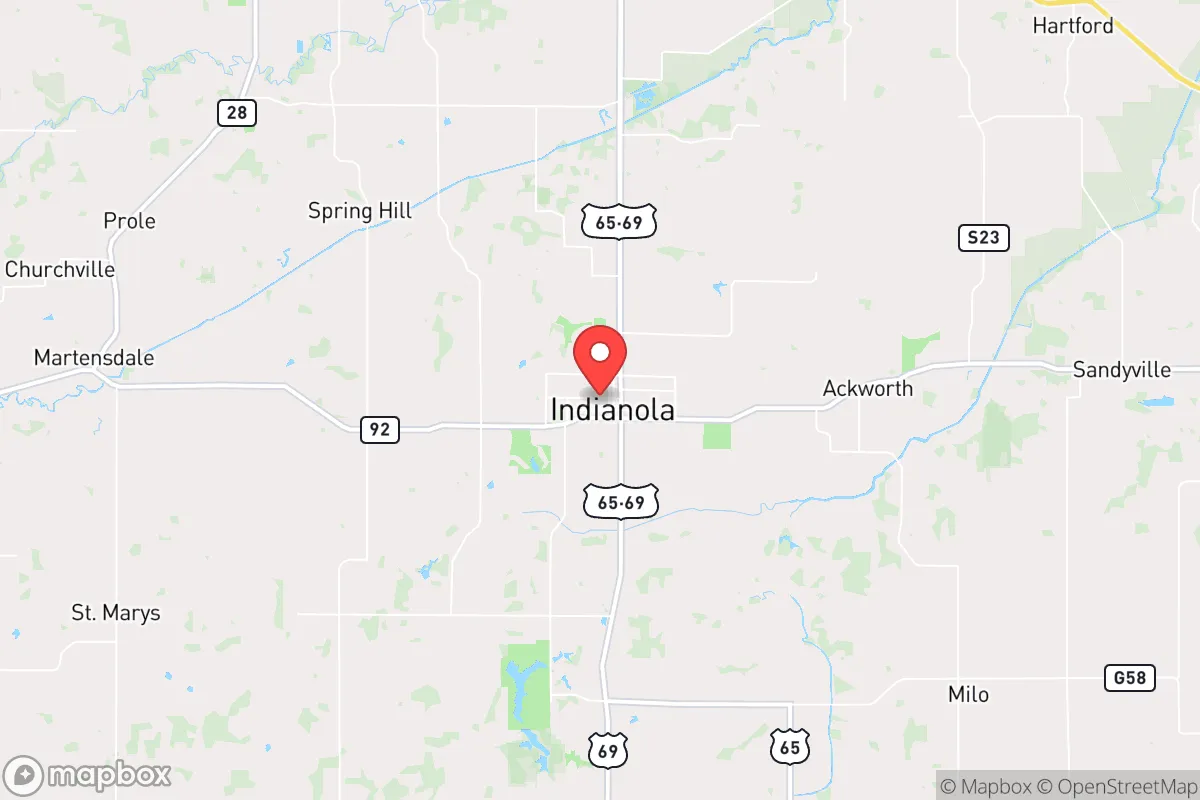
Indianola, Iowa, offers a notably high degree of personal sovereignty for those seeking to minimize government overreach in daily life, particularly when compared to coastal states or even urban centers within the Midwest. The town’s political culture, rooted in central Iowa’s agricultural and small-town ethos, generally favors individual responsibility over state intervention. For the survivalist or prepper-minded individual, Indianola represents a strategic middle ground: close enough to Des Moines for employment and supply runs, yet far enough to avoid the regulatory creep and cultural pressures that often accompany metropolitan living. The key question is whether this autonomy is structural and durable, or merely a function of low population density and a quiet local economy.
Tax burden and regulatory posture: How Iowa’s policies affect your wallet and freedom
Iowa’s state-level tax and regulatory environment has shifted notably toward individual liberty in recent years, and Indianola residents benefit directly. The state’s flat income tax rate, which dropped to 3.8% in 2025 and is scheduled to reach 3.5% by 2026, is among the most competitive in the region. There is no state tax on Social Security benefits, and retirement income from pensions and 401(k)s is largely exempt, which matters for those planning long-term self-sufficiency. Property taxes in Warren County hover around 1.5% of assessed value, slightly above the state average but reasonable for the services provided. More importantly, Iowa has a right-to-work law and has preempted local governments from enacting their own minimum wage or paid leave mandates, meaning Indianola’s city council cannot unilaterally impose new burdens on businesses or residents. The regulatory posture is best described as “hands-off until safety is an issue”—building permits are straightforward, business licensing is minimal, and there is no county-level health department that aggressively pursues code violations on private property. For someone wanting to run a small workshop, keep livestock, or operate a home-based firearms business, the bureaucratic friction is low.
Self-defense and gun law specifics: What you can carry, store, and build
Iowa is a constitutional carry state, meaning no permit is required to carry a concealed firearm for anyone legally allowed to possess one. Indianola’s local law enforcement, the Warren County Sheriff’s Office, is known for a pro-Second Amendment stance; there are no local ordinances restricting magazine capacity, ammunition types, or storage requirements beyond state law. The state also has a strong “stand your ground” statute, with no duty to retreat in any place where you are lawfully present. For preppers, this extends to property defense: Iowa law explicitly allows the use of deadly force to prevent a forcible felony, including home invasion, and civil immunity is granted if the force is justified. Suppressors are legal for hunting and target shooting, and there are no state-level restrictions on NFA items like short-barreled rifles or machine guns, provided federal paperwork is in order. Indianola’s proximity to rural shooting ranges and private land makes it feasible to train regularly without traveling far. The only notable limitation is that Iowa does not allow open carry in vehicles without a permit, but that is a minor inconvenience. Overall, the legal framework here treats self-defense as a fundamental right, not a privilege to be managed by the state.
Self-reliance and homesteading viability: Lot sizes, zoning, and off-grid feasibility
Indianola’s zoning code is a mixed bag for the serious homesteader. Within city limits, standard residential lots range from 0.25 to 0.5 acres, which is enough for a substantial garden, a small chicken coop, and perhaps a single goat or two, but not for larger livestock or significant food production. The city does allow backyard chickens with a permit, and beekeeping is permitted. However, off-grid living—solar panels, rainwater collection, composting toilets—is technically allowed but subject to building code compliance, which can be costly. The real opportunity lies just outside city limits in Warren County’s unincorporated areas, where minimum lot sizes are typically 2 to 5 acres and zoning restrictions are minimal. There, you can build a pole barn, install a septic system, drill a well, and set up solar without needing a parade of permits. The county does not enforce any “aesthetic” covenants, so your property can look as functional as you need it to. For those wanting to be truly self-reliant, the land south and east of Indianola—toward the Lake Red Rock area—offers affordable parcels with good soil and water access. The main constraint is that Iowa’s building code still requires electrical and plumbing to meet state standards if you ever want to sell, but for a private retreat, you can operate largely outside the system.
Personal liberties: Parental rights, medical autonomy, speech, and property
On parental rights, Iowa has been a battleground, but the current legal landscape favors family autonomy. The state passed a Parents’ Bill of Rights in 2021, which guarantees that parents have the fundamental right to direct the upbringing, education, and health care of their children. This means Indianola parents can opt their kids out of any curriculum or activity they find objectionable, and school districts are required to notify parents of any medical or mental health services provided on campus. Medical autonomy is more nuanced: Iowa has not enacted any broad vaccine mandates, and while the state does require certain immunizations for school attendance, religious and medical exemptions are available and not overly burdensome. Telehealth and direct-primary-care models are legal and growing, giving residents options outside the insurance system. Free speech is robust—Iowa has no hate speech laws that criminalize political or religious expression, and local government meetings in Indianola are generally open to public comment without prior approval. Property rights are protected by Iowa’s strong eminent domain laws, which require a public purpose and just compensation, and there is no statewide rent control or landlord licensing scheme. For the prepper, the most relevant liberty is the ability to store food, fuel, and medicine without state interference—there are no limits on how much ammunition, canned goods, or prescription antibiotics (with a valid prescription) you can keep on hand.
In the broader context of the Midwest, Indianola’s sovereignty profile is solid but not extreme. It lacks the near-total freedom of rural counties in South Dakota or Montana, where zoning is virtually nonexistent and state income tax is zero. However, it offers a more practical balance for those who need to maintain a professional career or access to healthcare while building a resilient lifestyle. The town’s political culture is reliably conservative—Warren County voted +18 points Republican in the 2024 presidential election—and local officials are responsive to concerns about federal overreach. For a single individual or family looking to step back from the chaos of coastal cities without disappearing into the wilderness, Indianola provides a defensible, lawful, and affordable base of operations. The sovereignty here is not absolute, but it is real, and it is backed by a state government that has, for now, chosen to trust its citizens more than its bureaucrats.

* Values derived from national, state, county, city and local statistics and may differ in a specific area. Last updated: 2026-04-29T22:47:03.000Z
Narrative content on this page is AI-generated and may contain mistakes. Verify any details that matter before acting on them.
ReloMaps may earn a commission from affiliate links at no extra cost to you.

