
Photo: Wikipedia
Quality of Life in Indianola, IA
A high quality of life with strong walkability, manageable living costs, healthy neighborhood signals, and solid amenity access.
What does Quality of Life tell us?
Quality of Life blends cost of living, nearby amenities, socioeconomic signals, and neighborhood character. City-level scores represent the whole municipality; individual neighborhoods can differ.
What does this tell us?
Quality of Life blends cost of living, nearby amenities, socioeconomic signals, and neighborhood character. City-level scores represent the whole municipality; individual neighborhoods can differ.
Cost of Living
18% below national average
The Real Cost of Living in Indianola, IA for 2026
| Tier | Individual | Family (4) |
|---|---|---|
| Survival | $15k | $29k |
| Comfortable | $44k | $65k |
| Luxury | $111k+ | $172k+ |
| Elite (Top 5%) | $131k+ | $203k+ |
120%
The Area Signal
A metric tracking the socioeconomic signals of the area.
Hobbies
Explore the areaGroceries
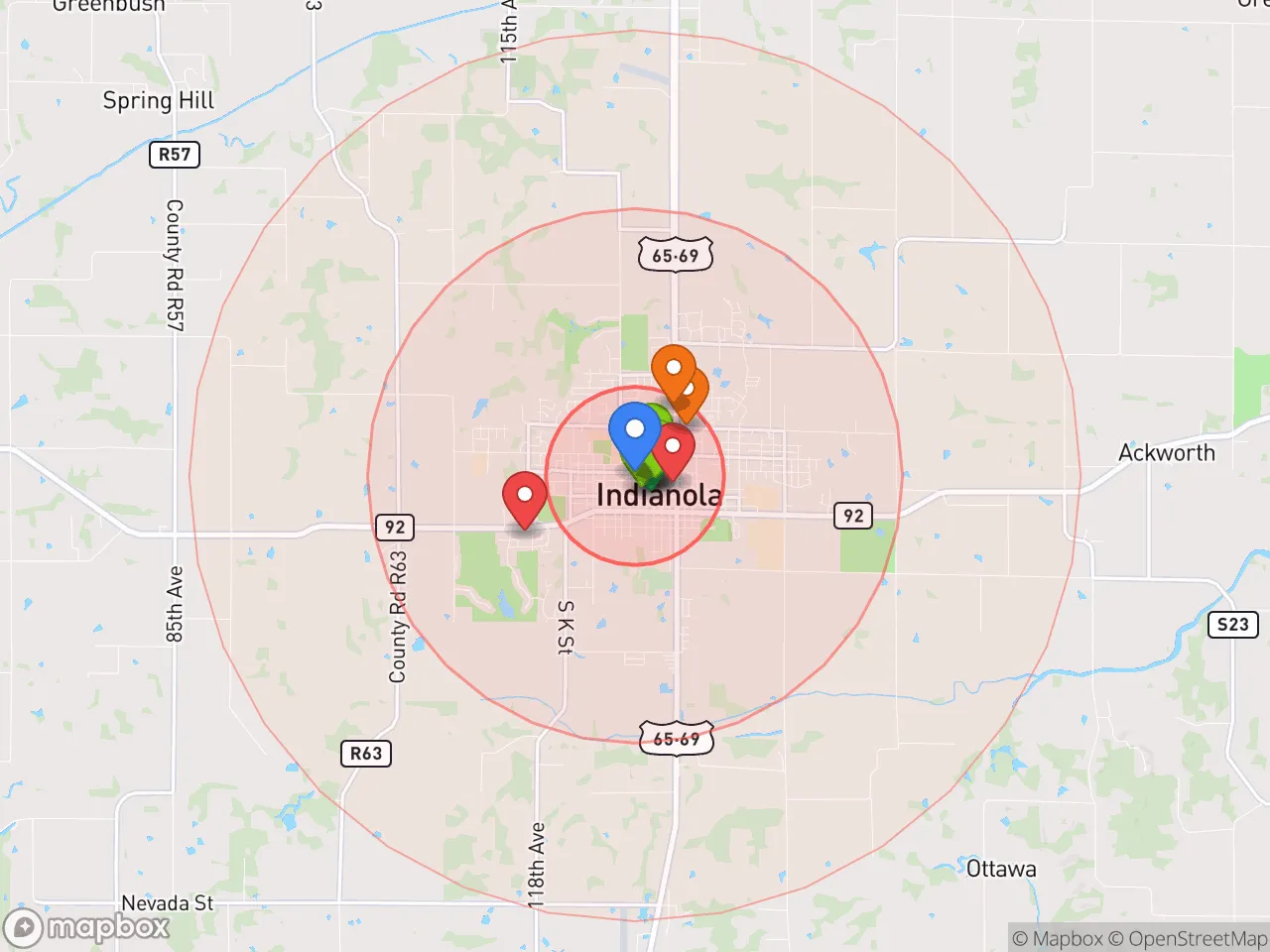
2 within 10 miles
Gas
12 within 10 miles
Hospital
9 within 20 miles
Airport
MCI — Kansas City International
Post Office
USPS — Indianola, IA
Critical Amenities
Quality-of-Life Analysis
Indianola, Iowa, presents a quality of life defined by strong community ties, above-average affluence, and a notably low cost of living that attracts families and professionals seeking a slower pace without sacrificing proximity to a major metro. The city’s population of roughly 16,000 is anchored by a mix of long-time residents, young families drawn to the highly rated school system, and commuters who work in Des Moines but prefer a quieter, more affordable home base. With a cost of living index of 82—18% below the national average—Indianola offers a tangible financial advantage that shapes daily life for its residents.
Cost of living, housing, and how Indianola compares to Des Moines
Indianola’s affordability is a primary draw, especially when compared to the state capital just 20 minutes north. The median home value sits at $228,100, roughly $50,000 less than the median in Des Moines proper, while the median rent of $966 is similarly competitive. This pricing allows residents to secure more space—often a single-family home with a yard—for the same monthly outlay as a smaller apartment in the metro. The average commute of 21.9 minutes is a key trade-off: slightly longer than a Des Moines inner-city drive, but far shorter than the 30+ minute commutes common in many suburban rings. For those working in Des Moines’ insurance, finance, or healthcare sectors, this commute is a manageable price for a significantly lower housing burden. Property taxes in Warren County are moderate, and overall utility costs track below national averages, further stretching household budgets.
Schools, amenities, and the daily rhythm of life in Indianola
Daily life in Indianola revolves around a walkable downtown square, the expansive campus of Simpson College, and a calendar of community events that foster a strong sense of place. The Indianola Community School District is a major anchor, consistently earning above-average ratings for academics and extracurriculars, which is a primary reason families choose the area over more rural Warren County towns. The city’s parks system—including the 80-acre Buxton Park and the Indianola Dog Park—provides ample green space, while the nearby Lake Ahquabi State Park offers hiking, fishing, and camping within a 10-minute drive. Retail and dining are concentrated along the Jefferson Way corridor and the historic square, with a mix of local restaurants, a Hy-Vee grocery, and a Walmart Supercenter covering daily needs. The presence of Simpson College infuses the town with cultural events, from theater productions to guest lectures, and supports a small but active arts scene. The annual National Balloon Classic in July is a signature event that draws visitors from across the state, reinforcing Indianola’s identity as a tight-knit, event-oriented community.
Indianola is best suited for those who prioritize a low-stress, family-oriented lifestyle with strong schools and a clear sense of community over the urban amenities and nightlife of a larger city. Young professionals and remote workers who value a short commute to Des Moines for work or entertainment, but want a quieter home base with affordable housing, will find the balance appealing. Retirees and empty-nesters are also drawn to the walkable downtown, low crime rates, and access to healthcare via the nearby MercyOne Indianola clinic. The city’s political and social climate leans moderately conservative, reflecting broader Warren County trends, but the college presence ensures a degree of diversity and openness. For anyone seeking a predictable, safe, and financially sensible place to raise a family or settle into a slower rhythm, Indianola delivers a quality of life that is both attainable and deeply rooted in Midwestern community values.

Crime in Indianola, IA
Lower crime rates than 81% of comparable U.S. locations.
Violent CrimeViolent Crime Analysis
Property CrimeProperty Crime Analysis
Crime Analysis
Indianola, Iowa, reports a violent crime rate of 140.2 incidents per 100,000 residents, a figure that sits well below both the state and national averages. However, the city’s property crime rate of 3,248.6 per 100,000 is notably elevated, nearly matching the national average and exceeding the Iowa state average by a significant margin. This creates a mixed safety picture where residents face a low risk of violent offenses but a heightened risk of theft, burglary, and other property-related crimes. As a growing suburb of Des Moines, Indianola’s crime dynamics are influenced by its proximity to a larger metropolitan area, which can introduce both urban spillover effects and the policy environment of Polk and Warren counties.
Crime in context
When compared to statewide data, Indianola’s violent crime rate is roughly half the Iowa average of approximately 280 per 100,000, and less than a third of the national rate of about 380 per 100,000. This makes the city one of the safer options in central Iowa for violent offenses like assault, robbery, and homicide. In contrast, the property crime rate of 3,248.6 per 100,000 is nearly double the Iowa average of roughly 1,800 per 100,000 and closely tracks the national average of around 2,500 per 100,000. The elevated property crime figure is driven primarily by larceny-theft and motor vehicle theft, which are common in communities with easy interstate access and a mix of residential and commercial zones. Readers should note that progressive prosecutorial policies in nearby Des Moines and Polk County have been linked to lower incarceration rates and shorter sentences for property offenders, which can result in repeat offenders cycling back into surrounding communities like Indianola.
What residents experience
For the average resident, daily life in Indianola does not involve a high risk of violent confrontation. Most violent crimes are domestic in nature or occur between acquaintances, not random attacks on strangers. The more tangible concern is property crime: vehicle break-ins, package theft, and burglaries of unlocked homes and sheds are the most common complaints reported to the Indianola Police Department. Residents in neighborhoods near the Simpson College campus or along the Highway 65/69 corridor report higher instances of these crimes, likely due to increased foot traffic and transient populations. The city’s police force maintains a community-oriented approach, but the broader judicial environment in Warren County, which has seen a shift toward progressive sentencing reforms, means that repeat property offenders often receive diversion programs rather than jail time, a factor that can undermine deterrence and frustrate victims seeking accountability.
Neighborhood-level variation in Indianola is modest but noticeable. The historic downtown core and newer subdivisions on the city’s west side generally report lower crime rates, while areas closer to the interstate exchange and apartment complexes near the college see elevated property crime. Gated communities and homeowner associations with private security have emerged as a response, but these remain a minority of housing stock. For prospective residents, the key takeaway is that Indianola offers a low violent crime environment but demands vigilance against property theft, with the effectiveness of local law enforcement partially offset by a justice system that prioritizes offender rehabilitation over public safety outcomes.
* Values derived from national, state, county, city and local statistics and may differ in a specific area. Last updated: 2026-04-29T22:47:03.000Z
Narrative content on this page is AI-generated and may contain mistakes. Verify any details that matter before acting on them.
ReloMaps may earn a commission from affiliate links at no extra cost to you.

