
Photo: Wikipedia
Political ClimatePolitical Climate in Indianola, IA
District shown is the primary district for this city’s centroid. Cities may span multiple districts.
Local Political AnalysisPolitical Analysis of Indianola, IA
Indianola has long been a reliably conservative community, and that hasn’t changed much at the local level, though you can feel the winds shifting a bit as the Des Moines metro creeps south. The Cook PVI of R+4 tells you the district leans Republican, but it’s not a deep-red stronghold like you’d find further west or south in the state. In the 2024 presidential race, Warren County—where Indianola sits—voted for Trump by about 12 points, which is solid but not overwhelming. What’s more telling is the local school board and city council races: those used to be sleepy, unopposed affairs, but now you’re seeing more contested seats with candidates pushing progressive ideas like DEI initiatives and climate action plans. It’s still a conservative town at heart, but the trajectory is worth watching if you value limited government and local control.
How it compares
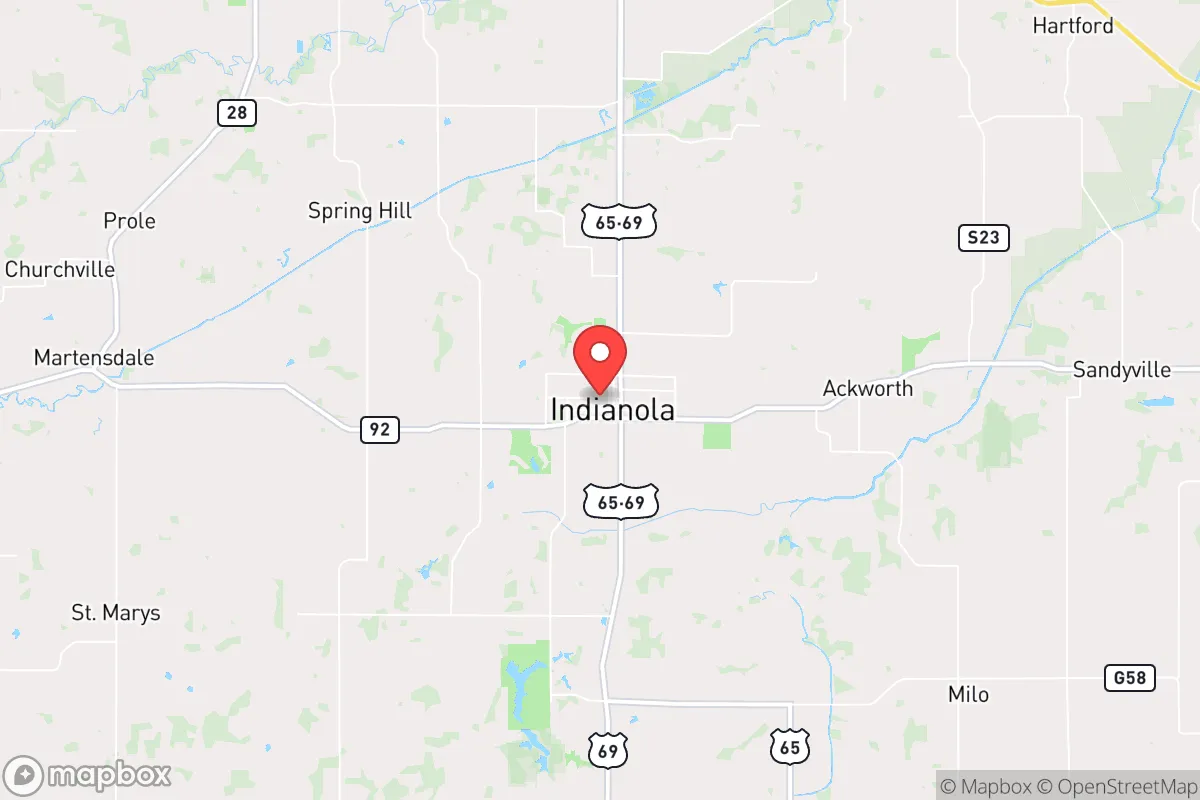
Drive 15 minutes north to Norwalk or 25 minutes to West Des Moines, and you’re in a completely different political world. Those suburbs are trending blue fast, with school boards adopting critical race theory-adjacent curricula and city councils pushing higher density zoning that erodes property rights. Indianola, by contrast, still feels like the old Iowa—folks wave from their trucks, the county fair is a big deal, and the Warren County Board of Supervisors has consistently rejected mask mandates and vaccine passport proposals. Compare it to Pella, 30 minutes east, which is even more conservative thanks to its Dutch Reformed heritage, or to Winterset, which is similar but a bit more libertarian-leaning on gun rights. Indianola sits in a sweet spot: conservative enough to preserve personal freedoms, but close enough to the metro that you can still commute if you have to.
What this means for residents
For now, you can expect low taxes, minimal government interference in your daily life, and a school system that still emphasizes traditional values over social engineering. The Warren County Sheriff’s Office has publicly stated they won’t enforce any federal gun control measures they deem unconstitutional, which is a big deal for Second Amendment supporters. Property taxes are reasonable—around 1.5% of assessed value—and there’s no city income tax. The downside? If the progressive wave from Des Moines keeps pushing south, you could see more ballot initiatives on things like carbon taxes or sanctuary city policies. The 2026 midterms will be a bellwether: if the school board flips, that’s your first warning sign. Long-term, Indianola could either hold the line or become another bedroom community for Des Moines liberals. It really depends on whether enough conservative families move in to offset the metro spillover.
Culturally, Indianola still flies the American flag proudly, and the annual National Balloon Classic draws crowds without any political drama. But there are subtle shifts: the local library now hosts a “Pride Month” display, and the high school has a Gender-Sexuality Alliance club. These aren’t mandates from the state—they’re local choices, which is exactly the kind of thing that worries folks who believe in parental rights and local control. The good news is that the city council has so far resisted calls for “hate speech” ordinances or defunding the police. If you’re looking for a place where you can still own your property, raise your kids without government indoctrination, and keep your tax dollars local, Indianola is one of the last affordable bastions in central Iowa. Just keep an eye on those school board meetings—that’s where the real battle is being fought.

State Political ClimatePolitical Climate in Iowa
State Political AnalysisPolitical Environment in the State
Iowa has long been a reliably Republican state in presidential elections, voting for the GOP candidate in seven of the last eight cycles, but its political identity is more nuanced than a simple red-state label. The state’s overall lean is a product of a deep urban-rural split, with conservative, agricultural communities in the west and north counterbalancing the growing Democratic influence in a handful of college towns and the eastern industrial corridor. Over the past 20 years, the GOP has solidified its hold on state government, now holding trifecta control, but the margin of that control has tightened as suburban and urban areas have shifted leftward, creating a dynamic and often contentious political landscape.
Urban vs. rural divide
The political map of Iowa is a textbook case of the urban-rural divide. The state’s two largest metros, Des Moines and the Quad Cities (Davenport, Bettendorf), are the primary engines of Democratic votes. Polk County, home to Des Moines, has trended blue for over a decade, with Democrats winning it by double digits in recent statewide races. Johnson County, anchored by the University of Iowa in Iowa City, is the state’s most reliably Democratic stronghold, often voting 2-to-1 for Democrats. In contrast, the vast rural expanse—counties like Sioux, Lyon, and Plymouth in the northwest, and counties like Adair and Guthrie in the central west—vote Republican by margins of 60-70% or more. A key battleground is the suburban ring around Des Moines, particularly Dallas County (Waukee, West Des Moines) and Warren County (Indianola). Dallas County, once a GOP lock, has become a swing county, flipping to Biden in 2020 by a narrow margin, a trend driven by an influx of younger, more educated professionals. The rural areas, however, remain deeply conservative, and their outsized representation in the state legislature ensures the GOP’s dominance in crafting state policy.
Policy environment
Iowa’s policy environment under unified Republican control has been aggressively conservative, particularly on fiscal and social issues. The state has enacted a flat income tax rate of 3.9%, set to drop to 3.5% by 2026, making it one of the most tax-friendly states in the Midwest. Property taxes are relatively low, and there is no inheritance tax. On education, the state passed a universal school voucher program in 2023, allowing any family to use public funds for private or homeschool expenses—a major win for school choice advocates. Healthcare policy has been mixed; the state expanded Medicaid under the Affordable Care Act, but the current administration has pushed for work requirements and privatization of managed care. Election laws have been tightened significantly: voter ID is required, absentee ballot drop boxes were restricted, and early voting windows were shortened. The state also passed a six-week abortion ban in 2023, which is currently blocked by the courts but reflects the legislature’s strong pro-life stance. For a conservative, Iowa’s policy environment is largely aligned with limited government principles, though the expansion of Medicaid remains a point of contention.
Trajectory & freedom
On the whole, Iowa has been moving toward greater personal freedom in several key areas, but with notable exceptions. The most significant expansion of liberty came with the 2021 passage of constitutional carry (permitless carry of handguns), making Iowa a Second Amendment sanctuary state. The state also passed a Parents’ Bill of Rights in 2021, requiring schools to notify parents of any curriculum involving sexuality or gender identity, and allowing parents to opt their children out of such instruction. In 2023, the legislature banned gender-affirming care for minors, a move that has been challenged in court but signals a strong stance on medical autonomy for parents. On the economic front, the flat tax and deregulation efforts have reduced the state’s footprint in daily life. However, there are areas of concern for liberty-minded residents. The state’s aggressive use of eminent domain for carbon capture pipelines has sparked backlash from property rights advocates, with many rural landowners feeling their rights are being trampled for corporate gain. Additionally, the state’s strict alcohol and cannabis laws—Iowa has no legal recreational marijuana and a very limited medical program—are seen by some as an overreach of government into personal choices. Overall, the trajectory is positive for conservatives, but the pipeline fight is a flashpoint that could erode trust in the GOP’s commitment to property rights.
Civil unrest & political movements
Iowa has not seen the large-scale civil unrest of coastal states, but there have been notable political movements and flashpoints. The most visible in recent years has been the farmland ownership debate, with a 2021 law restricting foreign ownership of agricultural land, driven by concerns over Chinese and other foreign entities buying up Iowa’s most valuable resource. This has been a unifying issue across the political spectrum. On the left, the Black Lives Matter protests in Des Moines and Iowa City in 2020 were relatively small but led to calls for police reform, which were largely rejected by the GOP legislature. The immigration issue is less prominent than in border states, but the state has seen a rise in migrant labor in meatpacking plants, particularly in towns like Storm Lake and Perry, leading to some local tensions over housing and social services. The state has no sanctuary city policies, and the legislature passed a law requiring local law enforcement to cooperate with federal immigration authorities. The election integrity debate has been a major theme, with the GOP’s voting restrictions drawing sharp criticism from Democrats and civil rights groups, but no widespread fraud has been documented. A new resident would notice the strong presence of evangelical churches in rural areas and the active involvement of groups like The Family Leader in state politics, which shapes the social conservative agenda.
Projection
Over the next 5-10 years, Iowa is likely to remain a Republican-leaning state, but the margin of control could narrow. The key demographic shift is the continued growth of the Des Moines metro, particularly Dallas County, which is attracting younger, more diverse, and more moderate residents. This could turn the state from a solid red to a light red or even a purple state in presidential elections, similar to what has happened in Arizona and Georgia. The rural population is aging and declining, which will reduce the GOP’s base unless they can turn out more voters in the suburbs. The school choice and tax policies are likely to attract more conservative families from blue states, potentially offsetting some of the urban drift. However, the pipeline fight and property rights issues could fracture the GOP coalition, opening the door for a more populist or libertarian challenge. A new resident moving in now should expect a state that remains conservative on social and fiscal issues, but with a growing urban-liberal counterweight that will make statewide elections increasingly competitive. The culture war battles over education and gender will likely intensify, but the fundamental policy direction—lower taxes, school choice, gun rights—is unlikely to reverse.
For a conservative individual or family considering a move, Iowa offers a strong alignment with traditional values, low taxes, and a high degree of personal freedom in most areas. The state’s political climate is stable and predictable, with a government that is generally responsive to conservative priorities. The main practical takeaways are: you’ll enjoy low taxes and a business-friendly environment, your children will have access to school choice, and your Second Amendment rights are well-protected. However, be aware that the Des Moines suburbs are becoming more liberal, and the property rights battles over pipelines are a real concern for landowners. If you value a state where your vote counts and your voice is heard in a conservative legislature, Iowa is a solid bet. Just keep an eye on the growing urban influence—it’s the one factor that could shift the state’s trajectory in the coming decade.
* Values derived from national, state, county, city and local statistics and may differ in a specific area. Last updated: 2026-04-29T22:47:03.000Z
Narrative content on this page is AI-generated and may contain mistakes. Verify any details that matter before acting on them.
ReloMaps may earn a commission from affiliate links at no extra cost to you.

