Photo: Wikipedia
Strategic Assessment of Iowa City, IA
Meaningful friction. Expect exposure to either population pressure, blast zones, or natural disaster risk. Consider buying a retreat property.
What does the Strategic Assessment tell us?
Our Strategic Assessment grades tactical survivability of an area. Major population centers, military targets, fallout zones, natural disasters, and border exposure all drive risk — lower exposure means a more defensible position in a crisis.
This is heavily inspired by Joel Skousen's Strategic Relocation book. Highly recommended you checkout the book ($)What does this tell us?
Our Strategic Assessment grades tactical survivability of an area. Major population centers, military targets, fallout zones, natural disasters, and border exposure all drive risk — lower exposure means a more defensible position in a crisis.
This is heavily inspired by Joel Skousen's Strategic Relocation book. Highly recommended you checkout the book ($)Strategic Pillars

Key Distances
Regional Safe Places
Below is our recommended "safe zones" in Iowa and the surrounding area based on our strategic heuristics. For most people, it's unrealistic to live in a “safe zone” full-time due to work, family or other personal reasons. They tend to be more rural. However, many of these areas are perfect for second homes and retreat properties that double as a vacation home or even a short-term rental.
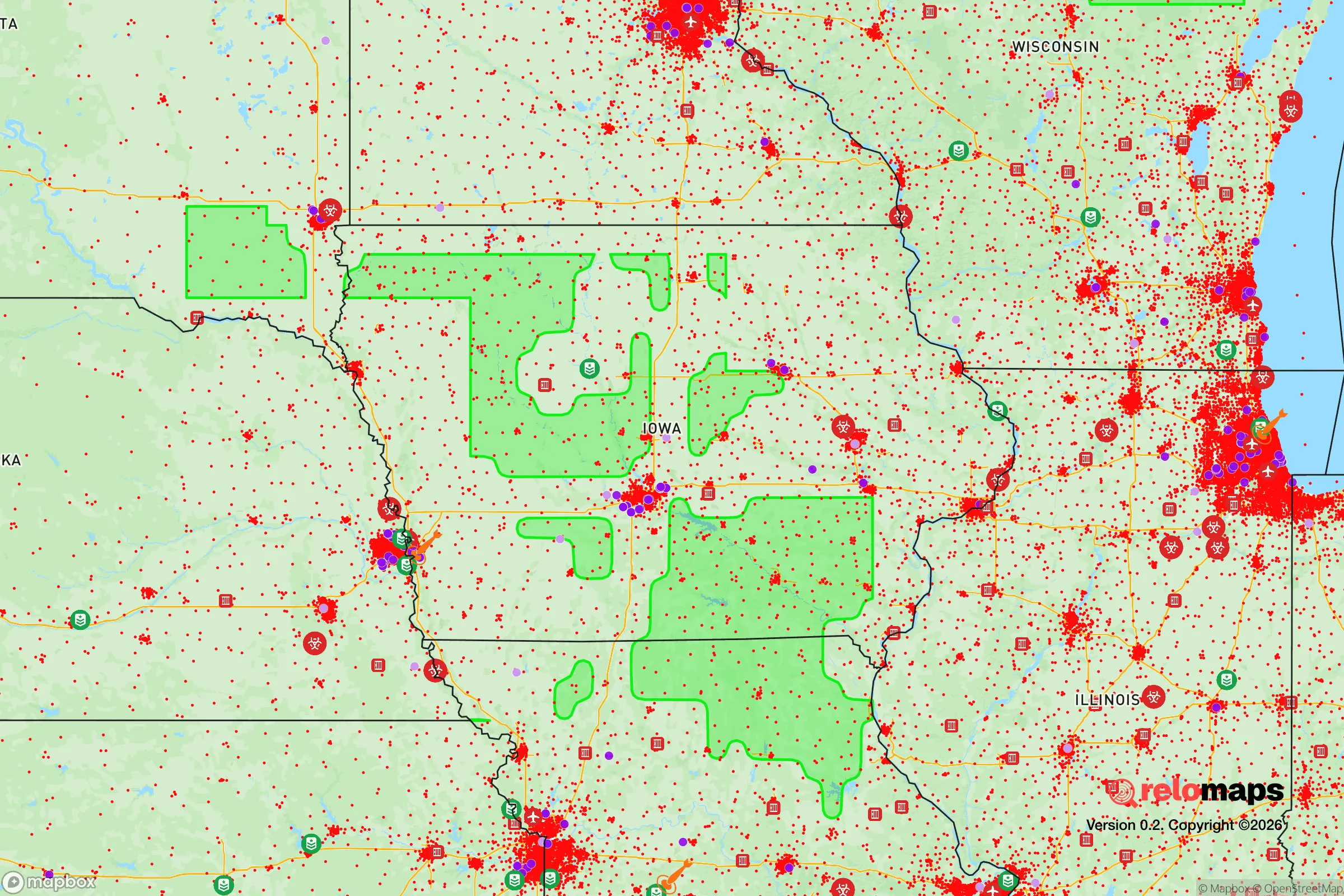
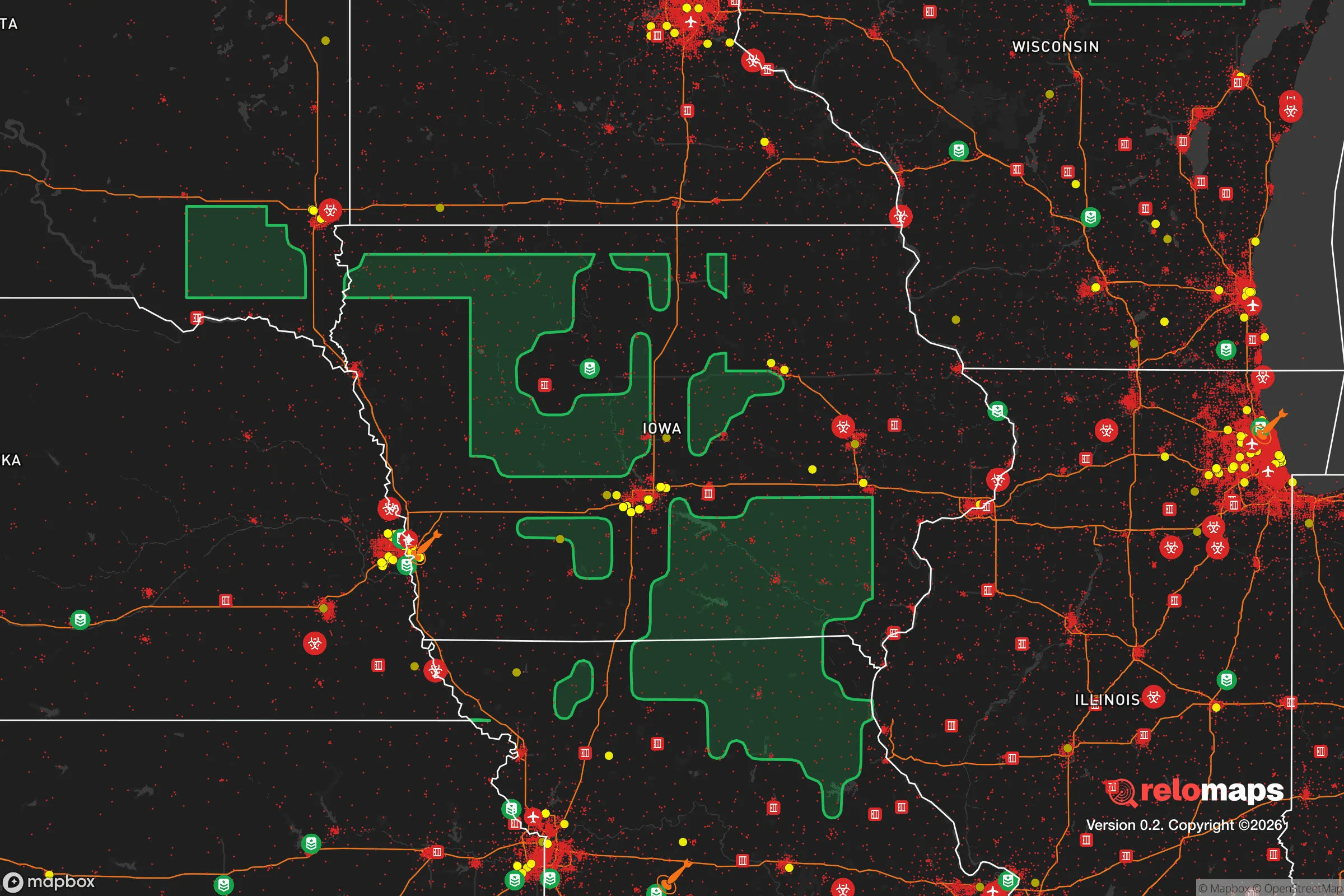


Important Note: For informational purposes only. This does not mean nothing bad ever happens in the green zones. Please use common sense. This is based on public data and modeled with AI. We tried to take a conservative approach but mistakes happen. We update this regularly as new information becomes available.
Solar Generator Recommendations
Backup power matters more here than in safer locations. We've picked three solar generators across budgets and capacity tiers — start with the budget unit if you only need a few essentials, or step up if you want to run a fridge and HVAC for days at a time.

Jackery Portable Power Station Explorer 300
Budget OptionPower on the Go: Weighing only 11 lbs, it's convenient to set up and store with book-sized foldable solar panels

BLUETTI Portable Power Station AC180
Designed for both indoor and outdoor scenarios, AC180 is highly capable as it has a robost capacity and continuous output power.

EF ECOFLOW DELTA Pro Ultra Power Station
Upgraded PickEcoFlow DELTA Pro Ultra is a whole-home energy system designed to grow with your family. Integrated with the Smart Home Panel 2, it scales to meet your evolving energy needs — keeping your home powered, intelligent, and secure through every stage of life.
We earn a commission, at no additional cost to you.
Strategic Assessment Analysis
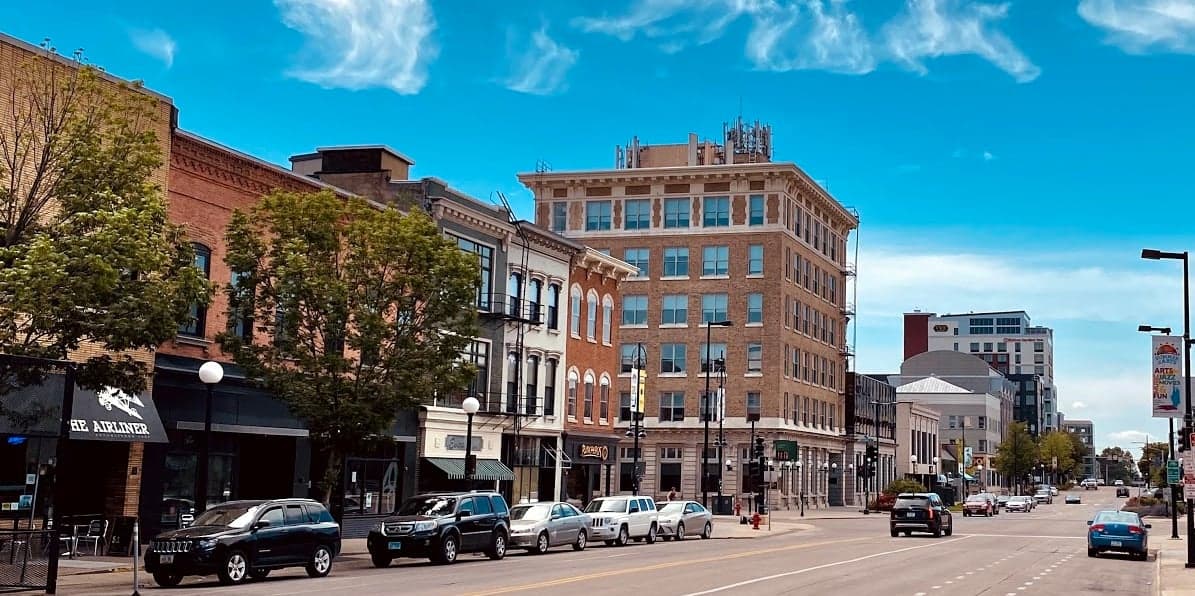
Iowa City, Iowa, presents a mixed strategic picture for the conservative prepper or survivalist. Its core resilience lies in its position as a regional hub for essential services—namely the University of Iowa Hospitals and Clinics, a Level 1 trauma center—and its location in the relatively stable agricultural heartland of the Midwest. However, its identity as a liberal college town, its proximity to the Mississippi River corridor, and its population density create specific vulnerabilities that a relocator must weigh carefully. This analysis breaks down the area’s geographic position, its exposure to risks, and the practical realities of daily life for someone prioritizing long-term preparedness.
Geographic position and natural advantages for long-term stability
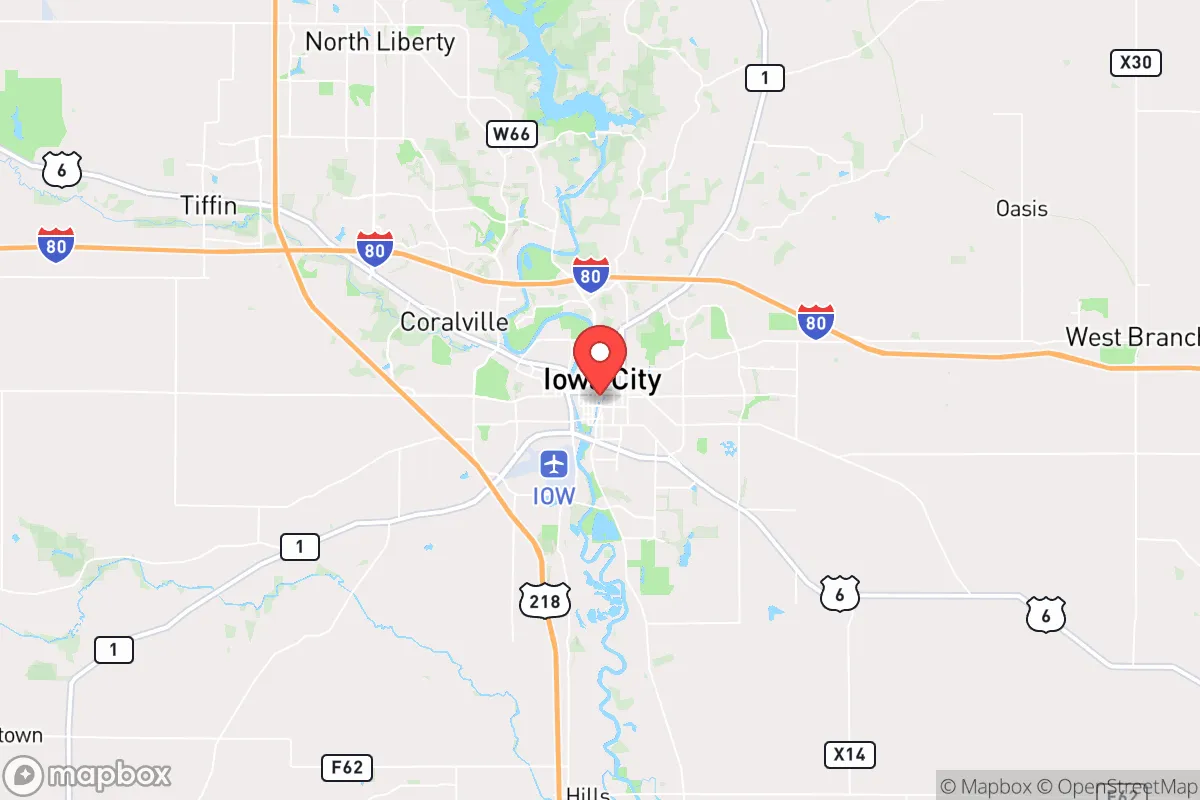
Iowa City sits in the rolling hills of eastern Iowa, roughly 30 miles west of the Mississippi River and 120 miles east of Des Moines. This location offers a genuine buffer from the immediate fallout zones of major metropolitan areas like Chicago (180 miles east) or St. Louis (200 miles south). The surrounding Johnson County is dominated by agricultural land—corn and soybeans—which provides a theoretical food security advantage if local supply chains fracture. The area is not prone to earthquakes, hurricanes, or wildfires, and while tornadoes are a real seasonal threat, the terrain offers more natural cover than the flat plains further west. The Iowa River runs through the city, providing a surface water source, though it is heavily managed and not pristine. For a relocator, the key advantage is the 120-mile distance from any major population center, which reduces the risk of being caught in a cascading urban collapse or a mass casualty event originating from a Chicago or St. Louis. The region’s agricultural base also means that, in a prolonged crisis, local food production could be a tangible asset, provided you have the means to access it.
Risks, exposures, and proximity to fallout-relevant landmarks
The most significant strategic liability is Iowa City’s status as the home of the University of Iowa, a large public research institution with a student population of over 30,000. In a scenario of civic unrest or a mass casualty event, a college campus of this size is a potential flashpoint. The city’s political culture is overwhelmingly liberal, which may create friction for a conservative relocator, but more critically, it means local governance and law enforcement priorities may not align with a prepper’s mindset. The Johnson County Sheriff’s Office and Iowa City Police Department are professional, but they are not structured for widespread civil defense. Proximity to the Mississippi River is a double-edged sword: it provides a waterway and trade route, but it also places Iowa City within the potential fallout zone of the Quad Cities metropolitan area (population ~380,000, 60 miles north) and the Davenport and Moline industrial corridors. A major industrial accident or a targeted event at a Mississippi River lock and dam—there are several between Iowa City and the Quad Cities—could disrupt river transport and create localized hazards. There are no nuclear power plants within a 50-mile radius, but the Duane Arnold Energy Center (decommissioned, near Cedar Rapids, 25 miles north) still contains spent fuel on site, a low-probability but high-consequence risk. The city’s reliance on the interstate highway system (I-80 runs directly through it) is a vulnerability: a major disruption on I-80 would sever supply lines and could funnel displaced populations from the coasts into the area.
Practical resilience for a relocator: food, water, energy, and defensibility
For a single individual or family looking to establish a resilient household, Iowa City offers a mixed bag. Food security is the strongest card: the surrounding farmland is real, and local farmers’ markets (like the Iowa City Farmers Market) are robust in season. However, the city itself is not a food-producing zone; you would need to secure land outside the urban core for gardening or livestock. The city’s water supply comes from the Iowa River and is treated at the Iowa City Water Treatment Plant. In a grid-down scenario, surface water is accessible but would require filtration and boiling—the river is not clean. The local energy grid is part of the Midcontinent Independent System Operator (MISO) network, which has shown strain during extreme weather events (e.g., the 2021 polar vortex). Natural gas is the primary heating fuel, and a prolonged outage would be a serious problem without a backup wood or propane source. Defensibility is the weakest point. Iowa City is a dense, walkable college town with a grid-like street pattern. There are no natural chokepoints or defensible terrain features within the city limits. A rural property in the surrounding townships—like North Liberty, Tiffin, or Solon—would offer far better security, with more land, fewer neighbors, and easier access to agricultural resources. The local gun culture is present but not dominant; Johnson County has a mix of rural hunters and urban liberals, so a relocator should expect to be part of a minority in terms of preparedness mindset. The University of Iowa Hospitals and Clinics is a world-class medical asset, but in a mass casualty event, it would be overwhelmed and likely a target for those seeking care.
The overall strategic picture for Iowa City is one of calculated trade-offs. It is not a prepper’s paradise, but it is not a death trap either. The area’s agricultural base and distance from major cities provide a genuine buffer that many coastal or urban locations lack. However, the liberal political climate, the presence of a large university, and the lack of natural defensibility mean that a relocator must be proactive—not reactive. If you can secure land outside the city limits, establish independent water and energy systems, and build a network of like-minded individuals (which will require effort in this environment), Iowa City can serve as a viable base of operations. If you are looking for a place to simply hunker down in place within the city limits, the risks of being caught in a campus-related unrest event or a supply chain disruption on I-80 are too high. The bottom line: Iowa City is a decent option for the prepared relocator who is willing to put in the work to build resilience from scratch, but it is not a turnkey solution for those seeking a low-effort retreat.

* Values derived from national, state, county, city and local statistics and may differ in a specific area. Last updated: 2026-04-24T15:00:35.000Z
Narrative content on this page is AI-generated and may contain mistakes. Verify any details that matter before acting on them.
ReloMaps may earn a commission from affiliate links at no extra cost to you.

