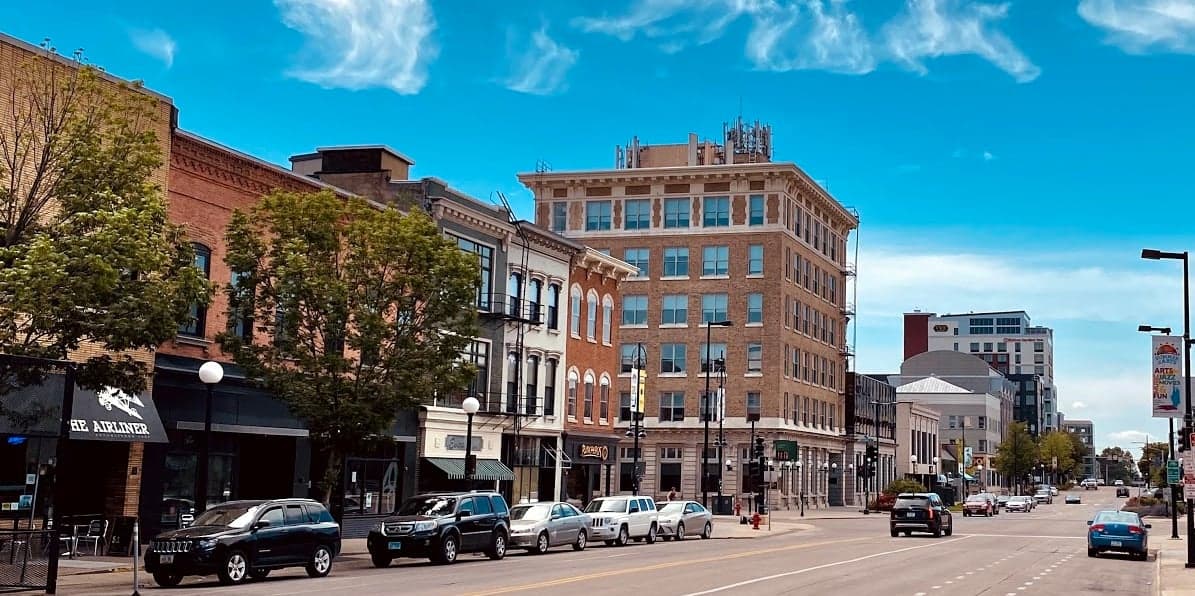
Photo: Wikipedia
Political ClimatePolitical Climate in Iowa City, IA
District shown is the primary district for this city’s centroid. Cities may span multiple districts.
Local Political AnalysisPolitical Analysis of Iowa City, IA
Iowa City sits in Johnson County, which has long been a deep blue island in a sea of red, but the surrounding area tells a different story. The Cook PVI for Iowa’s 1st Congressional District is R+4, meaning the broader region leans Republican by a modest margin, but Iowa City itself votes overwhelmingly Democratic—often by 30 to 40 points in presidential elections. That split has widened over the past decade, and if you’ve lived here as long as I have, you’ve watched the local politics shift from a moderate, live-and-let-live vibe to something a lot more progressive, with all the government overreach that comes with it.
How it compares
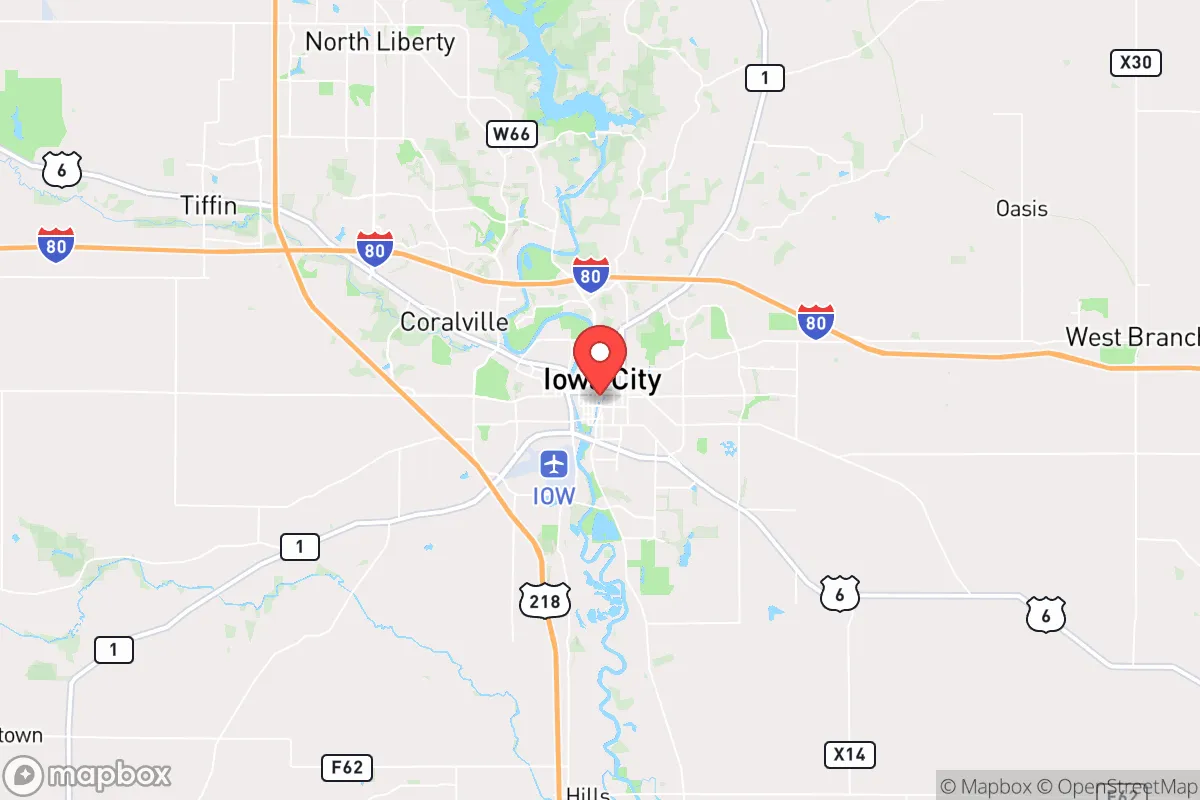
Drive 20 minutes north to Coralville or North Liberty, and you’ll find a more balanced mix—still blue-leaning, but with plenty of folks who vote their conscience on taxes and property rights. Head 30 minutes south to Washington or Kalona, and you’re in solidly conservative territory, where people still believe the county commission shouldn’t be telling you what kind of lightbulb to buy or how to run your small business. The contrast is stark: Iowa City’s city council has pushed zoning changes that make it harder to own a single-family home without jumping through hoops, while those smaller towns let you build a shed without a permit. The University of Iowa is the engine here, and it pulls the political culture leftward—faculty and students dominate local elections, and their priorities often clash with the practical concerns of longtime residents who just want to be left alone.
What this means for residents
If you value personal freedom—especially the freedom to make your own choices about your property, your business, and your kids’ education—Iowa City’s political climate can feel suffocating. The school board has embraced critical race theory and gender ideology curricula, and parents who object are often dismissed as bigots. The city council has floated rent control measures and mandatory affordable housing quotas for new developments, which sound good on paper but drive up costs for everyone else. Property taxes have climbed steadily to fund pet projects, and the local police department has been defunded in spirit if not in name—response times are up, and officers are told to de-escalate even when a situation clearly needs a firm hand. For conservatives, the trajectory is concerning: each election cycle brings a new slate of candidates promising to go further, and the moderate voices are getting squeezed out.
What makes Iowa City different
Despite the progressive tilt, Iowa City still has a few things going for it that keep it from being a total loss. The Iowa City Farmers Market is a genuine community hub where you can still buy meat from a farmer who’ll look you in the eye, and the Iowa Hawkeyes football games on Saturdays bring together folks from all walks of life—left, right, and center—under one roof. The University of Iowa Hospitals and Clinics is a world-class institution that draws doctors and researchers from across the country, many of whom are conservative-leaning and quietly frustrated with the local politics. But the cultural momentum is clearly in one direction: the city council recently declared Iowa City a “sanctuary city” for illegal immigrants, and the public library has hosted drag queen story hours for young children. If you’re a conservative looking to put down roots, you’ll want to keep a close eye on the next few election cycles—because the pendulum shows no sign of swinging back anytime soon.

State Political ClimatePolitical Climate in Iowa
State Political AnalysisPolitical Environment in the State
Iowa has been a reliably Republican state in presidential elections since 2016, but it wasn't always that way. For decades, it was a classic swing state, voting for Barack Obama twice before flipping hard to Donald Trump in 2016 and 2020, and then backing him again in 2024 by a comfortable margin. The state's political center of gravity has shifted rightward over the past 15 years, driven by a combination of rural realignment, suburban migration, and a state GOP that has aggressively pursued conservative policy. Today, Iowa is best described as a solidly red state with a few stubborn blue pockets, and its trajectory suggests it will stay that way for the foreseeable future.
Urban vs. rural divide
The political map of Iowa is a textbook case of the urban-rural split. The state's two largest metros—Des Moines and Iowa City—are the primary engines of Democratic votes. Polk County (Des Moines) and Johnson County (Iowa City) are reliably blue, with Johnson County often delivering margins of 30 points or more for Democrats. Cedar Rapids and Davenport are more competitive but still lean left, especially in state-level races. Meanwhile, the rest of the state is overwhelmingly Republican. Counties like Sioux County in the northwest (home to a large Dutch Reformed population) and Plymouth County routinely vote 70-80% Republican. The rural-urban divide has widened dramatically since 2012, with small towns and farming communities abandoning the Democratic Party over cultural and economic issues. The Quad Cities area (Scott County) is a notable battleground, flipping from Obama to Trump and staying there, reflecting the broader trend of working-class white voters leaving the Democratic coalition.
Policy environment
Iowa's policy environment is aggressively conservative by national standards, though still moderate compared to states like Texas or Florida. The state has a flat income tax of 3.8% (phasing down to 3.5% by 2027), no estate tax, and a relatively low corporate tax rate. Property taxes are moderate, though local levies vary. On education, Iowa passed a universal school voucher program in 2023, allowing any family to use state funds for private or homeschool expenses—a major win for school choice advocates. The state also enacted a six-week abortion ban in 2023 (the "fetal heartbeat" law), which was upheld by the Iowa Supreme Court in 2024. Election integrity measures include strict voter ID requirements, a ban on ballot drop boxes, and reduced early voting windows. The state also passed a law in 2021 banning transgender athletes from girls' sports, and in 2023, a law restricting gender-affirming care for minors. On the regulatory front, Iowa is a right-to-work state with minimal business regulations, though it still has a state-level minimum wage of $7.25 (matching the federal floor).
Trajectory & freedom
Iowa has become more free in several key areas over the past five years, particularly for conservatives. The 2021 permitless carry law (HF 756) allows any law-abiding adult to carry a concealed firearm without a permit, a major expansion of Second Amendment rights. The 2023 school choice law (HF 68) dramatically increased educational freedom, allowing parents to direct tax dollars to the school of their choice. The 2023 abortion ban (SF 359) restricted a procedure many conservatives view as a violation of the right to life. However, there are areas where freedom has contracted. The state's ban on gender-affirming care for minors (HF 68, same bill as the voucher law) restricts medical choices for families, though this is a deliberate policy choice by the conservative majority. Property rights remain strong, with no statewide rent control and limited eminent domain abuse. The state's tax cuts are ongoing, with the flat tax scheduled to drop further, which should increase economic freedom. Overall, Iowa is trending toward a more libertarian-conservative model, with a focus on school choice, gun rights, and lower taxes, while maintaining traditional social regulations.
Civil unrest & political movements
Iowa has seen relatively little civil unrest compared to coastal states. The 2020 Black Lives Matter protests in Des Moines and Iowa City were largely peaceful, though there were some property damage incidents in downtown Des Moines. The state's most visible political movements are on the right: the Iowa Firearms Coalition is a powerful lobbying force, and the Family Leader (a Christian conservative group) has significant influence in the state legislature. On the left, the Iowa Democratic Party has struggled to maintain relevance, with activist groups focusing on abortion rights and LGBTQ issues. Immigration politics are less heated than in border states, though there have been flashpoints over refugee resettlement in Waterloo and Des Moines. The state has no sanctuary city policies, and local law enforcement generally cooperates with federal immigration authorities. Election integrity has been a major topic since 2020, with the GOP-led legislature passing the aforementioned voter ID and ballot restrictions. There have been no major secession or nullification movements, though some rural counties have passed symbolic resolutions asserting Second Amendment sanctuary status. A new resident would notice a generally calm political atmosphere, with the most visible activism being pro-life rallies at the state capitol and occasional protests at university campuses.
Projection
Over the next 5-10 years, Iowa is likely to become more Republican and more conservative. The state's population is aging and becoming more rural, as young people continue to leave for coastal metros. In-migration is modest, with most newcomers coming from neighboring states like Illinois and Minnesota, often drawn by lower taxes and conservative governance. The Des Moines metro is growing and diversifying, which could create a more competitive political environment in Polk County, but the rest of the state is solidifying its red lean. The state's congressional delegation is already all-Republican, and that is unlikely to change. The biggest wildcard is the potential for a Democratic resurgence in the suburbs of Des Moines and Cedar Rapids, but current trends suggest the GOP's rural base will continue to outweigh any urban gains. A new resident moving in now should expect a state that remains culturally conservative, with low taxes, strong gun rights, and a focus on school choice, but with a growing divide between the liberal cities and the conservative countryside.
For a conservative individual or family considering a move, Iowa offers a stable, predictable political environment that aligns with traditional values. The state's policy trajectory is clearly toward greater freedom in education, gun rights, and economic liberty, while maintaining social conservatism on issues like abortion and transgender policy. The urban-rural divide means you can choose your community: live in Des Moines or Iowa City if you want a more diverse, liberal environment, or pick a smaller town like Pella, Orange City, or Ankeny for a more conservative, family-oriented setting. The bottom line: Iowa is a safe bet for conservatives who want a state that respects their values and is actively working to protect them from federal overreach.
* Values derived from national, state, county, city and local statistics and may differ in a specific area. Last updated: 2026-04-24T15:00:35.000Z
Narrative content on this page is AI-generated and may contain mistakes. Verify any details that matter before acting on them.
ReloMaps may earn a commission from affiliate links at no extra cost to you.

