Photo: Wikipedia
Political ClimatePolitical Climate in Irmo, SC
District shown is the primary district for this city’s centroid. Cities may span multiple districts.
Local Political AnalysisPolitical Analysis of Irmo, SC
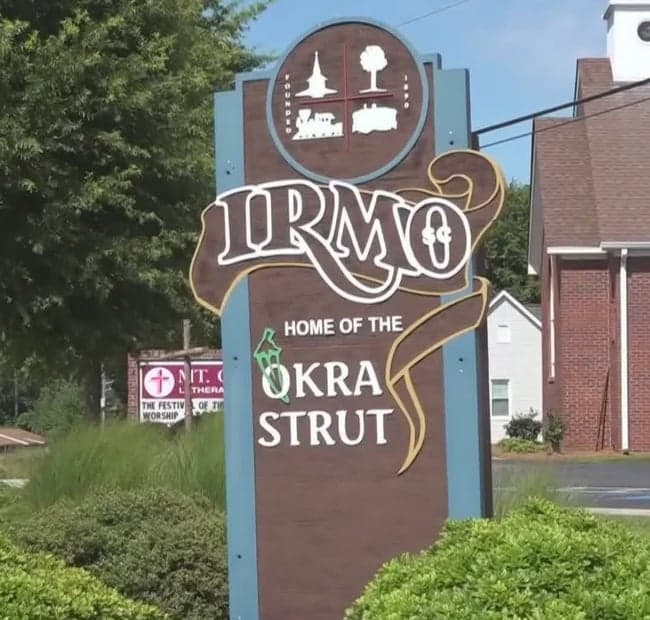
Irmo’s political climate has long been a reliable conservative anchor in the Midlands, and that hasn’t changed much—even as the rest of the country gets pulled in different directions. The area carries a Cook PVI of R+7, which means it votes about seven points more Republican than the national average, and that’s held steady through the last few cycles. You see it in local races, state elections, and even the way folks talk around here: there’s a deep-seated belief in limited government, personal responsibility, and keeping the tax man out of your wallet. But I’ve been watching the edges fray a little—new folks moving in from places like Charlotte or Atlanta bring different ideas, and you can feel the pressure building to shift toward more progressive policies, especially on zoning and school board issues.
How it compares
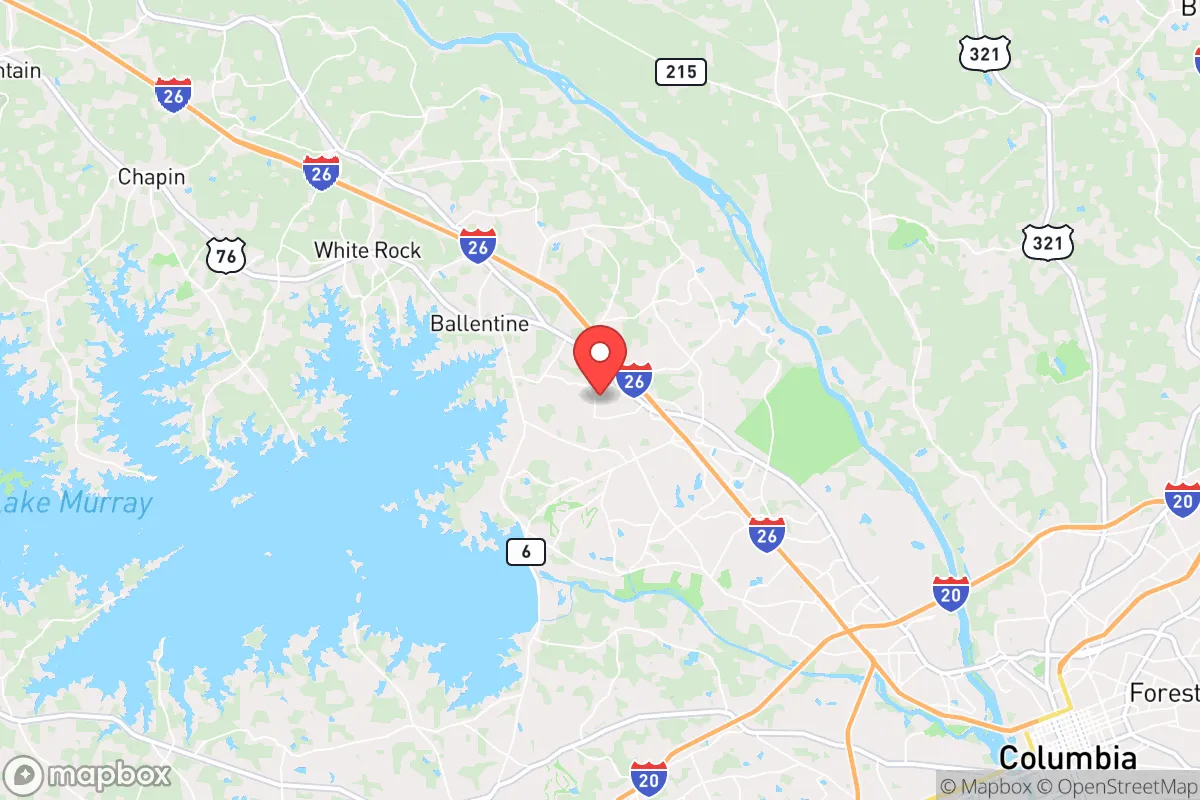
Drive ten minutes east into downtown Columbia, and you’re in a completely different world—Lexington County as a whole leans red, but Richland County, which borders Irmo, is reliably blue. That contrast is stark: Irmo’s precincts routinely vote 60-65% Republican, while Columbia’s urban core swings hard left. Even nearby Chapin, just up the road, feels more traditionally conservative than Irmo these days, because Irmo’s gotten more suburban and diverse, which brings a wider range of political opinions. The real tell is how Irmo votes compared to the rest of Lexington County: the county went about 58% for Trump in 2020, but Irmo itself was closer to 62-63% in some precincts. That’s not a huge gap, but it shows Irmo is still a little more conservative than its immediate surroundings—though that gap is narrowing as new housing developments bring in younger families who lean more moderate on social issues.
What this means for residents
For people living here, the political lean means you can generally count on local government to stay out of your business—property taxes are low compared to Richland County, zoning is pretty relaxed, and there’s no appetite for the kind of overreach you see in bigger cities. You won’t find mask mandates or vaccine passports being pushed by the town council, and the school board has fought off attempts to bring critical race theory into the curriculum. But I’ve seen the warning signs: a few years back, there was a push to add more affordable housing mandates that would have effectively let the county tell you what you could do with your own land, and it only got voted down by a narrow margin. The concern is that as more people move in from places with bigger government habits, those votes get tighter, and you end up with the same kind of bureaucratic nonsense that drove people out of the Northeast in the first place.
One thing that sets Irmo apart culturally is the strong sense of local identity tied to the Lake Murray area—people here are protective of their property rights and their way of life, and they don’t take kindly to outsiders telling them how to run their schools or their businesses. The local Republican club is active, and you’ll see signs for conservative candidates in every yard during election season. But the long-term trajectory worries me: if the county keeps approving high-density developments without thinking about the political culture shift, Irmo could start looking more like a suburb of Charlotte than the small-town conservative haven it’s always been. For now, it’s still a place where you can raise a family without worrying about government overreach, but you’ve got to stay engaged to keep it that way.

State Political ClimatePolitical Climate in South Carolina
State Political AnalysisPolitical Environment in the State
South Carolina has long been a reliably red state, but the nature of that conservatism is shifting. The state leans Republican by about 18 points in presidential elections, with the GOP holding supermajorities in both legislative chambers and every statewide office. Over the past 20 years, the coalition has evolved from a traditional, agrarian-based Dixiecrat-turned-Republican base into a more suburban, Sun Belt-driven majority, fueled by massive in-migration from the Northeast and Midwest. The 10-year arc shows the state getting redder at the top of the ticket, but with growing ideological fractures between the Lowcountry libertarians, Upstate evangelicals, and the coastal transplant corridor.
Urban vs. rural divide
The political map of South Carolina is a study in contrasts. The rural Lowcountry and Pee Dee regions—places like Walterboro, Florence, and Orangeburg—vote heavily Republican, often by 30-40 point margins, driven by older, white, churchgoing populations. The Upstate, anchored by Greenville and Spartanburg, is the GOP's strongest metro base, with Greenville County itself delivering 60%+ for Trump in 2024. Charleston is the state's blue island: the city proper and its inner suburbs (Mount Pleasant, James Island) trend Democratic, powered by a mix of young professionals, military families, and coastal transplants. The real battleground is the suburban ring around Columbia—places like Lexington and Irmo—where the GOP still holds but is seeing erosion among college-educated women and newcomers from blue states. The rural-urban divide here is sharper than in neighboring Georgia or North Carolina, because South Carolina lacks a true second blue metro to balance Charleston.
Policy environment
South Carolina's policy posture is broadly conservative, but with some notable wrinkles. The state has a flat income tax of 6.2% (phasing down to 6% by 2026), no estate tax, and a relatively low property tax burden thanks to the Act 388 assessment cap on owner-occupied homes. Sales tax is 6% state-level, with local options pushing it to 9% in some counties. Education policy is a mixed bag: the state has a robust school choice program (the Education Scholarship Trust Fund, expanded in 2023), but public school funding remains among the lowest in the nation per pupil. Healthcare is a flashpoint—South Carolina refused Medicaid expansion under the ACA, leaving a coverage gap of roughly 200,000 working poor. Election laws are strict: voter ID is required, early voting was expanded to two weeks in 2022, but absentee voting requires an excuse. The state also passed a near-total abortion ban in 2023 (the "Fetal Heartbeat Act"), with exceptions only for rape, incest, and life of the mother. For a conservative, the tax and school choice environment is favorable, but the healthcare gap and low public school funding are real trade-offs for families.
Trajectory & freedom
On personal freedom, South Carolina has been moving in a decidedly conservative direction over the past five years. The state enacted constitutional carry (permitless carry of handguns) in 2024, making it the 29th state to do so. Parental rights were strengthened with the Parents' Bill of Rights (2023), which requires schools to notify parents of any changes to a child's mental, emotional, or physical health—a direct counter to transgender accommodation policies. Medical autonomy is limited: the abortion ban is among the strictest in the Southeast, and the state has no right-to-try law for terminally ill patients. Property rights are strong, with no statewide rent control and a relatively straightforward eminent domain process. Taxation is trending downward, with the income tax rate scheduled to drop to 6% by 2026. However, there are concerning signs: the state's Freedom of Information Act has been weakened by recent court rulings, and local governments in Charleston and Columbia have pushed for "inclusionary zoning" that some view as an infringement on property rights. Overall, the trajectory is toward more gun freedom and parental control, but with creeping local government overreach in the blue cities.
Civil unrest & political movements
South Carolina has seen its share of political flashpoints. The Confederate flag removal from the Statehouse grounds in 2015, following the Charleston church shooting, was a watershed moment that split the conservative base—many rural Republicans saw it as federal overreach, while urban and suburban conservatives accepted it as a necessary compromise. The Black Lives Matter protests in 2020 were concentrated in Charleston and Columbia, with some property damage but no sustained unrest. On the right, the Moms for Liberty movement has been particularly active in the Upstate, especially in Greenville and Spartanburg counties, pushing for book bans and curriculum transparency. Immigration politics are relatively quiet—South Carolina is not a border state and has no sanctuary cities; the state passed a law in 2011 (the "South Carolina Illegal Immigration Reform Act") that remains on the books, requiring E-Verify for all employers. Election integrity controversies flared after 2020, with the state GOP pushing for stricter absentee ballot rules, but no major fraud was ever proven. A new resident would notice that political activism here is more church-driven and less street-level than in states like Georgia or Florida—it's quieter, but the divisions are real.
Projection
Over the next 5-10 years, South Carolina is likely to remain solidly Republican at the state level, but the character of that conservatism will change. The biggest demographic shift is the influx of retirees and remote workers from the Northeast, particularly to the coastal counties (Beaufort, Charleston, Horry). These newcomers tend to be fiscally conservative but socially moderate—they want low taxes and good schools, but they're less enthusiastic about the culture war battles that animate the Upstate base. This could create a two-party system within the GOP: a Lowcountry libertarian wing and an Upstate evangelical wing. The state's rural areas will continue to depopulate, weakening the GOP's traditional base. The most likely outcome is a state that stays red but becomes more pragmatic on issues like Medicaid expansion and education funding, while holding the line on taxes and gun rights. For a conservative moving in now, expect a state that will feel familiar politically for at least another decade, but with growing tension between the coastal transplants and the Upstate traditionalists.
For a new resident, the bottom line is this: South Carolina offers a low-tax, gun-friendly, parent-empowered environment that is genuinely conservative by national standards. The trade-offs are real—public schools are underfunded, healthcare access is limited for lower-income residents, and the political culture can feel insular in rural areas. If you're a single professional or a family looking for a place where your values are the norm and government is generally hands-off, South Carolina delivers. Just know that the coastal cities are becoming more purple, and the culture war battles are likely to intensify as the state absorbs more out-of-state arrivals. Pick your county carefully—Lexington and Greenville are safer bets for a traditional conservative lifestyle than Charleston or Mount Pleasant.
* Values derived from national, state, county, city and local statistics and may differ in a specific area. Last updated: 2026-04-29T22:54:06.000Z
Narrative content on this page is AI-generated and may contain mistakes. Verify any details that matter before acting on them.
ReloMaps may earn a commission from affiliate links at no extra cost to you.

