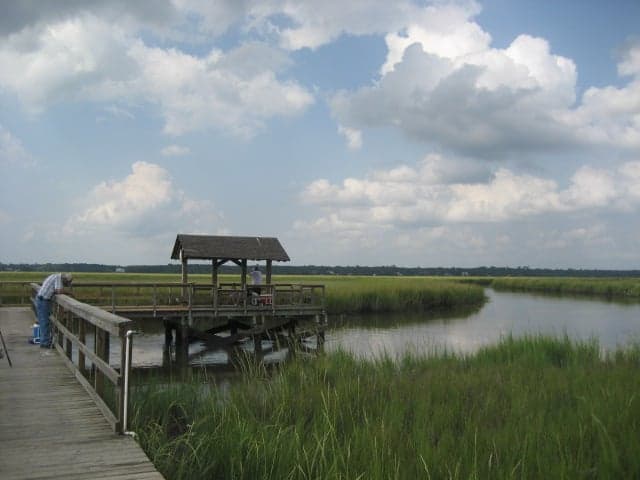
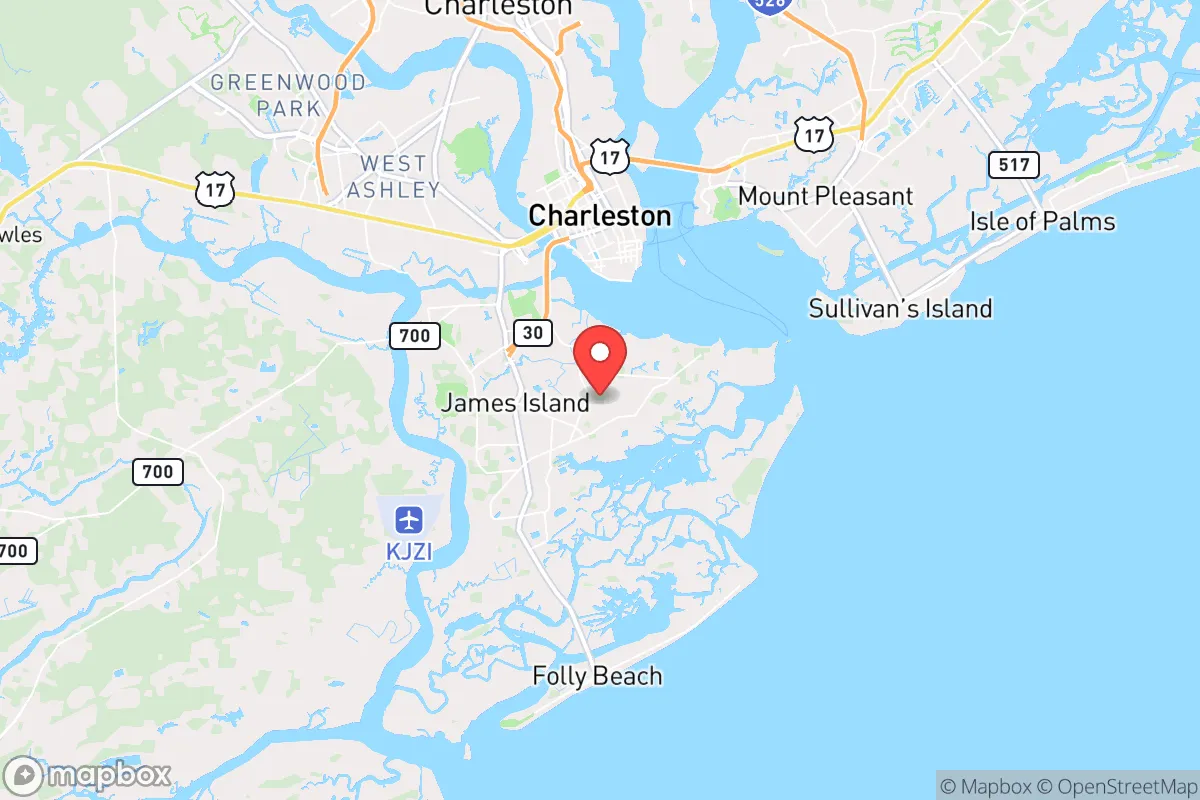
Photo: Wikipedia
Demographics of James Island, SC
Historical data isn't available for James Island, SC. Trends shown are for Charleston County, SC.
Affluence Level in James Island, SC
An upper-middle-class area. Household wealth, education levels, and homeownership run ahead of national benchmarks.
People of James Island, SC
The people of James Island, South Carolina, today form a predominantly white (82.6%), college-educated (48.0%) community of 11,738 residents, characterized by a strong sense of Lowcountry identity and a notably low foreign-born population (1.5%). This is a place where deep-rooted local families, many tracing lineage to the island’s pre-Civil War plantations, live alongside a steady influx of mainlanders drawn by Charleston’s economy and the island’s suburban feel. The population is older and more homogenous than the surrounding Charleston metro, with a Black population of 12.1% reflecting the island’s Gullah Geechee heritage, while Hispanic (2.4%) and East/Southeast Asian (0.2%) communities remain very small. Distinct neighborhoods like Riverland Terrace and Stiles Point still bear the imprint of the waves that built them.
How the city was settled and grew
James Island’s human history begins with the Sewee and Etiwan tribes, who used the island for seasonal hunting and fishing before European contact. The first permanent European settlers arrived in the late 1600s as part of the English colonial land-grant system, establishing large rice and indigo plantations that relied on enslaved Africans. By the 18th century, the island’s population was majority Black, with enslaved Gullah Geechee people developing a distinct creole culture that survives today in the historic Stiles Point and Fort Johnson areas. After the Civil War, freedmen established small farming communities, notably in the Sol Legare and Battery Island neighborhoods, where descendants still live. The island remained rural and sparsely populated through the early 1900s, with a population under 2,000, primarily engaged in truck farming, oystering, and fishing. The first major suburban wave came after World War II, when returning veterans and Charleston workers built modest homes in Riverland Terrace (developed in the 1950s) and Bayfront, drawn by cheap land and proximity to the city.
Modern era (post-1965)
The 1965 Immigration and Nationality Act had minimal direct impact on James Island, as the island never became a destination for post-1965 immigrant groups. Instead, the modern era has been defined by domestic in-migration from other parts of the South and the Northeast. The completion of the James Island Connector in the 1990s dramatically accelerated suburbanization, turning the island into a bedroom community for Charleston professionals. Newer subdivisions like Harbor Woods and Secessionville absorbed most of this growth, attracting white, college-educated families seeking larger lots and better schools than downtown Charleston offered. The Black population, which was roughly 30% in 1970, has steadily declined to 12.1% today, as rising property values and gentrification have pushed many Gullah Geechee families to neighboring Johns Island or North Charleston. The Asian (East/Southeast Asian) population remains negligible at 0.2%, and the Indian subcontinent population is 0.1%, reflecting the island’s lack of the tech or academic anchors that draw these groups elsewhere. The Hispanic share (2.4%) is growing slowly, primarily through service-industry workers renting in older neighborhoods like Sol Legare.
The future
The population trajectory points toward continued homogenization. James Island is effectively built out, with little undeveloped land left, so future growth will come from redevelopment and in-fill rather than new subdivisions. The island’s high home prices (median over $600,000) and low rental stock will likely accelerate the out-migration of lower-income and Black residents, pushing the white share above 85% within a decade. The foreign-born population (1.5%) is unlikely to grow significantly, as the island lacks the dense apartment complexes or ethnic institutions that attract immigrants. The Hispanic and East/Southeast Asian communities will probably remain small, plateauing at 3-4% and under 1% respectively, as most new arrivals to the Charleston area settle in North Charleston or Summerville. The most significant demographic shift may be generational: an aging population (median age ~42) will be partially offset by younger families priced out of downtown Charleston but still able to afford James Island’s older, smaller homes in Riverland Terrace and Bayfront.
For someone moving in now, James Island is becoming a stable, predominantly white, upper-middle-class enclave with a strong sense of place but limited demographic diversity. The island’s character is increasingly defined by its role as a quiet, family-oriented suburb of Charleston, rather than as the independent, working-class community it was a generation ago. New residents should expect a neighborly, low-crime environment with excellent schools, but also a population that is less diverse than the region as a whole and likely to become more so over time.

* Values derived from national, state, county, city and local statistics and may differ in a specific area. Last updated: 2026-04-30T04:07:00.000Z
Narrative content on this page is AI-generated and may contain mistakes. Verify any details that matter before acting on them.
ReloMaps may earn a commission from affiliate links at no extra cost to you.

