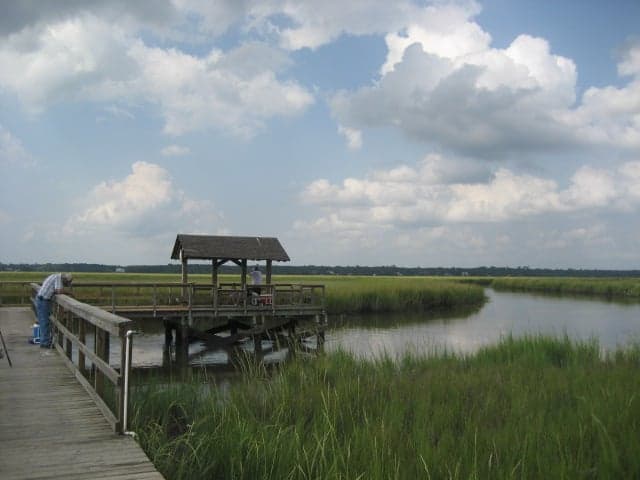
Photo: Wikipedia
Political ClimatePolitical Climate in James Island, SC
District shown is the primary district for this city’s centroid. Cities may span multiple districts.
Local Political AnalysisPolitical Analysis of James Island, SC
James Island has long been a quiet, family-oriented community where folks value their privacy and personal freedoms, but the political winds here are shifting in ways that should give any freedom-loving resident pause. For decades, this was a reliably conservative stronghold, with most neighbors voting for limited government and traditional values. Today, the Cook Political Index rates the area at R+6, meaning it still leans Republican, but that margin is thinner than it used to be — and the trend line is heading in the wrong direction as Charleston’s progressive influence creeps across the bridges.
How it compares
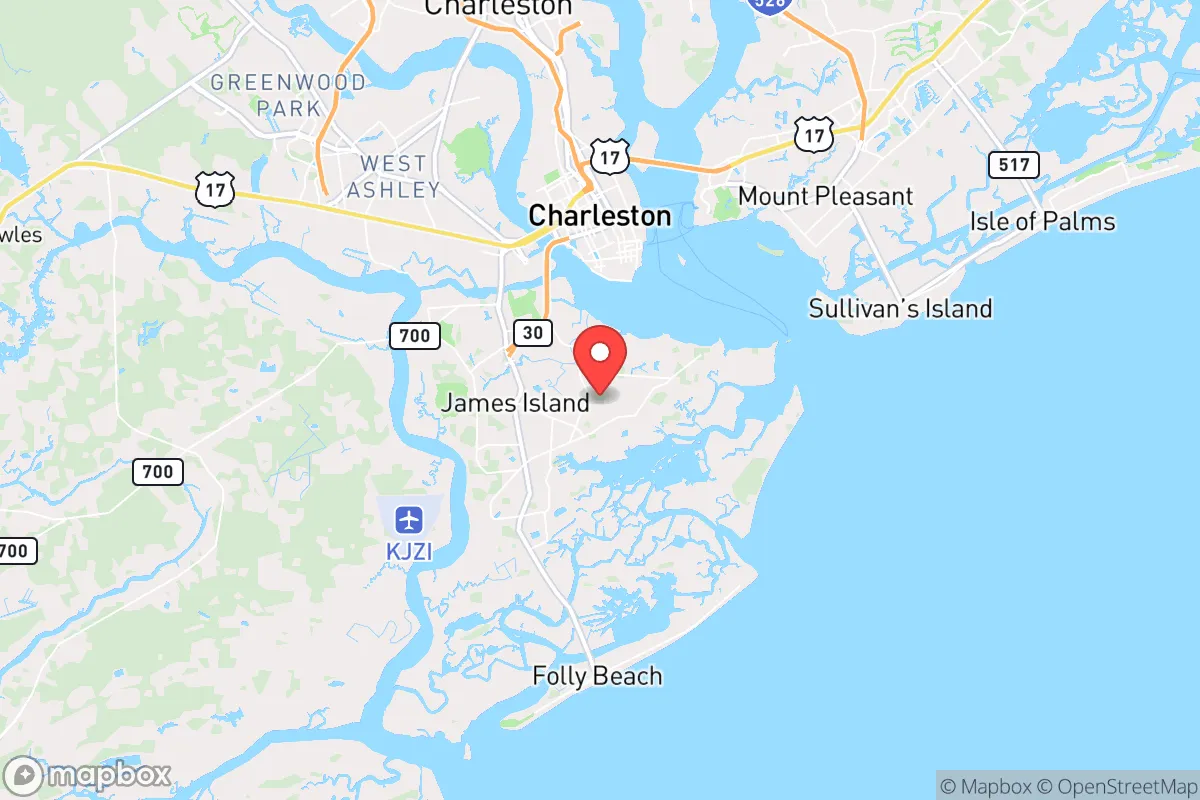
To understand James Island’s political climate, you have to look at the surrounding areas. Head into downtown Charleston, and you’re in a deep-blue bubble where city council debates focus on bike lanes, density zoning, and climate resolutions. Cross the Ashley River to West Ashley, and you’ll find a more mixed bag — some conservative pockets, but increasingly dominated by transplants from out of state who bring big-government ideas with them. Meanwhile, just a few miles south, places like Folly Beach and Johns Island are seeing similar demographic shifts, with new developments bringing younger, more progressive voters. James Island sits right in the middle of this pressure cooker. It’s still red enough that you won’t get funny looks for flying a Gadsden flag, but the local school board and town council races are getting tighter every cycle, and that’s a real concern for anyone who believes in keeping government out of their backyard.
What this means for residents
For the average James Island family, the most immediate impact of this political drift is on your wallet and your rights. Property taxes have been creeping up as the county adopts more progressive spending priorities — think new public art projects and environmental studies instead of fixing potholes or keeping the beach access open. There’s also growing chatter about zoning restrictions that could limit how you use your own land, from short-term rental bans to stricter building codes. If you’re the kind of person who believes your home is your castle, these are red flags. The local government is still more hands-off than in Charleston proper, but the pressure to “harmonize” with city policies is real. Longtime residents remember when you could park your boat in the driveway without a permit — now you need to check the HOA rules and the town ordinance before you even think about it.
What daily life is like for families
Day to day, James Island still feels like a place where neighbors know each other and kids ride bikes to the park. The schools are decent, the traffic is manageable (for now), and you can still find a local mechanic who’ll fix your truck without charging you an arm and a leg. But the cultural vibe is shifting. More coffee shops and boutique stores are opening, which sounds nice, but they bring a certain clientele that tends to vote for higher taxes and more regulations. The Fourth of July parade is still a big deal, and the local churches are full on Sunday, but you can feel the tension between the old guard and the newcomers. If you’re looking for a place where you can live your life without the government breathing down your neck, James Island is still a decent bet — but keep an eye on those town council meetings. The next few election cycles will decide whether this stays a conservative haven or becomes just another suburb of the progressive machine.

State Political ClimatePolitical Climate in South Carolina
State Political AnalysisPolitical Environment in the State
South Carolina has long been a reliably red state, but the nature of that conservatism has shifted noticeably over the past 15-20 years. The old-school, establishment-friendly GOP that dominated Columbia through the 2000s has given way to a more populist, culturally conservative coalition, driven by explosive growth in the coastal Lowcountry and the Upstate. While the state hasn't flipped blue in a presidential race since 1976, the margins have tightened in places like Charleston and Greenville, even as rural counties like Oconee and Horry have become more reliably Republican. The overall partisan lean remains solidly Republican, but the internal dynamics are more complex than a simple red-state label suggests.
Urban vs. rural divide
The political map of South Carolina is a study in contrasts. The state's three major metro areas—Charleston, Greenville, and Columbia—each have their own political character. Charleston County, driven by the booming tech and tourism sectors and an influx of out-of-state professionals, has become a Democratic stronghold, with the city of Charleston itself voting heavily blue. In 2024, Charleston County went for the Democratic presidential candidate by roughly 10 points, a stark contrast to the surrounding rural counties. Greenville County, once a GOP bastion, has seen its margins shrink as the city of Greenville has gentrified and attracted younger, more moderate voters; the county still votes Republican, but by single digits rather than the 20-point margins of a decade ago. Columbia, anchored by the state government and the University of South Carolina, is a purple island in a red sea, with Richland County reliably Democratic and Lexington County across the river deeply Republican. The real engine of the state's conservatism is the rural and suburban expanse: the Pee Dee, the Lowcountry outside Charleston, and the Upstate foothills. Counties like Oconee, Pickens, and Horry (home to Myrtle Beach) routinely deliver 65-70% of their votes to Republican candidates. This urban-rural split is the defining feature of South Carolina's political geography.
Policy environment
South Carolina's policy environment is broadly conservative, but with some notable wrinkles. The state has a flat income tax rate of 6.4%, which was cut from 7% in 2022 as part of a phased reduction plan that aims to eventually reach 6%. Property taxes are relatively low, with a 4% assessment ratio for owner-occupied homes and a 6% cap on annual increases. The state has a right-to-work law and is a "no-permit, no-issue" state for concealed carry of firearms. On education, the state has expanded school choice through the Education Scholarship Trust Fund program, which provides state-funded accounts for private school tuition, and has also passed a Parents' Bill of Rights that affirms parental authority over medical decisions and curriculum. Healthcare policy is more mixed: the state did not expand Medicaid under the Affordable Care Act, but it has a robust telehealth system and has passed laws protecting conscience rights for medical providers. Election laws have been tightened in recent years, with a voter ID requirement and restrictions on absentee ballot drop boxes. The state also passed a six-week abortion ban in 2023, which has been a major flashpoint. Overall, the policy environment is friendly to traditional conservative priorities, but the pace of change is slower than in states like Texas or Florida.
Trajectory & freedom
On the freedom front, South Carolina has been a mixed bag over the past five years. On the positive side for conservatives, the state has expanded gun rights significantly: in 2021, it became a constitutional carry state, allowing law-abiding citizens to carry a concealed firearm without a permit. The Parents' Bill of Rights, passed in 2023, gives parents explicit authority over their children's education and medical care, including the right to opt out of any curriculum or activity they find objectionable. The state has also passed a law prohibiting transgender girls from participating in female sports in K-12 schools. On the negative side, the state has seen a significant expansion of government power in the name of public health and safety. The COVID-19 pandemic saw Governor Henry McMaster issue a series of executive orders that closed businesses and restricted gatherings, though these were less severe than in many other states. More concerning for some conservatives is the state's approach to property rights: the use of eminent domain for economic development projects has been a recurring issue, particularly in the Charleston area, where the state has used condemnation powers to acquire land for the planned I-526 extension. The state's tax burden, while lower than many, is still higher than in Florida or Tennessee, and the flat income tax is a point of contention for those who favor a complete phase-out. The trajectory is toward more conservative policies on cultural issues, but the state's growth and the influx of new residents from blue states could shift the balance over time.
Civil unrest & political movements
South Carolina has not seen the level of civil unrest seen in some other states, but there have been notable flashpoints. The 2015 Charleston church shooting, in which a white supremacist killed nine Black parishioners at Mother Emanuel AME Church, sparked a statewide debate over the Confederate flag, which was eventually removed from the Statehouse grounds. The removal was a bipartisan effort, but it remains a sensitive issue in many rural areas. The Black Lives Matter protests in 2020 were relatively muted compared to other states, with most demonstrations in Columbia and Charleston remaining peaceful. On the right, the state has a strong grassroots conservative movement, particularly around gun rights and school choice. The "Moms for Liberty" chapter in Greenville has been active in school board elections, pushing for curriculum transparency and parental rights. Immigration politics are less heated than in border states, but there is a vocal minority pushing for stricter enforcement, particularly in the Upstate, where the growing Hispanic population has become a political issue. The state has not passed any sanctuary city laws, and local law enforcement generally cooperates with federal immigration authorities. Election integrity has been a recurring theme, with the state's Republican-controlled legislature passing a series of laws tightening voter ID requirements and restricting absentee voting. The 2020 election saw no major controversies in South Carolina, but the issue remains a rallying point for conservative activists.
Projection
Looking ahead 5-10 years, South Carolina is likely to remain a reliably red state, but the margins could narrow in key areas. The biggest wildcard is in-migration: the state is growing rapidly, particularly in the coastal counties and the Upstate, and many of the new residents are coming from blue states like New York, New Jersey, and California. These newcomers tend to be more moderate or even liberal on cultural issues, which could shift the political balance in places like Charleston and Greenville. However, the state's rural and suburban areas are growing more conservative, and the Republican Party has a deep bench of local officials and activists. The state's policy trajectory is likely to continue on its current path: more school choice, continued gun rights expansion, and a slow but steady reduction in the income tax. The biggest threat to conservative governance is the state's growing dependence on federal funds, which could create pressure to expand Medicaid or adopt other progressive policies. For someone moving in now, the expectation should be that South Carolina will remain a conservative state, but one that is increasingly contested in its urban centers. The state's political culture is still defined by its rural and suburban majority, but the coastal and Upstate metros are becoming more purple with each election cycle.
For a conservative-leaning individual or family, South Carolina offers a generally favorable policy environment, but it's not a libertarian paradise. The state has a relatively low tax burden, strong gun rights, and a growing school choice movement, but it also has a history of government overreach on property rights and a slow-moving bureaucracy. The key is to choose your location carefully: the rural counties and smaller towns offer the most freedom and the least political friction, while the major metros are increasingly contested. If you're looking for a state that is broadly aligned with conservative values but still has room for improvement, South Carolina is a solid choice—just don't expect it to stay exactly the same over the next decade.
* Values derived from national, state, county, city and local statistics and may differ in a specific area. Last updated: 2026-04-30T04:07:00.000Z
Narrative content on this page is AI-generated and may contain mistakes. Verify any details that matter before acting on them.
ReloMaps may earn a commission from affiliate links at no extra cost to you.

