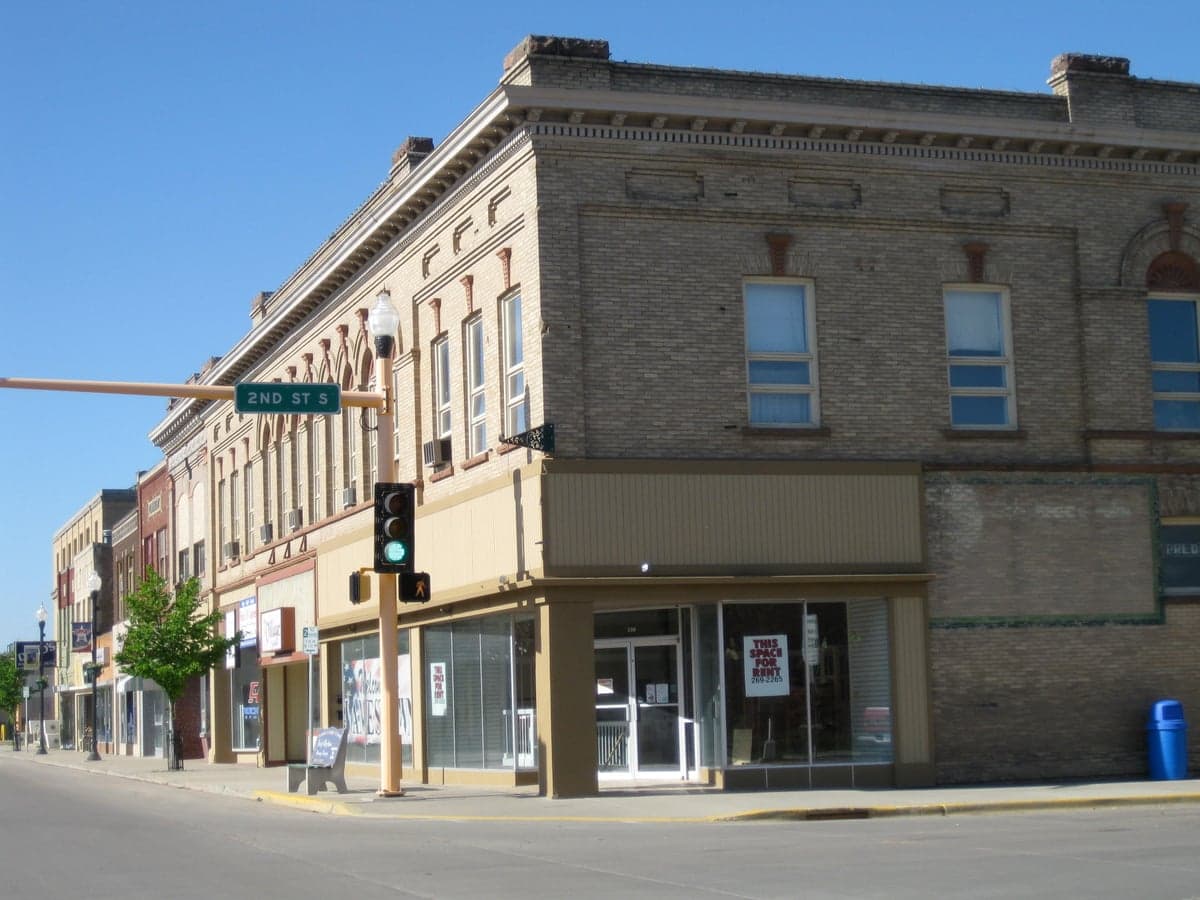
Photo: Wikipedia
Political ClimatePolitical Climate in Jamestown, ND
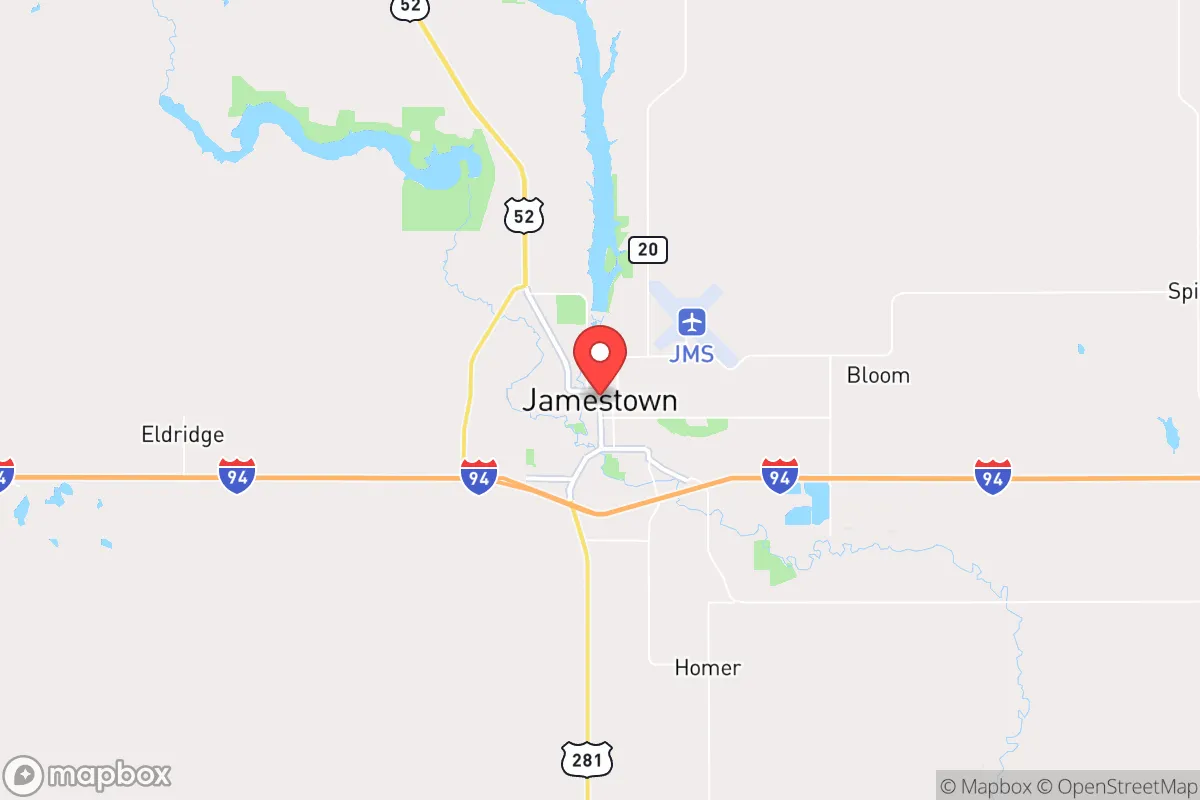
District shown is the primary district for this city’s centroid. Cities may span multiple districts.
Inherited from parent state — no local data available.
Local Political AnalysisPolitical Analysis of Jamestown, ND
Jamestown, North Dakota, is about as solidly conservative as it gets, with a Cook PVI of R+18 that tells you pretty much everything you need to know about the local voting habits. This isn't a place that swings with the national winds; it's a community that has consistently voted Republican in presidential elections by a wide margin, and that trend has only deepened over the last decade. The political lean here is rooted in a straightforward, live-and-let-live philosophy, where folks generally believe the government that governs least governs best, and they're not shy about saying so at the coffee shop or the county commission meeting.
How it compares
Drive an hour west to Bismarck, and you'll find a similar conservative vibe, though the state capital has a bit more of a professional-class, establishment Republican feel. The real contrast is if you head east to Fargo, which has grown more purple over the years, with a younger, more transient population that's brought in some progressive leanings, especially on social issues. Jamestown, by comparison, feels like a time capsule of traditional values—not in a dusty, backward way, but in the sense that people here still value self-reliance, local control, and the Second Amendment without apology. The surrounding rural areas, like Stutsman County as a whole, are even more conservative than the city itself, which means the political pressure is always toward keeping things small and local, not toward expanding government programs or mandates.
What this means for residents
For someone living here, the political climate translates into a pretty straightforward daily life. You don't see a lot of government overreach into personal freedoms—no heavy-handed business closures, no aggressive zoning that tells you what you can do with your own property, and a general sense that the school board and city council are more interested in keeping taxes low than in pushing social experiments. The downside, if you can call it that, is that if you're hoping for rapid change or progressive policy shifts, you'll be waiting a long time. The community is stable, but that stability can feel like stagnation to some. The real concern for long-time residents is watching any creeping influence from state or federal mandates—like when Bismarck or Washington tries to impose one-size-fits-all rules on local gun laws or energy regulations. So far, Jamestown has been pretty good at pushing back, but you have to stay vigilant.
Cultural and policy distinctions
One thing that sets Jamestown apart is its strong agricultural and energy roots, which means policy debates here often center on land use, water rights, and the cost of doing business. There's a deep skepticism of any environmental regulation that feels like it's coming from people who've never set foot on a farm. The local culture is also heavily influenced by the National Buffalo Museum and the annual festival scene, which reinforces a sense of pride in the area's frontier heritage. You won't find a lot of talk about diversity initiatives or climate action plans at city hall; instead, the focus is on practical stuff like maintaining roads, supporting the local hospital, and keeping the school system strong without turning it into a political battleground. If you're looking for a place where you can live your life without a lot of bureaucratic hassle, Jamestown fits the bill—but you have to be comfortable with a community that values tradition over trendiness and isn't afraid to say no to the latest progressive wave.

State Political ClimatePolitical Climate in North Dakota
State Political AnalysisPolitical Environment in the State
North Dakota is a deeply red state, but don't let the statewide numbers fool you into thinking it's a monolith. The state has voted Republican in every presidential election since 1968, and in 2024, Donald Trump carried it by a staggering 20 points. However, the political energy here is less about a unified conservative front and more about a simmering tension between the old-school, libertarian-leaning prairie populism and a newer, more interventionist strain of GOP governance. Over the last 20 years, the state has shifted from a "leave us alone" ethos to a more aggressively pro-business, culturally conservative posture, but that shift has come with its own set of battles over just how much government should be involved in your life.
Urban vs. rural divide
The political map of North Dakota is a classic tale of two landscapes. The eastern corridor, anchored by Fargo and Grand Forks, is the state's liberal-leaning crescent. Fargo, home to North Dakota State University and a growing tech and healthcare sector, is the only real blue dot on the map. In 2024, Cass County (Fargo) voted just 52% for Trump, a far cry from the 80%+ margins seen in the rural west. Grand Forks, with the University of North Dakota, is a lighter shade of red, but still leans Republican by about 15 points. The real conservative engine is the western half of the state, from Minot and Williston in the oil patch down to Dickinson and Bismarck. These are the counties that routinely deliver 80-85% Republican votes. The Bakken oil boom supercharged this divide, bringing in a wave of younger, more culturally conservative workers who solidified the west's red hue. Meanwhile, the rural farm counties in the central part of the state, like McLean and Sheridan, are reliably red but with a distinct independent streak—they'll vote for a Republican, but they'll also vote to legalize marijuana or reject a property tax increase, showing a libertarian bent that doesn't always align with the party line.
Policy environment
North Dakota's policy environment is a mixed bag for a conservative. On the plus side, there is no state income tax—a huge draw for relocators. The regulatory posture is generally light, especially for energy and agriculture, which is why the Bakken boom took off. The state legislature, controlled by a supermajority of Republicans, has been aggressive on cultural issues: in 2023, they passed a near-total abortion ban (triggered by the Dobbs decision), a ban on transgender athletes in K-12 and college sports, and a law requiring schools to notify parents of any "sexually explicit" materials in libraries. However, the state also has a high sales tax (up to 8% in some cities) and property taxes that are a constant source of frustration. On education, the state has a robust school choice program, including a tax credit for private school tuition, but the public schools in rural areas are often the only option. Healthcare is a mixed bag: the state expanded Medicaid under the Affordable Care Act in 2013, a move that still rankles some conservatives, but it also has a strong network of rural hospitals. Election laws are solid: voter ID is required, and the state has no early voting by mail (except for absentee), which keeps election integrity high in the eyes of most residents.
Trajectory & freedom
The trajectory here is a tug-of-war between two visions of freedom. On one hand, the state has expanded gun rights: in 2021, it passed constitutional carry, allowing anyone over 18 who can legally possess a firearm to carry it concealed without a permit. That's a clear win for personal liberty. On the other hand, the state has become more interventionist in medical autonomy. In 2023, the legislature passed a law banning gender-affirming care for minors, which conservatives see as protecting children, but libertarians see as government overreach into medical decisions. The biggest flashpoint is property rights. The state has a history of using eminent domain for pipelines (the Dakota Access Pipeline protests in 2016-2017 were centered near the Standing Rock Reservation), and the legislature has consistently sided with energy companies over landowners. In 2023, they passed a law limiting the ability of counties to regulate oil and gas development, effectively stripping local control. For a conservative who values localism, this is a red flag. Parental rights are strong: the state has a robust "parents' bill of rights" law, and the 2023 library materials law gives parents direct oversight. But the state also has a high rate of government dependency—oil revenues fund a lot of programs, which some see as a form of "big government conservatism."
Civil unrest & political movements
North Dakota is not a hotbed of civil unrest, but it has had its moments. The Dakota Access Pipeline protests in 2016-2017 were the largest act of civil disobedience in the state's modern history, drawing thousands of activists from across the country to the area near Cannon Ball. The state government, under then-Governor Jack Dalrymple, responded with a heavy hand, deploying the National Guard and passing laws to criminalize protest. This created a lasting rift between the state's conservative establishment and the Native American communities, particularly the Standing Rock Sioux Tribe. On the right, there is a growing populist movement, often centered around the state's agricultural and energy sectors, that is skeptical of corporate influence and federal overreach. The "Bismarck insiders" are often criticized by grassroots activists who feel the GOP has become too cozy with the oil and gas lobby. There is no serious secession movement, but there is a strong "state sovereignty" rhetoric, especially around federal land management. Immigration is a non-issue here—the state has a tiny foreign-born population, and there are no sanctuary cities. Election integrity is not a major controversy; the state's system is widely trusted, even by conservatives.
Projection
Over the next 5-10 years, North Dakota is likely to become even more culturally conservative, but the tension between libertarian and interventionist impulses will intensify. The demographic trends are concerning for the state's long-term viability: the population is aging, and young people are leaving for the coasts. The oil boom has slowed, and the state is struggling to diversify its economy. In-migration is minimal—most new residents are coming from other rural states like Montana and South Dakota, which reinforces the conservative tilt. However, the growth of Fargo as a regional tech and healthcare hub could slowly shift the political center of gravity eastward. If Fargo continues to grow, it could become a more competitive district, but it's unlikely to flip the state. The biggest wildcard is the state's fiscal situation: the oil revenue that has funded low taxes and generous spending is volatile. If a downturn hits, the state may be forced to raise taxes or cut services, which could spark a backlash. For a new resident, expect a state that is safe, predictable, and culturally aligned with traditional values, but be aware that the government is not shy about using its power to enforce those values, even if it means overriding local control or individual medical choices.
For someone moving here, the bottom line is this: North Dakota offers a high degree of cultural and economic freedom, but it's not a libertarian paradise. The government is actively involved in shaping the moral and economic landscape, and if you're comfortable with that—and with cold winters and long drives—you'll find a welcoming, safe, and prosperous community. Just don't expect to be left entirely alone. The state's motto is "Strength from the Soil," but these days, it's strength from the legislature, too.
* Values derived from national, state, county, city and local statistics and may differ in a specific area. Last updated: 2026-04-19T04:56:46.000Z
Narrative content on this page is AI-generated and may contain mistakes. Verify any details that matter before acting on them.
ReloMaps may earn a commission from affiliate links at no extra cost to you.

