
Photo: Wikipedia
Strategic Assessment of Janesville, WI
Meaningful friction. Expect exposure to either population pressure, blast zones, or natural disaster risk. Consider buying a retreat property.
What does the Strategic Assessment tell us?
Our Strategic Assessment grades tactical survivability of an area. Major population centers, military targets, fallout zones, natural disasters, and border exposure all drive risk — lower exposure means a more defensible position in a crisis.
This is heavily inspired by Joel Skousen's Strategic Relocation book. Highly recommended you checkout the book ($)What does this tell us?
Our Strategic Assessment grades tactical survivability of an area. Major population centers, military targets, fallout zones, natural disasters, and border exposure all drive risk — lower exposure means a more defensible position in a crisis.
This is heavily inspired by Joel Skousen's Strategic Relocation book. Highly recommended you checkout the book ($)Strategic Pillars

Key Distances
Regional Safe Places
Below is our recommended "safe zones" in Wisconsin and the surrounding area based on our strategic heuristics. For most people, it's unrealistic to live in a “safe zone” full-time due to work, family or other personal reasons. They tend to be more rural. However, many of these areas are perfect for second homes and retreat properties that double as a vacation home or even a short-term rental.
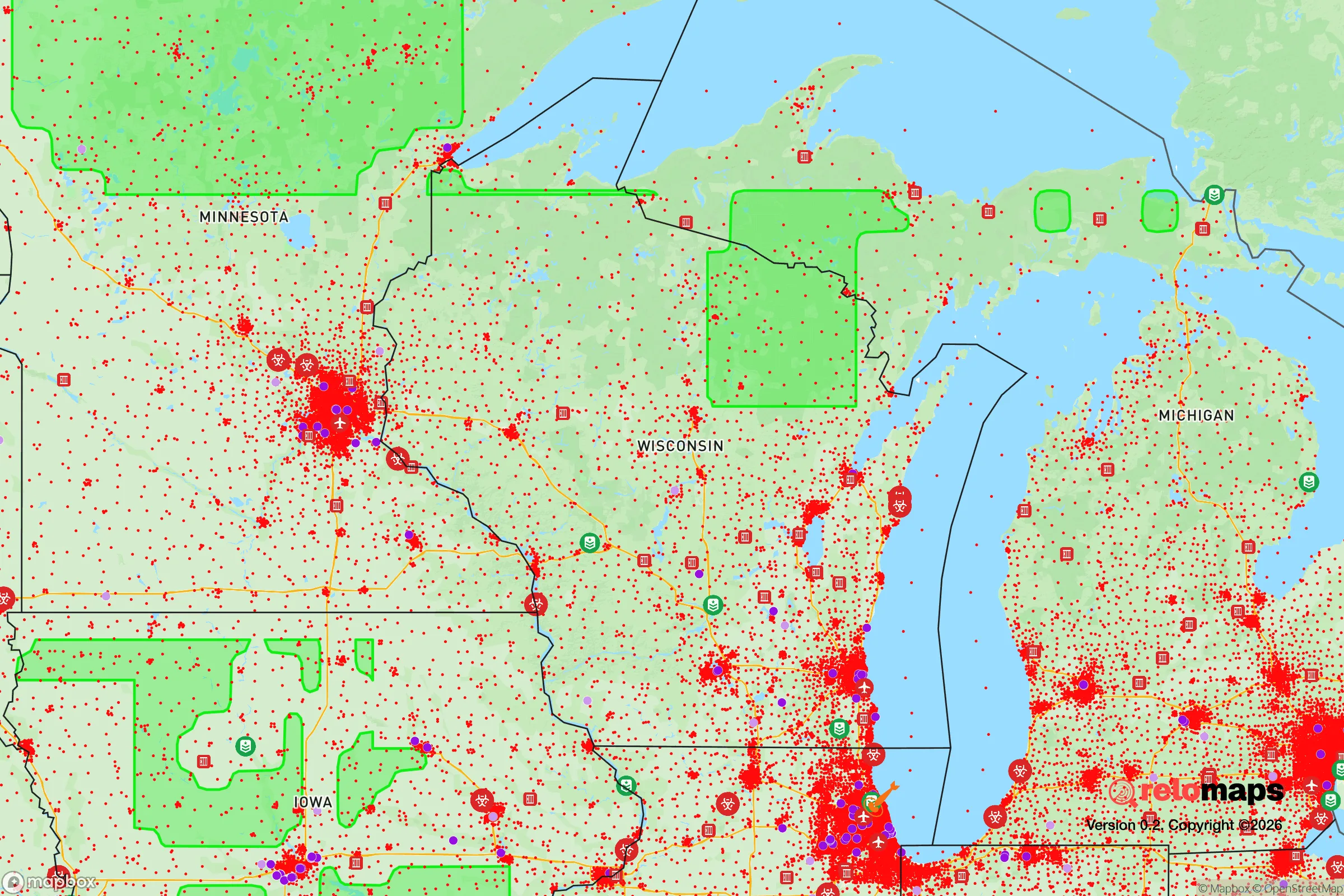
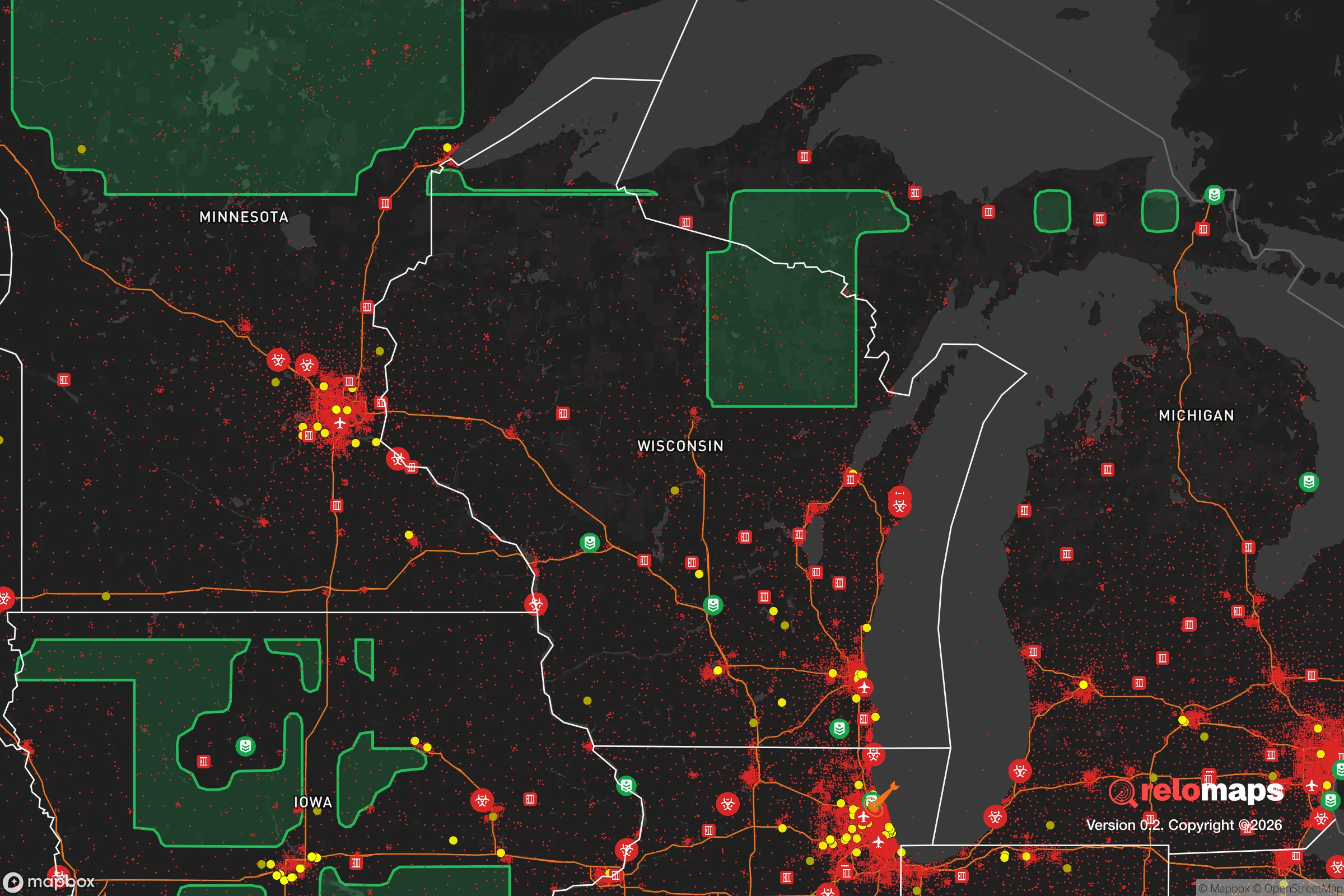


Important Note: For informational purposes only. This does not mean nothing bad ever happens in the green zones. Please use common sense. This is based on public data and modeled with AI. We tried to take a conservative approach but mistakes happen. We update this regularly as new information becomes available.
Solar Generator Recommendations
Backup power matters more here than in safer locations. We've picked three solar generators across budgets and capacity tiers — start with the budget unit if you only need a few essentials, or step up if you want to run a fridge and HVAC for days at a time.

Jackery Portable Power Station Explorer 300
Budget OptionPower on the Go: Weighing only 11 lbs, it's convenient to set up and store with book-sized foldable solar panels

BLUETTI Portable Power Station AC180
Designed for both indoor and outdoor scenarios, AC180 is highly capable as it has a robost capacity and continuous output power.

EF ECOFLOW DELTA Pro Ultra Power Station
Upgraded PickEcoFlow DELTA Pro Ultra is a whole-home energy system designed to grow with your family. Integrated with the Smart Home Panel 2, it scales to meet your evolving energy needs — keeping your home powered, intelligent, and secure through every stage of life.
We earn a commission, at no additional cost to you.
Strategic Assessment Analysis
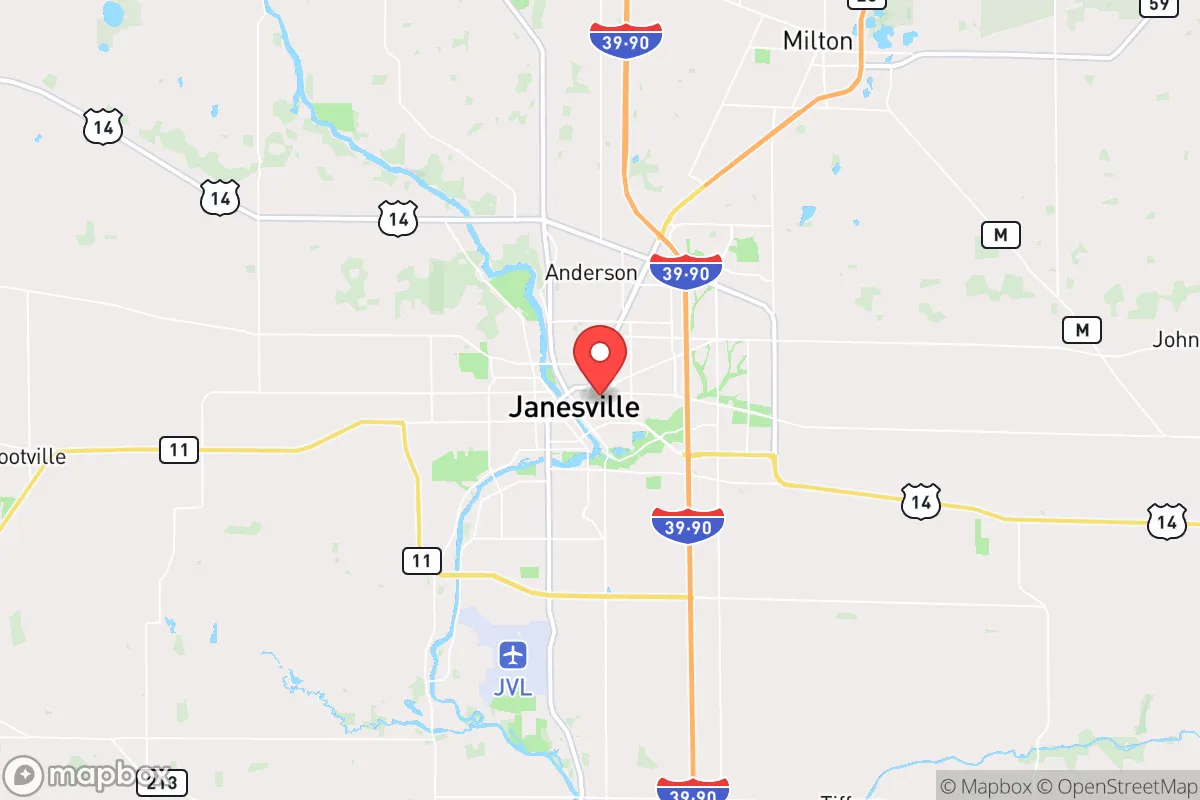
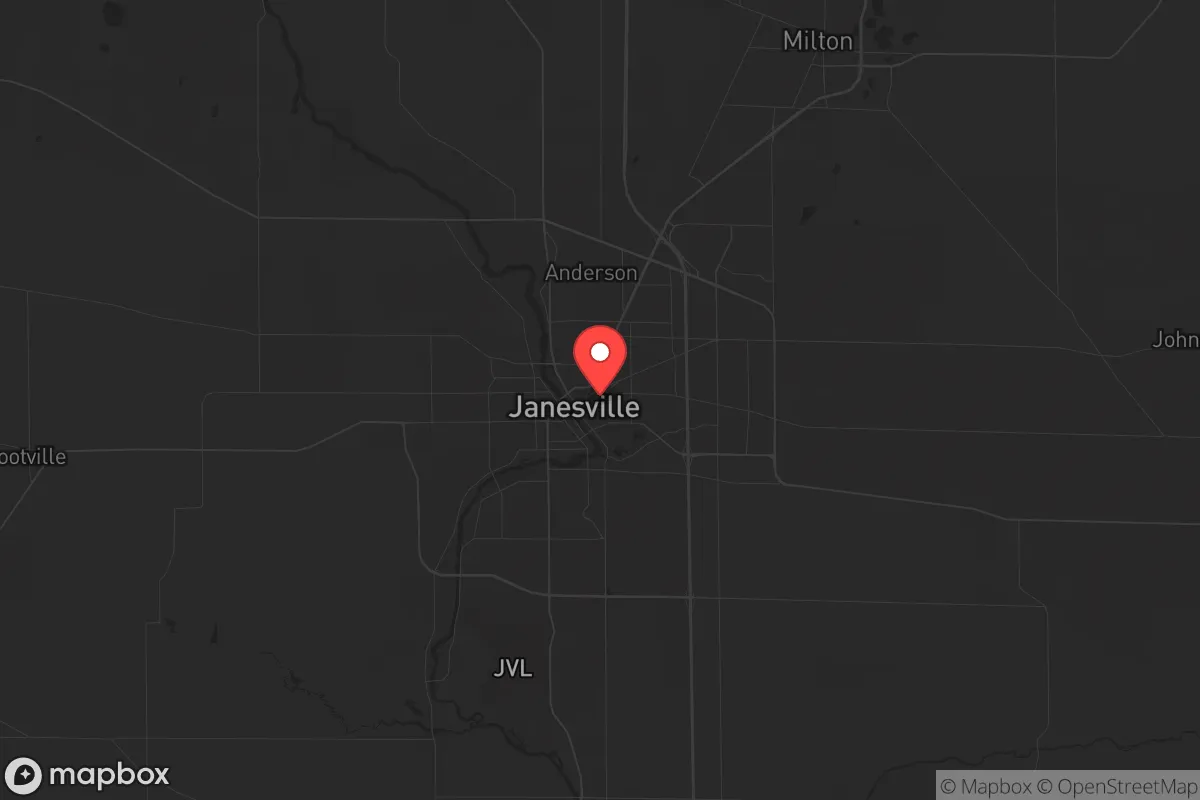
Janesville, Wisconsin, sits in a sweet spot that few relocation analysts fully appreciate: close enough to the economic engines of Madison, Milwaukee, and Chicago to matter, but far enough off the interstate highway spine that it won’t be a primary target or a choke point during a crisis. The city’s location along the Rock River, its legacy manufacturing base, and its position in a county that voted +15 points Republican in 2024 give it a structural resilience that appeals to anyone thinking about long-term preparedness. For a conservative-leaning relocator—whether single or raising a family—Janesville offers a blend of industrial self-sufficiency, agricultural adjacency, and political alignment that is increasingly rare in the upper Midwest.
Geographic position and natural advantages for long-term stability
Janesville sits in Rock County, roughly 40 miles south of Madison and 70 miles northwest of Chicago. That sounds like a liability for a prepper, but the key detail is that the city is not on I-90/94—the main Chicago-to-Madison corridor. Instead, it’s served by I-39/90, which runs north-south but is less congested and less likely to be a primary evacuation or military movement route. The Rock River runs through the center of town, providing a reliable surface water source that can be treated or filtered. The surrounding terrain is gently rolling farmland, not dense forest, which means good visibility and defensible sightlines if you’re on the outskirts. The area sits on the edge of the Driftless Area, a region that escaped glaciation and therefore has more varied topography, deeper soils, and better groundwater recharge than the flatlands to the east. For a relocator, that means fewer floodplain issues and more reliable well water than you’d find in the typical Wisconsin farm country.
Risks, exposures, and proximity to fallout-relevant landmarks
The biggest risk in Janesville is its proximity to Chicago and Madison as potential target zones in a major conflict or civil unrest scenario. Chicago is a Tier 1 metropolitan area for any number of crisis scenarios—nuclear, biological, or economic collapse—and Madison is a state capital with a major university and a concentration of government infrastructure. Janesville is far enough away that fallout patterns from a Chicago strike would likely pass to the east or northeast, depending on wind, but it’s close enough that secondary effects like refugee flow, supply chain disruption, and civil unrest could arrive within hours. The city itself has no major military installations, no nuclear power plants, and no obvious high-value infrastructure that would make it a primary target. However, the nearby Beloit (10 miles south) has a large automotive plant and rail yard, and the Janesville-Beloit area is a rail hub for the Union Pacific and Canadian Pacific lines. In a national emergency, those rail corridors could become chokepoints or targets for sabotage. The Rock County Airport is a general aviation field with a 8,000-foot runway, which could be a double-edged sword: useful for resupply or evacuation, but also a potential landing zone for unwanted attention.
Practical resilience for a relocator: food, water, energy, and defensibility
For a single person or a family looking to be self-sufficient, Janesville has real strengths. The city sits in the heart of Wisconsin’s dairy and grain belt, meaning local food production is not a hypothetical—it’s the actual economy. Within a 20-minute drive, you can find dozens of farms selling raw milk, eggs, meat, and produce directly to consumers. The Rock River is fishable year-round, and the surrounding county has ample public hunting land for deer and small game. Water is the bigger concern: the municipal water supply comes from the Rock River and is treated, but in a grid-down scenario, you’d need your own well or a reliable filtration system. The water table in Rock County is generally good, with many rural properties having wells at 50-100 feet. Energy-wise, Janesville is served by Alliant Energy, which has a mix of coal, natural gas, and renewables. The grid is stable but not hardened against EMP or cyberattack. Solar is viable—the area gets about 190 sunny days per year, which is average for the Midwest—but winter cloud cover can be a problem. Wood heating is a realistic option, as firewood is abundant and cheap in the surrounding countryside. Defensibility is mixed: the city itself is a typical Midwestern grid layout with limited natural barriers, but the rural outskirts offer good options for a homestead with a long driveway, a creek or pond, and a clear field of fire. The local sheriff’s office is well-funded and generally conservative, and the county has a strong tradition of gun ownership and hunting. That cultural factor matters: in a crisis, you want neighbors who are armed and competent, not urbanites who have never handled a firearm.
The overall strategic picture for Janesville is one of moderate resilience with manageable trade-offs. It’s not a remote mountain redoubt, and it won’t be the last place standing in a nationwide collapse. But for a relocator who wants to stay within a few hours of the economic core of the Midwest while maintaining a realistic prepping posture, it’s a solid choice. The political climate is favorable, the local food and water resources are above average, and the risk profile is lower than any major city in the region. The key is to buy property outside the city limits—preferably with a well, a septic system, and a wood stove—and to build relationships with the local farming community before you need them. Janesville won’t save you from a direct hit on Chicago, but it will give you a fighting chance in the kind of slow-burn crisis that most of the country is actually likely to face.

* Values derived from national, state, county, city and local statistics and may differ in a specific area. Last updated: 2026-04-21T10:28:05.000Z
Narrative content on this page is AI-generated and may contain mistakes. Verify any details that matter before acting on them.
ReloMaps may earn a commission from affiliate links at no extra cost to you.

