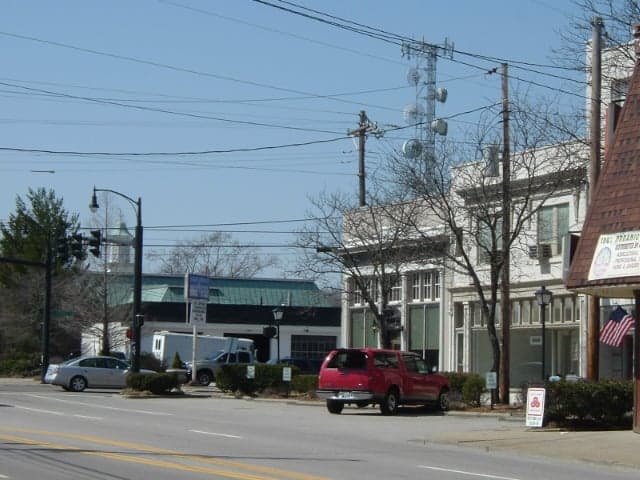
Photo: Wikipedia
Political ClimatePolitical Climate in Jeffersontown, KY
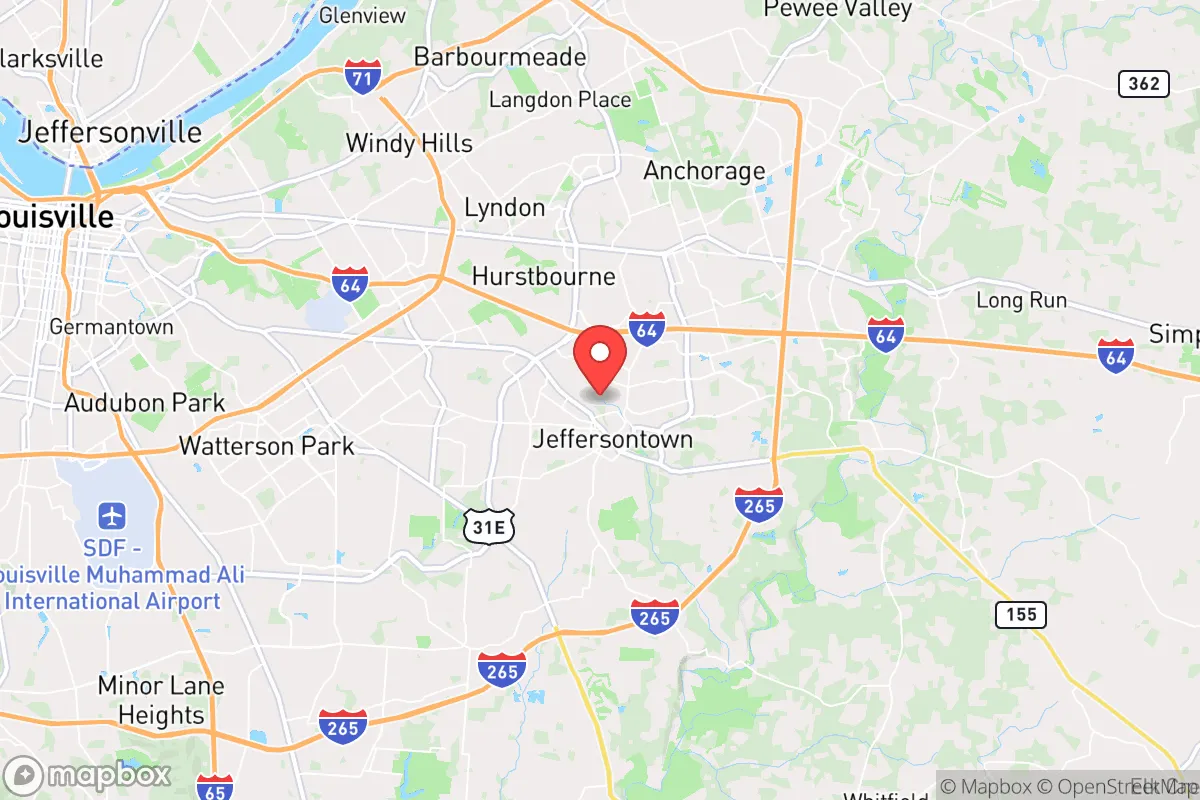
District shown is the primary district for this city’s centroid. Cities may span multiple districts.
Local Political AnalysisPolitical Analysis of Jeffersontown, KY
Jeffersontown, Kentucky, has a political climate that’s shifting in ways that should give any freedom-loving resident pause. While the city itself has historically been a more moderate, business-friendly community, the latest data shows a Cook PVI of D+10, meaning it leans significantly more Democratic than the nation as a whole. That’s a stark contrast to the surrounding areas of eastern Jefferson County, like Anchorage or Middletown, which tend to vote more conservatively. Over the past decade, I’ve watched local elections and policy debates drift further from the small-government, personal-responsibility principles that made this a great place to raise a family.
How it compares
To understand Jeffersontown’s political landscape, you have to look at the broader region. Just a few miles south, in Bullitt County, you’ll find communities like Mount Washington and Shepherdsville that vote reliably Republican, often by double-digit margins. Head north into downtown Louisville, and you’re in a deep-blue stronghold. Jeffersontown sits right in the middle, but the D+10 rating tells you it’s been pulled leftward. That’s not surprising when you consider the influx of new residents from more progressive areas and the influence of county-wide policies from Louisville Metro Council. The contrast is sharp: while Jeffersontown’s city council still leans conservative on issues like zoning and taxes, the county-level votes often push for higher spending and more regulations that creep into our daily lives.
What this means for residents
For folks who value limited government and personal freedoms, the trend is concerning. The D+10 lean means local representatives are more likely to support policies that expand government reach—think stricter business licensing, higher property taxes to fund county programs, and zoning changes that limit what you can do with your own land. I’ve seen it firsthand: a friend of mine who runs a small auto shop on Taylorsville Road had to jump through more hoops last year to renew his permit than he did a decade ago. That’s the kind of overreach that chips away at the entrepreneurial spirit this town was built on. If you’re looking for a place where your rights to own property, run a business, and live without excessive bureaucracy are respected, Jeffersontown still has those roots, but they’re getting thinner every election cycle.
Culturally, Jeffersontown has always prided itself on being a tight-knit community—the “City of Vision” with its annual Gaslight Festival and a strong sense of local identity. But as the political climate shifts, you’re seeing more pressure to adopt progressive social policies that don’t align with traditional values. There’s been talk in recent years about adding diversity, equity, and inclusion mandates to city contracts, which is a red flag for anyone who believes in merit over quotas. The good news is that local resistance is still strong; many residents I talk to are fed up with the direction and are getting more involved in city council meetings. If you’re considering a move here, keep an eye on the next few elections—they’ll determine whether Jeffersontown stays a place where you’re free to live your life your way, or becomes another suburb where government tells you how to do it.

State Political ClimatePolitical Climate in Kentucky
State Political AnalysisPolitical Environment in the State
Kentucky has long been a reliably red state in federal elections, but its political climate is more nuanced than a simple partisan label suggests. The state has voted for the Republican presidential candidate in every election since 2000, often by double-digit margins—Donald Trump carried it by 26 points in 2020 and by over 30 points in 2024. However, this conservative dominance at the top of the ticket masks a deep internal divide: the state’s rural and suburban areas are overwhelmingly Republican, while Louisville and Lexington remain Democratic strongholds. Over the past two decades, the GOP has solidified control of the state legislature and all statewide offices, a shift driven by the realignment of rural voters and the decline of the old Blue Dog Democrat tradition.
Urban vs. rural divide
The political map of Kentucky is a study in contrasts. The two major urban centers—Louisville (Jefferson County) and Lexington (Fayette County)—are reliably Democratic, with Louisville often voting 60% or more for Democratic candidates. These cities are home to the state’s largest universities, a growing professional class, and a more diverse population. In contrast, the rest of the state is deeply red. The rural counties of Eastern Kentucky, such as Pike, Knox, and Letcher, have shifted dramatically from Democratic to Republican over the past 20 years, driven by cultural conservatism and opposition to environmental regulations on coal. The suburban counties around Louisville—like Oldham and Spencer—are among the most Republican in the state, often voting 70-80% for GOP candidates. Meanwhile, the Northern Kentucky suburbs of Cincinnati (Boone, Kenton, Campbell counties) are reliably red but have shown some suburban drift toward moderation in local races. The Bowling Green area (Warren County) is a growing conservative hub, fueled by a strong manufacturing base and a large refugee resettlement community that has largely aligned with Republican values.
Policy environment
Kentucky’s policy environment is decidedly conservative, with a strong emphasis on limited government and traditional values. The state has a flat income tax rate of 4.5%, which is being phased down from 5% under a 2022 law that triggers automatic cuts when revenue targets are met—a clear signal of a pro-growth, low-tax trajectory. Property taxes are among the lowest in the nation, and there is no estate tax. The regulatory climate is business-friendly, with a right-to-work law (passed in 2017) and a tort reform system that caps noneconomic damages. On education, Kentucky has a robust school choice movement: the state passed a charter school law in 2017 (though implementation has been slow) and created education opportunity accounts in 2021, allowing tax credits for private school scholarships. However, the state’s public school system remains a battleground, with teachers’ unions clashing with the GOP-controlled legislature over pension reform and funding. On healthcare, Kentucky expanded Medicaid under the Affordable Care Act in 2014, but the state has since imposed work requirements (currently blocked in court) and moved toward managed care. Election laws have tightened: the state requires a photo ID to vote, has restricted absentee voting, and passed a 2021 law limiting ballot drop boxes—all framed as election integrity measures. Socially, Kentucky is a traditional values state: it has a constitutional amendment defining marriage as between a man and a woman (though unenforceable after Obergefell), and it has some of the strictest abortion laws in the nation, with a near-total ban (triggered after Dobbs) that includes no exceptions for rape or incest.
Trajectory & freedom
On the whole, Kentucky is moving in a direction that expands personal freedom in many areas, particularly economic and Second Amendment rights. In 2019, the state became a constitutional carry state, allowing permitless concealed carry of firearms—a major win for gun rights advocates. The legislature has also passed a “Stand Your Ground” law (no duty to retreat) and preempted local gun ordinances, ensuring uniform firearm laws across the state. On parental rights, Kentucky passed a 2022 law requiring schools to notify parents of any “human sexuality” instruction and allowing parents to opt their children out—a response to the critical race theory and LGBTQ curriculum debates. The state has also enacted a religious freedom restoration act (RFRA) in 2013, which provides a legal shield for individuals and businesses citing religious objections. However, there are concerning trends. The state’s medical marijuana program, signed into law in 2023, is heavily restricted and won’t be operational until 2025—a slow roll that frustrates advocates. More troubling for liberty-minded residents is the state’s aggressive use of civil asset forfeiture, which has been criticized by both left and right for allowing law enforcement to seize property without a criminal conviction. Additionally, the state’s occupational licensing requirements remain burdensome for many trades, though some reforms have been made in recent years. The biggest freedom concern is the state’s pension crisis: Kentucky has one of the most underfunded public pension systems in the country, which could lead to future tax hikes or service cuts that erode economic freedom.
Civil unrest & political movements
Kentucky has seen its share of political flashpoints, but they are generally localized and not indicative of widespread unrest. The most notable recent event was the 2020 protests in Louisville following the death of Breonna Taylor, which led to months of demonstrations, property damage, and a heavy police presence. The city became a national symbol of the Black Lives Matter movement, and the protests exposed deep divisions between the city’s progressive leadership and the state’s conservative legislature. In response, the GOP-controlled legislature passed a 2021 law (the “Safer Kentucky Act”) that increased penalties for rioting, blocking highways, and damaging property—a direct rebuke to the unrest. On the right, the state has a strong grassroots conservative movement, particularly in rural areas, that is active in school board meetings, county GOP committees, and anti-abortion activism. The Kentucky Freedom Coalition and the Kentucky Family Rights Foundation are influential groups pushing for school choice, parental rights, and religious liberty. Immigration politics are less heated than in border states, but there is tension in Bowling Green, which has a large refugee population (mostly from Iraq and Somalia) that has been a source of both economic revitalization and cultural friction. There is no sanctuary city policy in Kentucky; in fact, the state passed a 2018 law requiring local governments to cooperate with federal immigration enforcement. Election integrity remains a hot-button issue: the 2020 election saw Trump’s victory in the state by a wide margin, but some grassroots activists continue to push for hand-counted paper ballots and audits, leading to a 2022 law that created a new election integrity unit within the Secretary of State’s office.
Projection
Over the next 5-10 years, Kentucky is likely to become even more Republican at the state level, but with growing internal friction between the rural base and the suburban/urban populations. In-migration is modest but noticeable: people are moving to the Lexington and Louisville suburbs, as well as to Bowling Green and Richmond, drawn by low cost of living and a slower pace of life. These new arrivals tend to be more moderate than the rural base, which could create a “purpling” effect in some suburban districts over time. However, the state’s population is aging and declining in many rural counties, which will likely reinforce the GOP’s rural stronghold. The biggest wildcard is the pension crisis: if the state is forced to raise taxes or cut services, it could spark a taxpayer revolt that reshapes the political landscape. On social issues, expect continued battles over school curriculum, transgender rights, and abortion access, with the legislature likely to push further restrictions. The state’s gun laws are unlikely to be rolled back, but there may be pressure for red flag laws after high-profile incidents. Overall, Kentucky will remain a solidly conservative state, but the flavor of that conservatism may shift from a coal-and-agriculture base to a more suburban, tech-driven one as the economy diversifies.
For a new resident, the bottom line is this: Kentucky offers a low-tax, low-regulation environment with strong protections for gun rights, religious liberty, and parental authority. You’ll find a welcoming culture in most places outside of Louisville and Lexington, but be prepared for a state that is deeply divided along urban-rural lines. The cost of living is low, the people are friendly, and the pace of life is slower—but you’ll need to be comfortable with a government that is increasingly assertive on social issues and that has a looming fiscal headache in its pension system. If you value personal freedom, traditional values, and a community that largely minds its own business, Kentucky is a solid choice. Just keep an eye on the pension situation and the ongoing culture war in the schools—those are the two issues that will define the state’s future.
* Values derived from national, state, county, city and local statistics and may differ in a specific area. Last updated: 2026-04-21T09:09:28.000Z
Narrative content on this page is AI-generated and may contain mistakes. Verify any details that matter before acting on them.
ReloMaps may earn a commission from affiliate links at no extra cost to you.

