Photo: Wikipedia
Demographics of Jeffersonville, IN
Affluence Level in Jeffersonville, IN
A middle-class area roughly in line with national averages across income, home values, education, and employment.
People of Jeffersonville, IN
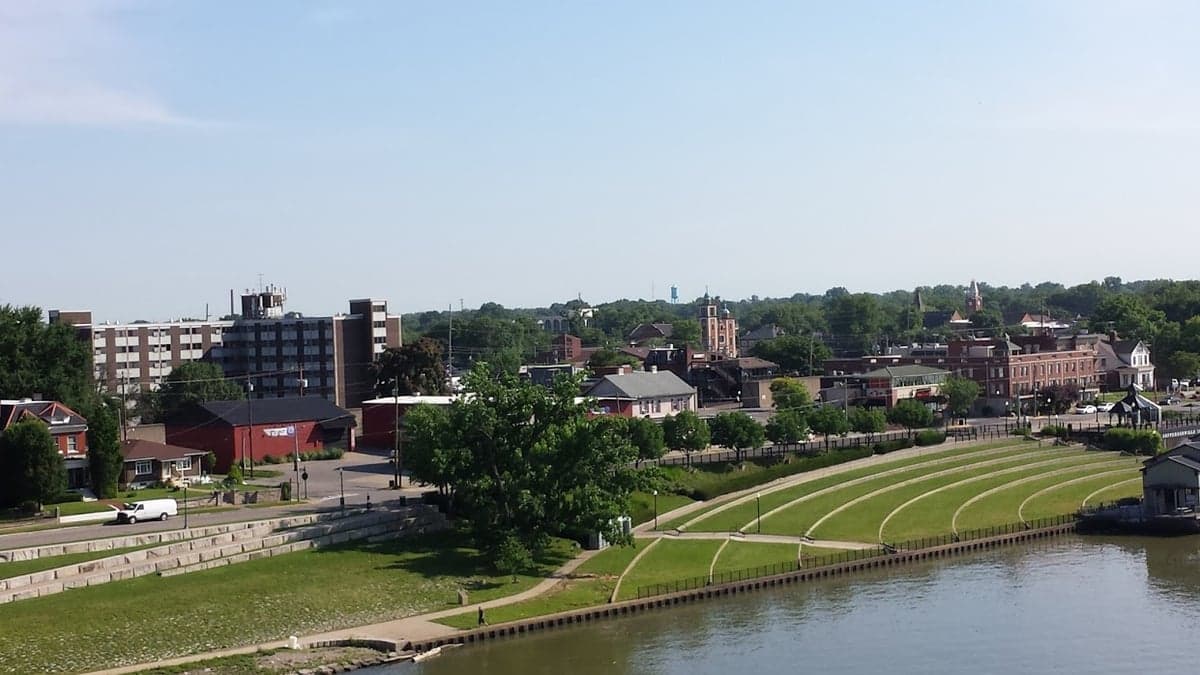
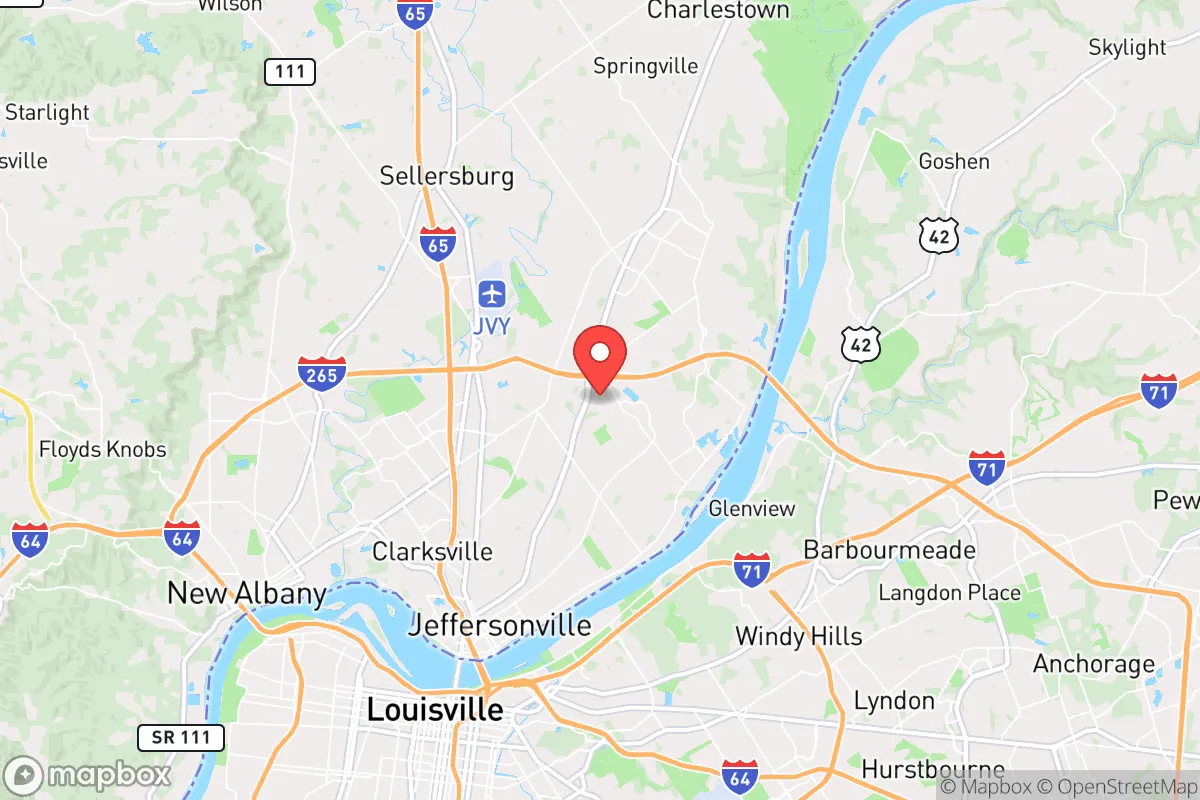
Jeffersonville, Indiana, is a predominantly white, working-to-middle-class Ohio River city of 50,176 residents, where a strong sense of local identity is rooted in its industrial and transportation history. The population is notably less diverse than the national average, with a foreign-born share of just 1.3%, and the city retains a distinctly Midwestern, family-oriented character. While the city has seen modest growth in its Hispanic and Black populations, it remains a place where generational families live alongside newer arrivals drawn by lower housing costs and proximity to Louisville, Kentucky.
How the city was settled and grew
Jeffersonville was founded in 1802 on a land grant to surveyor John Gwathmey, with the original plat laid out in a grid pattern that still defines the Downtown historic district. The city’s early population was overwhelmingly of English, German, and Scots-Irish descent, drawn by river trade and the promise of fertile bottomland. The construction of the Louisville and Portland Canal in the 1820s and the arrival of the railroad in the 1850s turned Jeffersonville into a major shipbuilding and manufacturing hub. The Clarksville area (technically a separate town but closely tied) and the Port Fulton neighborhood (now part of Jeffersonville) housed the Irish and German laborers who built the canal and worked the railyards. By the early 20th century, the city’s population was almost entirely native-born white, with a small Black community concentrated in the West End neighborhood, near the riverfront industrial zone. The World War II era brought a temporary influx of workers to the Jeffersonville Boat & Machine Company (Jeffboat), but the city’s racial and ethnic composition remained largely static through the 1960s.
Modern era (post-1965)
The post-1965 period saw Jeffersonville begin a slow, incremental diversification, though it never experienced the large-scale immigration seen in larger Midwestern cities. The 1970s and 1980s brought a wave of white domestic in-migration from rural Southern Indiana and Kentucky, as families sought jobs in the region’s logistics and distribution centers. This growth pushed development northward into the Oak Park and Holmans Lane areas, which became the city’s primary middle-class subdivisions. The Black population, which had been historically small and concentrated in the West End, grew modestly to 12.1% by the 2020s, with some families moving into the Northgate area and newer subdivisions near I-265. The Hispanic population (5.5%) is a more recent phenomenon, largely arriving since 2000, drawn by construction and service-sector jobs; they are dispersed across the city but have a small visible presence in the Downtown and Oak Park areas. The East/Southeast Asian population (0.9%) and Indian-subcontinent population (0.6%) are very small and highly dispersed, with no distinct ethnic enclave. The city’s low foreign-born share (1.3%) reflects its limited role as a destination for new immigrants compared to Louisville, just across the river.
The future
Jeffersonville’s population is projected to continue slow, steady growth, driven primarily by domestic migration from higher-cost areas in the Louisville metro and from other parts of Indiana. The city is not homogenizing into a single identity, but rather tribalizing along income and lifestyle lines: the Downtown historic district is attracting a younger, more college-educated cohort (25.5% of residents hold a bachelor’s degree or higher), while the Oak Park and Northgate subdivisions remain solidly family-oriented and middle-class. The immigrant communities are likely to remain very small and are not expected to form distinct enclaves; the Hispanic population may grow gradually but will likely assimilate into the broader white-majority culture. The Black population is stable and not growing rapidly. The next 10-20 years will likely see Jeffersonville become slightly more diverse, but it will remain a predominantly white, native-born city where the defining demographic story is not immigration but the continued in-migration of Americans seeking affordable homes and a slower pace of life.
For someone moving in now, Jeffersonville offers a stable, low-crime environment with a clear sense of place, but it is not a multicultural hub. The city is becoming a bedroom community for Louisville professionals and a haven for families who want a small-town feel with big-city access. The population is slowly aging, and the biggest challenge will be attracting enough young families and workers to sustain the tax base and local schools. It is a place where newcomers are welcomed, but where the culture remains distinctly Midwestern, conservative, and rooted in its river-town past.

* Values derived from national, state, county, city and local statistics and may differ in a specific area. Last updated: 2026-04-24T19:31:33.000Z
Narrative content on this page is AI-generated and may contain mistakes. Verify any details that matter before acting on them.
ReloMaps may earn a commission from affiliate links at no extra cost to you.

