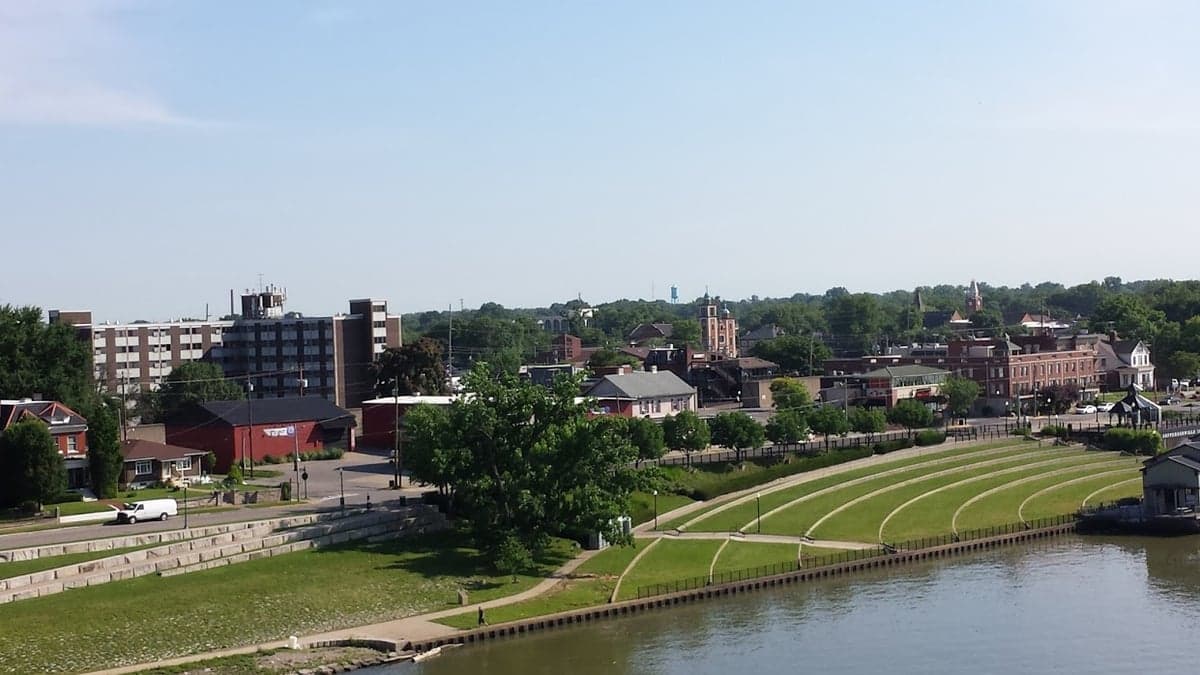
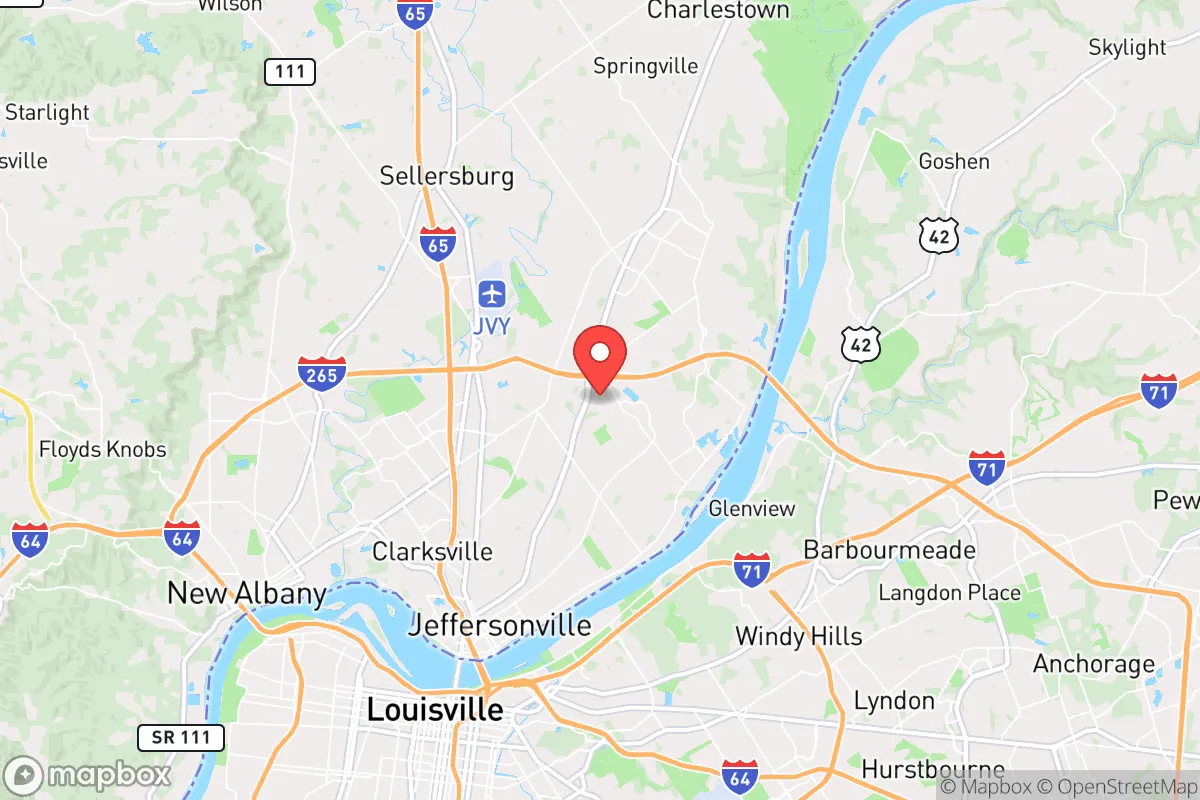
Photo: Wikipedia
Personal Sovereignty in Jeffersonville, IN
Viable for self-reliance. Generally workable, though some barriers may limit total independence.
What does Personal Sovereignty tell us?
Personal Sovereignty measures your capacity for self-reliance and independence with minimal government friction. Higher scores mean fewer barriers between you and the way you want to live... but it assumes you have the space you need and good neighbors.
What does this tell us?
Personal Sovereignty measures your capacity for self-reliance and independence with minimal government friction. Higher scores mean fewer barriers between you and the way you want to live... but it assumes you have the space you need and good neighbors.
State Policy
Energy independence: Importer (35% of energy produced in-state)
Personal Liberty
Homesteading

Personal Liberty Analysis
Jeffersonville, Indiana, offers a notably higher degree of personal sovereignty than much of the country, largely because it sits in a state that has deliberately pushed back against federal overreach and progressive social engineering. For the individual or family operating from a survivalist or prepper mindset, the key question isn't whether the government will leave you alone—it's how much room you have to build your own life before the regulatory apparatus intrudes. Indiana’s general posture is one of restraint, but Jeffersonville’s proximity to Louisville, Kentucky, and its status as a growing suburban hub means you get a mix of small-town autonomy with access to regional resources. The trade-off is that you are still within a metro area that leans left, so local ordinances and the influence of Clark County government can occasionally chafe against the state’s more libertarian leanings. Overall, this is a place where a determined individual can carve out significant freedom, but it requires active awareness of where the lines are drawn.
Tax burden and regulatory posture: How much the state and local government takes and controls
Indiana’s tax structure is one of the most favorable in the Midwest for those seeking to keep more of what they earn. The state income tax is a flat 3.15% as of 2026, with no progressive brackets that punish higher earners or small business owners. Property taxes in Clark County are reasonable, with an effective rate around 0.85% of assessed value—well below the national average. This means a $250,000 home in Jeffersonville will cost you roughly $2,125 annually in property tax, leaving more capital for land, supplies, or investments in self-sufficiency. Sales tax is 7%, which is moderate, but groceries and prescription drugs are exempt. The regulatory environment is equally restrained: Indiana is a right-to-work state, meaning you cannot be forced to join a union as a condition of employment, and occupational licensing requirements are less burdensome than in neighboring Kentucky or Illinois. For the prepper, this translates to fewer hurdles when starting a home-based business, a side trade, or a small farm operation. The state government has also resisted adopting California-style environmental regulations, so building codes and land-use restrictions are generally minimal outside of floodplain zones along the Ohio River. The main regulatory friction point in Jeffersonville itself is the city’s zoning code, which can be restrictive in older neighborhoods but is far more permissive in the unincorporated areas of Clark County just outside city limits.
Self-defense and gun law specifics: What you can carry, where, and how to store it
Indiana is a constitutional carry state, meaning no permit is required to carry a handgun openly or concealed for anyone legally allowed to possess a firearm. This is a significant advantage over states that require a license, background check, or waiting period. Jeffersonville residents can carry without government permission, and the state preempts local gun ordinances, so the city cannot ban firearms in parks, public buildings (unless posted), or other common areas. Stand-your-ground laws are fully in effect—there is no duty to retreat before using deadly force if you are lawfully present and believe it is necessary to prevent death or serious injury. Magazine capacity is unrestricted, and there is no state-level assault weapons ban. For the prepper, this means you can build an armory without worrying about a future state law confiscating your property, though federal restrictions still apply. The only notable limitation is that Indiana does not have a specific castle doctrine statute; instead, it relies on the broader self-defense framework, which has been interpreted favorably by courts. Storage laws are minimal—no requirement for gun safes or trigger locks—so you can keep firearms ready for immediate use without fear of prosecution. The biggest practical consideration is that Jeffersonville is a border town: crossing into Louisville, Kentucky, means you must comply with Kentucky’s laws, which are also permissive but have different rules about carrying in bars and government buildings. For daily life, however, the legal environment is as close to unencumbered as you will find in the Ohio Valley.
Self-reliance and homesteading viability: Lot sizes, zoning, and off-grid feasibility
Jeffersonville’s older residential lots are typically small—around 5,000 to 8,000 square feet—which limits large-scale homesteading within city limits. However, the surrounding unincorporated areas of Clark County offer much more room, with many parcels available at 1 to 5 acres for under $20,000 per acre. Zoning in the county is generally agricultural or rural residential, allowing for livestock, gardens, and even small-scale aquaculture without special permits. Chickens are allowed in most of Jeffersonville proper, but pigs and cattle are restricted to agricultural zones. Off-grid feasibility is mixed: Indiana has no state law prohibiting rainwater collection, and many rural properties have wells, but the county requires connection to a septic system, which can be costly if you are starting from raw land. Solar panels are legal and net metering is available, but the local utility, Duke Energy, has been known to impose interconnection fees that reduce the economic benefit. For the serious prepper, the best strategy is to buy land in the county—places like Charlestown or Sellersburg, just a few miles north—where you can build a pole barn, install a well, and run a generator without bureaucratic interference. The Ohio River provides a reliable water source for filtration, but be aware that floodplain restrictions apply within the 100-year flood zone. Overall, Jeffersonville itself is not a homesteading paradise, but it is a launchpad into a region where self-reliance is still legally viable.
Personal liberties: Parental rights, medical autonomy, speech, and property
Indiana has been a battleground for parental rights, and the current legal landscape is favorable to families who want to opt out of government overreach. The state passed a Parents’ Bill of Rights in 2022, which requires schools to notify parents of any medical or mental health services offered to minors and prohibits instruction on sexual orientation and gender identity in K-3 classrooms. This means you have legal standing to review curriculum, opt your child out of objectionable material, and refuse mandatory vaccinations for school attendance (though exemptions are available for medical, religious, and philosophical reasons). Medical autonomy is more complicated: Indiana has a near-total abortion ban with limited exceptions, which aligns with a conservative worldview, but the state also has a restrictive medical cannabis law that only allows CBD oil for severe epilepsy. For the prepper, this means you cannot legally grow your own medicine, and the state’s opioid prescription monitoring program is aggressive. Free speech is robust—Indiana has no hate speech laws that criminalize political or religious expression, and public gatherings are protected as long as they do not block traffic or incite violence. Property rights are strong: there is no statewide rent control, and eminent domain is rarely used for private development. The biggest threat to property sovereignty is the city’s nuisance ordinance, which can be used to target unkempt lots or vehicles, so keep your land tidy if you want to avoid fines. In sum, Jeffersonville offers a legal environment where a family can raise children with traditional values, speak freely, and control their property, but medical autonomy is limited by state drug laws.
Compared to the rest of the country, Jeffersonville sits in a sweet spot for personal sovereignty. It is not as free as a rural county in Idaho or Montana, where you can disappear into the woods, but it is far more autonomous than any major coastal city or even most of the Midwest. The state government has consistently pushed back against federal mandates, from COVID-19 restrictions to gun control, and the local culture in Clark County is still rooted in self-reliance rather than dependency. The main risk is that Jeffersonville’s growth is attracting people from less free states, which could shift local politics over time. For now, however, this is a place where a survivalist-minded individual can live with minimal government interference, keep their family insulated from progressive indoctrination, and build a resilient lifestyle—provided they stay aware of the few remaining regulatory tripwires. If you are looking for a base of operations in the Ohio Valley that respects your right to be left alone, Jeffersonville is a strong contender.

* Values derived from national, state, county, city and local statistics and may differ in a specific area. Last updated: 2026-04-24T19:31:33.000Z
Narrative content on this page is AI-generated and may contain mistakes. Verify any details that matter before acting on them.
ReloMaps may earn a commission from affiliate links at no extra cost to you.

