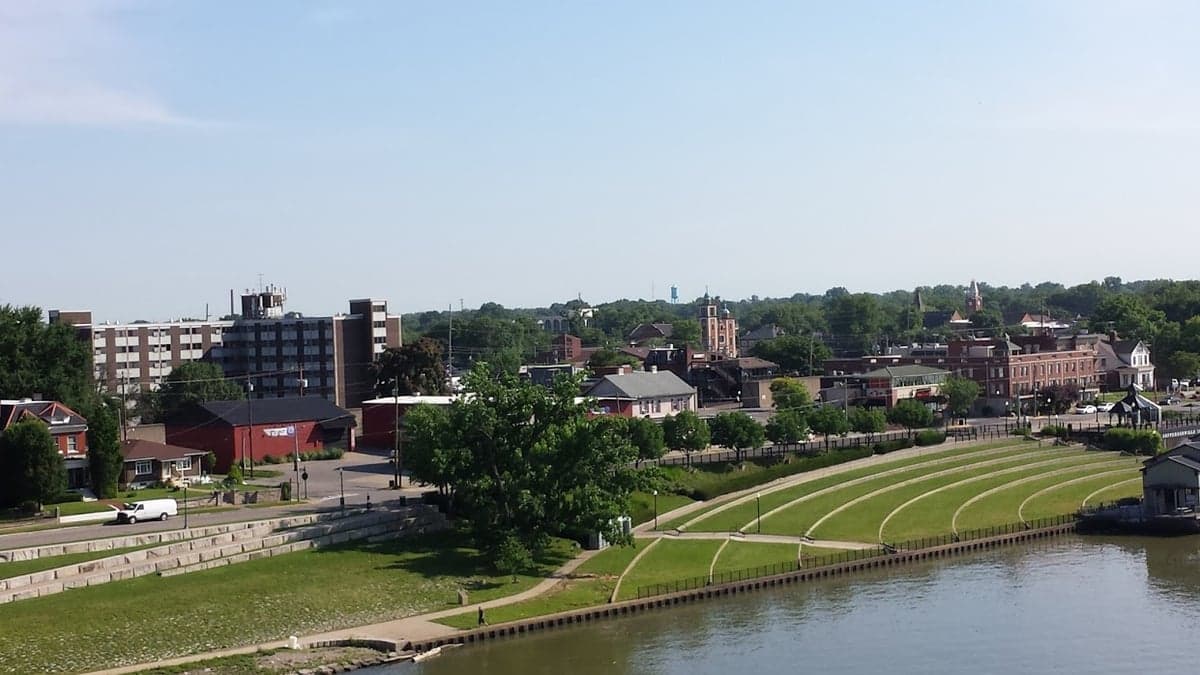
Photo: Wikipedia
Strategic Assessment of Jeffersonville, IN
Meaningful friction. Expect exposure to either population pressure, blast zones, or natural disaster risk. Consider buying a retreat property.
What does the Strategic Assessment tell us?
Our Strategic Assessment grades tactical survivability of an area. Major population centers, military targets, fallout zones, natural disasters, and border exposure all drive risk — lower exposure means a more defensible position in a crisis.
This is heavily inspired by Joel Skousen's Strategic Relocation book. Highly recommended you checkout the book ($)What does this tell us?
Our Strategic Assessment grades tactical survivability of an area. Major population centers, military targets, fallout zones, natural disasters, and border exposure all drive risk — lower exposure means a more defensible position in a crisis.
This is heavily inspired by Joel Skousen's Strategic Relocation book. Highly recommended you checkout the book ($)Strategic Pillars

Key Distances
Regional Safe Places
Below is our recommended "safe zones" in Indiana and the surrounding area based on our strategic heuristics. For most people, it's unrealistic to live in a “safe zone” full-time due to work, family or other personal reasons. They tend to be more rural. However, many of these areas are perfect for second homes and retreat properties that double as a vacation home or even a short-term rental.

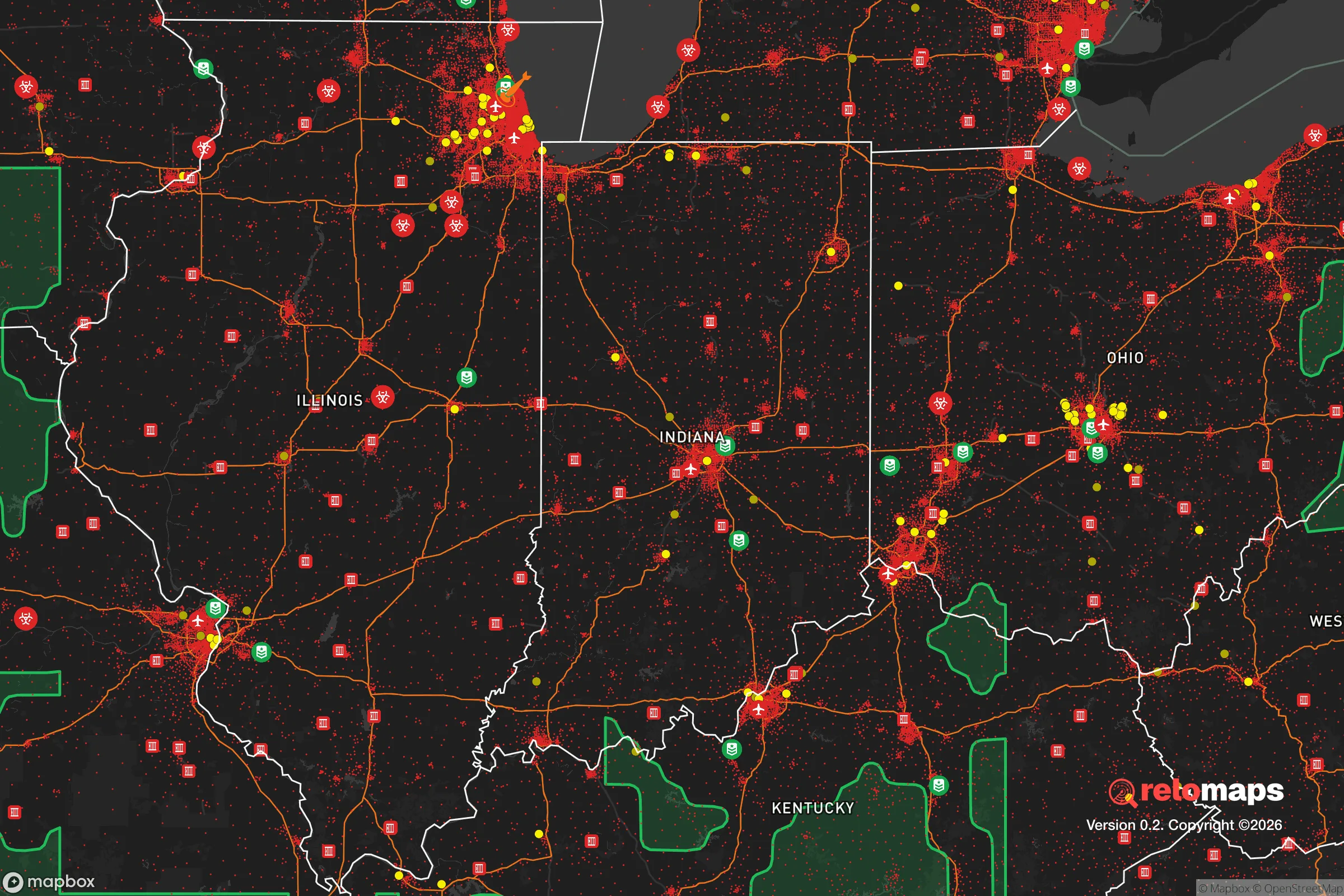


Important Note: For informational purposes only. This does not mean nothing bad ever happens in the green zones. Please use common sense. This is based on public data and modeled with AI. We tried to take a conservative approach but mistakes happen. We update this regularly as new information becomes available.
Solar Generator Recommendations
Backup power matters more here than in safer locations. We've picked three solar generators across budgets and capacity tiers — start with the budget unit if you only need a few essentials, or step up if you want to run a fridge and HVAC for days at a time.

Jackery Portable Power Station Explorer 300
Budget OptionPower on the Go: Weighing only 11 lbs, it's convenient to set up and store with book-sized foldable solar panels

BLUETTI Portable Power Station AC180
Designed for both indoor and outdoor scenarios, AC180 is highly capable as it has a robost capacity and continuous output power.

EF ECOFLOW DELTA Pro Ultra Power Station
Upgraded PickEcoFlow DELTA Pro Ultra is a whole-home energy system designed to grow with your family. Integrated with the Smart Home Panel 2, it scales to meet your evolving energy needs — keeping your home powered, intelligent, and secure through every stage of life.
We earn a commission, at no additional cost to you.
Strategic Assessment Analysis
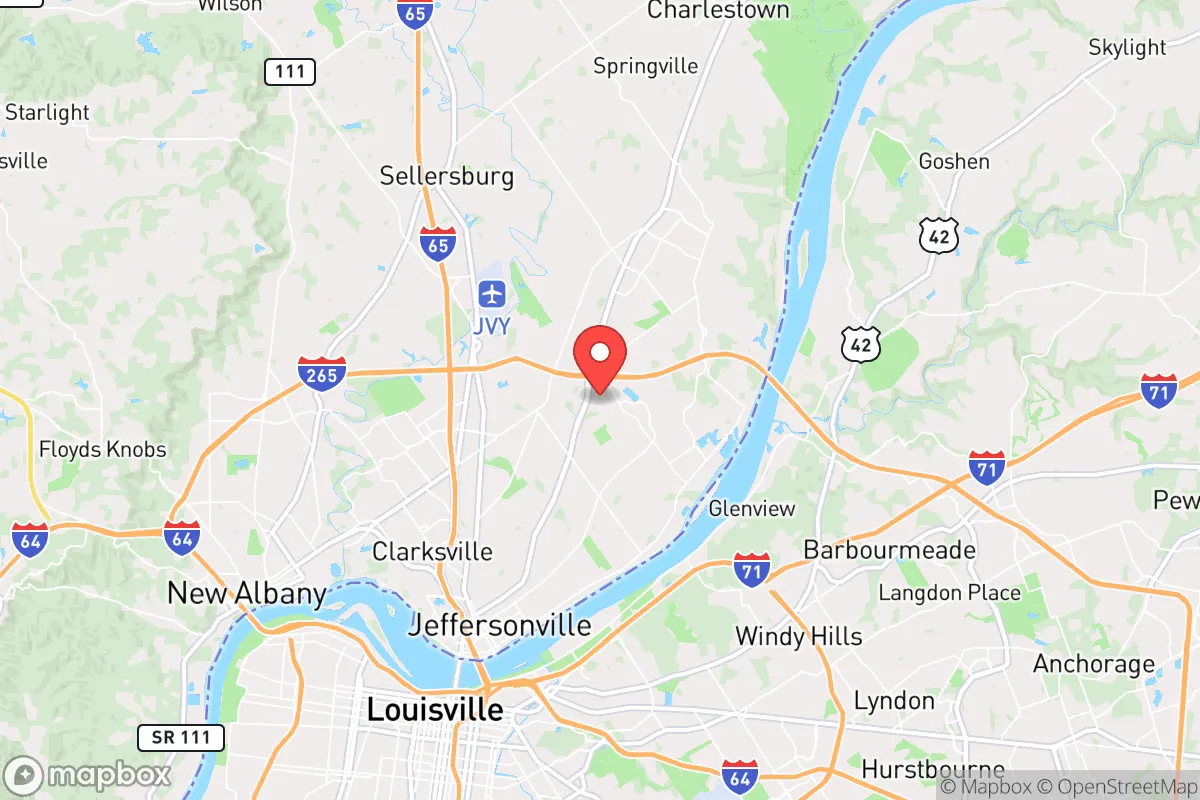
Jeffersonville, Indiana, sits directly across the Ohio River from Louisville, Kentucky, a position that offers both strategic depth and a critical vulnerability for a prepper or survivalist. Its resilience is tied to its location within a major transportation corridor—interstates 65, 64, and 71 converge here—but that same connectivity makes it a potential chokepoint during civil unrest or a mass casualty event. For a conservative relocator weighing long-term stability, Jeffersonville provides a buffer from the worst urban decay while still being close enough to regional resources, but the calculus hinges on whether you can manage the risks of being within the blast radius of a major metropolitan area.
Geographic position and natural advantages for long-term survival
Jeffersonville’s primary asset is its position on the Ohio River, a reliable water source that also serves as a natural barrier against ground-level threats from the south. The city sits on a floodplain, but the higher ground to the north and east—toward Charlestown and Sellersburg—offers defensible terrain with better drainage and fewer flood risks. The surrounding Clark County is largely rural, with farmland and forest that can support subsistence agriculture and foraging. The Ohio River Valley has a moderate climate, with four distinct seasons that allow for crop rotation and hunting, though summers are humid and winters can bring ice storms that disrupt power. For a prepper, the key advantage is the abundance of fresh water from the river and the ability to tap into groundwater via wells in the outlying areas, provided you secure a property outside the flood zone. The region’s limestone bedrock also means stable ground for building a bunker or root cellar, and the dense hardwood forests provide ample firewood and cover.
Risks, exposures, and proximity to fallout-relevant landmarks
The single greatest liability for Jeffersonville is its proximity to Louisville, a city of over 600,000 people that sits just across the river. In a scenario involving civil unrest, mass casualty events, or a major disaster, Louisville would become a source of refugees, looting, and potential violence. The bridges connecting the two cities—the Clark Memorial Bridge, the Kennedy Bridge, and the Sherman Minton Bridge—are obvious chokepoints that could be blocked or targeted. Jeffersonville is also within 50 miles of the Fort Knox military installation, which, while a potential asset for security, also makes the area a target for any adversary seeking to disrupt U.S. military logistics. The Ohio River itself is a double-edged sword: it provides water and transport, but it also carries contamination risks from upstream industrial sites, including chemical plants and coal ash ponds. The Louisville International Airport and the UPS Worldport hub are major logistical nodes that could become targets or sources of secondary disasters, such as a fuel spill or cargo fire. For a survivalist, the takeaway is that Jeffersonville is not a remote retreat—it is a suburban buffer zone that requires constant situational awareness and a plan to bug out north or east if the Louisville metro area collapses.
Practical resilience for a relocator: food, water, energy, and defensibility
For a single individual or family looking to establish a resilient homestead, Jeffersonville offers a mixed bag. The local food supply is decent, with farmers' markets in the summer and a strong network of small farms in Clark and Floyd counties. The Clark County Soil and Water Conservation District provides resources for home gardening and livestock, and the growing season runs from April to October, allowing for significant food production. Water is plentiful from the Ohio River, but you will need a filtration system rated for heavy metals and agricultural runoff—a Berkey or a reverse osmosis setup is non-negotiable. Energy reliability is a concern: the grid is served by Duke Energy, which has a history of outages during storms. Solar panels are viable, but the region’s cloud cover in winter means you will need battery storage and a backup generator. Defensibility is the weak point. Most homes in Jeffersonville are in suburban subdivisions with open layouts and limited sightlines. Properties on the northern edge of the county, near the Clark State Forest, offer better natural cover and standoff distance from the river and the interstate. If you are buying, prioritize a home with a basement, a well, and a wood-burning stove—these are non-negotiable for a prepper in this area. The local gun culture is strong, with several ranges and gun shops, and Indiana’s constitutional carry law means you can defend yourself without bureaucratic hurdles. However, the proximity to Louisville means you should also invest in a good security system and a plan for neighborhood watch, as suburban areas can become targets during a breakdown of order.
The overall strategic picture for Jeffersonville is that of a moderate-risk, moderate-reward location for a conservative relocator with a prepper mindset. It is not a bug-out location—you are too close to a major city and a military target for that. But it is a viable base of operations if you are willing to invest in hardening your property, building a community of like-minded neighbors, and maintaining a vehicle capable of a rapid evacuation north toward Indianapolis or east toward the Appalachian foothills. The area’s economic stability, anchored by the River Ridge Commerce Center and the Amazon fulfillment center, means that even in normal times, you can find work without compromising your values. The real test will come when the grid goes down or the unrest starts. If you are prepared to handle the influx from Louisville and the potential for river contamination, Jeffersonville can work. If you want true isolation, look further east into the Hoosier National Forest. But for a strategic relocation that balances access to resources with a manageable threat profile, Jeffersonville is a solid, if not spectacular, choice.

* Values derived from national, state, county, city and local statistics and may differ in a specific area. Last updated: 2026-04-24T19:31:33.000Z
Narrative content on this page is AI-generated and may contain mistakes. Verify any details that matter before acting on them.
ReloMaps may earn a commission from affiliate links at no extra cost to you.

