Photo: Wikipedia
Demographics of Joliet, IL
Affluence Level in Joliet, IL
A middle-class area roughly in line with national averages across income, home values, education, and employment.
People of Joliet, IL
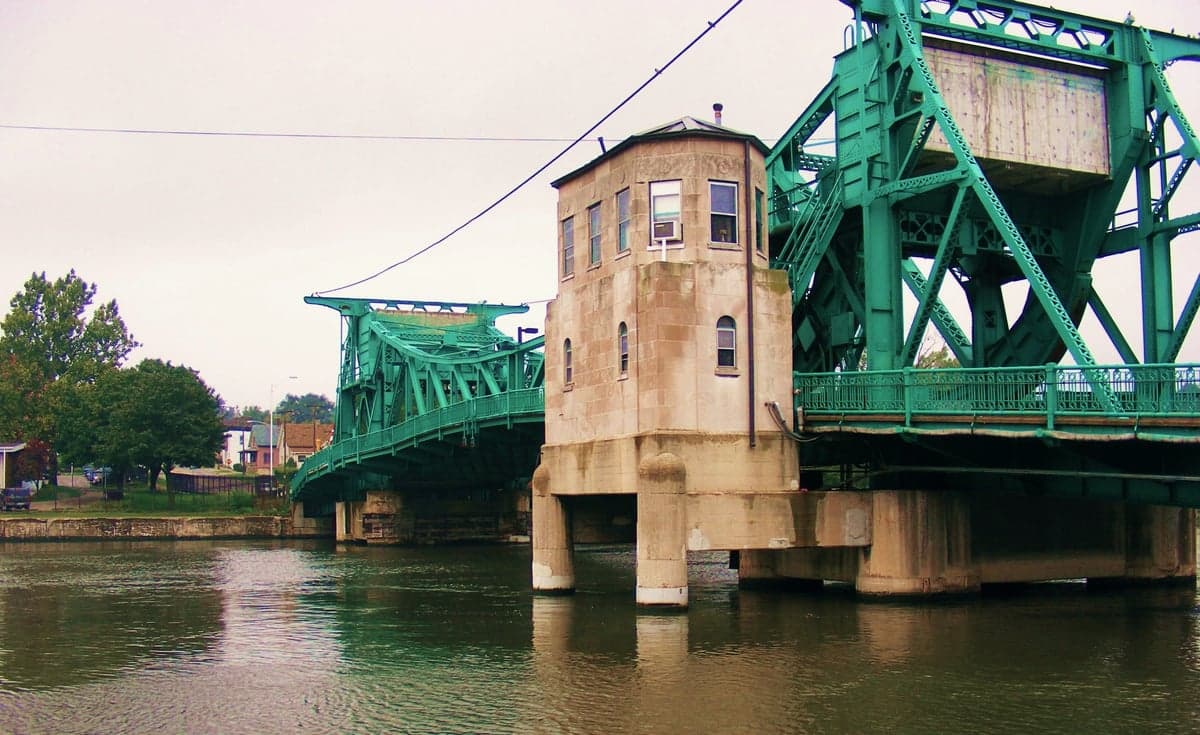
Joliet, Illinois, is a city of roughly 150,000 residents defined by its industrial working-class roots and a dramatic demographic transformation over the past half-century. Once a nearly all-white manufacturing hub, Joliet today is a majority-minority city where Hispanic residents (34.7%) and Black residents (16.7%) form substantial communities alongside a shrinking white population (43.5%). The city’s identity is shaped by this layered history of European immigration, Great Migration arrivals, and sustained Hispanic growth, creating a dense, ethnically diverse urban center in the southwestern Chicago suburbs.
How the city was settled and grew
Joliet’s population history begins with Irish and German laborers who built the Illinois and Michigan Canal in the 1830s and 1840s. These workers settled in what is now the Cathedral Area neighborhood near downtown, establishing the city’s first Catholic parishes and ethnic social clubs. The canal’s completion in 1848 turned Joliet into a transportation and limestone quarrying hub, drawing waves of Eastern and Southern European immigrants. By the early 1900s, Polish immigrants had concentrated in the East Side neighborhood around St. Joseph’s Church, while Italian immigrants clustered in the West Side near the limestone quarries and the Joliet Correctional Center. These groups provided labor for the city’s steel mills, chemical plants, and the Joliet Arsenal, which opened during World War II. The city’s population peaked at 84,000 in 1960, with a population that was over 95% white and heavily Catholic, anchored by the blue-collar jobs at Caterpillar, Commonwealth Edison, and the state prison.
Modern era (post-1965)
The post-1965 era reshaped Joliet’s ethnic map. The Immigration and Nationality Act of 1965 opened doors for non-European immigration, but Joliet’s first major modern shift came from domestic migration. Black families moving north during the Second Great Migration settled primarily in the Fairview neighborhood and the Forest Park area east of downtown, drawn by manufacturing jobs that remained plentiful through the 1970s. By 1990, Joliet’s Black population had reached 15%, concentrated in these eastern and southeastern blocks. The bigger transformation began in the 1990s and accelerated after 2000: Hispanic immigration, primarily from Mexico and Puerto Rico, surged as Joliet’s warehouse and logistics sector expanded along the I-80 and I-55 corridors. Hispanic families moved into the Ingalls Park neighborhood and the Rock Run area near the new intermodal freight terminals, areas that had been white working-class enclaves a generation earlier. The white population fell from 78% in 1990 to 43.5% today, while the Hispanic share rose from 8% to 34.7% over the same period. The city’s foreign-born population stands at 8.5%, a figure that understates the Hispanic presence because many Mexican-American families are now second- or third-generation. East/Southeast Asian communities (1.6%) and Indian-subcontinent residents (0.4%) remain small, concentrated in the newer subdivisions near the Louis Joliet Mall and the University of St. Francis campus.
The future
Joliet’s demographic trajectory points toward continued Hispanic growth and a plateauing or slowly declining white population. The Hispanic share is likely to approach 40–45% by 2040, driven by higher birth rates and continued migration from the Chicago metro area’s southwest side. Black population share has stabilized near 16–17% and is not expected to grow significantly, as younger Black families increasingly move to Will County’s outer suburbs like Plainfield and Shorewood. The white population will continue to age in place in older neighborhoods like the Cathedral Area and West Side, while younger white families are largely absent from Joliet’s housing market. The city is not homogenizing into a single ethnic bloc; instead, it is tribalizing into distinct enclaves. The East Side remains heavily Polish and Italian in its older core, Fairview and Forest Park are predominantly Black, and Ingalls Park and Rock Run are overwhelmingly Hispanic. The small Asian and Indian communities are dispersed but most visible in the newer subdivisions near the mall. The college-educated share (25%) is low for the Chicago region, reflecting Joliet’s persistent blue-collar character even as manufacturing has given way to warehouse and distribution jobs.
For a conservative-leaning individual or family considering Joliet, the bottom line is this: Joliet is a working-class, ethnically diverse city where neighborhood choice largely determines your daily experience. The city is not gentrifying rapidly, nor is it declining sharply — it is solidifying into a Hispanic-majority, multiethnic industrial suburb with stable but modest growth. The public schools and city services reflect the tax base of a blue-collar community, not a wealthy exurb. If you value ethnic diversity and affordable housing within commuting distance of Chicago’s job centers, Joliet offers that — but the cultural and political character varies significantly by which neighborhood you choose.

* Values derived from national, state, county, city and local statistics and may differ in a specific area. Last updated: 2026-04-29T23:54:42.000Z
Narrative content on this page is AI-generated and may contain mistakes. Verify any details that matter before acting on them.
ReloMaps may earn a commission from affiliate links at no extra cost to you.

