Quality of Life in Joshua, TX
Above-average quality of iife. The area offers a reasonable cost of living, decent mobility, and a mix of neighborhood amenities.
What does Quality of Life tell us?
Quality of Life blends cost of living, nearby amenities, socioeconomic signals, and neighborhood character. City-level scores represent the whole municipality; individual neighborhoods can differ.
What does this tell us?
Quality of Life blends cost of living, nearby amenities, socioeconomic signals, and neighborhood character. City-level scores represent the whole municipality; individual neighborhoods can differ.
Cost of Living
5% above national average
The Real Cost of Living in Joshua, TX for 2026
| Tier | Individual | Family (4) |
|---|---|---|
| Survival | $21k | $39k |
| Comfortable | $53k | $77k |
| Luxury | $109k+ | $169k+ |
| Elite (Top 5%) | $137k+ | $212k+ |
78%
The Area Signal
A metric tracking the socioeconomic signals of the area.
Hobbies
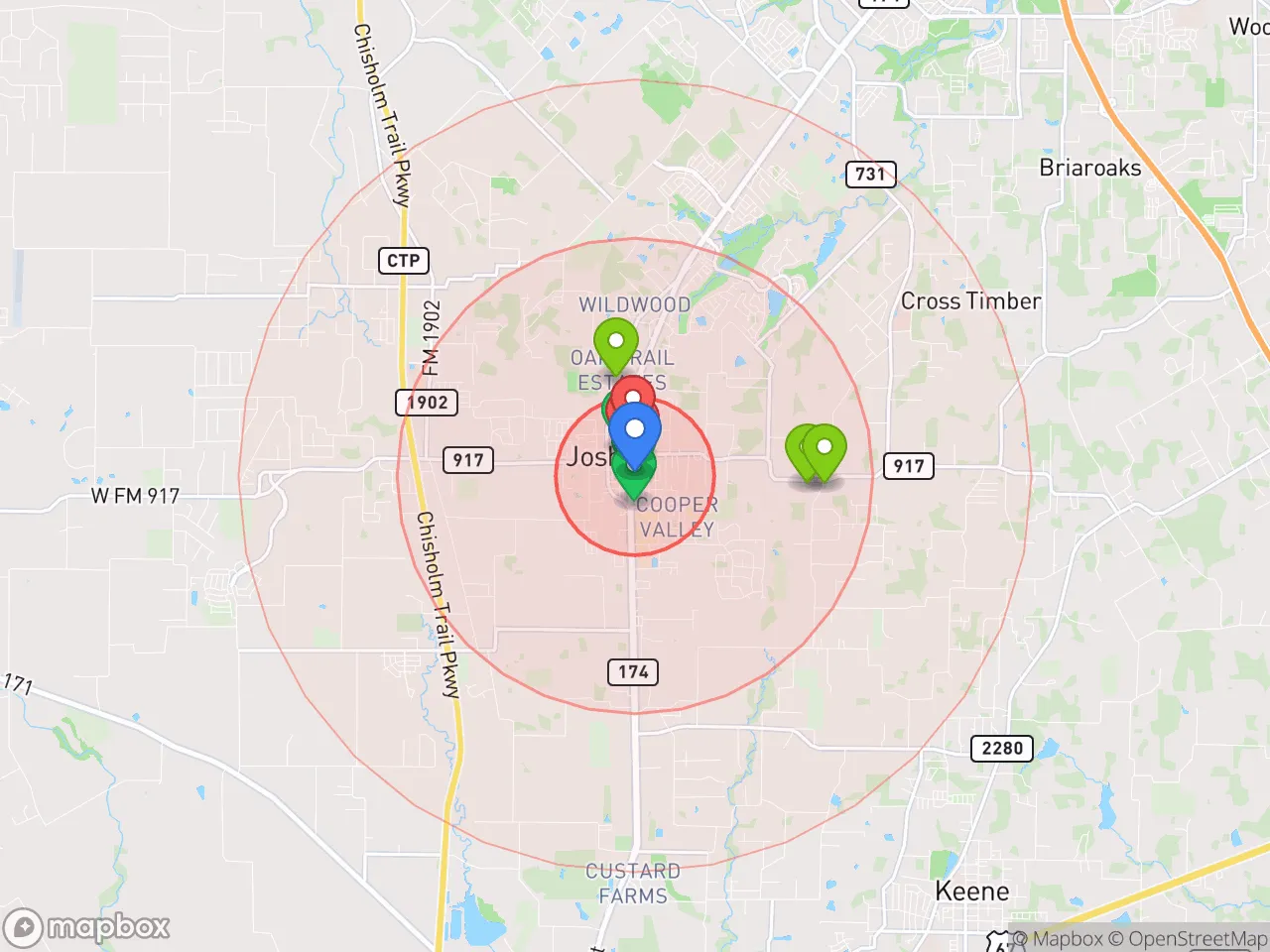
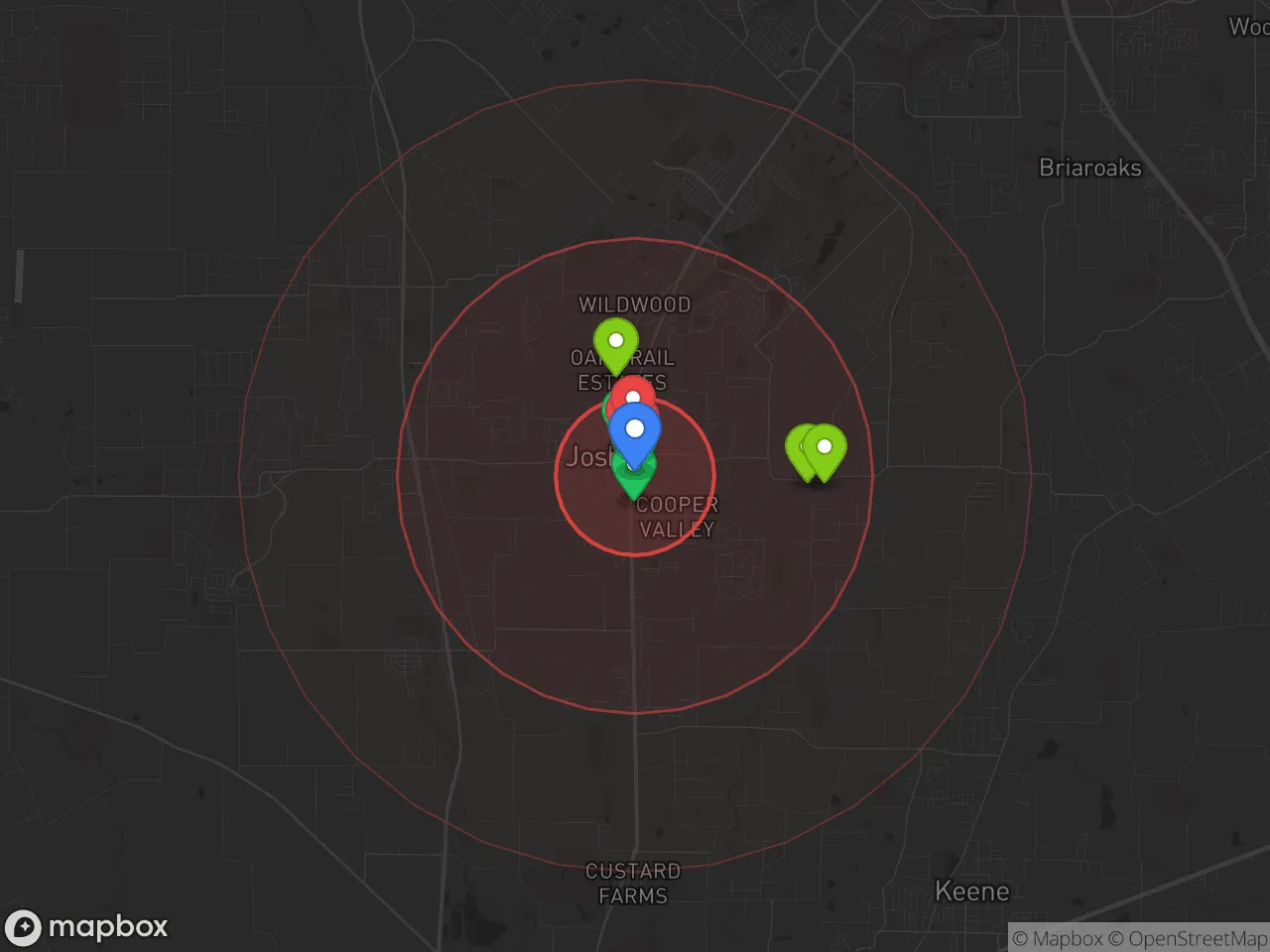
Explore the areaGroceries
10 within 10 miles
Gas
20 within 10 miles
Hospital
20 within 20 miles
Airport
DFW — Dallas/Fort Worth International
Post Office
USPS — Joshua, TX
Critical Amenities
Quality-of-Life Analysis
Joshua, Texas, presents a notably affluent yet family-oriented quality of life, drawing residents who prioritize suburban space and community safety over urban proximity. Located in Johnson County, the city attracts a mix of young families, mid-career professionals, and retirees seeking a quieter alternative to the Dallas-Fort Worth metroplex, with a cost of living index of 105—slightly above the national average but significantly lower than nearby cities like Fort Worth or Arlington. The typical resident values a slower daily rhythm, larger lot sizes, and a strong sense of local identity, making Joshua a deliberate choice for those willing to trade a longer commute for more square footage and lower crime rates.
Cost of living, housing affordability, and how Joshua compares to nearby cities
Joshua’s cost of living index of 105 is manageable for most households, especially when compared to the DFW metro average of around 108–110. The median home value of $271,000 is notably lower than Fort Worth’s median of roughly $340,000 and well below Dallas’s $400,000-plus range, making homeownership more attainable for first-time buyers and growing families. Median rent sits at $1,286, which undercuts the regional average of $1,450–$1,600, offering renters a cost advantage without sacrificing suburban amenities. However, the trade-off is a longer average commute of 31.8 minutes—higher than the national average of 26 minutes—as most residents drive to jobs in Fort Worth, Arlington, or even Dallas. For households that can absorb the commute, Joshua delivers significantly more housing value per dollar than its urban neighbors, with newer construction and larger lots common in developments like the Joshua Hills and Creekside subdivisions.
Local amenities, schools, and the daily rhythm of life in Joshua
Daily life in Joshua revolves around its well-regarded Joshua Independent School District, which serves roughly 4,500 students and consistently earns B+ ratings from Niche, with particular strength in elementary education and athletics. The city’s amenity base is modest but functional: residents rely on the Joshua Community Center for recreation, the nearby Lake Pat Cleburne for fishing and boating, and a growing strip of local businesses along FM 917 and Broadway Street. For major shopping, dining, and healthcare, most residents drive 15–20 minutes to Burleson or Cleburne, or 30 minutes to Fort Worth’s cultural and medical hubs. The pace is distinctly suburban—weekends often involve youth sports at Joshua High School, church gatherings at one of the city’s dozen-plus congregations, or outdoor time at Chisenhall Fields park. While nightlife is virtually nonexistent, the trade-off is a low crime rate that consistently ranks among the safest in Johnson County, with property crime rates roughly half the national average.
Joshua is best suited for families and professionals who prioritize space, safety, and school quality over urban convenience and short commutes. Retirees on a fixed income may find the cost of living manageable, though the lack of walkable amenities and reliance on driving could be a drawback. Young professionals without children might feel isolated, as the social scene is heavily family-oriented and the commute to DFW job centers can be draining. Ultimately, Joshua rewards those who value a quiet, community-driven lifestyle with strong schools and affordable housing—provided they are willing to trade 30-plus minutes in the car each way for the peace of a small-town setting.

Crime in Joshua, TX
Crime rates similar to the national median for U.S. locations.
Violent CrimeViolent Crime Analysis
Property CrimeProperty Crime Analysis
Crime Analysis
Joshua, Texas, reports a violent crime rate of 342.3 incidents per 100,000 residents and a property crime rate of 1,780.9 per 100,000, placing it in a moderate safety tier compared to other suburban communities in the Dallas-Fort Worth metroplex. While these figures are below the national average for property crime, the violent crime rate sits slightly above the national median, a dynamic shaped in part by the broader criminal justice environment of Johnson County and the surrounding metro area. Residents should weigh these statistics against the reality that Joshua is part of a large, progressive-leaning metropolitan region where district attorneys and judges often prioritize rehabilitation over incarceration, a philosophy that can result in more offenders cycling back onto the streets and reducing overall public safety.
Crime in context
Joshua’s violent crime rate of 342.3 per 100,000 is roughly 10% higher than the national average of 310 per 100,000, while its property crime rate of 1,780.9 per 100,000 is about 15% lower than the national average of 2,100 per 100,000. Compared to Texas as a whole, which recorded a violent crime rate of approximately 450 per 100,000 in recent years, Joshua appears safer than many urban centers like Dallas or Fort Worth. However, the city’s proximity to the DFW metroplex means it is subject to the same regional justice policies: progressive prosecutors in Tarrant and Dallas counties have implemented cash bail reforms and diversion programs that critics argue embolden repeat offenders. This regional context is critical because criminals do not respect municipal boundaries, and a soft-on-crime approach in nearby jurisdictions can spill over into Joshua.
What residents experience
In practice, Joshua residents report property crimes—such as vehicle break-ins, package theft, and burglary—as the most common safety concern, consistent with the elevated property crime rate. Violent incidents, including aggravated assault and robbery, occur less frequently but are often concentrated in specific areas near major thoroughfares like U.S. Route 67. The Johnson County Sheriff’s Office and Joshua Police Department maintain a visible presence, but staffing levels are modest, with roughly 1.2 officers per 1,000 residents, below the national average of 2.4. This understaffing can delay response times, particularly during peak hours. The progressive justice trends in the broader metro area—such as reduced bail amounts and early release programs—mean that individuals arrested for property crimes in Joshua may face minimal consequences, returning to the community quickly and potentially reoffending.
Neighborhood-level safety varies noticeably within Joshua. Established subdivisions near the city center, such as those around Old Town Joshua, tend to have lower incident rates due to stronger neighborhood watch programs and higher home values. In contrast, newer developments along the city’s eastern edge, closer to the more densely populated areas of Burleson and Fort Worth, report higher rates of vehicle theft and vandalism. Rental properties and apartment complexes near the intersection of FM 917 and U.S. 67 see the most police calls, often tied to transient populations. Prospective residents should research specific street-level crime maps and consider homes in homeowner association (HOA)-governed communities, which often fund private security patrols to supplement public policing. The overarching safety picture in Joshua is one of manageable risk, but one that is increasingly influenced by the lenient criminal justice policies of the surrounding metroplex—a factor that demands vigilance from anyone considering relocation.
* Values derived from national, state, county, city and local statistics and may differ in a specific area. Last updated: 2026-05-12T01:14:44.000Z
Narrative content on this page is AI-generated and may contain mistakes. Verify any details that matter before acting on them.
ReloMaps may earn a commission from affiliate links at no extra cost to you.

