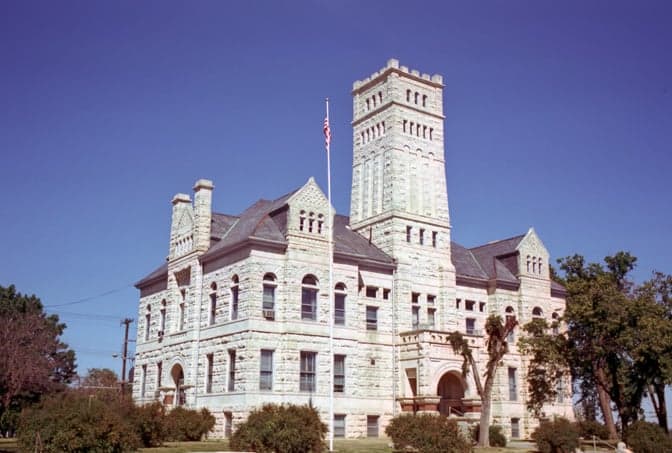
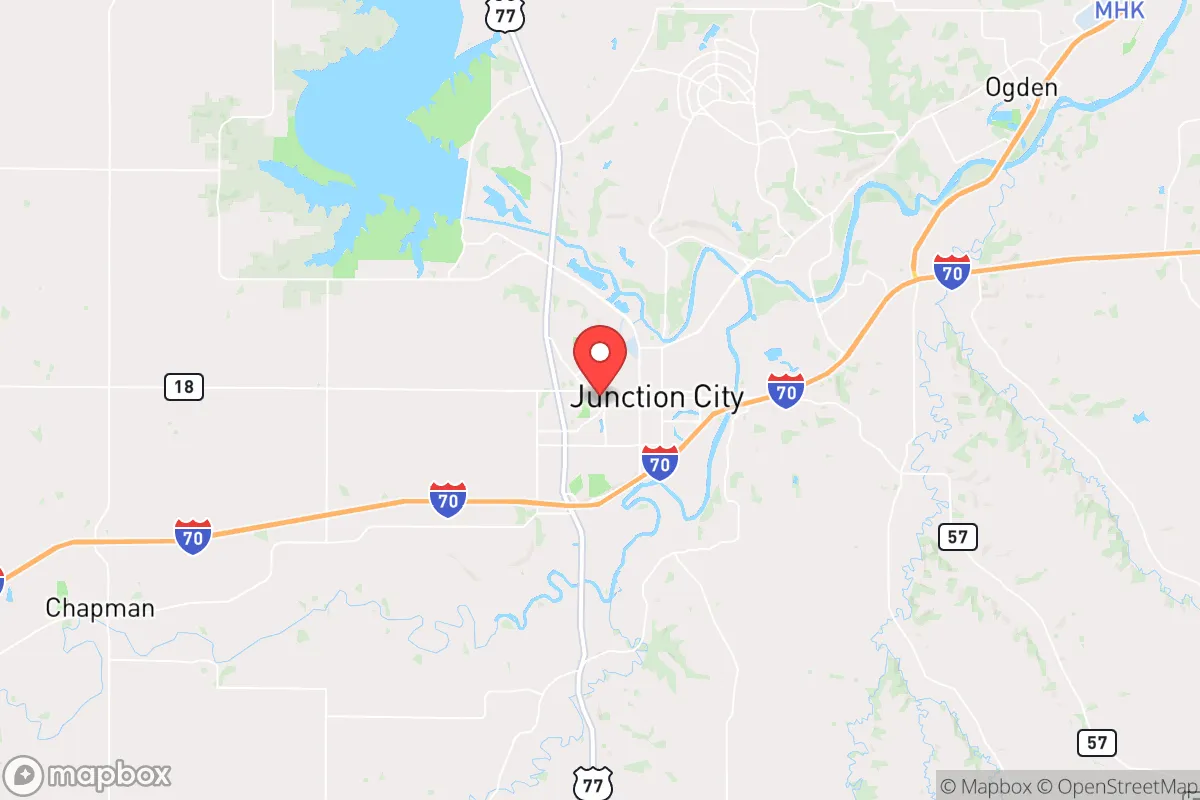
Photo: Wikipedia
Demographics of Junction City, KS
Affluence Level in Junction City, KS
A below-average socioeconomic profile. Incomes, home values, and educational attainment trail the U.S., with higher poverty and unemployment.
People of Junction City, KS
Junction City, Kansas, is a community of roughly 22,431 residents defined by its deep military ties and a demographic profile that is notably more diverse than much of rural Kansas. The city’s character is shaped by a large active-duty and veteran population connected to nearby Fort Riley, resulting in a transient yet resilient populace with a higher-than-average share of Black (20.1%) and Hispanic (16.4%) residents compared to the state as a whole. With a relatively low foreign-born rate of 3.2% and a college attainment rate of 23.2%, Junction City is a working-class, family-oriented hub where military service and agricultural roots remain central to its identity.
How the city was settled and grew
Junction City was founded in 1858 at the confluence of the Republican and Smoky Hill rivers, a strategic location that drew early settlers as a supply point for westward expansion. The original population was overwhelmingly white, composed of farmers, merchants, and railroad workers from the Midwest and Northeast who were attracted by the promise of fertile land and the Union Pacific Railroad’s arrival in the 1860s. The city’s first distinct neighborhood, Heritage Hill, was built by these early Anglo settlers and remains a historic district with Victorian-era homes. A second wave arrived with the establishment of Fort Riley in 1853, which brought a steady stream of soldiers and their families, many of whom settled in the Fort Riley Housing areas and the adjacent Milford Lake district. By the early 20th century, a small Black community had formed near East 7th Street, drawn by railroad and service jobs, though segregation kept them largely separate from the white majority. The city’s growth remained modest through the 1950s, with the population hovering around 10,000, anchored by agriculture and the military base.
Modern era (post-1965)
The post-1965 era brought significant demographic shifts, driven primarily by the military’s integration and the expansion of Fort Riley during the Vietnam War. The Hart-Cellar Act of 1965 had a limited direct effect on Junction City—foreign-born residents remain just 3.2%—but the military’s desegregation policies and base expansions drew a growing number of Black and Hispanic service members and their families. By the 1980s, the Black population had risen to roughly 15%, concentrated in the Westside neighborhood near the base and in the North Junction area, where affordable housing and proximity to Fort Riley made it a natural landing point. The Hispanic population, now 16.4%, grew steadily from the 1990s onward, driven by both military families and civilian workers in construction, meatpacking, and agriculture. Many Hispanic families settled in the Southside district, near the industrial corridor along Highway 77. The East/Southeast Asian population (3.1%) is almost entirely military-affiliated, with Filipino and Korean families clustering in Fort Riley Housing and the Grandview Plaza area just east of the city. The Indian subcontinent population remains negligible at 0.1%, reflecting the absence of a tech or medical sector that typically draws that group. White residents, now 50.4%, have seen their share decline from over 80% in 1970, as many longtime families moved to newer subdivisions in Geary County or to nearby Manhattan, leaving older neighborhoods like Heritage Hill and East 7th Street with a more diverse, lower-income population.
The future
The population of Junction City is likely to remain stable or grow slowly, driven by Fort Riley’s continued role as a major Army installation. The city is not homogenizing; rather, it is tribalizing into distinct enclaves based on income and military status. The Westside and Fort Riley Housing areas will remain heavily military and racially diverse, while Heritage Hill and newer subdivisions near Milford Lake will attract white, higher-income families seeking larger lots and better schools. The Hispanic population is expected to grow modestly, plateauing as second-generation families assimilate and move to suburbs or other regions. The Black population may also stabilize, as military assignments rotate families in and out. The East/Southeast Asian community will remain small and transient, tied to specific military units. The foreign-born share is unlikely to rise significantly, as Junction City lacks the economic magnets—tech, universities, or large refugee resettlement programs—that drive immigration elsewhere. Over the next 10–20 years, the city will likely become slightly more Hispanic and slightly less white, but the overall character will remain that of a military town with a working-class, family-oriented ethos.
For someone moving in now, Junction City offers a community where military service creates a shared sense of purpose and where racial diversity is a fact of daily life, not a political abstraction. The city is not a melting pot but a collection of distinct neighborhoods, each with its own demographic anchor. New residents should expect a place where the base drives the economy, where schools are heavily influenced by military turnover, and where the cost of living remains low. It is a stable, if not rapidly growing, community—a good fit for those who value practicality over prestige and who are comfortable with a population that is more transient and diverse than the surrounding Kansas countryside.

* Values derived from national, state, county, city and local statistics and may differ in a specific area. Last updated: 2026-04-29T18:41:29.000Z
Narrative content on this page is AI-generated and may contain mistakes. Verify any details that matter before acting on them.
ReloMaps may earn a commission from affiliate links at no extra cost to you.

