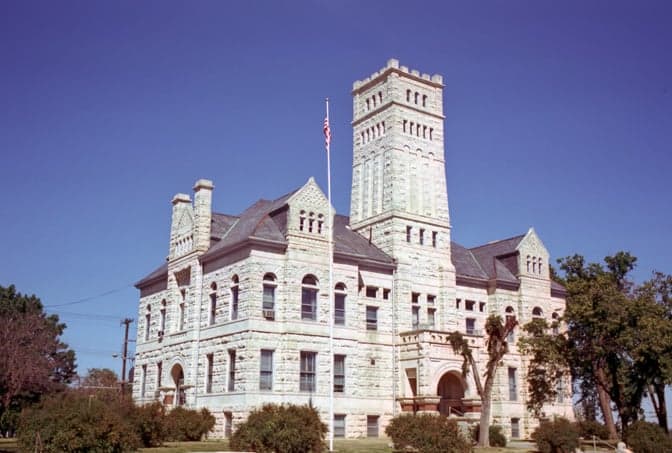
Photo: Wikipedia
Political ClimatePolitical Climate in Junction City, KS
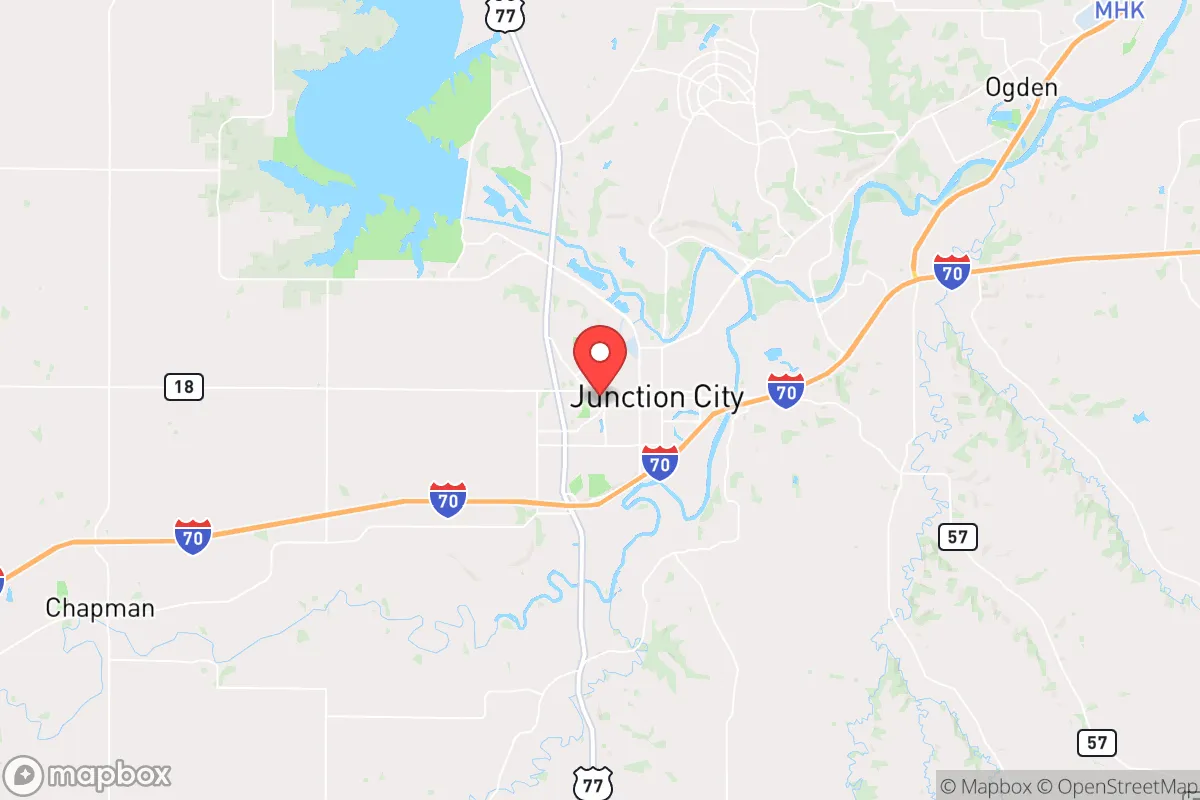
District shown is the primary district for this city’s centroid. Cities may span multiple districts.
Local Political AnalysisPolitical Analysis of Junction City, KS
Junction City, Kansas, has long been a solidly conservative community, and the Cook PVI of R+10 reflects that reality pretty accurately. You can feel it in the air—folks here generally believe in minding your own business, keeping the government out of your wallet and your personal life, and sticking to the values that built this country. That said, like a lot of small cities in the Midwest, there’s been a slow but noticeable shift over the past decade or so, especially as the nearby Fort Riley military base brings in a more transient population from all over the country. The core of the town still leans red, but you’ll find a growing number of younger families and newcomers who are pushing for a more progressive agenda, particularly on social issues and local spending. It’s not a dramatic flip, but it’s something long-time residents keep an eye on—because once government starts creeping into areas it doesn’t belong, it’s hard to push it back.
How it compares
If you drive just 20 miles east to Manhattan, you’ll hit Kansas State University territory, and that place is a whole different animal politically—much more liberal, with a younger, more activist crowd that’s been pushing for things like higher taxes and more regulations on local businesses. Junction City, by contrast, has historically been a blue-collar, military-friendly town where people value personal responsibility over government handouts. Surrounding Geary County as a whole votes reliably Republican, but the city itself has seen some close races in recent years, especially for school board and city council seats. The contrast with nearby towns like Abilene or Salina is also telling—those places are even more conservative, with less diversity and a stronger agricultural base. Junction City’s mix of military families, retirees, and working-class folks gives it a slightly more moderate flavor than its neighbors, but it’s still a place where a candidate running on a platform of lower taxes and less government interference will usually win the day.
What this means for residents
For the average person living here, the political climate directly affects your daily life in ways you might not think about until something changes. Property taxes have been a hot-button issue for years, and the push to raise them for new city projects—like the recent downtown revitalization efforts—has been met with serious skepticism from folks who don’t want to see their hard-earned money go to things they didn’t ask for. The school board has also become a battleground, with some members pushing for curriculum changes that align with progressive values, while parents and local conservatives fight to keep the focus on basics and local control. If you value your Second Amendment rights, you’ll be relieved to know that Junction City remains a stronghold for gun owners, with no serious local push for restrictions. But the concern is that as the city grows and attracts more people from out of state, those freedoms could come under pressure. The key is staying involved—voting in every local election, showing up to city council meetings, and making sure your voice is heard before the government decides what’s best for you.
Culturally, Junction City still holds onto its small-town, self-reliant character, but you can see the cracks forming. There’s a growing divide between older residents who remember when the town was more homogeneous and younger transplants who want to bring in big-city ideas like bike lanes, public art projects, and more social services. The military presence at Fort Riley does tend to keep things grounded—most service members and their families are pretty conservative themselves—but the turnover means the political landscape can shift quickly. Long-term, the trajectory depends on who moves in and who stays. If the trend toward progressive policies continues, you might see more government overreach in areas like zoning, business regulations, and even how local law enforcement operates. For now, though, Junction City is still a place where you can live your life without too much interference, as long as you’re willing to keep an eye on the ballot box and push back when the government starts reaching too far.

State Political ClimatePolitical Climate in Kansas
State Political AnalysisPolitical Environment in the State
Kansas has long been a reliably red state in presidential elections, voting Republican by double digits in every cycle since 2008, but the picture beneath the surface is more complicated than the statewide numbers suggest. The dominant coalition is a mix of rural conservatives, suburban moderates, and a growing libertarian-leaning wing, but the state has also seen a notable shift toward the center in recent years, driven largely by the suburbs of Johnson County and the growing influence of the Kansas City metro area. Over the past 10-20 years, the state has moved from a solidly conservative stronghold to a more competitive environment, with Democrats winning the governorship in 2018 and 2022, and the state legislature becoming a battleground over education funding, tax policy, and social issues.
Urban vs. rural divide
The political map of Kansas is a textbook example of the urban-rural split. The eastern third of the state, anchored by the Kansas City metro area, is the most politically competitive region. Johnson County, home to affluent suburbs like Overland Park and Leawood, has been trending blue for a decade, flipping from a 12-point Republican margin in 2012 to a 10-point Democratic margin in 2020. This shift is driven by college-educated professionals, many of whom work in healthcare, tech, and finance, and who are increasingly turned off by the national GOP’s cultural battles. Meanwhile, the state’s other major metro, Wichita (Sedgwick County), remains a swing area, leaning Republican but with a significant Democratic base in the city proper. The rural expanse—counties like Grant, Haskell, and Wallace in the west—votes overwhelmingly Republican, often by 70-80 point margins, driven by agriculture, energy, and a deep distrust of federal authority. The divide is stark: the state’s 10 most populous counties account for over 60% of the vote, and the rural counties are losing population, which is slowly eroding the GOP’s structural advantage.
Policy environment
Kansas’s policy environment is a mixed bag for conservatives. The state has a flat income tax rate of 5.7% (as of 2025), down from a top rate of 6.45% in 2020, and no inheritance tax, which is a plus for property owners and retirees. However, the state’s sales tax is relatively high at 6.5%, and local options can push it over 10% in some cities. The regulatory posture is generally business-friendly, with a right-to-work law and no state-level minimum wage above the federal $7.25. Education policy is a flashpoint: the state has a school choice program (the Kansas Tax Credit for Low-Income Students Scholarship Program) but it’s limited, and the state’s funding formula has been the subject of repeated lawsuits, with the Kansas Supreme Court often mandating more spending. On healthcare, Kansas did not expand Medicaid under the ACA, leaving about 150,000 low-income adults in a coverage gap—a sore point for many conservatives who see it as a federal overreach but also a practical problem for rural hospitals. Election laws are moderately restrictive: voter ID is required, and the state has a 20-day advance voting period, but no-excuse mail voting was eliminated in 2021. The state’s abortion law is among the strictest in the nation, with a near-total ban after 22 weeks and a 2022 “Value Them Both” amendment that affirmed no state constitutional right to abortion, which was upheld by voters in a 2022 referendum.
Trajectory & freedom
On the freedom front, Kansas has been a mixed bag, with some notable expansions and contractions. The state passed a constitutional carry law in 2015, allowing permitless concealed carry, and has a strong castle doctrine and Stand Your Ground law. However, in 2023, the legislature passed a law banning gender-affirming care for minors, which was a win for parental rights advocates but also drew federal lawsuits. On property rights, the state has a strong eminent domain law that protects landowners, but local zoning battles in Johnson County have become more contentious as density increases. Tax freedom took a hit in 2022 when the legislature passed a flat tax that actually raised taxes on some low-income households, but a 2024 law cut the corporate income tax rate from 4% to 3.5%. The biggest freedom concern for many conservatives is the growing influence of the Kansas Supreme Court, which has repeatedly struck down legislative maps and school funding laws, leading to calls for judicial reform. Overall, the state is becoming slightly more free on fiscal and gun issues, but less free on social issues as the legislature reacts to cultural shifts.
Civil unrest & political movements
Kansas has seen relatively little civil unrest compared to coastal states, but there have been notable flashpoints. In 2022, the “Value Them Both” abortion referendum drew massive protests and counter-protests in Topeka and Overland Park, with both sides mobilizing heavily. The state has also seen a growing “county sovereignty” movement in rural areas, with several counties passing resolutions declaring themselves “Second Amendment sanctuaries” and opposing federal land management. Immigration politics are less heated than in border states, but the city of Dodge City has seen tensions over meatpacking plant workers, and the state passed a law in 2023 requiring local law enforcement to cooperate with ICE. Election integrity controversies flared after 2020, with the state’s top election official (a Republican) defending the results, but a 2021 audit found no widespread fraud. The most visible political movement is the rise of the “Moms for Liberty” chapter in Johnson County, which has been active in school board races over curriculum and library books. A new resident would notice that political activism is more localized and less confrontational than in states like Texas or Florida, but the culture war is definitely present in school board meetings and county commission chambers.
Projection
Over the next 5-10 years, Kansas is likely to become more competitive at the state level, but not necessarily more liberal. The key demographic shift is the continued growth of Johnson County, which is attracting young families and remote workers from the coasts who are fiscally conservative but socially moderate. This could push the state toward a more “purple” status, similar to what happened in Colorado in the 2010s. However, the rural counties are shrinking, and the state’s population growth is anemic (about 0.3% annually), so the political balance will depend on turnout. The state legislature is likely to remain Republican-controlled due to gerrymandering, but the governorship could flip again in 2026. On policy, expect continued fights over school funding, tax cuts, and abortion, with the state Supreme Court remaining a flashpoint. A new resident moving in now should expect a state that is still conservative on most issues, but with a growing suburban moderate bloc that could make statewide elections unpredictable. The bottom line: Kansas is a good place for someone who wants low taxes, gun rights, and a slower pace of life, but be prepared for the culture war to intensify in the suburbs, especially around education and parental rights.
For a new resident, the practical takeaway is that Kansas offers a relatively stable, low-cost environment with a conservative tilt, but the political climate is not monolithic. If you’re moving to a rural county like Ellis or Finney, you’ll find a deeply red community with little political friction. If you’re moving to Overland Park or Lenexa, you’ll encounter a more diverse and politically active population where school board meetings and city council races are the front lines of the culture war. The state’s trajectory is toward more competition, not less, so expect the political landscape to shift over the next decade, but the core values of limited government and personal responsibility remain strong in most of the state.
* Values derived from national, state, county, city and local statistics and may differ in a specific area. Last updated: 2026-04-29T18:41:29.000Z
Narrative content on this page is AI-generated and may contain mistakes. Verify any details that matter before acting on them.
ReloMaps may earn a commission from affiliate links at no extra cost to you.

