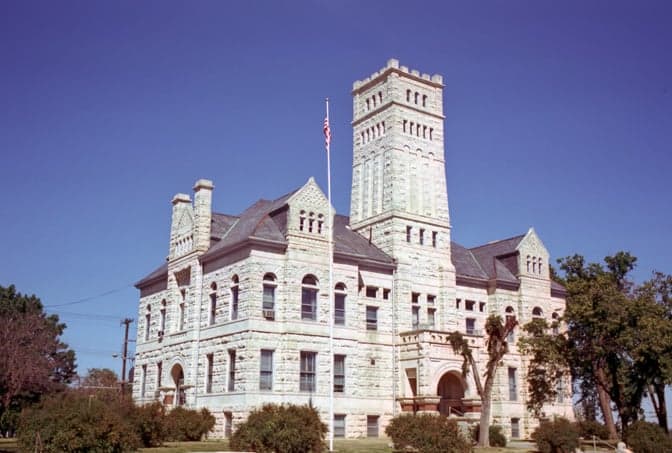
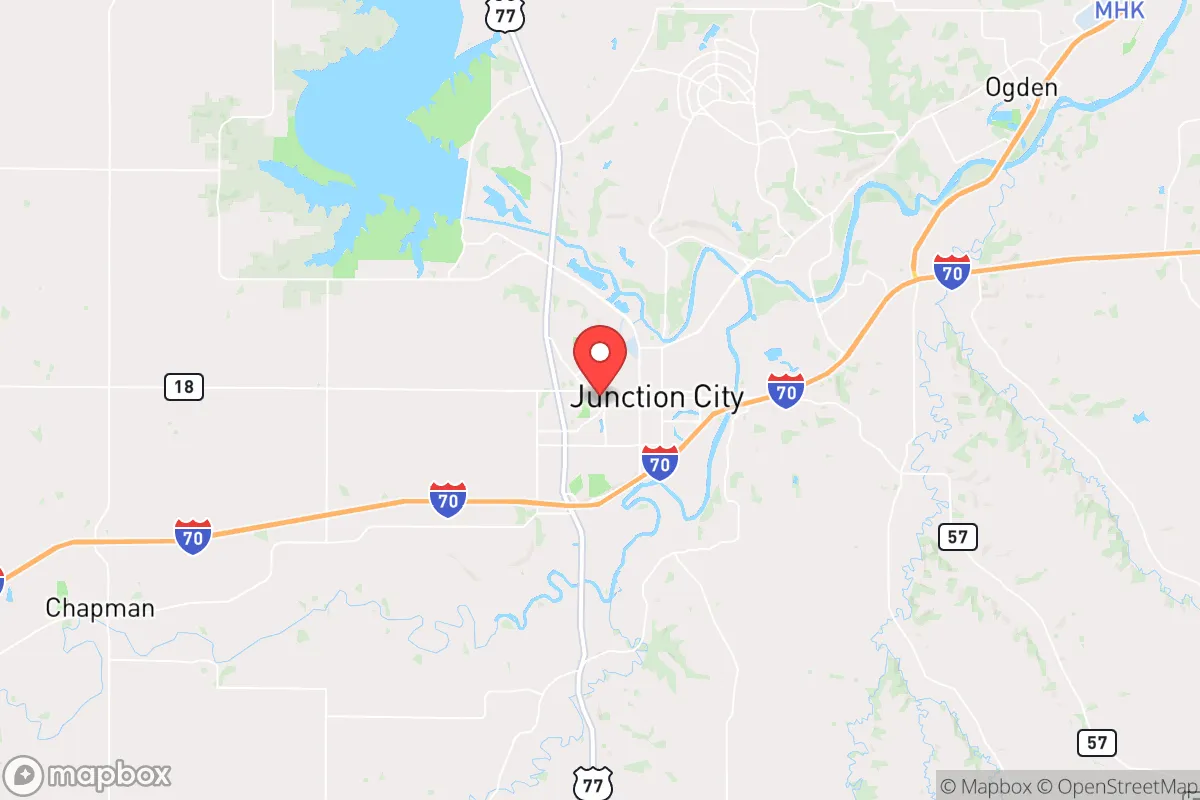
Photo: Wikipedia
Strategic Assessment of Junction City, KS
Workable tactical position. Some exposure to population density or targets, but generally defensible in a crisis.
What does the Strategic Assessment tell us?
Our Strategic Assessment grades tactical survivability of an area. Major population centers, military targets, fallout zones, natural disasters, and border exposure all drive risk — lower exposure means a more defensible position in a crisis.
This is heavily inspired by Joel Skousen's Strategic Relocation book. Highly recommended you checkout the book ($)What does this tell us?
Our Strategic Assessment grades tactical survivability of an area. Major population centers, military targets, fallout zones, natural disasters, and border exposure all drive risk — lower exposure means a more defensible position in a crisis.
This is heavily inspired by Joel Skousen's Strategic Relocation book. Highly recommended you checkout the book ($)Strategic Pillars

Key Distances
Regional Safe Places
Below is our recommended "safe zones" in Kansas and the surrounding area based on our strategic heuristics. For most people, it's unrealistic to live in a “safe zone” full-time due to work, family or other personal reasons. They tend to be more rural. However, many of these areas are perfect for second homes and retreat properties that double as a vacation home or even a short-term rental.
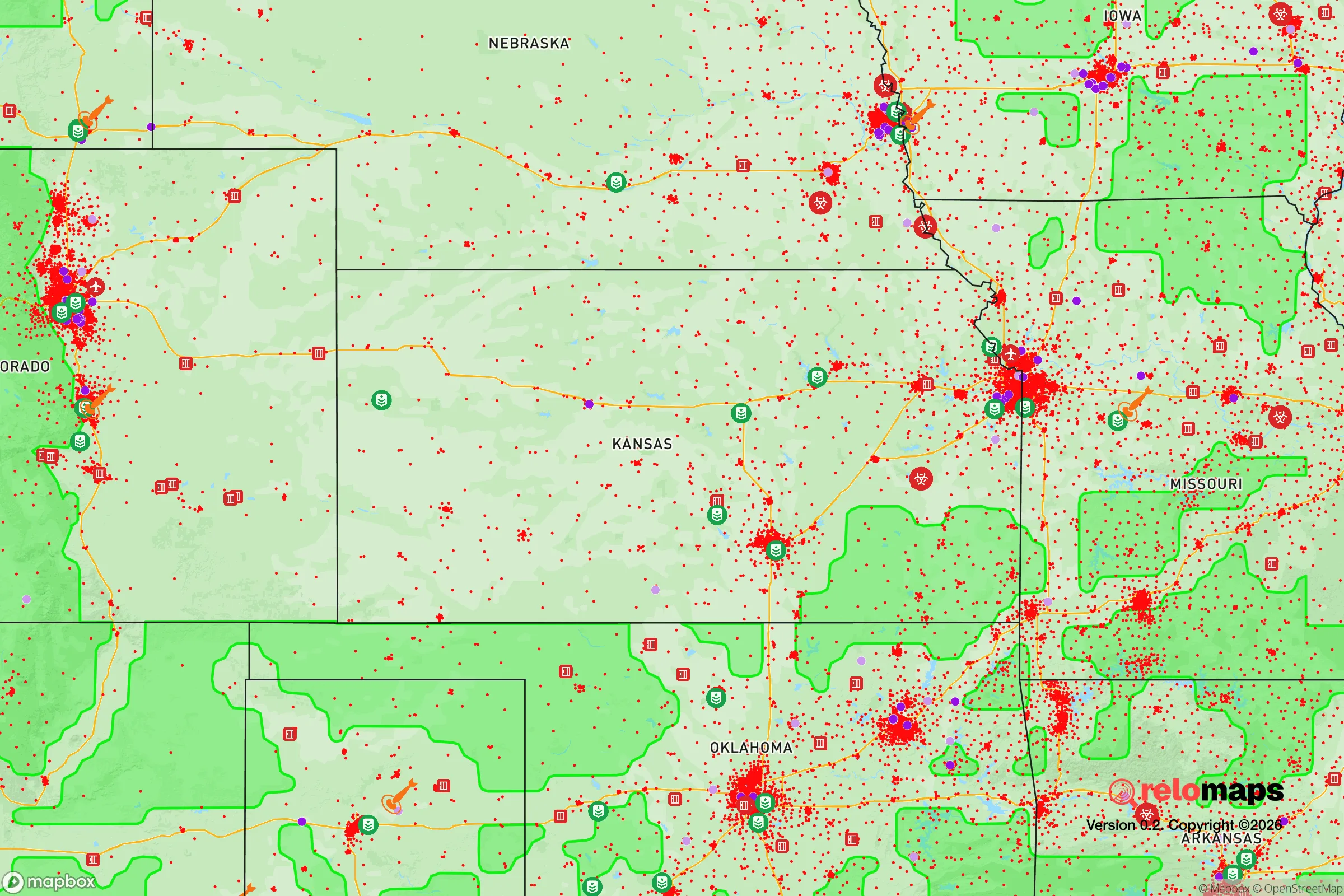
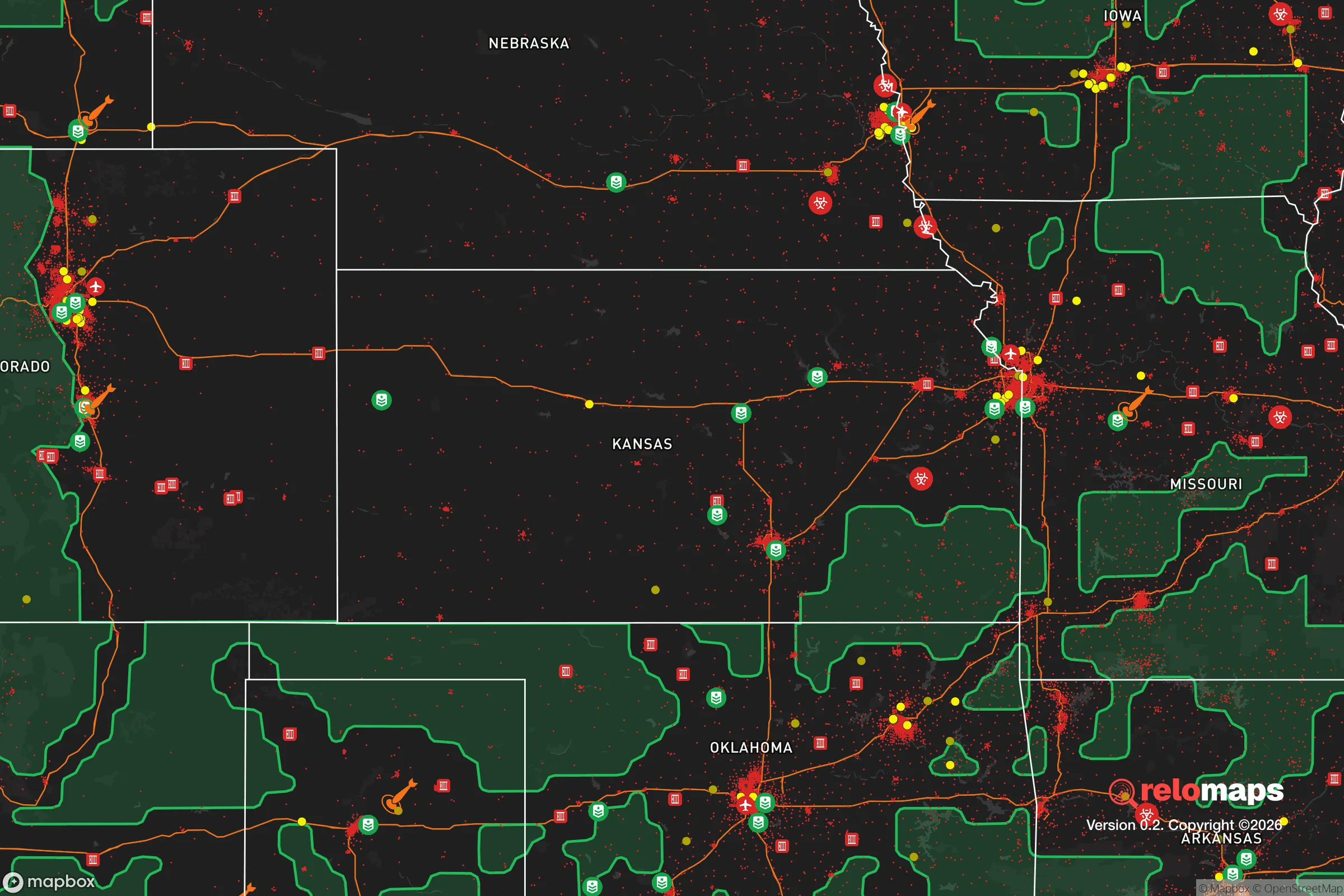


Important Note: For informational purposes only. This does not mean nothing bad ever happens in the green zones. Please use common sense. This is based on public data and modeled with AI. We tried to take a conservative approach but mistakes happen. We update this regularly as new information becomes available.
Solar Generator Recommendations
Backup power matters more here than in safer locations. We've picked three solar generators across budgets and capacity tiers — start with the budget unit if you only need a few essentials, or step up if you want to run a fridge and HVAC for days at a time.

Jackery Portable Power Station Explorer 300
Budget OptionPower on the Go: Weighing only 11 lbs, it's convenient to set up and store with book-sized foldable solar panels

BLUETTI Portable Power Station AC180
Designed for both indoor and outdoor scenarios, AC180 is highly capable as it has a robost capacity and continuous output power.

EF ECOFLOW DELTA Pro Ultra Power Station
Upgraded PickEcoFlow DELTA Pro Ultra is a whole-home energy system designed to grow with your family. Integrated with the Smart Home Panel 2, it scales to meet your evolving energy needs — keeping your home powered, intelligent, and secure through every stage of life.
We earn a commission, at no additional cost to you.
Strategic Assessment Analysis
Junction City, Kansas, sits at a strategic intersection of geographic isolation and logistical connectivity, making it a quietly compelling option for those prioritizing resilience in an increasingly uncertain national landscape. Anchored by the nearby Fort Riley military installation, the area benefits from a stabilizing institutional presence while remaining far enough from major population centers to avoid the worst-case scenarios of urban collapse. For the prepper or survivalist-minded relocator, this central Kansas community offers a blend of defensible space, agricultural self-sufficiency, and a political culture that leans heavily conservative — a combination that warrants serious consideration in any relocation calculus.
Geographic position and natural advantages for long-term security
Junction City’s location at the confluence of the Republican and Smoky Hill rivers — which form the Kansas River — provides a reliable freshwater resource that is increasingly rare in drought-prone regions of the West. The surrounding Flint Hills region offers rolling terrain with natural cover and limited through-traffic, reducing the likelihood of mass migration through the area during a crisis. The city sits roughly 60 miles west of Topeka and 120 miles west of Kansas City, placing it outside the immediate fallout zone of a major metropolitan target while still within a day’s drive of supply routes if needed. The local climate is continental, with hot summers and cold winters, but the area is not prone to hurricanes, earthquakes, or wildfires at the scale seen in coastal or mountain states. For a relocator, this means fewer natural disaster variables to plan around, and the ability to focus on human-caused threats — civil unrest, supply chain disruptions, or grid failures — which are the primary concerns for a conservative prepper mindset.
Risks, exposures, and proximity to fallout-relevant landmarks
The most significant risk factor for Junction City is its proximity to Fort Riley, a major Army base that houses the 1st Infantry Division. While the base provides a stabilizing economic and security presence in normal times, it also makes the area a potential secondary target in a conflict scenario involving strategic military assets. A conventional or asymmetric attack on Fort Riley could produce fallout — both literal and figurative — that would directly impact Junction City, located just a few miles south of the base’s main cantonment area. Additionally, the nearby Interstate 70 corridor, which runs east-west through the state, could become a chokepoint for mass evacuation or military movement during a national emergency, potentially drawing unwanted attention or traffic through the region. On the plus side, Junction City is far from nuclear power plants (the nearest is Wolf Creek, about 100 miles southeast), major ports, and the nation’s largest population centers. The risk of being caught in a cascading urban collapse — riots, grid failure, disease outbreaks — is substantially lower than in any coastal or Rust Belt metro area. For the survivalist, the calculus is clear: the base is a double-edged sword, but the overall threat profile is manageable with proper planning and situational awareness.
Practical resilience for a relocator: food, water, energy, and defensibility
Junction City’s practical resilience metrics are strong for a small city of roughly 20,000 people. The surrounding agricultural region — wheat, corn, soybeans, and cattle — means that local food production is not just possible but dominant, reducing reliance on long-distance supply chains. The city’s water supply is drawn from the Kansas River and groundwater wells, and the area’s low population density means that well-drilling for private properties is feasible and relatively affordable. Energy infrastructure is typical for the Plains: natural gas and coal-fired generation with growing wind capacity in the broader region. Off-grid solar is viable given the area’s average of 220 sunny days per year, though winter cloud cover can be a factor. Defensibility is a mixed picture. The city itself is laid out in a standard grid pattern with limited natural barriers, but the surrounding rural properties — especially those in the Flint Hills — offer excellent vantage points, limited road access, and the ability to create a layered security perimeter. The local population is heavily military-affiliated and gun-owning, which creates a cultural environment where self-defense is normalized and community watchfulness is high. For a single individual or family, the ability to integrate into this culture — rather than stand out as an outsider — is a key factor in long-term security. The local economy is stable but not booming, with housing prices well below national averages; a typical three-bedroom home can be found for under $200,000, freeing up capital for prepping supplies, land purchases, or off-grid upgrades.
The overall strategic picture for Junction City is one of calculated trade-offs. It offers a rare combination of freshwater access, agricultural abundance, and cultural alignment for conservative-leaning relocators, all while sitting far enough from major targets to avoid the worst of a cascading collapse. The presence of Fort Riley introduces a unique risk profile — potential military targeting — but also provides a pool of trained, armed residents and a local economy that doesn’t depend on fragile global supply chains. For the prepper who values community resilience over absolute isolation, Junction City represents a middle ground: not a remote bunker in the mountains, but a defensible, resource-rich town with a population that takes preparedness seriously. If the goal is to be ready for civic unrest, mass casualty events, or long-term disruption, this Kansas community deserves a spot on the short list — especially for those who want to stay within the American heartland rather than retreat to the fringes.

* Values derived from national, state, county, city and local statistics and may differ in a specific area. Last updated: 2026-04-29T18:41:29.000Z
Narrative content on this page is AI-generated and may contain mistakes. Verify any details that matter before acting on them.
ReloMaps may earn a commission from affiliate links at no extra cost to you.

