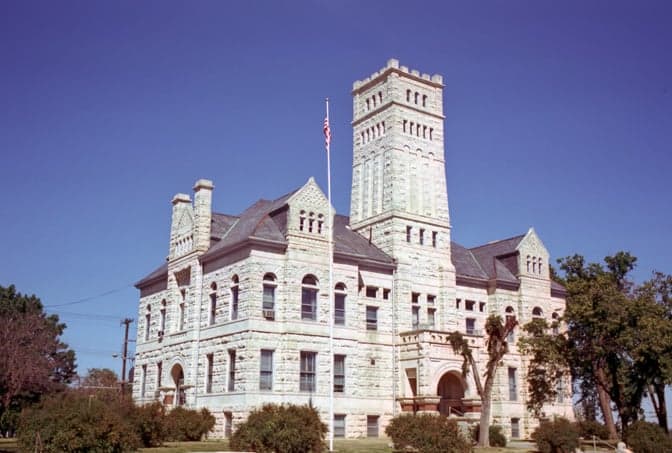
Photo: Wikipedia
Quality of Life in Junction City, KS
A high quality of life with strong walkability, manageable living costs, healthy neighborhood signals, and solid amenity access.
What does Quality of Life tell us?
Quality of Life blends cost of living, nearby amenities, socioeconomic signals, and neighborhood character. City-level scores represent the whole municipality; individual neighborhoods can differ.
What does this tell us?
Quality of Life blends cost of living, nearby amenities, socioeconomic signals, and neighborhood character. City-level scores represent the whole municipality; individual neighborhoods can differ.
Cost of Living
24% below national average
The Real Cost of Living in Junction City, KS for 2026
| Tier | Individual | Family (4) |
|---|---|---|
| Survival | $16k | $31k |
| Comfortable | $32k | $46k |
| Luxury | $82k+ | $127k+ |
| Elite (Top 5%) | $97k+ | $150k+ |
130%
The Area Signal
A metric tracking the socioeconomic signals of the area.
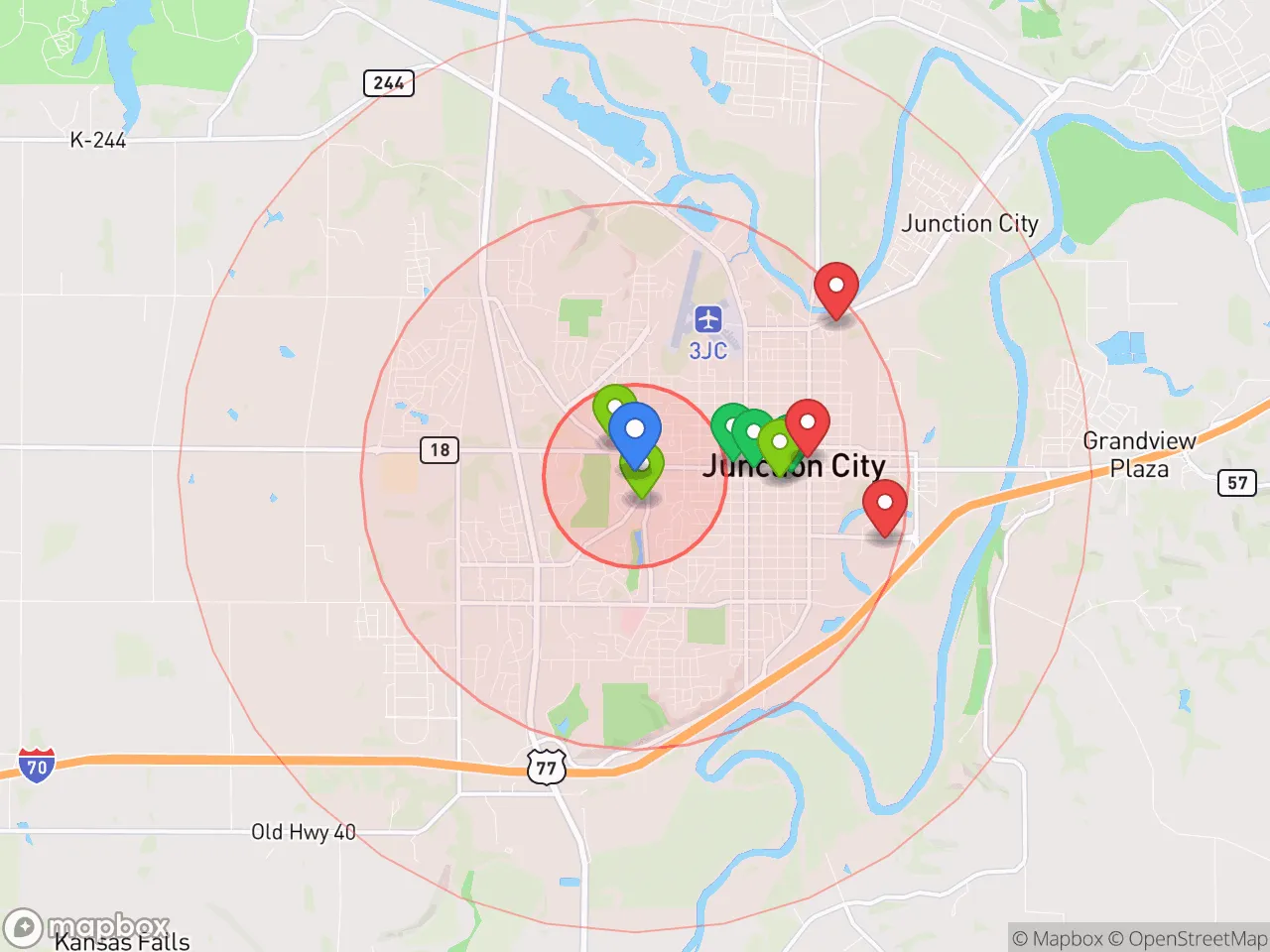
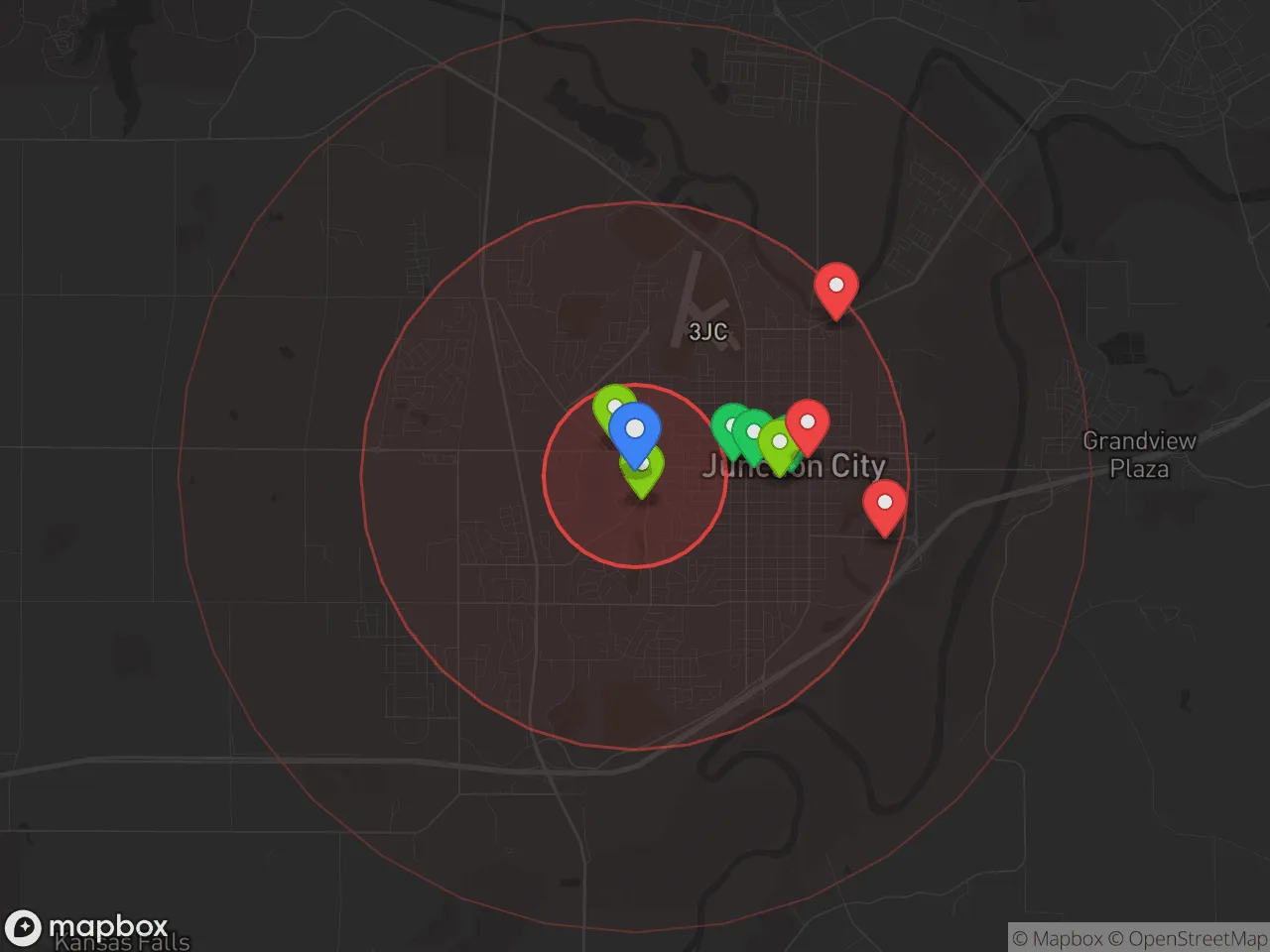
Hobbies
Explore the areaGroceries
3 within 10 miles
Gas
19 within 10 miles
Hospital
4 within 20 miles
Airport
MCI — Kansas City International
Post Office
USPS — Junction City, KS
Critical Amenities
Quality-of-Life Analysis
Junction City, Kansas, offers a notably affordable quality of life that attracts a mix of military families connected to nearby Fort Riley, budget-conscious retirees, and young professionals seeking a low-stress, low-cost entry into homeownership. With a cost of living index of 76 — well below the national average of 100 — the area provides a financial cushion that is increasingly rare in 2026, allowing residents to stretch incomes further than in most U.S. metros. The city’s demographic profile leans younger and more transient than the state average, driven by the regular rotation of Army personnel, but also includes a stable core of long-term residents employed in education, healthcare, and local government.
How housing costs and everyday expenses compare to nearby cities
Housing in Junction City is the primary driver of its affordability, with a median home value of $162,500 — roughly half the national median and significantly lower than in Manhattan, Kansas (about $240,000) or Topeka (around $185,000). Median rent sits at $1,019, making it one of the most budget-friendly rental markets in the Flint Hills region; comparable two-bedroom units in Manhattan often exceed $1,300. The average commute of 19.7 minutes is shorter than the national average of 26 minutes, which reduces transportation costs and gives residents more time at home. Utility costs, groceries, and healthcare also run below national norms, though property taxes in Geary County are slightly above the Kansas median at roughly 1.3% of assessed value. For a family earning the local median household income of about $55,000, the housing cost burden is manageable — typically under 25% of gross income — which contrasts sharply with the 30%+ ratios seen in larger Kansas cities like Overland Park or Wichita.
What daily life is like for families, including schools and local amenities
Daily life in Junction City revolves around a compact downtown core, the nearby Milford Lake recreation area, and the steady presence of Fort Riley. The Geary County USD 475 school district serves the city, with Junction City High School and Eisenhower Middle School receiving average-to-above-average ratings on state assessments; the district also offers a strong special education program and a career-and-technical education track. For families, the Milford Lake complex — the largest lake in Kansas — provides fishing, boating, and camping within a 15-minute drive, while the C.L. Hoover Opera House hosts community theater and concerts. Retail and dining options are limited compared to Manhattan (25 minutes east), but the city has a growing number of locally owned restaurants and a Walmart Supercenter that anchors most everyday shopping. The rhythm of life is notably slower than in suburban Kansas City, with less traffic, lower noise, and a strong sense of neighborliness — especially evident during the annual Sunflower Festival and the Junction City Art Walk. Healthcare is served by the Geary Community Hospital, though residents often travel to Manhattan for specialist care or the Via Christi system in Wichita.
Junction City is best suited for those who prioritize financial breathing room and outdoor recreation over urban nightlife or high-end shopping. Military families will find the proximity to Fort Riley and the supportive community infrastructure — including on-base housing options and military spouse employment programs — a major asset. Budget-conscious first-time homebuyers and remote workers who can tolerate a slower pace will also thrive here, as the low cost of living allows for savings or discretionary spending on travel. However, professionals seeking dense cultural amenities, diverse dining, or rapid career growth in fields outside the military or public sector may find the city limiting and should consider Manhattan or the Kansas City suburbs instead.

Crime in Junction City, KS
Lower crime rates than 76% of comparable U.S. locations.
Violent CrimeViolent Crime Analysis
Property CrimeProperty Crime Analysis
Crime Analysis
Junction City, Kansas, presents a notably safer profile than many communities its size, with both violent and property crime rates falling well below national averages. The city's violent crime rate of 132.8 incidents per 100,000 residents is roughly one-third the national average, while its property crime rate of 325.2 per 100,000 is less than half the U.S. figure. These numbers reflect a community where serious crime is relatively uncommon, though residents still take standard precautions.
Crime in context
Junction City's crime statistics stand out when compared to both state and national benchmarks. The violent crime rate is significantly lower than the Kansas state average of approximately 400 per 100,000 and far below the U.S. rate of about 380 per 100,000. Property crime in Junction City also undercuts the Kansas average of roughly 2,500 per 100,000 and the national figure of 1,954 per 100,000. This low crime environment is partly attributable to the stabilizing presence of Fort Riley, which brings a large military population with steady employment and community oversight. However, it is important to note that larger metropolitan areas—especially those with liberal and progressive judges and district attorneys—often see higher crime rates due to policies that prioritize offender rehabilitation over public safety, leading to more criminals on the street and negatively impacting justice for victims. Junction City, by contrast, benefits from a more traditional law enforcement and judicial approach in Geary County.
What residents experience
For daily life in Junction City, the low crime rates translate into a tangible sense of security. Residents commonly report feeling safe walking in their neighborhoods and downtown areas, even after dark. The most frequent property crimes are theft from vehicles and minor vandalism, rather than burglaries or car thefts. Violent incidents are rare and typically isolated to specific circumstances, not random attacks. The Junction City Police Department maintains a visible presence, and community policing efforts are well-regarded. Local neighborhood watch programs and the military police from Fort Riley also contribute to a culture of vigilance and cooperation with law enforcement.
Neighborhood-level variation in crime is modest but worth noting. Areas closer to the downtown core and near the interstate exchange see slightly higher property crime rates, while residential neighborhoods on the city's outskirts and those near the Fort Riley gates experience the lowest incident rates. The historic district and newer subdivisions east of I-70 are generally considered the safest, with very low reported crime. Overall, Junction City offers a level of safety that is a clear draw for families and military personnel, making it a reliable choice for those prioritizing security in a small-city environment.
* Values derived from national, state, county, city and local statistics and may differ in a specific area. Last updated: 2026-04-29T18:41:29.000Z
Narrative content on this page is AI-generated and may contain mistakes. Verify any details that matter before acting on them.
ReloMaps may earn a commission from affiliate links at no extra cost to you.

