Strategic Assessment of Jupiter Inlet Colony, FL
Meaningful friction. Expect exposure to either population pressure, blast zones, or natural disaster risk. Consider buying a retreat property.
What does the Strategic Assessment tell us?
Our Strategic Assessment grades tactical survivability of an area. Major population centers, military targets, fallout zones, natural disasters, and border exposure all drive risk — lower exposure means a more defensible position in a crisis.
This is heavily inspired by Joel Skousen's Strategic Relocation book. Highly recommended you checkout the book ($)What does this tell us?
Our Strategic Assessment grades tactical survivability of an area. Major population centers, military targets, fallout zones, natural disasters, and border exposure all drive risk — lower exposure means a more defensible position in a crisis.
This is heavily inspired by Joel Skousen's Strategic Relocation book. Highly recommended you checkout the book ($)Strategic Pillars

Key Distances
Regional Safe Places
Below is our recommended "safe zones" in Florida and the surrounding area based on our strategic heuristics. For most people, it's unrealistic to live in a “safe zone” full-time due to work, family or other personal reasons. They tend to be more rural. However, many of these areas are perfect for second homes and retreat properties that double as a vacation home or even a short-term rental.

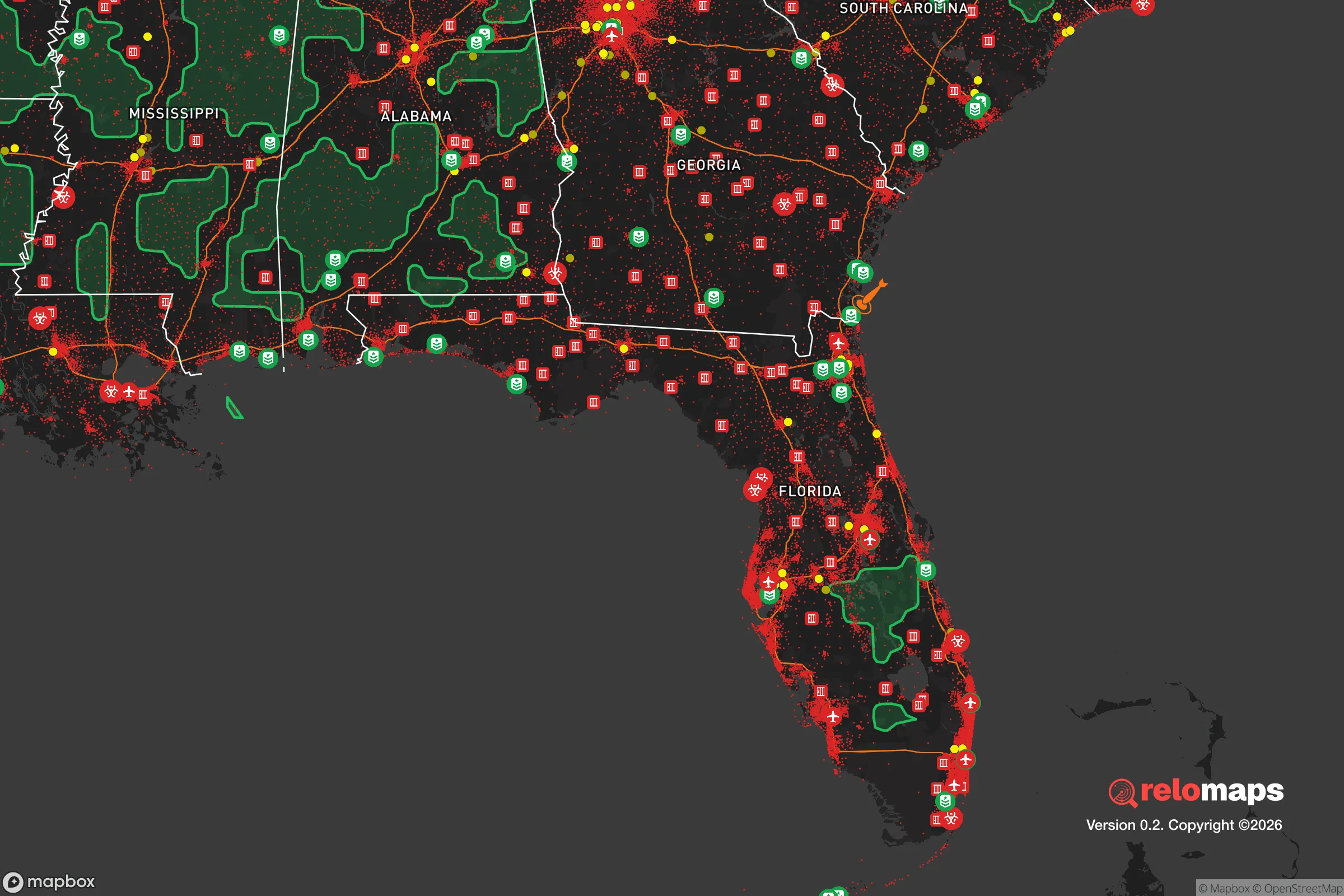


Important Note: For informational purposes only. This does not mean nothing bad ever happens in the green zones. Please use common sense. This is based on public data and modeled with AI. We tried to take a conservative approach but mistakes happen. We update this regularly as new information becomes available.
Solar Generator Recommendations
Backup power matters more here than in safer locations. We've picked three solar generators across budgets and capacity tiers — start with the budget unit if you only need a few essentials, or step up if you want to run a fridge and HVAC for days at a time.

Jackery Portable Power Station Explorer 300
Budget OptionPower on the Go: Weighing only 11 lbs, it's convenient to set up and store with book-sized foldable solar panels

BLUETTI Portable Power Station AC180
Designed for both indoor and outdoor scenarios, AC180 is highly capable as it has a robost capacity and continuous output power.

EF ECOFLOW DELTA Pro Ultra Power Station
Upgraded PickEcoFlow DELTA Pro Ultra is a whole-home energy system designed to grow with your family. Integrated with the Smart Home Panel 2, it scales to meet your evolving energy needs — keeping your home powered, intelligent, and secure through every stage of life.
We earn a commission, at no additional cost to you.
Strategic Assessment Analysis
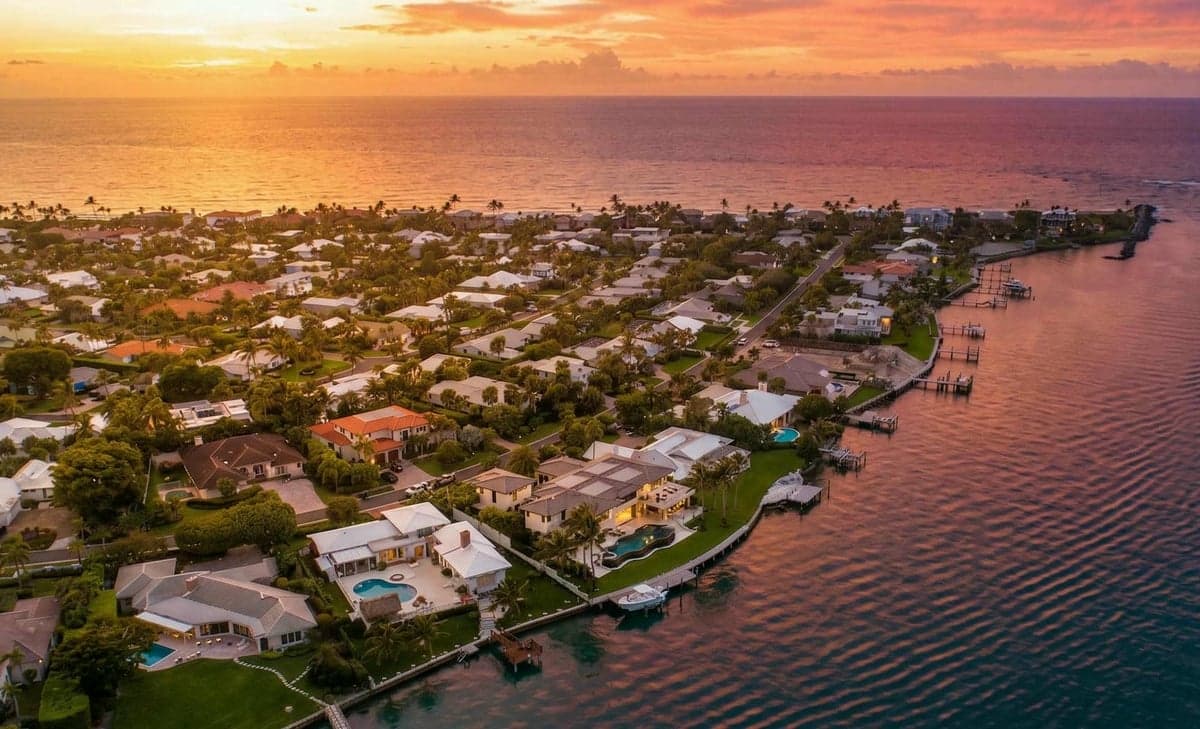
Jupiter Inlet Colony, Florida, presents a complex strategic picture for the conservative prepper or survivalist. Its primary advantage is its extreme geographic isolation—a small, gated barrier island community with a single road in and out, offering a natural chokepoint and a degree of physical separation from the mainland’s potential chaos. However, that same isolation becomes a critical liability when you consider its proximity to the densely populated Palm Beach–Miami corridor, a major target for civil unrest, mass casualty events, and infrastructure collapse. The colony’s resilience is a double-edged sword: defensible but dangerously exposed to fallout from nearby urban and military targets.
Geographic position and natural advantages for a strategic retreat
Jupiter Inlet Colony sits at the confluence of the Atlantic Ocean and the Jupiter Inlet, a naturally sheltered waterway. This location offers two key strategic benefits. First, the community is physically separated from the mainland by the Intracoastal Waterway and a narrow bridge—the only vehicular access point. This single-point entry can be monitored and, if necessary, defended with minimal manpower. Second, the surrounding waters provide a natural barrier against ground-based threats, while the nearby Jupiter Inlet Lighthouse and surrounding state park offer elevated observation points. The area’s subtropical climate allows for year-round gardening and foraging, with abundant local seafood (snook, redfish, and crab) in the inlet and nearshore waters. The shallow, protected waters of the Loxahatchee River estuary also provide a potential secondary escape route by small boat, should the bridge become compromised. For a relocator prioritizing defensibility and resource access, the colony’s geography is a strong starting point—but only if you can secure the bridge.
Risks, exposures, and proximity to fallout-relevant landmarks
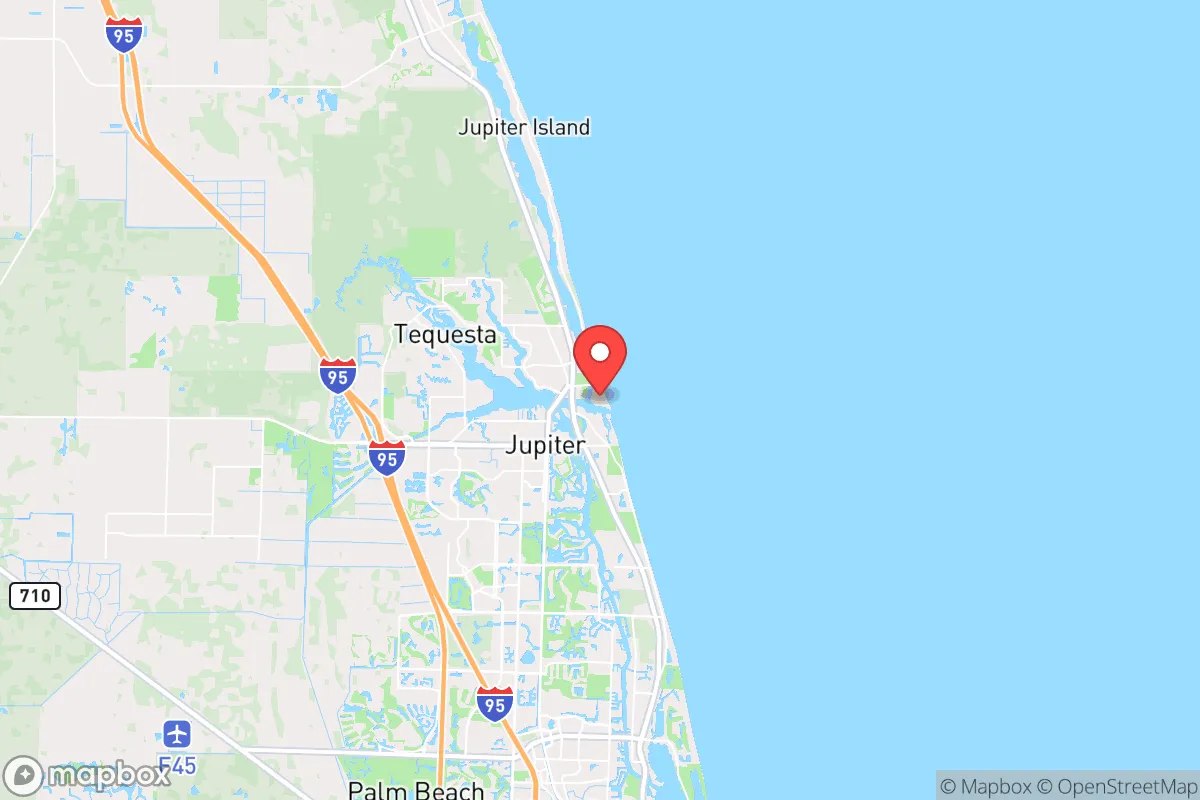
The colony’s greatest vulnerability is its proximity to high-value, high-risk targets. Jupiter Inlet Colony lies roughly 15 miles north of Palm Beach International Airport and 20 miles from the Port of Palm Beach, both potential nodes for mass evacuation or military staging during a crisis. More critically, it sits within 30 miles of the MacDill Air Force Base in Tampa (a primary CENTCOM hub) and the Port of Miami, a major logistics and naval facility. In a scenario involving civil unrest or a mass casualty event, these locations could become focal points for federal response—or targets for adversaries. The colony itself is a small, wealthy enclave (population under 300), which could make it a target for looting or forced relocation by desperate populations from the mainland. The single bridge is a double-edged sword: it can be defended, but if compromised, the colony becomes a trap. Additionally, the area is vulnerable to hurricane storm surge (the colony sits at sea level), and a major storm could render the bridge impassable for days or weeks, cutting off supply lines. For the survivalist, the risk of being trapped by either human or natural forces is a serious concern.
Practical resilience for a relocator: food, water, energy, and defensibility
For a single individual or family willing to invest in preparation, Jupiter Inlet Colony offers a workable but demanding resilience profile. Water is the most immediate concern: the colony relies on municipal water from the mainland, which could be disrupted. A private well is not feasible on a barrier island, so a prepper would need to stockpile at least 5 gallons per person per day, plus a high-capacity filtration system (e.g., Berkey or Sawyer) for rainwater collection or inlet water. The Loxahatchee River is brackish, so desalination (via solar stills or portable reverse osmosis) is necessary for long-term survival. Food security is moderate: the inlet and ocean provide year-round protein, but gardening is limited by sandy soil and salt spray. Raised beds with imported soil and a greenhouse would be essential. The colony has no commercial agriculture, so a prepper must rely on stored dry goods (rice, beans, canned meats) for at least 6–12 months. Energy is a bright spot: Florida’s abundant sunshine makes solar panels a viable primary power source. A modest 5kW system with battery storage (e.g., Tesla Powerwall or DIY LiFePO4) can run a refrigerator, lights, and communications gear. The colony’s small size (roughly 0.3 square miles) means a determined group could patrol the perimeter, but the open beach and waterfront create multiple potential entry points for small boats. Defensibility is high only if you control the bridge—a single vehicle checkpoint with a .308 rifle and a radio can hold it against disorganized threats. However, a coordinated attack or a large-scale evacuation wave would overwhelm any small group. The colony’s lack of a local police force (it relies on the Jupiter Police Department, which would be stretched thin) means self-defense is the only option.
In the broader strategic picture, Jupiter Inlet Colony is a niche option for the well-funded, well-prepared prepper who values isolation and is willing to accept the risks of being trapped. It is not a location for those seeking a self-sufficient homestead—it lacks the land, fresh water, and agricultural capacity for long-term independence. Instead, it functions best as a temporary redoubt for the first 6–12 months of a crisis, after which a prepper would need to relocate inland (e.g., to the Lake Okeechobee region or the Florida Panhandle) for sustainable survival. The colony’s proximity to high-value targets and its dependence on a single bridge make it a high-risk, high-reward choice. For the conservative relocator concerned with civil unrest and mass casualty events, this location demands a serious commitment to pre-positioning supplies, establishing water independence, and maintaining a low profile. If you can secure the bridge and the inlet, you have a defensible beachhead. If you cannot, you have a very expensive coffin.

* Values derived from national, state, county, city and local statistics and may differ in a specific area. Last updated: 2026-05-14T02:28:04.000Z
Narrative content on this page is AI-generated and may contain mistakes. Verify any details that matter before acting on them.
ReloMaps may earn a commission from affiliate links at no extra cost to you.

