Political ClimatePolitical Climate in Jupiter Inlet Colony, FL
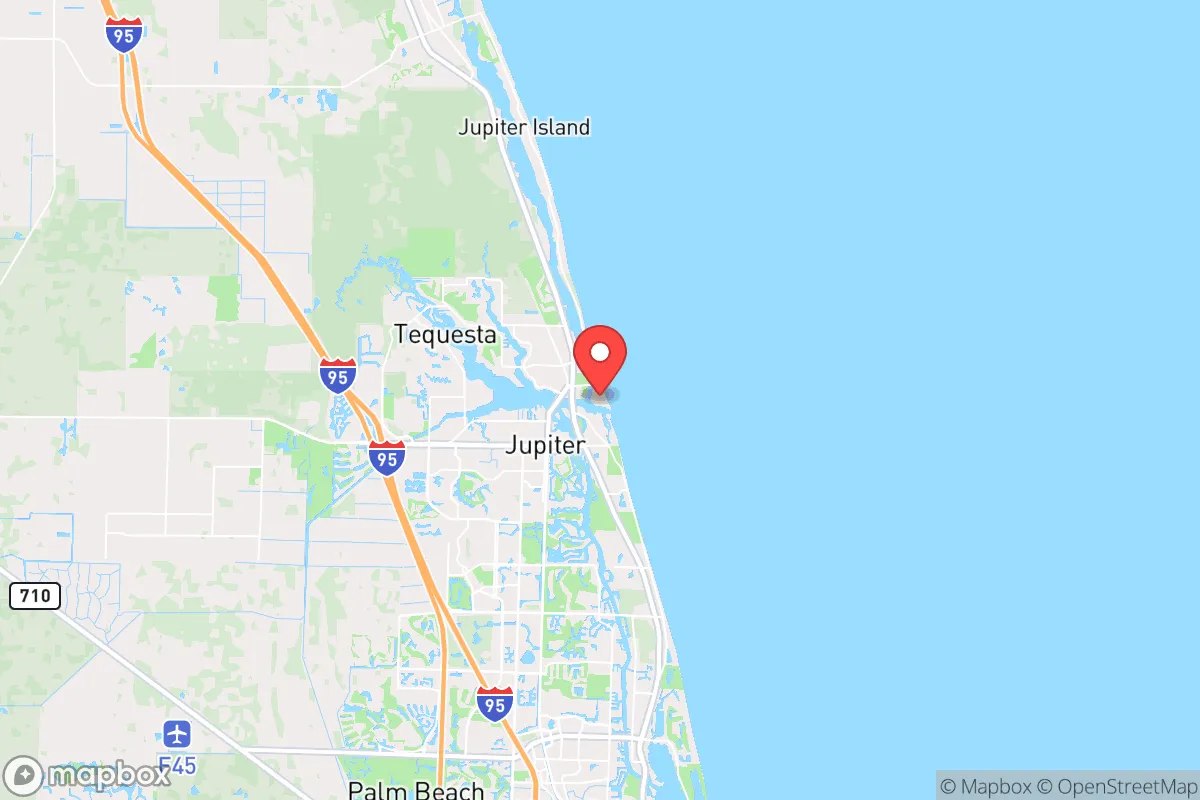
District shown is the primary district for this city’s centroid. Cities may span multiple districts.
Local Political AnalysisPolitical Analysis of Jupiter Inlet Colony, FL
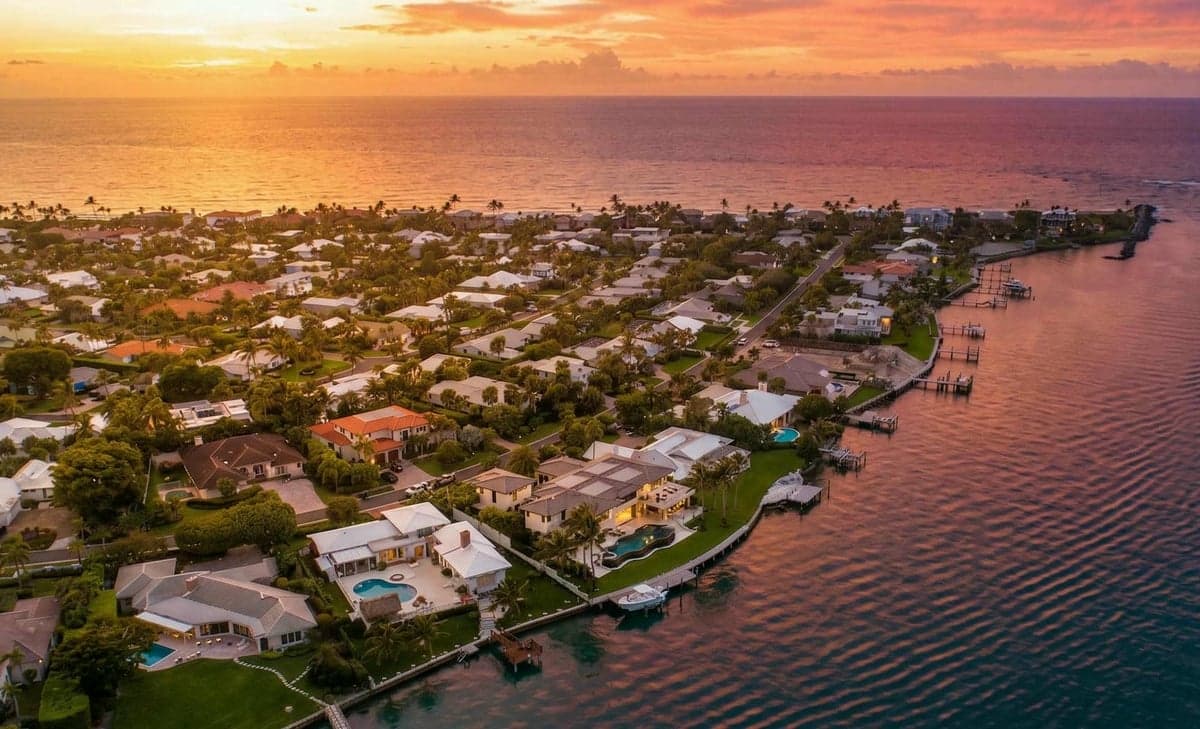
Jupiter Inlet Colony is about as solidly conservative as you’ll find on Florida’s east coast, and it’s been that way for decades. With a Cook PVI of R+7, this tiny town leans a full two points redder than the state of Florida itself, which sits at R+5. That might not sound like a huge gap, but when you live here, you feel it in the little things—the way people talk about property rights, the local zoning board’s attitude toward new development, and the general expectation that government should stay out of your backyard. The trajectory has been steady, though I’ve noticed a few worrying signs lately as Palm Beach County’s more progressive coastal towns start to influence regional politics.
How it compares
Compared to the rest of Florida, Jupiter Inlet Colony is a conservative stronghold in a county that’s been trending purple. Drive ten miles south to West Palm Beach or fifteen miles north to Stuart, and you’ll find a different political vibe—more mixed, more willing to entertain progressive ideas like higher impact fees or stricter environmental regulations on private property. Here in the Colony, we’ve historically resisted that. The R+7 rating reflects a community that votes reliably Republican in presidential and state races, and local elections are often decided by who’s seen as the more credible defender of individual freedoms. The contrast with Florida’s overall R+5 is meaningful: it means we’re not just a red dot in a red state; we’re a deeper shade, and that shows up in how our town council handles things like short-term rental restrictions or beach access rules. We tend to err on the side of letting homeowners do what they want with their land, as long as it doesn’t harm neighbors.
What this means for residents
For someone moving here, the political climate means you can expect a local government that’s skeptical of overreach. Property taxes are relatively low, and there’s little appetite for new ordinances that tell you how to maintain your lawn or what color you can paint your shutters. That said, I’ve seen a creeping shift over the last five years—more pressure from county-level officials to adopt uniform building codes and environmental rules that feel like they’re designed for denser, more liberal areas. If that trend continues, we could lose some of the autonomy that makes this place special. For now, though, the town’s small size (under 300 residents) means you still have a direct line to your elected officials, and they know that pushing too hard on progressive pet projects will get them voted out fast.
Culturally, Jupiter Inlet Colony is a place where people wave from golf carts and leave their doors unlocked, but there’s also a quiet wariness about outside influence. The biggest policy distinction from the rest of Florida is how we handle beachfront development: we’ve fought hard to keep commercial interests from turning our shoreline into a tourist strip, and that’s a conservative value—protecting local character against big-government or big-money schemes. Long-term, I’m cautiously optimistic. As long as we keep electing people who remember that the town’s charter was written to limit government, not expand it, we’ll stay the course. But I’d be lying if I said I wasn’t watching the county commission meetings a little closer these days.

State Political ClimatePolitical Climate in Florida
State Political AnalysisPolitical Environment in the State
Florida is a solidly Republican state with a Cook PVI of R+5, but don’t let that single number fool you—it’s a battleground in miniature, where a coalition of conservative-leaning retirees, suburban families, and rural voters has held the line against a rapidly growing progressive bloc from the Northeast and Latin America. Over the past 20 years, the state has shifted from a classic swing state (think Bush v. Gore in 2000) to a reliably red one in statewide races, with Republicans winning every governor’s race since 1998 and both U.S. Senate seats since 2018. The 2022 midterms were a watershed: Governor Ron DeSantis won by nearly 20 points, and Miami-Dade County—once a Democratic stronghold—flipped red for the first time in decades. That trajectory is no accident; it’s the result of deliberate policy and demographic sorting.
Urban vs. rural divide
The political map of Florida is a tale of three regions. The I-4 corridor from Tampa to Orlando is the classic swing zone, where suburban voters in places like Lakeland and Winter Park often decide elections. But the real story is the Miami-Dade shift: once a Democratic bastion, it’s now a red-leaning county thanks to Cuban, Venezuelan, and Nicaraguan voters who fled socialist regimes and vote Republican at high rates. Meanwhile, the Panhandle—places like Pensacola and Panama City—is deep red, culturally Southern, and reliably conservative. The blue dots are shrinking: Orlando and Gainesville (home to the University of Florida) remain liberal enclaves, but they’re surrounded by red suburbs. St. Petersburg and Tallahassee also lean left, but their influence is diluted by the sheer growth of red-leaning exurbs like Ocala and Port St. Lucie. The rural-urban divide is stark: in 2024, rural counties like Liberty and Lafayette voted 80%+ Republican, while urban core precincts in Miami and Orlando hit 70%+ Democrat.
Policy environment
Florida’s policy environment is a conservative’s dream—low taxes, light regulation, and a focus on parental rights. There’s no state income tax, a huge draw for high-earners and retirees. Property taxes are capped by the Save Our Homes amendment, and the homestead exemption shields up to $50,000 of home value. The regulatory climate is business-friendly: no state-level minimum wage above the federal floor (though voters passed a $15 minimum by 2026 via ballot initiative), and right-to-work laws keep unions weak. On education, the Parental Rights in Education Act (HB 1557, the “Don’t Say Gay” law) restricts classroom instruction on sexual orientation and gender identity through third grade, and the School Choice program is among the most expansive in the nation, with vouchers and education savings accounts available to nearly all families. Healthcare is mixed: the state refused Medicaid expansion under the ACA, but it has robust telehealth laws and a competitive insurance market. Election laws tightened after 2020: SB 90 (2021) limited drop boxes, required ID for mail ballots, and restricted third-party ballot collection. The state also banned sanctuary cities via SB 168 (2019), requiring local law enforcement to cooperate with ICE.
Trajectory & freedom
Florida is becoming more free in the traditional sense—lower taxes, less government intrusion into daily life—but that freedom is increasingly defined by conservative values. The Constitutional Carry law (SB 150, 2023) allows permitless carry of firearms, a major expansion of Second Amendment rights. The Individual Freedom Act (HB 7, 2022) bans critical race theory in workplaces and schools, protecting free speech from compelled diversity training. On medical freedom, SB 988 (2023) prohibits COVID-19 vaccine mandates by private employers unless they allow exemptions. Parental rights were strengthened by HB 1 (2023), which expanded the original “Don’t Say Gay” law to all grades and banned classroom instruction on gender identity. Property rights got a boost with SB 250 (2023), limiting homeowners’ association fines and restricting deed restrictions on short-term rentals. The only area where freedom has contracted is on the left’s pet issues: abortion is banned after 15 weeks (HB 5, 2022) with a six-week ban (HB 7, 2023) pending court review, and recreational marijuana remains illegal despite a 2024 ballot initiative that fell short of the 60% threshold. The trend is clear: Florida is doubling down on individual liberty in the economic and cultural spheres, while restricting it on social issues where conservatives see a moral stake.
Civil unrest & political movements
Florida has seen its share of political flashpoints, but they’re less about street violence and more about organized activism. The 2020 protests in Miami and Orlando were relatively small compared to Portland or Seattle, thanks to a quick law enforcement response and a state preemption law that prevented local defunding. The Moms for Liberty movement, born in Brevard County, has become a national force, pushing for school board transparency and parental rights. On the left, the Dream Defenders and ACLU of Florida have been active in challenging the six-week abortion ban and the Parental Rights law. Immigration politics are hot: the Unaccompanied Alien Children crisis in 2021 saw thousands of minors sent to shelters in places like Homestead, sparking local backlash. The state’s SB 1718 (2023) made it a crime to transport undocumented immigrants into Florida, and Governor DeSantis bused migrants to Martha’s Vineyard as a political statement. Election integrity remains a flashpoint: the 2020 recount in Broward and Palm Beach counties was chaotic, leading to the creation of the Office of Election Crimes and Security in 2022, which has prosecuted dozens of cases of double voting. A new resident would notice the strong police presence in urban areas and the active civic engagement around school boards and county commissions—politics here is local and personal.
Projection
Over the next 5-10 years, Florida will likely become more Republican, not less. The in-migration is overwhelmingly from blue states like New York, California, and Illinois, but these newcomers are often fiscally conservative or culturally moderate—they’re fleeing high taxes and crime, not looking to turn Florida blue. The Hispanic vote is the wild card: younger, U.S.-born Latinos are more liberal than their Cuban parents, but they’re still a decade away from being a dominant force. Meanwhile, the retiree boom from the Midwest and Northeast will continue to favor Republicans, especially on taxes and property rights. The biggest risk to the conservative trajectory is climate change: rising sea levels and hurricane intensity could drive up insurance costs and property taxes, potentially pushing out the middle class and creating a new constituency for government intervention. But for now, the state’s political leadership is doubling down on growth, with SB 1024 (2023) limiting local government ability to deny development permits. Expect more school choice expansion, further tax cuts, and continued battles over abortion and immigration. The state will remain a national laboratory for conservative governance, with other red states copying its playbook.
For a new resident, the bottom line is this: Florida offers a high degree of personal and economic freedom compared to most states, but that freedom comes with a specific cultural and political framework. You’ll pay no state income tax, you can carry a concealed weapon without a permit, and your kids won’t be taught about gender identity in elementary school. But you’ll also face high property insurance costs, a six-week abortion ban, and a state government that actively enforces immigration law. If you’re a conservative-leaning individual or parent looking to escape a high-tax, high-regulation blue state, Florida is the most obvious destination—just be prepared for the humidity and the politics to both be intense.
* Values derived from national, state, county, city and local statistics and may differ in a specific area. Last updated: 2026-05-14T02:28:04.000Z
Narrative content on this page is AI-generated and may contain mistakes. Verify any details that matter before acting on them.
ReloMaps may earn a commission from affiliate links at no extra cost to you.

