 Popular
Photo: Wikipedia
Quality of Life in Kansas City, MO
Above-average quality of iife. The area offers a reasonable cost of living, decent mobility, and a mix of neighborhood amenities.
What does Quality of Life tell us?
Quality of Life blends cost of living, nearby amenities, socioeconomic signals, and neighborhood character. City-level scores represent the whole municipality; individual neighborhoods can differ.
What does this tell us?
Quality of Life blends cost of living, nearby amenities, socioeconomic signals, and neighborhood character. City-level scores represent the whole municipality; individual neighborhoods can differ.
Cost of Living
7% below national average
The Real Cost of Living in Kansas City, MO for 2026
| Tier | Individual | Family (4) |
|---|---|---|
| Survival | $19k | $36k |
| Comfortable | $44k | $65k |
| Luxury | $122k+ | $189k+ |
| Elite (Top 5%) | $148k+ | $229k+ |
104%
The Area Signal
A metric tracking the socioeconomic signals of the area.
Hobbies
Explore the areaGroceries
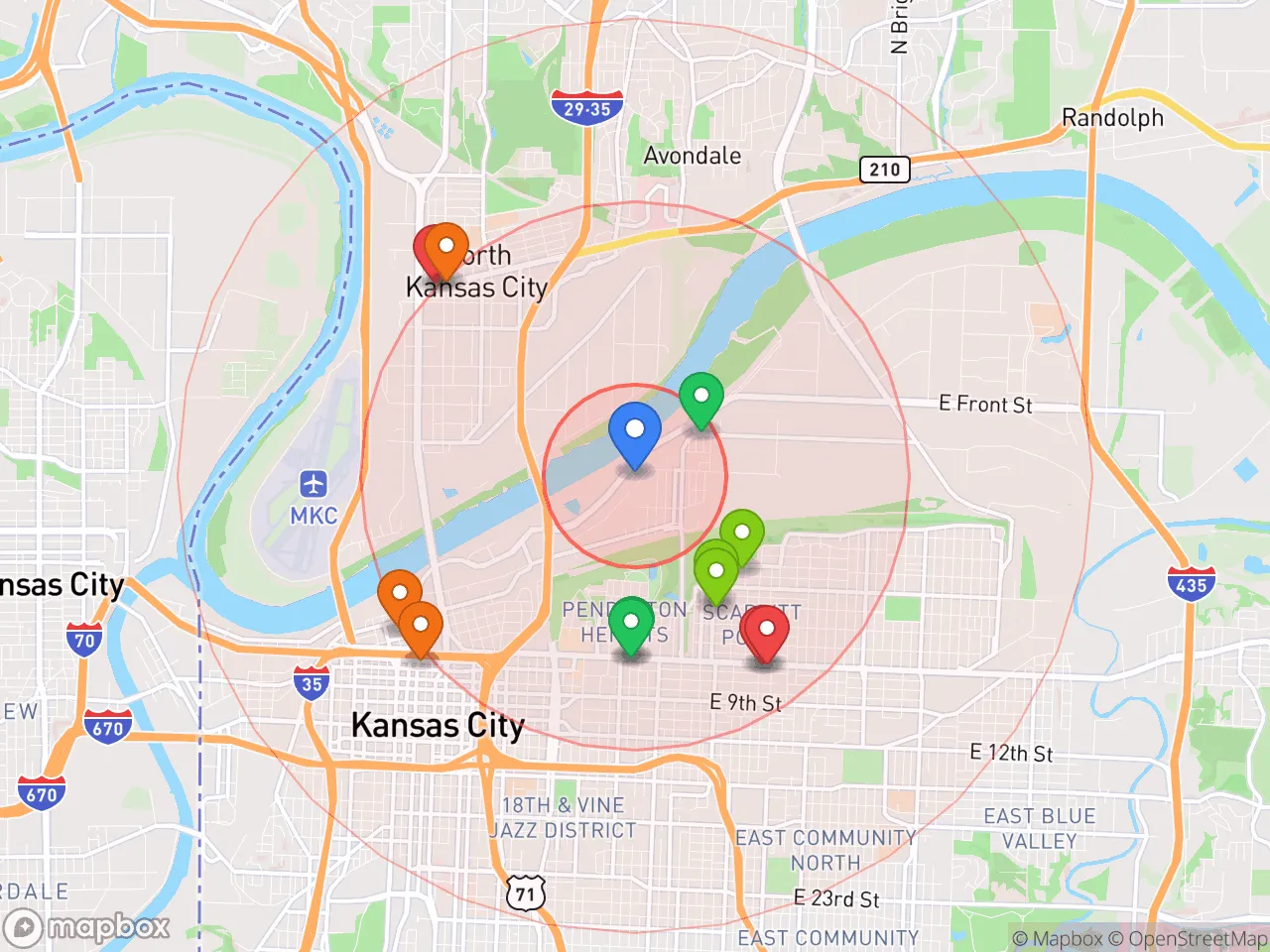
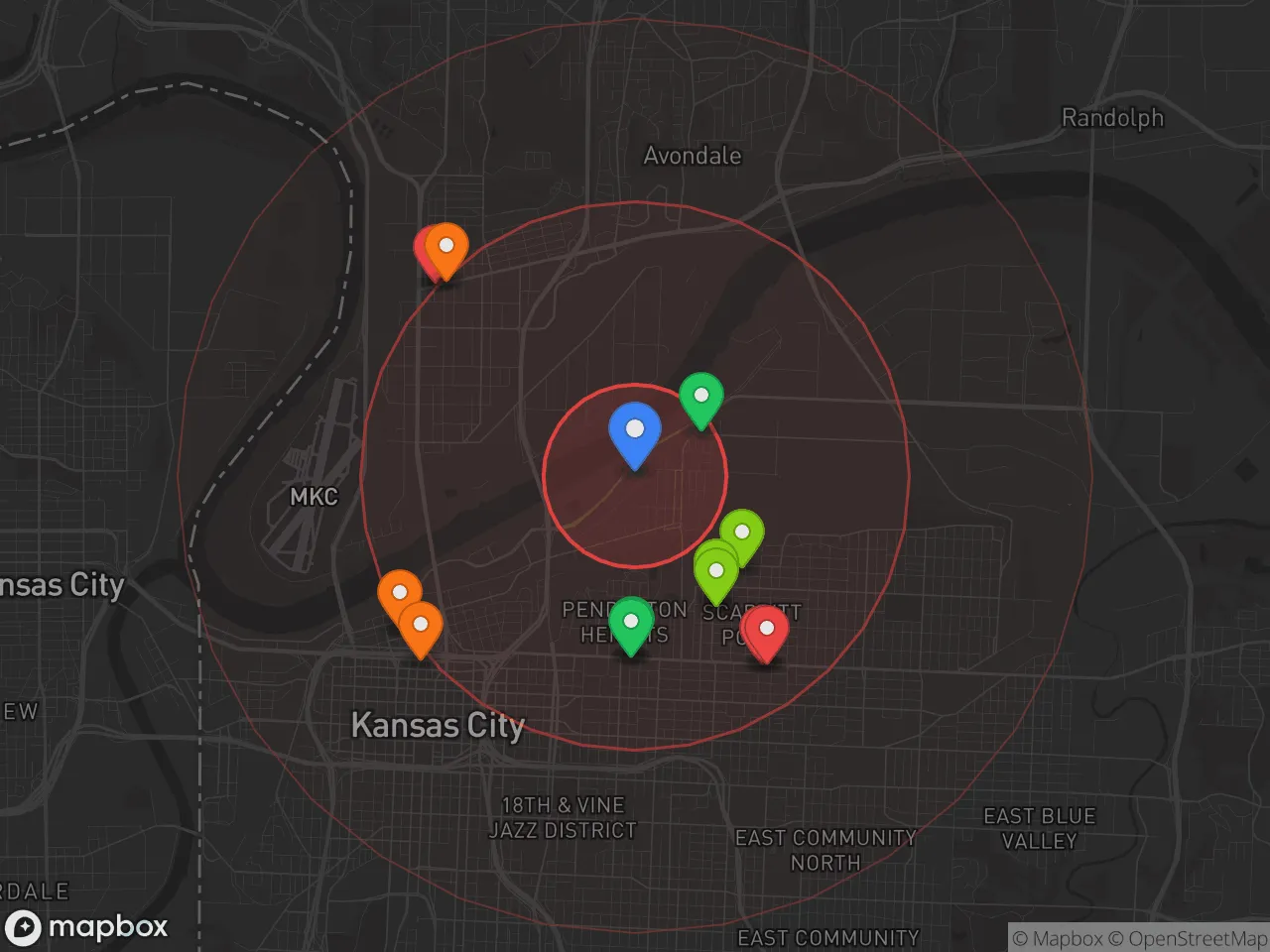
7 within 10 miles
Gas
20 within 10 miles
Hospital
20 within 20 miles
Airport
MCI — Kansas City International
Post Office
USPS — North Kansas City, MO
Critical Amenities
Quality-of-Life Analysis
Kansas City, Missouri offers a quality of life defined by Midwestern affordability paired with big-city amenities, attracting a mix of young professionals, growing families, and creative-class workers drawn to its low cost of living and vibrant arts scene. With a cost-of-living index of 93 (100 is the U.S. average), the metro area consistently ranks as one of the most affordable major cities in the country, making it a practical choice for those seeking urban energy without coastal price tags. The population skews younger than the national median, with a notable concentration of workers in healthcare, logistics, and professional services, while the city’s historic neighborhoods and expanding downtown core appeal to those who value walkability and cultural density.
Cost of living, housing, and affordability compared to nearby suburbs
Kansas City’s overall affordability is a primary draw, with the median home value at $227,000 — roughly half the national median — and median rent at $1,186, well below the U.S. average of $1,400. This price advantage is most pronounced when compared to suburbs like Overland Park, Kansas, where median home values exceed $350,000, or Lee’s Summit, where values hover around $310,000. The average commute of 21.9 minutes is shorter than the national average of 26 minutes, allowing residents to live affordably in central neighborhoods like Brookside, Waldo, or the Northland while still reaching downtown or the Country Club Plaza in under 25 minutes. Property taxes in Missouri are relatively low (roughly 0.8% of assessed value), though income taxes are progressive up to 5.4%, and sales taxes in Kansas City proper can reach 9.125% due to combined city and county levies. For renters, the city’s inventory of older duplexes and fourplexes in midtown keeps entry-level costs manageable, though newer luxury apartments in the Crossroads Arts District command rents above $1,800.
What daily life is like for families and professionals: amenities, schools, and rhythm
Daily life in Kansas City balances a relaxed pace with a robust calendar of cultural events, anchored by the Nelson-Atkins Museum of Art, the Kauffman Center for the Performing Arts, and the World War I Museum and Memorial. The city’s public school system, Kansas City Public Schools, has faced historic challenges with funding and enrollment, but several charter schools — such as AC Prep and Hogan Preparatory Academy — offer strong alternatives, and suburban districts like Park Hill and North Kansas City are highly rated. For families, the Kansas City Zoo, Science City at Union Station, and over 200 parks (including the sprawling Swope Park) provide year-round recreation. The food scene is a defining feature, with a deep bench of barbecue institutions (Joe’s Kansas City, Arthur Bryant’s) alongside a growing farm-to-table movement in the Crossroads. The city’s rhythm is notably car-dependent outside the urban core, but the KC Streetcar connects downtown, the River Market, and Union Station, with an extension to the Plaza under construction. Sports fans follow the Chiefs (NFL) and Royals (MLB), and the city’s low-key, neighborly vibe means residents often know their baristas and bartenders by name.
Kansas City is best suited for those who want a genuine urban experience — arts, dining, professional opportunity — without the stress of a high cost of living or brutal commutes. It works well for first-time homebuyers who can enter the market on a modest salary, for remote workers seeking a lower tax burden than states like California or New York, and for families willing to navigate the school-choice landscape to find a good fit. It is less ideal for those seeking a 24-hour city with late-night transit or a dense, walkable core comparable to Chicago or New York. The city’s affordability, however, gives residents financial breathing room to travel, invest, or simply enjoy a higher standard of living than their paycheck might afford elsewhere.

Crime in Kansas City, MO
Significantly higher crime rates than 90% of comparable U.S. locations.
Violent CrimeViolent Crime Analysis
Property CrimeProperty Crime Analysis
Crime Analysis
Kansas City, Missouri, faces a serious public safety challenge, with crime rates that significantly exceed both state and national averages. The city’s violent crime rate of 1,369.4 incidents per 100,000 residents is roughly three times the national average, while the property crime rate of 3,962.6 per 100,000 is nearly double the U.S. figure. These statistics place Kansas City among the most dangerous large cities in the Midwest, a reality driven in part by the area’s status as a large metro region with a justice system influenced by progressive prosecutorial policies that prioritize offender leniency over public safety.
Crime in context
Kansas City’s violent crime rate is more than double Missouri’s state average of roughly 540 per 100,000 and far exceeds the national rate of about 380 per 100,000. Property crime is similarly elevated, with the city’s rate outpacing the state average of approximately 2,500 per 100,000. The disparity is stark when compared to smaller, more conservative-leaning suburbs in the metro area, such as Lee’s Summit or Blue Springs, where crime rates are a fraction of Kansas City’s. The city’s high crime numbers are a direct consequence of a criminal justice environment where progressive district attorneys and judges have implemented policies like cash bail reform and reduced charging for non-violent offenses, effectively putting more offenders back on the street and undermining deterrence.
What residents experience
For residents, the high crime rates translate into tangible daily risks. Carjackings, armed robberies, and burglaries are common occurrences, particularly in neighborhoods near downtown and along the Troost Avenue corridor. Property crime, including vehicle theft and break-ins, is a near-constant concern, with many residents investing in security cameras, steering wheel locks, and neighborhood watch groups. The city’s homicide rate, which has consistently topped 150 per year since 2020, creates a climate of fear that affects quality of life and property values. The progressive approach to prosecution—marked by a reluctance to hold repeat offenders accountable—means that many residents feel the justice system is not on their side, leaving them to bear the burden of a revolving-door criminal justice system.
Neighborhood-level variation is significant, however. Safer enclaves like the Northland (north of the Missouri River) and the historic Country Club Plaza area have lower crime rates, though they are not immune to spillover from high-crime zones. In contrast, areas east of Troost Avenue and parts of the East Side experience the highest concentrations of violent crime. Prospective residents should research specific ZIP codes and consult local crime maps, as the difference between a block in a safe pocket and a high-risk corridor can be stark. Ultimately, Kansas City’s crime problem is deeply tied to its progressive governance, and those considering a move should weigh the risks carefully against the city’s cultural and economic attractions.
* Values derived from national, state, county, city and local statistics and may differ in a specific area. Last updated: 2026-04-30T00:39:29.000Z
Narrative content on this page is AI-generated and may contain mistakes. Verify any details that matter before acting on them.
ReloMaps may earn a commission from affiliate links at no extra cost to you.

