 Popular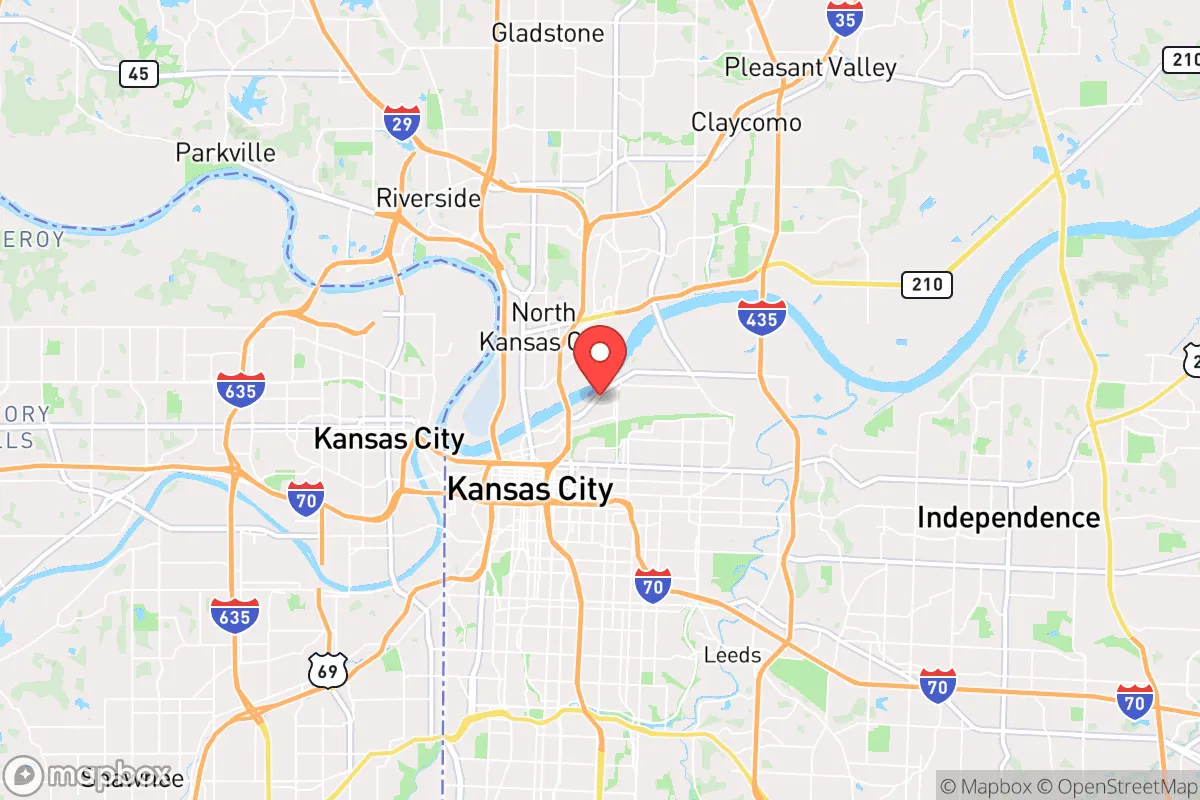
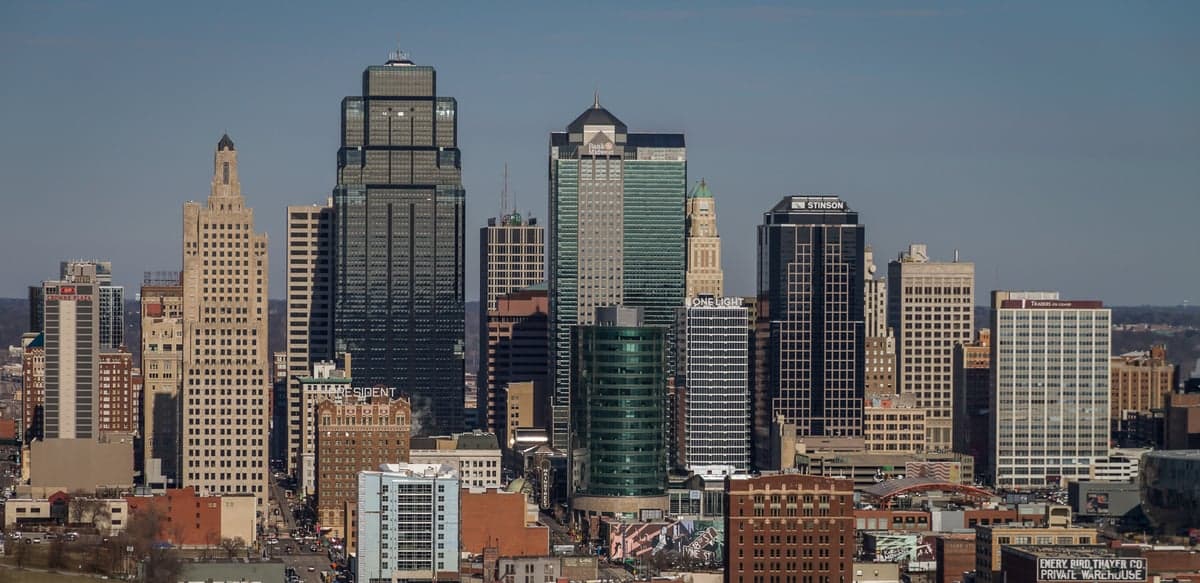
Photo: Wikipedia
Strategic Assessment of Kansas City, MO
Multiple tactical vulnerabilities. Population density, target proximity, or disaster risk are likely compounding. A retreat property and exit planning is required.
What does the Strategic Assessment tell us?
Our Strategic Assessment grades tactical survivability of an area. Major population centers, military targets, fallout zones, natural disasters, and border exposure all drive risk — lower exposure means a more defensible position in a crisis.
This is heavily inspired by Joel Skousen's Strategic Relocation book. Highly recommended you checkout the book ($)What does this tell us?
Our Strategic Assessment grades tactical survivability of an area. Major population centers, military targets, fallout zones, natural disasters, and border exposure all drive risk — lower exposure means a more defensible position in a crisis.
This is heavily inspired by Joel Skousen's Strategic Relocation book. Highly recommended you checkout the book ($)Strategic Pillars

Key Distances
Regional Safe Places
Below is our recommended "safe zones" in Missouri and the surrounding area based on our strategic heuristics. For most people, it's unrealistic to live in a “safe zone” full-time due to work, family or other personal reasons. They tend to be more rural. However, many of these areas are perfect for second homes and retreat properties that double as a vacation home or even a short-term rental.


Important Note: For informational purposes only. This does not mean nothing bad ever happens in the green zones. Please use common sense. This is based on public data and modeled with AI. We tried to take a conservative approach but mistakes happen. We update this regularly as new information becomes available.
Solar Generator Recommendations
Backup power matters more here than in safer locations. We've picked three solar generators across budgets and capacity tiers — start with the budget unit if you only need a few essentials, or step up if you want to run a fridge and HVAC for days at a time.

Jackery Portable Power Station Explorer 300
Budget OptionPower on the Go: Weighing only 11 lbs, it's convenient to set up and store with book-sized foldable solar panels

BLUETTI Portable Power Station AC180
Designed for both indoor and outdoor scenarios, AC180 is highly capable as it has a robost capacity and continuous output power.

EF ECOFLOW DELTA Pro Ultra Power Station
Upgraded PickEcoFlow DELTA Pro Ultra is a whole-home energy system designed to grow with your family. Integrated with the Smart Home Panel 2, it scales to meet your evolving energy needs — keeping your home powered, intelligent, and secure through every stage of life.
We earn a commission, at no additional cost to you.
Strategic Assessment Analysis
Kansas City, Missouri, occupies a strategic middle-ground position that offers genuine resilience advantages for those planning around civic unrest, supply chain disruptions, or large-scale disasters, but it also carries significant exposure risks that demand clear-eyed assessment. Its location at the confluence of the Missouri and Kansas Rivers provides a natural water supply and historical transportation corridor, while its distance from both coasts and major fault lines reduces vulnerability to hurricanes, earthquakes, and tsunami threats. However, the city’s proximity to a major rail hub, an interstate highway crossroads, and a large metropolitan population of roughly 2.2 million means that any national-scale disruption — whether economic collapse, civil unrest, or a mass casualty event — will likely concentrate here. For the conservative-leaning relocator who values self-sufficiency, low population density, and defensible space, Kansas City offers a mixed picture: it is not a remote redoubt, but it is far better positioned than coastal megacities for weathering prolonged instability.
Geographic position and natural advantages for long-term survival
Kansas City sits in the heart of the American breadbasket, which is arguably the single most important natural advantage for any resilience-minded relocation. The surrounding region — eastern Kansas and western Missouri — is some of the most productive agricultural land in the world, with deep topsoil, reliable rainfall, and a growing season long enough for corn, soybeans, wheat, and vegetables. This means that in a scenario where national food distribution collapses, the area around Kansas City would be one of the last places to run out of locally grown calories. The Missouri River provides a massive, year-round freshwater source that is unlikely to be contaminated by saltwater intrusion or coastal storm surge, unlike rivers near the Gulf or Atlantic coasts. The region also sits on the Ogallala Aquifer’s eastern edge, offering groundwater access for those who drill private wells outside city limits. Elevation is moderate — roughly 800 to 1,000 feet above sea level — so flash flooding is localized, and the area is not prone to landslides, wildfires, or sinkholes. Winters are cold but manageable, with average January lows around 20°F, and summers are hot and humid, which supports agriculture but also means heat-related health risks during prolonged power outages. For a prepper, the key takeaway is that Kansas City’s natural resource base — water, fertile soil, moderate climate — is among the best in the continental United States for sustaining a population through a multi-year crisis.
Risks, exposures, and proximity to fallout-relevant landmarks
The most serious vulnerability for Kansas City in a national emergency is its role as a transportation and logistics hub. The city is the second-largest rail hub in the United States by volume, with major classification yards for BNSF, Union Pacific, and Norfolk Southern. It sits at the intersection of Interstates 35, 29, 70, and 435, making it a natural chokepoint for trucking and military logistics. In a scenario involving civil unrest, mass migration from coastal cities, or a cascading infrastructure failure, Kansas City would become a funnel for displaced populations, refugees, and potentially hostile elements moving along these corridors. The city also hosts a major federal presence: the IRS service center, the U.S. Army’s Fort Leavenworth (just 30 miles northwest), and Whiteman Air Force Base (60 miles east), which operates B-2 stealth bombers. While these installations provide a security buffer in some scenarios, they also make the region a potential target for strategic attacks — whether cyber, electromagnetic pulse (EMP), or conventional — aimed at disrupting military command and control. Additionally, the nearby Wolf Creek Generating Station (a nuclear power plant 90 miles southwest) and the Truman Dam complex (which controls the Osage River) represent industrial hazards that, while low-probability, could create localized contamination or flooding if compromised. For the conservative relocator, the calculus is clear: Kansas City’s centrality is a double-edged sword — it offers supply access but also attracts the very chaos you are trying to avoid.
Practical resilience for a relocator: food, water, energy, and defensibility
For a single individual or family looking to establish a resilient homestead within commuting distance of Kansas City, the practical picture is encouraging but requires deliberate planning. The suburban and exurban rings — places like Lee’s Summit, Grain Valley, Odessa, or the rural areas north of the river in Platte and Clay counties — offer affordable land with well water potential and space for gardens, chickens, and small livestock. Property taxes in Missouri are among the lowest in the nation, and the state has relatively permissive zoning laws for accessory structures, rainwater collection, and alternative energy systems. Solar panels are a viable investment here: the region averages 200 sunny days per year, and net metering policies allow homeowners to sell excess power back to the grid — though in a grid-down scenario, battery storage becomes essential. Natural gas is widely available in suburban areas, but for true off-grid resilience, propane tanks and wood-burning stoves are more reliable. The biggest practical challenge is defensibility. Kansas City’s terrain is mostly flat to gently rolling, with few natural chokepoints or high-ground positions. A rural property with a long driveway, perimeter fencing, and good visibility is achievable but requires capital. Crime in the urban core — particularly in neighborhoods east of Troost Avenue — is high, with Kansas City consistently ranking among the top 10 U.S. cities for violent crime per capita. This means that relocating to the outer suburbs or exurbs is not just a lifestyle preference but a security necessity. For water, the Missouri River is a reliable source, but it requires filtration and treatment; a private well with a hand pump or solar-powered pump is far more secure. Food storage is straightforward: the area has numerous Costco, Sam’s Club, and local farm co-ops, and the growing season allows for canning and dehydrating. Overall, Kansas City’s practical resilience is strong for those who choose the right location and invest in basic infrastructure — but it is not a turnkey survival zone.
The overall strategic picture for Kansas City, MO, is one of calculated trade-offs. It offers excellent natural resources, low natural disaster risk, and affordable land with good agricultural potential — all of which are critical for long-term self-sufficiency. But its role as a national transportation hub, its proximity to military targets, and its high urban crime rate mean that the conservative relocator must plan for the worst-case scenario: a mass migration event or civil unrest that turns the city into a contested zone. The smart play is not to live in Kansas City proper, but to establish a base in the rural or exurban fringe within a 30- to 60-minute drive, where you can access the city’s supply chains and medical facilities during stable times while maintaining distance during crises. If you are looking for a location that balances access to infrastructure with genuine survival capability, Kansas City deserves serious consideration — but only if you are willing to do the work of securing your own water, energy, and perimeter. It is not a bug-out location; it is a strategic hub that requires a clear-eyed, disciplined approach to resilience.

* Values derived from national, state, county, city and local statistics and may differ in a specific area. Last updated: 2026-04-30T00:39:29.000Z
Narrative content on this page is AI-generated and may contain mistakes. Verify any details that matter before acting on them.
ReloMaps may earn a commission from affiliate links at no extra cost to you.

