 Popular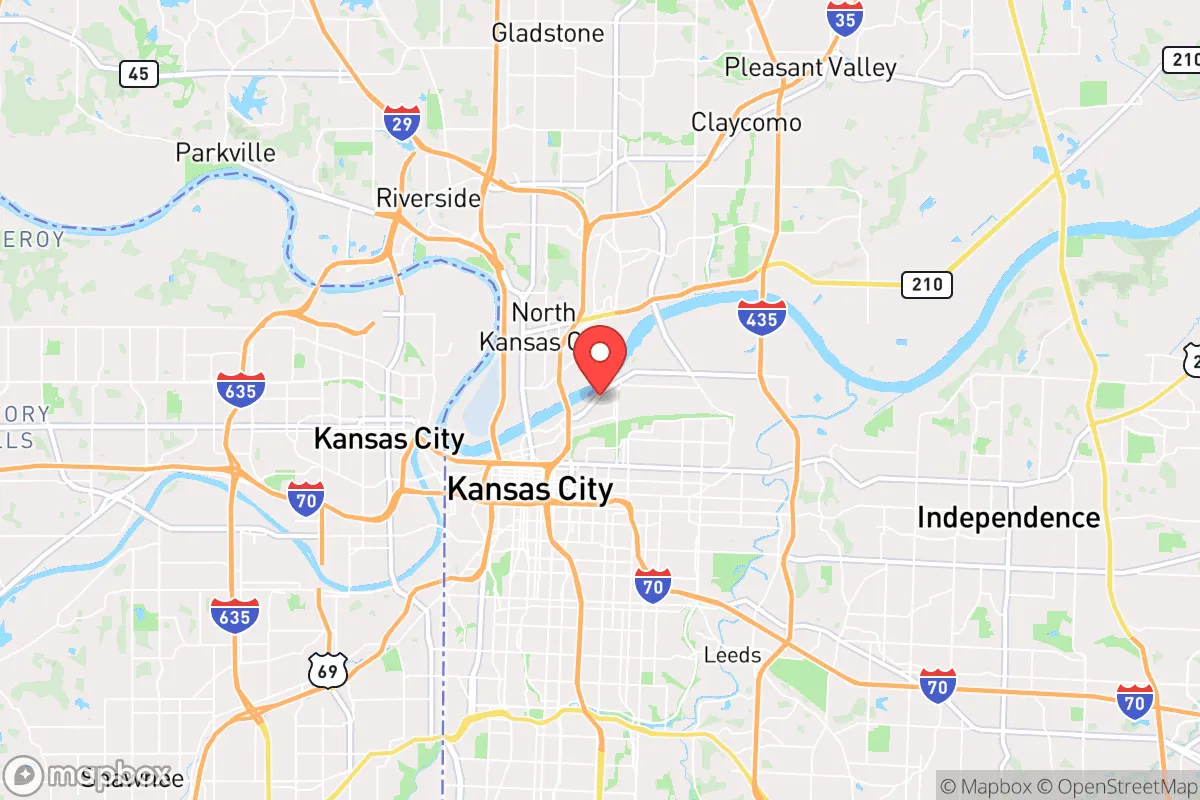

Photo: Wikipedia
Political ClimatePolitical Climate in Kansas City, MO
District shown is the primary district for this city’s centroid. Cities may span multiple districts.
Local Political AnalysisPolitical Analysis of Kansas City, MO
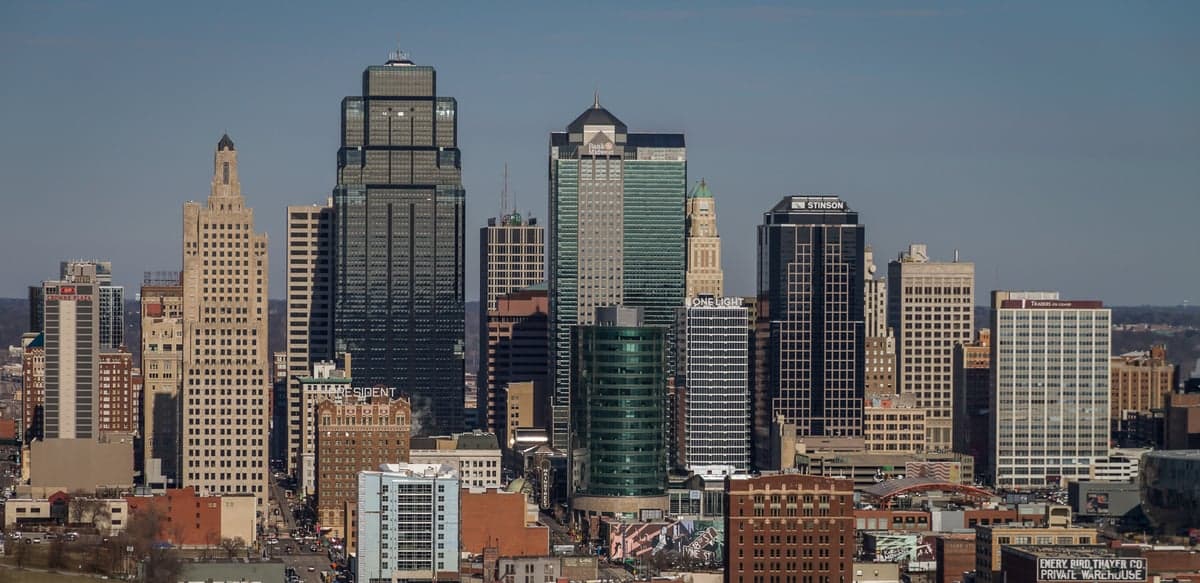
Kansas City, Missouri, leans heavily Democratic, with a Cook PVI of D+12, meaning the city votes about 12 points more Democratic than the national average. This wasn't always the case—I remember when this town was a lot more purple, with a strong moderate-to-conservative streak, especially in the Northland and older neighborhoods. But over the last decade or so, the city's politics have shifted hard to the left, driven by rapid growth in the urban core and a wave of progressive activism that's reshaped local government. If you're looking at the long-term trajectory, it's hard to see that trend reversing anytime soon, and that's something to keep in mind if you value limited government and personal freedoms.
How it compares
To really understand Kansas City's political climate, you have to look at the contrast with its surroundings. The city itself is a deep blue island in a sea of red. Drive 20 minutes south to Lee's Summit or 15 minutes east to Blue Springs, and you're in solidly conservative suburbs where property taxes are lower, zoning is more relaxed, and the local politics are far more skeptical of big government. Even across the state line in Johnson County, Kansas—places like Overland Park and Olathe—you'll find a more balanced mix, with a strong libertarian-leaning streak that pushes back on the kind of progressive policies you see in KCMO. The city's D+12 rating puts it in the same league as places like Denver or Portland, but the surrounding counties vote like rural Texas. That split means state-level politics often clash with city ordinances, especially on issues like gun rights, tax policy, and public health mandates.
What this means for residents
For someone who values personal freedom and minimal government overreach, living in Kansas City proper means dealing with a city council that's increasingly comfortable with regulation. You've seen it in the push for higher minimum wages, stricter landlord ordinances, and a general attitude that the city knows best. The property tax burden has crept up, and there's a growing appetite for new fees and taxes to fund pet projects. If you're a small business owner or a homeowner who just wants to be left alone, the local political climate can feel like a constant battle. On the flip side, the suburbs offer a much lighter touch—lower taxes, fewer mandates, and a general "live and let live" vibe that's harder to find inside the city limits. The long-term concern is that as the city's progressive base grows, it'll push for even more control over things like school curriculum, housing policy, and even how you use your own property.
Culturally, Kansas City still has a strong independent streak—people here are friendly but stubborn, and there's a deep pride in the city's history as a frontier town. But the policy direction is unmistakable. The city has embraced sanctuary policies, expanded non-discrimination ordinances, and taken a hard line on policing reform. For a conservative or libertarian-leaning resident, the day-to-day reality is that you're often on the defensive, fighting against a tide of new rules and regulations. The best advice I can give is to look closely at the neighborhood you choose—some wards are still more moderate than others—and keep an eye on the state legislature in Jefferson City, which often steps in to rein in the city's more ambitious progressive moves. It's a tug-of-war that's likely to continue for years, and if you're not comfortable with that tension, the surrounding suburbs might be a better fit.

State Political ClimatePolitical Climate in Missouri
State Political AnalysisPolitical Environment in the State
Missouri has long been a reliably red state in presidential elections, voting for the Republican candidate by comfortable margins since 2000, but its political climate is far more nuanced than a simple red-state label suggests. The state’s overall partisan lean is solidly Republican, driven by a massive rural and exurban base, but it’s a coalition that’s been shifting under the surface for the last 15-20 years. The old Show-Me State was a classic bellwether, but the 2008 and 2012 cycles saw it drift right, and by 2016, it had become a safe GOP stronghold, with Donald Trump winning by nearly 19 points in 2020 and over 18 points in 2024. That trajectory isn’t just about national trends—it’s about a realignment of its major metro areas and a deepening urban-rural chasm.
Urban vs. rural divide
The political map of Missouri is a textbook case of the urban-rural split. The two major population centers—St. Louis and Kansas City—are deep blue islands in a sea of red. St. Louis City and County, along with inner-ring suburbs like Clayton and University City, vote overwhelmingly Democratic, driven by a mix of union heritage, minority populations, and a growing progressive activist class. Kansas City and its immediate suburbs, including Independence and Lee’s Summit, lean blue, though the exurbs like Blue Springs and Grain Valley are more competitive. The real story is the rest of the state. The rural Ozarks, including counties like Christian, Taney, and Stone (home to Branson), are among the most Republican in the nation. The Bootheel, once a Democratic stronghold, has flipped hard red over the last two decades. The key swing region is the St. Louis exurbs—places like St. Charles County, which was a battleground in the 1990s but is now reliably Republican, and Jefferson County, which has moved from purple to deep red. The I-70 corridor between Kansas City and St. Louis, including Columbia (home to the University of Missouri), is a notable blue dot, but it doesn’t shift the statewide math.
Policy environment
Missouri’s policy environment is broadly conservative, with a few notable exceptions that reflect its independent streak. The state has a flat income tax rate of 4.95%, and the legislature has been actively cutting it, with a goal of phasing it out entirely. Property taxes are among the lowest in the nation, and there is no estate tax. The regulatory posture is business-friendly, with a right-to-work law passed in 2017 (though it was repealed by a 2018 ballot measure, a rare union victory). Education policy is a mixed bag: the state has a robust charter school system in St. Louis and Kansas City, but rural districts are underfunded and struggling. The state’s school choice movement is strong, with a growing number of charter and private school options. Healthcare policy is a flashpoint: Missouri did not expand Medicaid until a 2020 ballot initiative forced it, and the legislature has since tried to impose work requirements. Election laws have tightened: a 2022 law requires photo ID to vote, bans ballot drop boxes, and limits absentee voting. The state also has a constitutional amendment protecting the right to keep and bear arms, passed in 2014, which is one of the strongest in the country.
Trajectory & freedom
Missouri’s trajectory on personal freedom is a mixed bag, but the trend is clearly toward more liberty in several key areas. The state has been a leader in the Second Amendment sanctuary movement, with over 100 counties passing resolutions declaring themselves “Second Amendment Preservation Counties” in response to federal gun control proposals. In 2021, the legislature passed a law (HB 85) that nullifies any federal gun laws that don’t exist in state statute, a bold move that has been challenged in court. On parental rights, Missouri passed a 2023 law (HB 634) that bans gender transition procedures for minors and requires schools to get parental consent for any mental health services. The state also passed a 2022 law (SB 718) that prohibits schools from teaching about sexual orientation or gender identity in grades K-3, a version of Florida’s “Don’t Say Gay” law. On medical autonomy, Missouri has a strong conscience clause for healthcare providers, and the state has banned nearly all abortions after 8 weeks (with no exceptions for rape or incest) since 2019. However, the state has a high sales tax burden (over 8% in many areas), and property taxes, while low, are regressive. The biggest concern for freedom-minded residents is the growing influence of local governments in St. Louis and Kansas City, which have enacted mask mandates, vaccine requirements, and other public health measures that have been resisted by the state legislature.
Civil unrest & political movements
Missouri has a history of civil unrest, most notably the 2014 Ferguson protests after the shooting of Michael Brown, which sparked a national movement and led to the creation of the “Ferguson Effect” narrative. That event still echoes in local politics, with St. Louis County seeing a surge in progressive activism and a corresponding backlash. The state has seen organized protests from both sides: the “Moms for Liberty” movement is strong in the St. Louis suburbs, while the “Indivisible” groups are active in Columbia and Kansas City. Immigration politics are relatively quiet, as Missouri has a small foreign-born population, but the state has passed laws requiring local law enforcement to cooperate with federal immigration authorities. There is no sanctuary city policy in the state, though St. Louis has a “Welcoming City” ordinance that limits cooperation. Election integrity has been a major issue since 2020, with the state’s Republican secretary of state, Jay Ashcroft, pushing for stricter voter ID laws and purging voter rolls. The state has also seen a rise in “constitutional sheriff” movements in rural counties, where sheriffs have refused to enforce certain state or federal laws. The most visible flashpoint for a new resident would be the stark cultural divide between the urban cores and the rest of the state, which is on display in everything from local news to school board meetings.
Projection
Over the next 5-10 years, Missouri is likely to become even more Republican at the state level, driven by continued out-migration from St. Louis and Kansas City to the exurbs and rural areas. The state’s population growth is concentrated in the conservative-leaning suburbs of St. Charles County and the Springfield area, while the urban cores are stagnant or shrinking. This demographic shift will likely lead to further tax cuts, more restrictions on abortion and transgender rights, and a continued push for school choice. However, there are risks: the state’s reliance on sales tax revenue is unsustainable, and the aging population in rural areas could strain local services. The biggest wild card is the potential for a federal crackdown on state-level nullification efforts, which could create a constitutional crisis. For a new resident, the state will likely remain a haven for conservative values, with a low cost of living and a strong sense of local control, but the cultural and political battles will only intensify.
For a conservative-leaning individual or family considering a move, Missouri offers a solid bet: low taxes, strong gun rights, and a legislature that is actively pushing back against federal overreach. The key is to choose your location carefully—stick to the exurbs or rural areas if you want to avoid the progressive politics of St. Louis and Kansas City. The state is not without its challenges, including a struggling education system in some areas and a high crime rate in the urban cores, but for those who value personal freedom and a slower pace of life, it’s a strong contender. Just be prepared for the culture war to be a constant presence in local news and school board meetings.
* Values derived from national, state, county, city and local statistics and may differ in a specific area. Last updated: 2026-04-30T00:39:29.000Z
Narrative content on this page is AI-generated and may contain mistakes. Verify any details that matter before acting on them.
ReloMaps may earn a commission from affiliate links at no extra cost to you.

