 Popular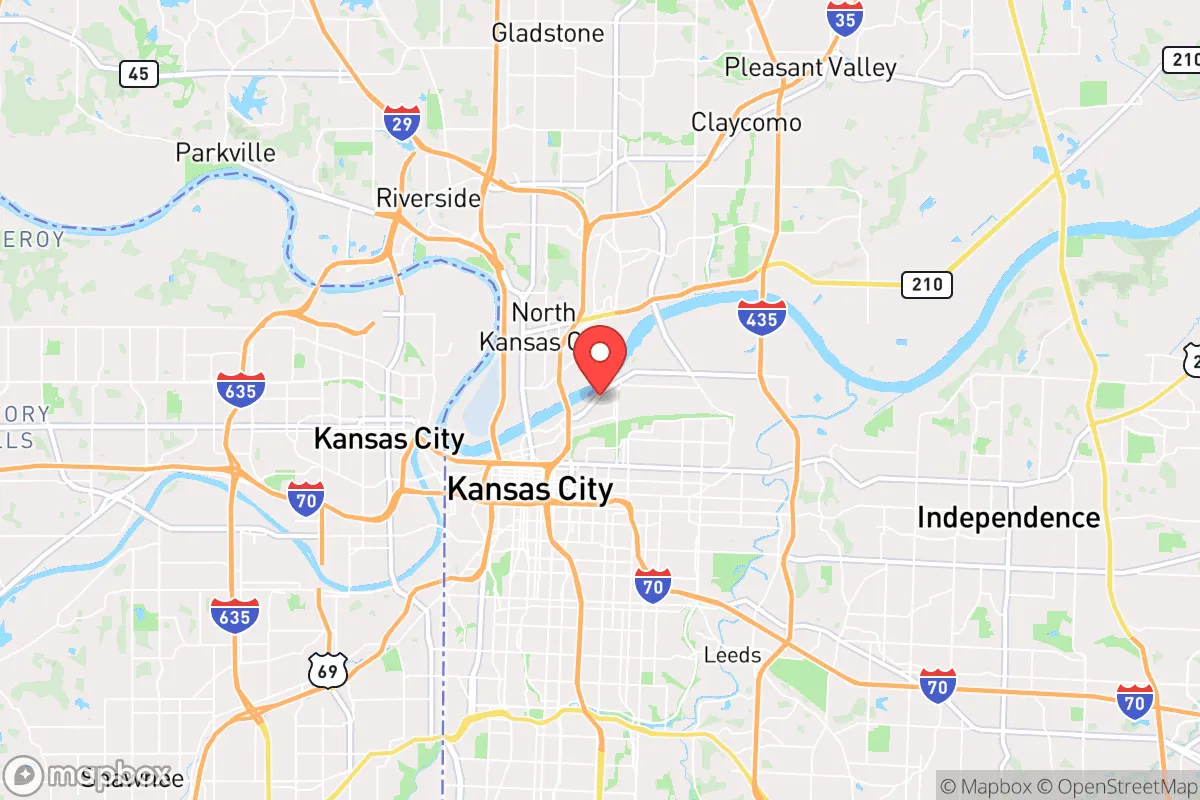
Photo: Wikipedia
Personal Sovereignty in Kansas City, MO
Strong independent fundamentals that actively favor personal liberty and low regulation.
What does Personal Sovereignty tell us?
Personal Sovereignty measures your capacity for self-reliance and independence with minimal government friction. Higher scores mean fewer barriers between you and the way you want to live... but it assumes you have the space you need and good neighbors.
What does this tell us?
Personal Sovereignty measures your capacity for self-reliance and independence with minimal government friction. Higher scores mean fewer barriers between you and the way you want to live... but it assumes you have the space you need and good neighbors.
State Policy
Energy independence: Importer (15% of energy produced in-state)
Personal Liberty
Homesteading

Personal Liberty Analysis
For the individual or family prioritizing personal sovereignty—meaning the maximum feasible control over one’s own life, property, and decisions—Kansas City, Missouri, presents a mixed but workable environment. Missouri as a whole has long positioned itself as a state resistant to federal overreach, with a state constitution that explicitly protects the right to keep and bear arms, a strong castle doctrine, and a tax code that avoids the worst of coastal confiscation. However, being in a major urban center means you’re living inside the jurisdiction of Kansas City’s municipal government, which has its own ideas about zoning, property use, and local ordinances. The practical sovereignty you’ll experience here depends heavily on which side of the city limits you land—and how willing you are to navigate the gap between state-level protections and city-level restrictions.
Tax burden and regulatory posture: what you keep and what you fight
Missouri’s overall tax burden is among the lowest in the nation, ranking 49th in combined state and local tax burden according to the Tax Foundation. There is no state income tax on Social Security benefits, and the state’s top marginal income tax rate has been cut to 4.95% as of 2025, with further reductions triggered by revenue growth. For a single earner or a family, that means more money stays in your pocket to spend, save, or invest in your own preparedness. Property taxes in Kansas City itself are moderate—around 1.2% of assessed value—but the city’s earnings tax is a sticking point: a flat 1% on all wages earned by residents and non-residents working within city limits. That’s a direct tax on your labor, and it’s one of the few such municipal earnings taxes left in the country. If you work in the city but live just outside it in a suburb like Lee’s Summit or Liberty, you avoid that 1% entirely. Regulatory posture at the state level is generally light-touch, with no state-level rent control, no state-level price controls, and a right-to-work law (though it was repealed by ballot measure in 2018, the practical effect on individual autonomy is minimal). The bigger regulatory friction comes from Kansas City’s own building codes, business licensing, and noise ordinances—none of which are draconian, but they do require you to play by the city’s rules if you’re inside the limits.
Self-defense and gun law specifics: what you can carry and where
Missouri is a constitutional carry state, meaning no permit is required to carry a concealed firearm for any law-abiding adult 19 or older (18 with a valid permit). This is a bedrock sovereignty issue for many preppers and survivalists, and Missouri delivers. The state also has a strong castle doctrine with no duty to retreat—if someone unlawfully enters your home, vehicle, or occupied structure, you are legally presumed to have a reasonable fear of death or great bodily harm, and you may use deadly force. Stand-your-ground laws extend that protection to any place you are lawfully present. Kansas City itself has seen a rise in violent crime—homicides peaked at 182 in 2020 and have remained elevated—which makes the ability to defend yourself and your family a practical necessity, not just a philosophical point. However, be aware that Kansas City’s municipal government has attempted to pass local gun control ordinances in the past, such as a 2021 ordinance banning open carry in city parks and public buildings. These have been challenged under state preemption laws, which prohibit cities from enacting stricter gun laws than the state. The Missouri Supreme Court has generally sided with state preemption, but the city continues to test the limits. If you live inside city limits, you may face occasional friction from local law enforcement who are not always up to speed on state preemption. The bottom line: your right to keep and bear arms is strongly protected at the state level, but you may need to assert it against local overreach.
Self-reliance and homesteading viability: lot sizes, zoning, and off-grid feasibility
If your vision of sovereignty includes growing your own food, raising animals, or reducing dependence on the grid, Kansas City proper is a tough sell. Standard residential lots in the urban core are typically 5,000 to 7,000 square feet, and city zoning restricts keeping chickens, goats, or bees to specific districts with permits. Backyard gardens are allowed, but you’re limited in scale. The city’s building codes also require connection to municipal water and sewer—going off-grid with a well and septic is not permitted inside city limits. For serious homesteading, you need to look at the surrounding counties: Platte, Clay, Jackson (the unincorporated parts), and Cass. In those areas, you can find 1- to 5-acre parcels for $20,000 to $60,000, with far looser zoning. Many of these properties allow livestock, rainwater catchment, and even alternative energy systems like solar panels and small wind turbines, though you’ll still need to comply with county building codes. The Missouri Department of Natural Resources has relatively straightforward permitting for private wells and septic systems, so true off-grid living is achievable within an hour’s drive of downtown Kansas City. For the prepper mindset, the best strategy is to buy land in a rural county and commute or work remotely—Kansas City’s job market is strong enough to support that lifestyle.
Personal liberties: parental rights, medical autonomy, speech, and property
Missouri has been a battleground for several key personal liberty issues. On parental rights, the state passed the Parental Bill of Rights in 2022, which affirms that parents have the fundamental right to direct the education, healthcare, and moral upbringing of their children. This law has been used to challenge school district policies on curriculum transparency and medical consent. Medical autonomy is more complicated: Missouri has some of the strictest abortion laws in the country, with a near-total ban (no exceptions for rape or incest, only medical emergency). For those who view this as a protection of life, it’s a win; for those who prioritize individual medical choice, it’s a restriction. On vaccine mandates, the state legislature has repeatedly introduced bills to ban employer and government vaccine mandates, though none have become law as of 2025. Free speech is broadly protected under the Missouri Constitution, which has its own free speech clause that has been interpreted as at least as protective as the First Amendment. Property rights are strong: Missouri is a “measurement of value” state for eminent domain, meaning you must be compensated at fair market value, and there is no state-level rent control. Kansas City does have a rental inspection program and a “just cause” eviction ordinance for certain properties, which some landlords view as an infringement on property rights. Overall, the state leans heavily toward individual liberty, but the city of Kansas City itself tilts more toward collective regulation—so your personal sovereignty will be higher the further you get from downtown.
Compared to other major Midwestern cities, Kansas City offers a relatively high degree of personal sovereignty for those willing to navigate the city-county divide. The state’s constitutional carry, low taxes, and strong property rights create a foundation that is far more favorable than what you’d find in Chicago, St. Louis, or Minneapolis. The main trade-off is that you cannot have both urban convenience and full autonomy—you have to choose your location strategically. For the survivalist or prepper, the smart play is to live in a rural county within commuting distance, where you can own firearms without local interference, raise your own food, and keep more of your income. Kansas City itself is a useful economic hub, but it is not a sovereignty sanctuary. Treat it as a resource, not a home base, and you’ll be well positioned.

* Values derived from national, state, county, city and local statistics and may differ in a specific area. Last updated: 2026-04-30T00:39:29.000Z
Narrative content on this page is AI-generated and may contain mistakes. Verify any details that matter before acting on them.
ReloMaps may earn a commission from affiliate links at no extra cost to you.

