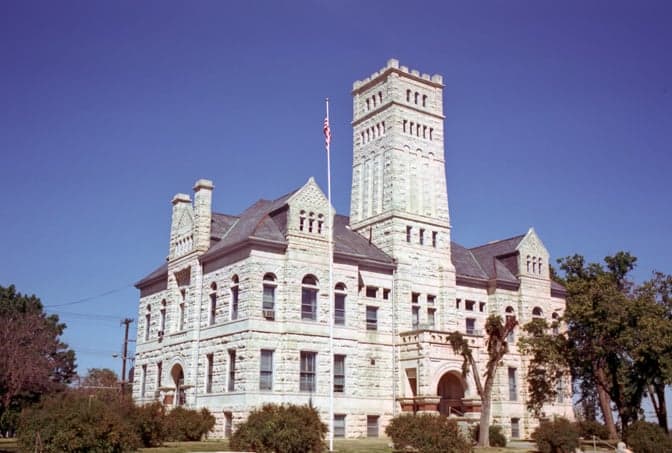
Photo: Wikipedia
Political ClimatePolitical Climate in Geary County
Showing district-level results — no local-only data available.
Local Political AnalysisPolitical Analysis of Geary County
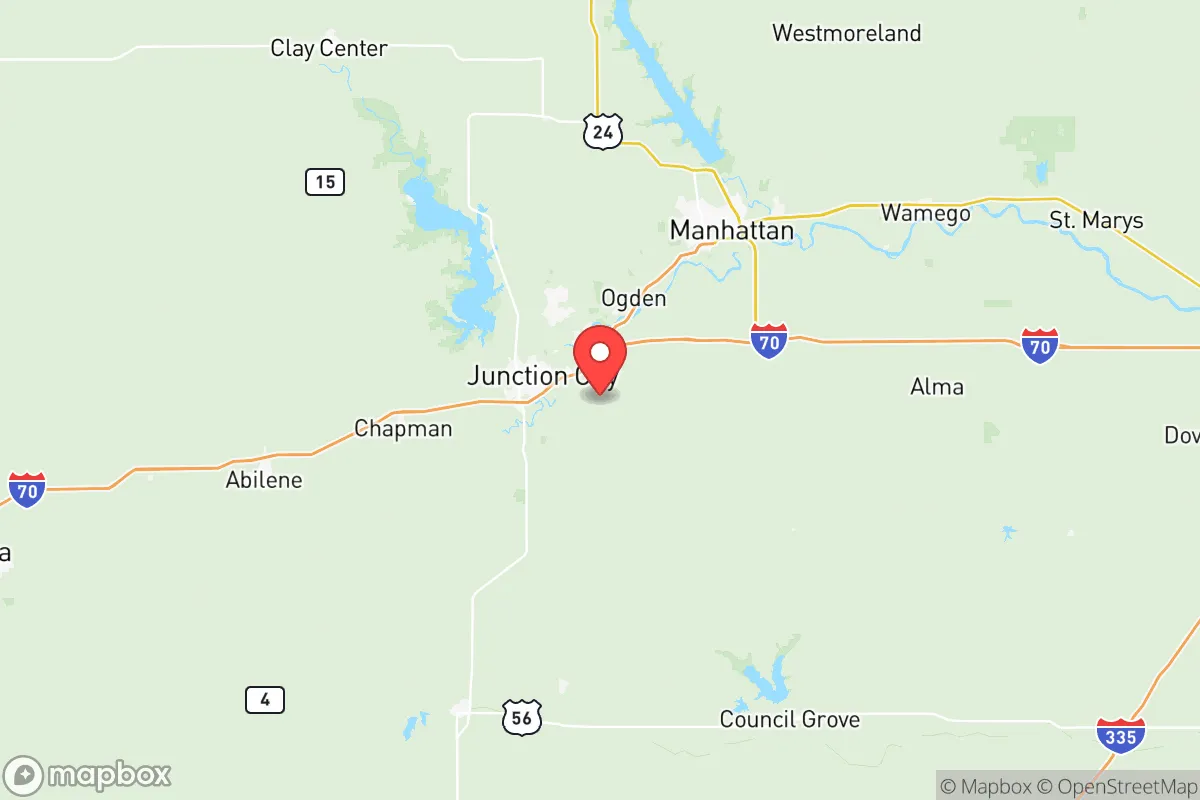
Geary County has long been a solidly conservative area, with a Cook PVI of R+10 that puts it slightly to the right of Kansas as a whole, which sits at R+9. But if you've lived here as long as I have, you know the political story isn't quite that simple—there's a real split between the rural, ranching communities and the more transient population around Junction City and Fort Riley. The county has voted Republican in every presidential election since 1968, but the margins have tightened in the last two cycles as the military base brings in folks from all over the country.
How it compares
Geary County's R+10 rating is a full point redder than the state's R+9, but that one-point gap hides a lot of nuance. The real difference is in the precinct-level voting patterns. In the rural towns like Grandview Plaza and Milford, you'll see Republican margins of 65-70%—those are the folks who've been here for generations, and they vote like it. But Junction City itself is a different animal. The precincts around the downtown area and near the base have been trending bluer, with some wards going 55-60% Democratic in recent county commission races. The swing precincts are the newer subdivisions on the east side of Junction City, where military families and younger professionals are settling—those areas are within 2-3 points of the county average and decide every local election. Compared to the rest of Kansas, Geary County is more of a bellwether than its R+10 suggests; the state's R+9 is driven by deep-red rural counties and the deep-blue pockets of Lawrence and Kansas City, while Geary is a genuine battleground within a conservative framework.
What this means for residents
For those of us who value limited government and personal freedom, the trend is concerning. The county commission has stayed reliably conservative, but the school board in Junction City has seen two progressive-backed candidates win seats since 2022, pushing for curriculum changes and DEI initiatives that many of us see as government overreach into how our kids are taught. The real red flag is the 2024 county sales tax referendum, which passed by only 52-48—a decade ago, that would have been 70-30. You're seeing more folks from out of state moving into the new developments near Fort Riley, and they bring big-government ideas with them. The local Republican party is still strong, but it's fighting a rear-guard action against the creeping influence of progressive ideology that wants to tell you how to run your business, what to teach your children, and how to live your life.
Culturally, Geary County still holds onto its conservative roots better than most of Kansas. The Second Amendment is a non-issue here—concealed carry is common, and nobody bats an eye. The county has a right-to-work ordinance that keeps unions from forcing their way into local businesses, and the property tax rates are among the lowest in the state. But the policy battles are shifting. The push for a county-wide mask mandate in 2021 was defeated by a 3-2 vote, and that fight woke a lot of people up. If you're looking for a place where government stays out of your personal business, Geary County is still that place—but you've got to stay involved, because the progressive wave is lapping at our shores, and it's only a matter of time before it tries to wash away the freedoms we've always taken for granted.

State Political ClimatePolitical Climate in Kansas
State Political AnalysisPolitical Environment in the State
Kansas has been a reliably Republican state for decades, carrying a Cook PVI of R+9, but the political landscape here is more layered than a simple red-state label suggests. The dominant coalition is a mix of rural conservatives, suburban moderates, and a growing libertarian-leaning wing, though the state has seen a noticeable rightward shift over the past 10-20 years, driven largely by backlash against moderate Republican governors and a steady exodus of progressive-leaning populations from places like Lawrence and Kansas City. If you’re looking for a state where conservative values still hold the line—but with some real internal tension—Kansas is a fascinating case.
Urban vs. rural divide
The political map of Kansas is a textbook study in contrast. The eastern third of the state, anchored by Kansas City (Wyandotte County) and Lawrence (Douglas County), is the Democratic stronghold—Wyandotte County voted +38 for Biden in 2020, while Douglas County went +35. These areas are driven by union households, university faculty, and a growing minority population. Meanwhile, the rest of the state is deeply red. Wichita (Sedgwick County) is the swingiest major metro—it voted for Trump by just 2 points in 2020, but the surrounding suburbs like Andover and Goddard are solidly conservative. The real engine of the GOP majority is the vast rural expanse: counties like Thomas County (Colby) and Sherman County (Goodland) routinely vote 80%+ Republican. A notable shift has been in Johnson County, the affluent Kansas City suburbs—once a moderate Republican bastion, it has trended left in presidential races (Biden lost it by only 4 points in 2020), but local offices remain firmly GOP. The 2022 governor’s race saw Democrat Laura Kelly win Johnson County by 10 points, a sign that suburban women are drifting away from the national GOP brand, even as the state legislature stays conservative.
Policy environment
Kansas’s policy environment is a mixed bag for conservatives. The tax structure is a major win: the state has a flat income tax rate of 5.7% (down from a progressive top rate of 6.45% in 2012), and the sales tax is capped at 6.5% state-level, though local add-ons can push it higher. The 2012 “Brownback tax cuts” experiment—which slashed income taxes and eliminated taxes on pass-through business income—was partially rolled back in 2017 after budget shortfalls, but the state still has no estate tax and a relatively low property tax burden (1.3% effective rate). On education, the state has a mixed record: school choice is limited compared to neighboring Oklahoma, but the legislature passed a $500 tax credit for private school expenses in 2023. Healthcare is a sore spot—Kansas has not expanded Medicaid under the ACA, which keeps premiums higher for the individual market, but also means no government expansion of a federal program. Election laws are solid: voter ID is required, and the state has a 20-day early voting window. The 2021 election integrity law (HB 2332) tightened mail-in ballot rules and banned ballot harvesting, which conservatives view as a necessary safeguard.
Trajectory & freedom
On the freedom front, Kansas has been moving in a positive direction for conservatives, but not without setbacks. The biggest win was the 2022 “Value Them Both” amendment—a state constitutional amendment affirming that there is no right to abortion in Kansas—which was defeated by voters 59-41%, a shocking result that showed the state is more libertarian on social issues than its GOP legislature. That said, the legislature has since passed a 22-week abortion ban and parental notification laws. Gun rights are strong: Kansas is a permitless carry state (since 2015), has no state-level assault weapons ban, and preempts local gun ordinances. The 2023 “Second Amendment Protection Act” (SB 58) prohibits state enforcement of any future federal gun bans. On parental rights, the 2023 “Parents’ Bill of Rights” (HB 2236) requires schools to notify parents of curriculum changes and allows them to opt kids out of sex education. Property rights are solid—the state has no statewide rent control, and the 2020 “Takings” law (HB 2500) requires compensation for regulatory actions that reduce property value by more than 20%. The biggest concern is the state’s growing reliance on federal funds (about 30% of the budget), which creates a long-term dependency risk.
Civil unrest & political movements
Kansas has seen relatively little civil unrest compared to coastal states, but there are flashpoints. The most visible was the 2022 abortion amendment campaign, which drew massive protests in Overland Park and Topeka, with both sides mobilizing heavily. The state has a small but active “Free State” movement—a nod to its pre-Civil War history—that pushes for nullification of federal gun laws and marijuana prohibition (medical marijuana remains illegal, though decriminalization is gaining traction). Immigration politics are muted compared to border states, but Garden City and Dodge City have seen tensions over meatpacking plant labor—both towns have large Hispanic populations (over 50% in Garden City) and have been targets of ICE raids. There is no sanctuary city policy anywhere in Kansas. Election integrity controversies flared in 2020 when then-Secretary of State Scott Schwab (R) defended the state’s mail-in ballot system, but no major fraud was found. The most visible political movement is the “Kansas Republican Assembly,” a grassroots group that pushes for school choice and anti-tax pledges, and they’ve successfully primaried moderate Republicans in the legislature.
Projection
Over the next 5-10 years, Kansas is likely to stay red but with a more libertarian flavor. The biggest demographic shift is the continued growth of Johnson County, which is becoming more diverse and educated—its population is now 12% Hispanic and 5% Asian, and it’s the fastest-growing county in the state. This will push the state toward a more “live and let live” conservatism, where fiscal restraint and gun rights remain strong, but social issues like marijuana and abortion become more permissive. The rural exodus will continue—counties like Cheyenne and Rawlins are losing population—which will weaken the traditional GOP base. In-migration is modest, mostly from Colorado and California, and these newcomers tend to be more moderate. The biggest wildcard is the state’s budget: if the flat tax is further cut (as Governor Kelly has proposed), it could trigger another fiscal crisis, which would empower progressive calls for tax hikes. A new resident moving in now should expect a state that remains solidly conservative on guns and taxes, but where the culture wars are fought in the suburbs, not the statehouse.
For a conservative-leaning individual or family, Kansas offers a strong foundation: low taxes, solid gun rights, and a legislature that fights for parental control and election integrity. The trade-off is that you’ll be living in a state where the urban-rural divide is real and growing, and where the suburbs are slowly shifting left. If you’re looking for a place where your values are the majority but not the monopoly, Kansas is a good bet—just don’t expect it to stay exactly the same as it was 20 years ago. The key is to get involved locally, because the real action is in school board and county commission races, not just the governor’s mansion.
* Values derived from national, state, county, city and local statistics and may differ in a specific area. Last updated: 2026-05-28T09:52:51.000Z
Narrative content on this page is AI-generated and may contain mistakes. Verify any details that matter before acting on them.
ReloMaps may earn a commission from affiliate links at no extra cost to you.

