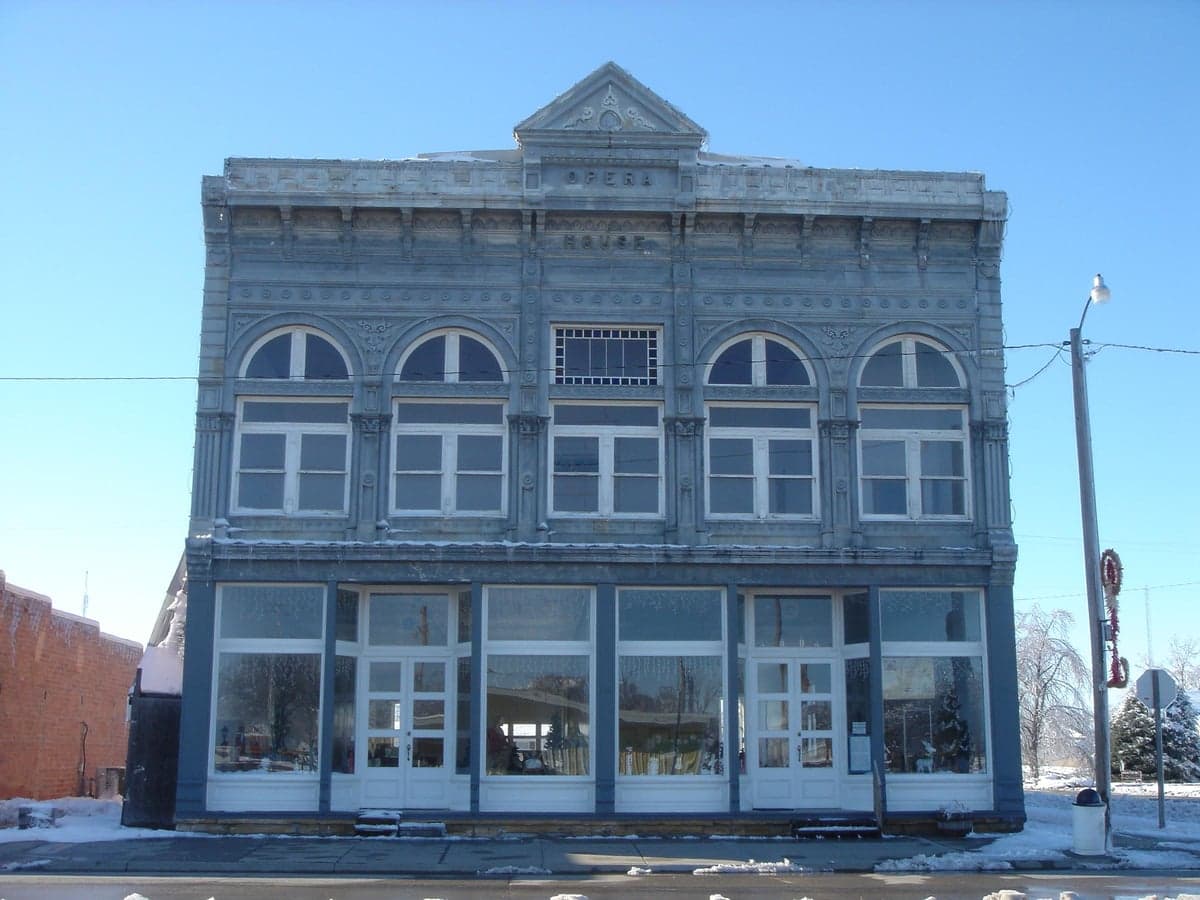
Photo: Wikipedia
Personal Sovereignty in Gove County
Viable for self-reliance. Generally workable, though some barriers may limit total independence.
What does Personal Sovereignty tell us?
Personal Sovereignty measures your capacity for self-reliance and independence with minimal government friction. Higher scores mean fewer barriers between you and the way you want to live... but it assumes you have the space you need and good neighbors.
What does this tell us?
Personal Sovereignty measures your capacity for self-reliance and independence with minimal government friction. Higher scores mean fewer barriers between you and the way you want to live... but it assumes you have the space you need and good neighbors.
State Policy
Energy independence: Self-sufficient (80% of energy produced in-state)
Personal Liberty
Homesteading

Personal Liberty Analysis
Gove County, Kansas, offers one of the most permissive personal sovereignty environments in the Great Plains, where state-level preemption and a deeply rural character create a regulatory landscape that prioritizes individual autonomy. With a population density of roughly 2.5 people per square mile and no incorporated city over 200 residents, the county’s governance is minimal by design, leaving residents in places like Gove City, Grainfield, and Quinter to operate with few local ordinances beyond basic public safety and zoning. For a relocation audience valuing self-determination, this corner of western Kansas presents a low-friction environment where state law generally defers to individual choice, particularly in taxation, self-defense, and land use.
Tax burden and regulatory posture in Gove County
Kansas maintains a relatively light tax and regulatory footprint compared to coastal states, and Gove County amplifies this through its rural character. The state’s income tax rate is a flat 5.7% (as of 2026), with no local income tax, and property taxes in Gove County average around 1.2% of assessed value—below the Kansas median of 1.4%. Sales tax in the county is 8.5% (state plus county), but most residents in Gove City, Grainfield, and Quinter purchase big-ticket items from neighboring counties or online, mitigating the impact. Regulatory posture is notably hands-off: there is no county-wide building code for single-family homes, no mandatory energy code, and no local business licensing beyond state requirements for specific professions. The county’s zoning is limited to agricultural and residential use designations, with no overlay districts or historic preservation rules. For a homesteader or small business owner, this means minimal paperwork and few inspections—a stark contrast to the permitting gauntlet found in urban Kansas counties like Johnson or Sedgwick. The state’s right-to-farm law further shields agricultural operations from nuisance lawsuits, reinforcing the county’s pro-autonomy stance.
Self-defense and gun law specifics in Gove County
Kansas is a constitutional carry state, and Gove County fully reflects this. No permit is required to carry a concealed handgun for any law-abiding adult 21 or older, and open carry is legal without a license. The county sheriff’s office in Gove City issues concealed carry permits for reciprocity purposes, but the process is straightforward—typically a same-day approval with a $100 fee and no waiting period. Stand-your-ground laws apply statewide, with no duty to retreat in any place where an individual is lawfully present. Gove County has no local firearm ordinances beyond state preemption, meaning no additional restrictions on magazine capacity, firearm types, or storage. The county’s rural nature means that gun ownership is near-universal; in towns like Grainfield and Quinter, firearms are commonly seen in vehicles and homes without stigma. The nearest gun ranges are in Oakley (15 miles east) and Scott City (30 miles south), but most residents practice on private land. For a self-defense-focused reader, Gove County offers one of the most permissive legal environments in the nation, with no local barriers to carrying or owning firearms.
Self-reliance and homesteading viability in Gove County
Homesteading and off-grid living are not just feasible in Gove County—they are the norm. Minimum lot sizes in unincorporated areas are 1 acre for residential use, but most parcels sold for homesteading are 5 to 40 acres, with prices ranging from $500 to $1,500 per acre. Zoning is minimal: no county-wide setback requirements for structures, no restrictions on rainwater collection, and no prohibition on composting toilets or greywater systems. Off-grid solar is common, with net metering available through Midwest Energy (the local electric cooperative) for grid-tied systems, but many residents in remote areas near Park and Grinnell operate fully off-grid without issue. Well drilling is straightforward—permits are issued by the Kansas Department of Agriculture with a $50 fee and no waiting period, and water tables in the Ogallala Aquifer are accessible at 100–200 feet. Septic systems require a county permit ($100) and a basic soil test, but no engineered design is mandated for standard systems. The county’s agricultural zoning allows livestock, chickens, and even small-scale commercial farming on residential parcels without special permits. For a family seeking self-sufficiency, Gove County’s regulatory environment is among the most accommodating in the state, with no HOA restrictions and minimal county oversight.
Personal liberties in Gove County: parental rights, medical autonomy, and property
Kansas law provides strong protections for parental rights, including a 2018 statute affirming parents’ fundamental right to direct their children’s education, healthcare, and religious upbringing. Gove County’s school districts—Gove County USD 292 (Gove City) and Wheatland USD 292 (Grainfield)—offer limited but functional public schools, but homeschooling is common, with no state registration or curriculum approval required. Medical autonomy is similarly broad: Kansas has no state-level vaccine mandate for adults, and the 2023 Medical Freedom Act prohibits discrimination based on vaccination status. The county has no local health ordinances beyond state requirements, and residents in Quinter and Grinnell often travel to Hays (60 miles east) for specialized care, but basic healthcare is available at the Gove County Medical Center in Quinter. Property rights are robust: no county-wide tree ordinances, no noise restrictions beyond state nuisance laws, and no limits on signage or fencing on private land. The state’s property rights laws require just compensation for any regulatory taking, and Gove County has no local rent control or landlord licensing. For a reader prioritizing personal liberties, the county’s legal framework is consistently deferential to individual choice, with few exceptions for public health or safety.
Overall, Gove County ranks among the most sovereignty-friendly areas in Kansas, comparable to neighboring Wallace and Logan counties but with slightly lower property taxes and more available land. The combination of constitutional carry, minimal zoning, low taxes, and strong parental rights creates an environment where personal autonomy is the default, not the exception. For a single individual or family seeking to maximize self-reliance and minimize government interference, Gove County offers a rare combination of legal permissiveness and practical affordability—a place where the state’s light touch is amplified by the county’s rural character and the absence of local overreach.

* Values derived from national, state, county, city and local statistics and may differ in a specific area. Last updated: 2026-08-26T03:20:10.000Z
Narrative content on this page is AI-generated and may contain mistakes. Verify any details that matter before acting on them.
ReloMaps may earn a commission from affiliate links at no extra cost to you.

