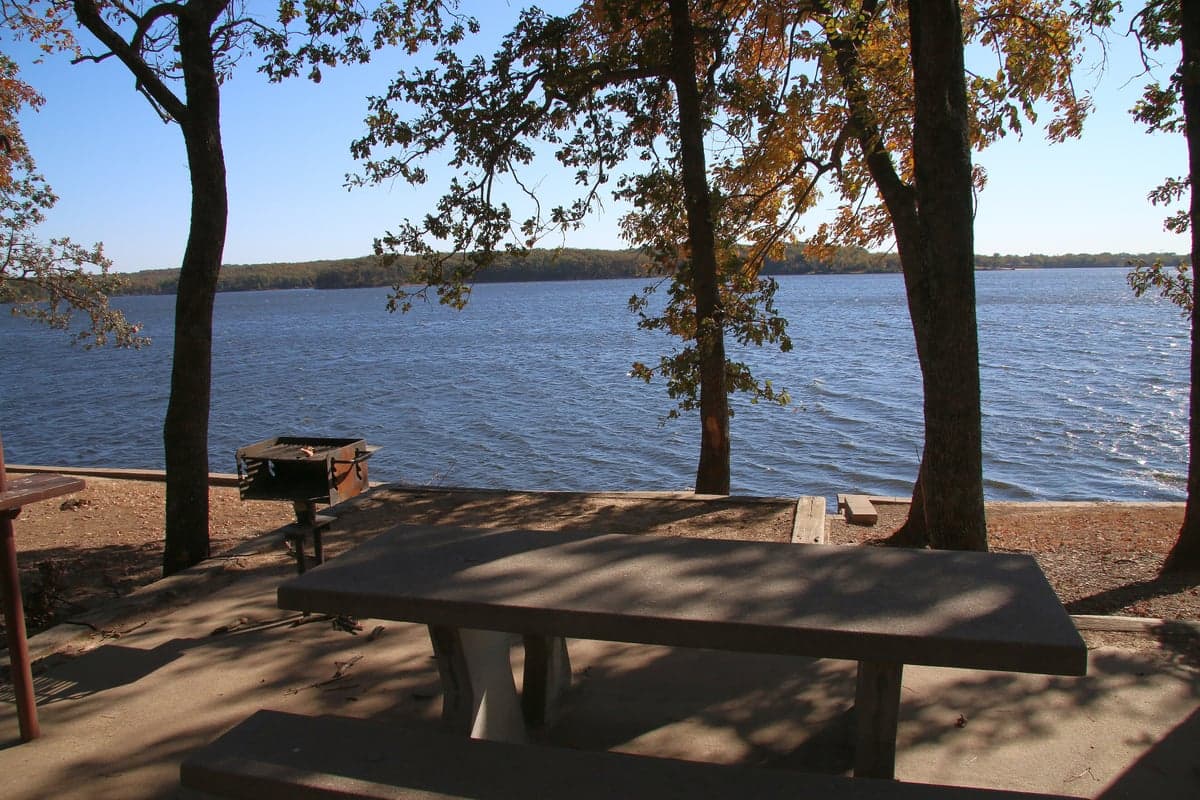
Photo: Wikipedia
Personal Sovereignty in Labette County
Viable for self-reliance. Generally workable, though some barriers may limit total independence.
What does Personal Sovereignty tell us?
Personal Sovereignty measures your capacity for self-reliance and independence with minimal government friction. Higher scores mean fewer barriers between you and the way you want to live... but it assumes you have the space you need and good neighbors.
What does this tell us?
Personal Sovereignty measures your capacity for self-reliance and independence with minimal government friction. Higher scores mean fewer barriers between you and the way you want to live... but it assumes you have the space you need and good neighbors.
State Policy
Energy independence: Self-sufficient (80% of energy produced in-state)
Personal Liberty
Homesteading

Personal Liberty Analysis
Labette County, Kansas offers a notably light regulatory environment that prioritizes personal autonomy, particularly for those seeking minimal government interference in daily life. The county’s posture is strongly informed by Kansas’s statewide constitutional carry law, low property tax rates relative to neighboring states, and a limited county-level regulatory footprint, making it a practical option for individuals and families who value self-reliance. While not as libertarian as some rural Western counties, Labette County’s combination of permissive gun laws, low taxes, and available undeveloped land creates a solid baseline for personal sovereignty within the context of Southeast Kansas.
Tax burden and regulatory posture: How Kansas compares
Kansas’s state-level tax burden lands near the middle of national rankings, but Labette County’s local choices keep the combined load manageable for most residents. The state’s flat individual income tax rate of 5.58% and a statewide sales tax of 6.5% are offset by the county’s relatively low property tax mill levies. In 2025, the average effective property tax rate in Labette County was approximately 1.1% of assessed home value, which is below the Kansas average of 1.3% and far lower than the 1.7%–2.0% rates common in neighboring Missouri. For a family owning a $150,000 home, this translates to roughly $1,650 annually in property taxes—about $300 less than the Kansas median. County business regulation is minimal: there is no county-level business license fee for most sole proprietorships, and zoning enforcement is spotty outside the incorporated cities. Residents in unincorporated areas like Angola or Dennis report little to no active code enforcement, allowing for home-based businesses and hobby farming without permit hurdles. The city of Oswego, the county seat, imposes modest building permit requirements for new construction, but fees are under $100 for most residential projects. Parsons, the county’s largest city, has a zoning code, but its enforcement is described by local real estate agents as “hands-off” for existing property owners. Overall, the regulatory burden in Labette County feels light—comparable to rural Oklahoma or Arkansas—but with the added benefit of Kansas’s more predictable income tax structure.
Self-defense and gun law specifics for residents
Kansas is a constitutional carry state, and Labette County fully reflects that framework. No permit is required to carry a concealed firearm for anyone 21 or older who is not legally prohibited from possessing a firearm. Open carry is also lawful without a permit. This makes Labette County one of the most gun-friendly jurisdictions in the Midwest, with no county-level restrictions beyond state statutes. The sheriff’s office in Oswego does not maintain a separate gun registry, and there are no local ordinances limiting magazine capacity or firearm types. For those who want a concealed carry permit for reciprocity in other states, the Labette County Sheriff’s Office processes applications efficiently, typically within 30 days. Shooting ranges are sparse but functional: the Labette County Gun Club near Altamont offers a 100-yard rifle range and pistol pits, with an annual membership fee under $100. Stand-your-ground laws apply statewide, meaning there is no duty to retreat before using force in self-defense in any place where a person is lawfully present. Castle doctrine protections also extend to occupied vehicles and workplaces. For residents moving from more restrictive states like California or Illinois, the legal environment here is a significant improvement in autonomy. The only notable limitation is that Kansas does not allow concealed carry in schools, government buildings with security, or private businesses that post signage—a standard restriction nationwide.
Self-reliance and homesteading viability: Lot sizes, zoning, and off-grid feasibility
Labette County is a strong candidate for homesteading and off-grid living, especially when compared to the more restrictive environment of Kansas City or the Front Range. The county’s geography is rolling prairie and farmland, with abundant groundwater suitable for wells. Minimum lot sizes in unincorporated areas are effectively unregulated—there is no countywide minimum lot size for rural residential use, though subdivision of land under 5 acres may trigger a septic system review. In practice, parcels of 1 to 10 acres are common and sell for $2,000–$5,000 per acre, depending on distance from paved roads. Cherokee, a small unincorporated community, has seen recent influx of families seeking affordable land with no homeowners’ association (HOA) restrictions. Off-grid feasibility is high: Kansas has no state law prohibiting rainwater collection, and most rural wells are permitted with a simple registration fee of $50. Solar panel installation is unrestricted in unincorporated areas, and net metering is available through the local electric cooperative, Liberty Utilities (serving Parsons) and Southeast Kansas Electric Cooperative (rural areas). The cooperative’s net metering policy allows for 1:1 credit up to 110% of annual consumption. Composting toilets and alternative wastewater systems are permitted under county health department guidelines, though a permit is required. The main practical limitation is that natural gas is not available in the most remote areas of the county, but propane delivery services are widespread. For those wanting to keep chickens or goats for personal use, no county-level permit is needed outside city limits. Even inside Parsons, city code allows up to four hens without a fee (no roosters), and goats are allowed on lots of 1 acre or more with a $25 annual permit. In Altamont, a town of about 1,000, the code is even looser—essentially no livestock restrictions as long as animals are not a nuisance. Homesteading here is more accessible than in much of the suburban Midwest.
Personal liberties: Parental rights, medical autonomy, speech, and property
Kansas law provides robust protections for parental rights and medical freedom compared to many coastal states. Since 2023, Kansas has a statutory Parents’ Bill of Rights (K.S.A. 72-1138) requiring school districts to obtain parental consent before administering surveys related to mental health or sexual orientation, and allowing parents to opt their children out of any curriculum. Labette County school districts—including Parsons USD 503, Oswego USD 504, and Labette County USD 506—largely comply with these statutes, and there have been no reported controversies over parental rights in local school board meetings. Medical autonomy is stronger than in some states but not libertarian: Kansas does not have a state-level individual mandate for health insurance, and there is no state-run vaccine registry. However, vaccine requirements for school attendance follow CDC guidelines, with medical and religious exemptions allowed. Telehealth for out-of-state providers is permitted, and direct primary care (DPC) practices are present in Parsons, offering transparent pricing without insurance involvement. On speech and property rights, Labette County is unremarkable but favorable. There are no county-level sign ordinances restricting political yard signs beyond state-defined time limits (no more than 60 days before or 10 days after an election). Property rights are strongly protected: eminent domain for private economic development is prohibited under Kansas law, a reaction to the Kelo v. New London case. No large-scale renewable energy projects (wind or solar farms) have been proposed in Labette County, meaning no condemnation battles have arisen. For a reader concerned about personal liberty, the county’s primary shortcoming is the lack of a robust alternative medicine community—functional medicine and naturopathic providers are scarce, with most residents driving to Joplin, Missouri (30 minutes from Parsons) for such services.
Overall, Labette County delivers a practical balance of personal sovereignty for a conservative-leaning audience. It lacks the radical low-tax, no-zoning environment of Storey County, Nevada or the extreme rural autonomy of Delta County, Colorado, but it offers a more accessible, family-oriented liberty ecosystem than most of the Midwest. The combination of constitutional carry, low property taxes, reduced regulation in unincorporated areas like Labette and Edna, and state-level protections for parental rights creates a real—not theoretical—sense of personal freedom. For a family or individual moving from a high-regulation state, the transition here will feel like a meaningful expansion of living space, in both acreage and autonomy.

* Values derived from national, state, county, city and local statistics and may differ in a specific area. Last updated: 2026-09-15T08:26:12.000Z
Narrative content on this page is AI-generated and may contain mistakes. Verify any details that matter before acting on them.
ReloMaps may earn a commission from affiliate links at no extra cost to you.

