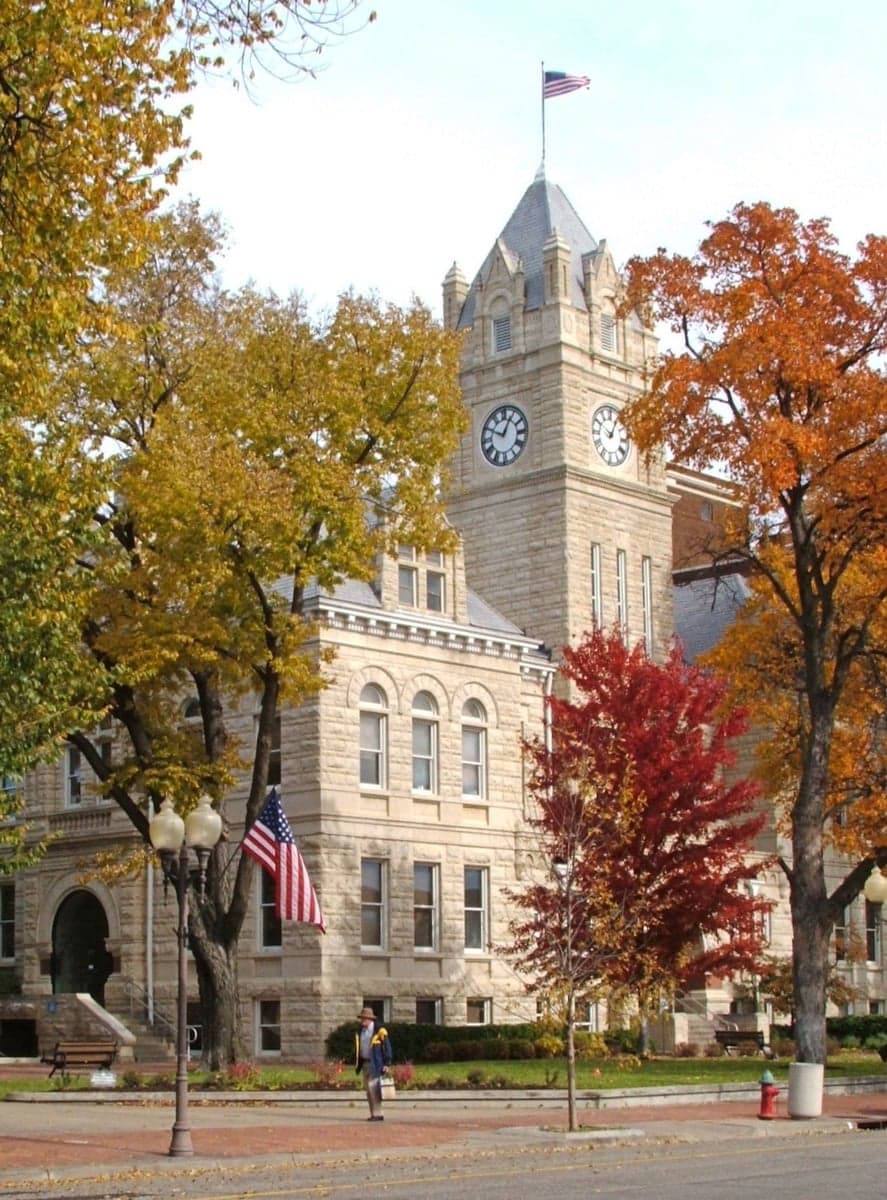
Photo: Wikipedia
Personal Sovereignty in Riley County
Viable for self-reliance. Generally workable, though some barriers may limit total independence.
What does Personal Sovereignty tell us?
Personal Sovereignty measures your capacity for self-reliance and independence with minimal government friction. Higher scores mean fewer barriers between you and the way you want to live... but it assumes you have the space you need and good neighbors.
What does this tell us?
Personal Sovereignty measures your capacity for self-reliance and independence with minimal government friction. Higher scores mean fewer barriers between you and the way you want to live... but it assumes you have the space you need and good neighbors.
State Policy
Energy independence: Self-sufficient (80% of energy produced in-state)
Personal Liberty
Homesteading

Personal Liberty Analysis
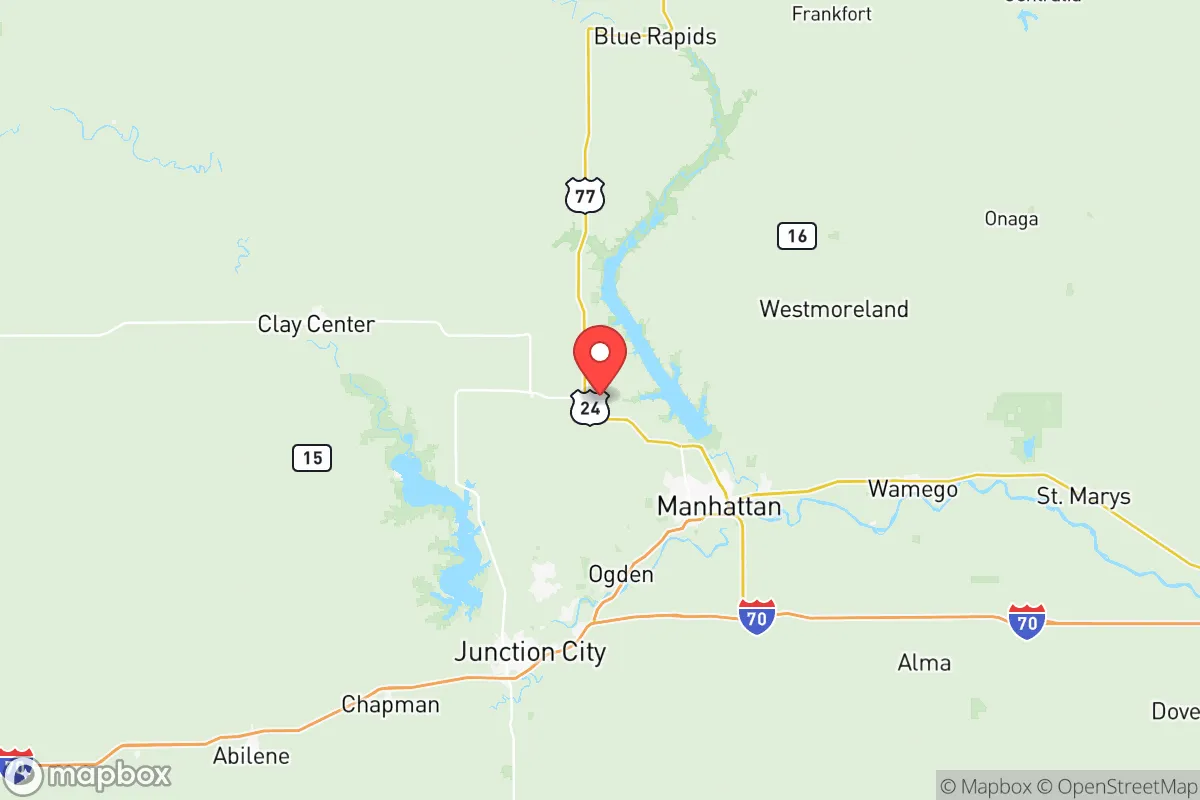
Personal sovereignty in Riley County depends heavily on which part of the county you choose. The urban core of Manhattan, dominated by Kansas State University and its associated government and academic bureaucracy, trends left on regulatory issues, while the rural towns of Ogden, Randolph, and Leonardville operate with a far lighter touch. This split means relocation strategy matters — the difference in autonomy between a house inside Manhattan city limits and one on an unincorporated acre near Tuttle Creek Reservoir is significant for anyone prioritizing self-determination.
Tax burden and business climate in Riley County
Kansas has a flat state income tax of 5.58% (as of 2025) with no local income tax, and Riley County keeps property taxes reasonable compared to the coasts. The combined property tax rate in the county typically runs 1.3% to 1.5% of assessed value, though Manhattan adds a city mill levy that pushes the total higher inside city limits. Sales tax in Manhattan hits 8.65% (state 6.5%, county 1.0%, city 1.0% plus transit authority), while Ogden and Randolph sit at a lower combined rate closer to 7.5% because they lack certain local add-ons. Regulatory posture is mixed: Kansas as a state has no universal business license requirement and relatively light occupational licensing, but Manhattan enforces rental inspection programs and building codes that can feel invasive to a prepper or homesteader. The county itself has no county-wide zoning in unincorporated areas — that’s a critical detail. If you buy land outside any city limits, you avoid most local code enforcement, meaning fewer eyes on your property and more freedom to build, store, and operate as you see fit.
Gun laws and self-defense culture in Riley County
Kansas is a permitless carry state for anyone 21 or older under the 2015 Personal and Family Protection Act, with no state-level red flag law and a strong stand-your-ground statute. That base legal framework applies across all of Riley County, but local culture varies dramatically. Manhattan is home to Kansas State University, which restricts firearms on campus property, and the city council has historically been less pro-2A than the surrounding towns, with some local ordinances limiting carry in city parks and buildings. Drive ten miles west to Ogden or north to Randolph, and you’re in areas where open carry is common, sheriff’s office support for gun rights is strong, and the local gun shops and private ranges see steady traffic from folks who take self-defense seriously. The Riley County Sheriff’s Office is generally pro-2A and processes concealed carry permits (still useful for reciprocity) quickly. For the prepper mindset, the real asset here is proximity to rural land north of Leonardville and along the Tuttle Creek corridor — spots where you can shoot on your own property without neighbors calling code enforcement, something Manhattan city limits will not tolerate. No magazine capacity bans, no firearm purchase waiting periods beyond federal NICS, and no requirement to register any firearm. This is a state that respects the individual right to bear arms, and the county reinforces that when you’re outside the university bubble.
Homesteading and off-grid living options in Riley County
Riley County’s unincorporated areas offer genuine homesteading potential because there is no county-wide zoning and no county building code in the truly rural townships. This means you can set up a shipping container home, a yurt, or a timber-frame cabin without the permitting gauntlet that sinks projects in Manhattan or the Kansas City suburbs. Leonardville, a village of roughly 380 people in the northern part of the county, sits on land where acreages of 5 to 20 acres are common and priced under $4,000 per acre as of late 2025. Randolph offers similar conditions, with larger parcels available along Mill Creek and the western edges of the county. Off-grid infrastructure is feasible: Kansas law explicitly protects rainwater collection, no state permit is needed for private wells on parcels over 1 acre (subject to county health department approval for water quality), and solar panels face no homeowner association restrictions when you’re outside city limits. The one constraint is that some rural subdivisions platted decades ago carry deed restrictions — have a title attorney review the chain before buying. Ogden sits in a middle zone: it’s incorporated but small enough that city council members will often work with you on animal ordinances, garden fencing, and accessory structures. If you want the most freedom per acre, target unincorporated land between Leonardville and the Washington County line, where county presence is minimal and neighbors are self-sufficient.
Personal liberty protections for families in Riley County
Kansas has relatively strong parental rights compared to blue states. The state’s 2021 Parental Rights Act allows parents to opt children out of any curriculum or activity they find objectionable, and school districts must provide advance notice of materials. Riley County’s largest district, Manhattan-Ogden USD 383, has been the subject of school board battles over library content and gender policies — typical of college towns — but parents who object can leverage state law to pull kids from specific lessons or shift to one of the smaller rural districts serving Randolph and Leonardville, where school culture is more traditional and administrative overreach is lower. Medical autonomy: Kansas has no state-level vaccine passport mandate, and during COVID the legislature passed bills limiting executive emergency powers to prevent the kind of extended lockdowns seen in neighboring states. That said, Manhattan’s health department pushed harder on mandates than surrounding counties did — another reason to locate outside city limits. Free speech protections are solid under the Kansas Bill of Rights, and property rights are protected by a strong eminent domain statute requiring full market value plus relocation costs. No personal income tax on Social Security benefits, which matters for anyone prepping for retirement years. The county’s culture of self-reliance is real: Ogden and Randolph have active local churches, volunteer fire departments, and community networks where neighbors look out for one another without expecting government intervention. That social fabric is a sovereignty asset in itself.
Compared to Johnson County or Douglas County, Riley County offers a meaningful step up in personal sovereignty — but only if you avoid Manhattan. The university town brings the regulatory creep typical of academic hubs: higher taxes, stricter codes, and a cultural climate less welcoming to firearms and off-grid living. The rural corridor of Ogden, Randolph, and Leonardville provides the low-tax, low-regulation, self-defense-friendly environment a prepping or survivalist family needs. If you value local autonomy and can live without big-box convenience, this part of the Flint Hills is one of the better bets in the state for keeping government at arm’s length.

* Values derived from national, state, county, city and local statistics and may differ in a specific area. Last updated: 2026-05-27T19:39:04.000Z
Narrative content on this page is AI-generated and may contain mistakes. Verify any details that matter before acting on them.
ReloMaps may earn a commission from affiliate links at no extra cost to you.

