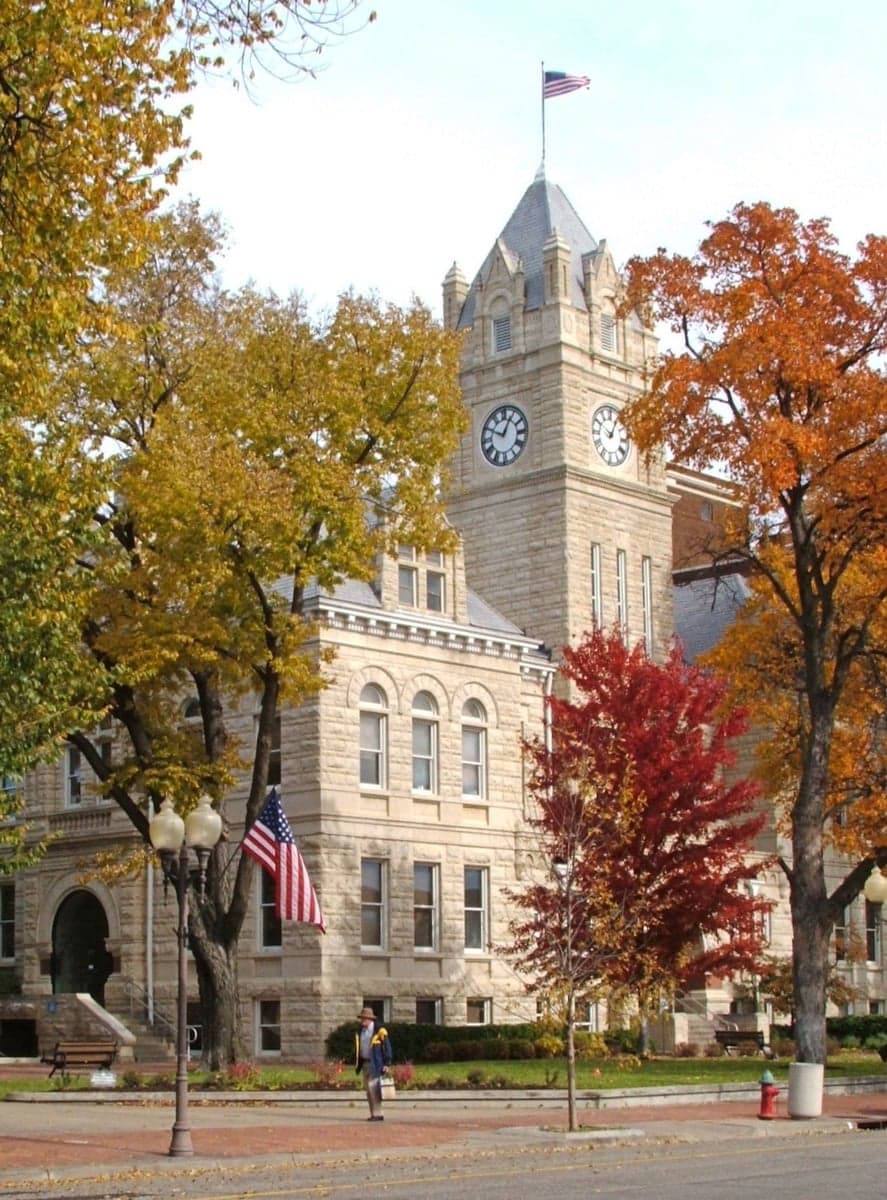
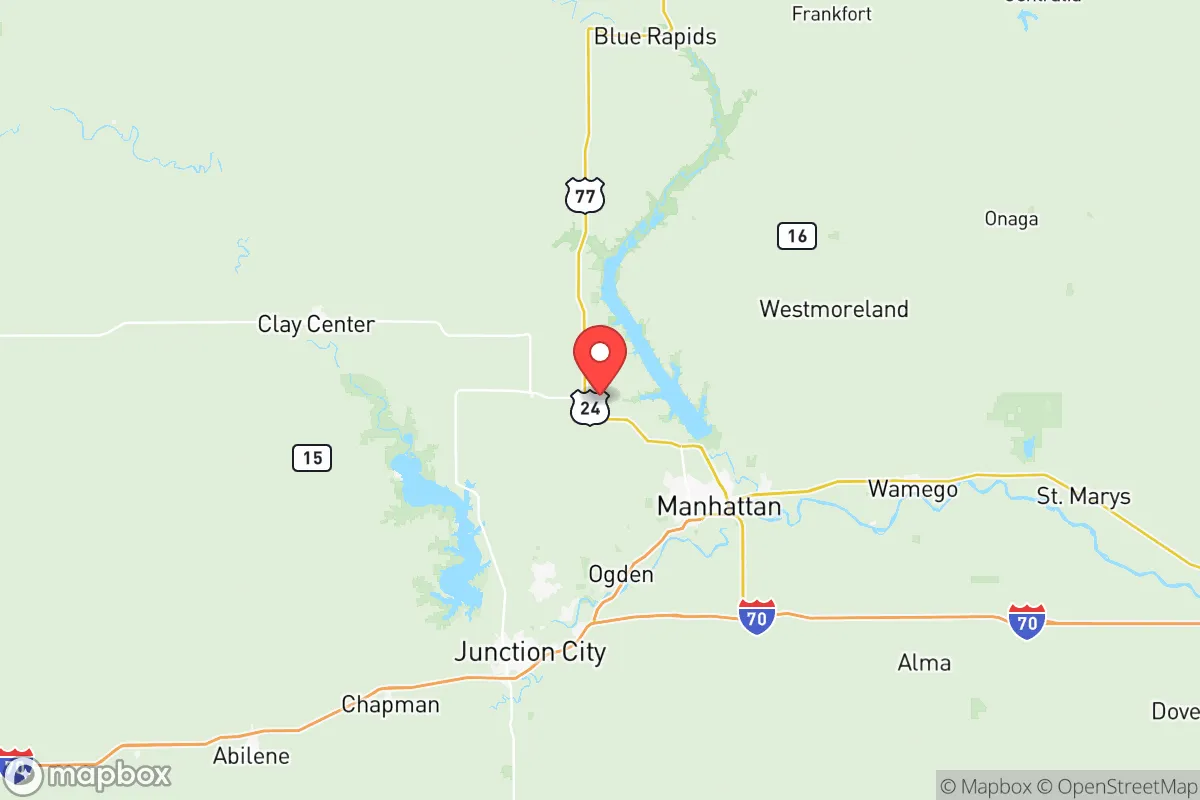
Photo: Wikipedia
Quality of Life in Riley County
A livable area that tracks near national norms for affordability, walkability, and neighborhood health.
What does Quality of Life tell us?
Quality of Life measures an area by evaluating factors like cost of living, nearby amenities, country club access, airport proximity, socioeconomic signals and neighborhood character. For large states, this is a general average — quality of life can vary dramatically between metro areas, suburbs, and rural communities within the same state.
What does this tell us?
Quality of Life measures an area by evaluating factors like cost of living, nearby amenities, country club access, airport proximity, socioeconomic signals and neighborhood character. For large states, this is a general average — quality of life can vary dramatically between metro areas, suburbs, and rural communities within the same state.
Cost of Living
12% below national average
90%
The Real Cost of Living in Riley County for 2026
| Tier | Individual | Family (4) |
|---|---|---|
| Survival | $17k | $32k |
| Comfortable | $45k | $66k |
| Luxury | $108k+ | $167k+ |
| Elite (Top 5%) | $137k+ | $213k+ |
Quality-of-Life Analysis
Riley County offers a quality-of-life spectrum stretching from the college town of Manhattan at its center to quiet rural crossroads and unincorporated prairie communities, each attracting a different resident profile. The county's overall cost of living index is 88 (12% below the national average), with a median home value of $231,200 and median rent of $1,065, while the average commute of just under 16 minutes makes even the farthest-flung pockets feel connected. This range allows families seeking university amenities, retirees looking for low-cost small-town living, and agricultural workers seeking wide-open spaces to all find a foothold within the same county boundary.
Largest town(s) & population centers
Manhattan is the county's undisputed hub, home to Kansas State University and approximately 54,000 residents. Daily life here revolves around the university calendar and the adjoining Aggieville commercial district, with abundant dining, arts venues, and a walkable downtown core along Poyntz Avenue. The city’s housing stock is a mix of historic bungalows near campus, newer subdivisions in the southwest (e.g., the Candlewood area), and apartment complexes serving students. For families, the Manhattan-Ogden USD 383 school district includes multiple elementary options and two public high schools. The city also anchors the county’s retail and healthcare, with the Via Christi Hospital on the east side and the Manhattan Town Center mall. Nearby Ogden (population ~2,200), technically its own city, functions as a bedroom community for Fort Riley and Manhattan—offering slightly lower home prices and a quieter pace while still being within a 10-minute drive of Manhattan’s amenities.
Smaller towns & rural pockets
East of Manhattan, Leonardville (pop. ~220) sits on the banks of the Republican River and embodies small-town Kansas: a grain elevator, a volunteer fire department, and an annual Leonardville Days celebration. Riley (pop. ~900), the county seat, features a historic courthouse square and a handful of locally owned businesses, with homes typically selling for the lower end of the county’s price range. Randolph (pop. ~130) and Keats (unincorporated) are scatterings of houses amid cropland and pasture, often inhabited by multi-generational farm families and a small number of commuters who trade longer drives for acreage. The rural pockets along Tuttle Creek Boulevard and the Flint Hills scenic byway include dispersed ranchettes and Conservation Reserve Program grasslands; these areas offer privacy and unobstructed views but lack municipal water or sewer service, requiring well and septic. The entire county sits within the Flint Hills tallgrass prairie region, giving even the developed parts a clear, open horizon.
Cost & lifestyle range
The spread in cost and lifestyle is stark between Manhattan’s west side and the far-eastern rural precincts. Manhattan’s newer subdivisions (e.g., Boulder Hills and Blue Hills) can see home prices from $300,000 to $500,000, while rental apartments near campus may run $1,200–$1,600 for a two-bedroom—still below national averages but the county’s most expensive. At the lower end, Ogden and Leonardville frequently list single-family homes under $150,000, and total monthly costs for a renter in a small-town duplex can be under $900. Property taxes are Kansas-typical at roughly 1.1–1.3% of assessed value, with no county-wide sales tax beyond state levels. Amenities shift accordingly: Manhattan offers multiple grocery chains, medical specialists, and the McCain Performance Series, while small towns rely on a single convenience store or a dollar store. Commute times for rural residents to Manhattan average 20–30 minutes one-way, still within the county’s very low 16-minute overall average. The trade-off is clear: shorter commutes and urban convenience in Manhattan versus lower housing costs and more land in the outlying communities.
Riley County best suits people who value geographic diversity within a short radius—the vibrant university town at one end, and genuine prairie solitude at the outer rim. Young professionals and K-State affiliates naturally gravitate to Manhattan’s core, while agricultural workers, retirees on fixed incomes, and families seeking affordable homeownership find the smaller towns like Ogden, Leonardville, or Riley a practical fit. No other county in Kansas packs such a broad quality-of-life range into so compact a geography.

Crime in Riley County
Crime rates similar to the national median for U.S. locations.
Violent CrimeViolent Crime Analysis
Property CrimeProperty Crime Analysis
Crime Analysis
Riley County, Kansas, presents a mixed safety profile that demands careful attention from potential residents. The county’s violent crime rate of 447.8 incidents per 100,000 residents is notably higher than the national average, while its property crime rate of 1,587.4 per 100,000 also exceeds typical benchmarks. This data, drawn from the most recent FBI Uniform Crime Reporting statistics, indicates that while the area is not among the most dangerous in the state, it is not a low-crime haven either. The presence of Kansas State University in Manhattan, the county’s largest city, introduces a dynamic where student populations and transient residents can influence crime patterns, particularly in neighborhoods immediately adjacent to campus.
Crime in context
Riley County’s violent crime rate of 447.8 per 100,000 is roughly 28% higher than the national average of approximately 380 per 100,000 and significantly above the Kansas state average of about 400 per 100,000. Property crime, at 1,587.4 per 100,000, is about 15% above the national average of roughly 1,380 per 100,000. These figures place Riley County in a middle tier among Kansas counties—less dangerous than Wyandotte County (Kansas City, KS) or Sedgwick County (Wichita), but more so than rural counties like Geary or Pottawatomie. The county’s crime is heavily concentrated in Manhattan, which accounts for the vast majority of reported incidents. The Riley County Police Department and the Manhattan Police Department share jurisdiction, and their reporting practices are generally transparent, though some critics argue that the presence of a large university population can skew statistics due to a higher volume of thefts and alcohol-related offenses.
What residents experience
Residents in Riley County report that property crime—particularly theft from vehicles and bicycle theft—is the most common nuisance, especially in the Aggieville district and near the Kansas State University campus in Manhattan. Violent crime, while less frequent, is a genuine concern in specific areas. The city of Manhattan has seen a rise in aggravated assaults and robberies, often linked to late-night activity near bars and student housing. In contrast, the smaller towns within Riley County, such as Ogden, Leonardville, and Randolph, experience far lower crime rates, with many reporting fewer than 10 violent crimes annually. The county’s judicial system, overseen by the Riley County District Court in Manhattan, has faced scrutiny from conservative residents who worry that progressive sentencing policies—common in many college towns—may lead to lenient treatment of repeat offenders. This concern is amplified by the fact that the county’s District Attorney, as of 2026, is an elected official who has publicly emphasized rehabilitation over incarceration, a stance that some residents believe contributes to a revolving-door justice system and higher recidivism.
Neighborhood-level variation
Crime in Riley County is not evenly distributed. The highest-risk areas are concentrated in central Manhattan, particularly around the Aggieville entertainment district and the neighborhoods immediately north and east of the Kansas State University campus. These areas see elevated rates of theft, vandalism, and alcohol-fueled assaults. Conversely, the western and southern parts of Manhattan—such as the Westloop and South Manhattan neighborhoods—are generally safer, with lower crime densities and more family-oriented housing. Outside Manhattan, the towns of Ogden (home to a small military population near Fort Riley) and Riley itself report very low crime, though they lack the amenities of the county seat. For those willing to commute, the unincorporated areas and rural subdivisions offer the safest environments, with property crime rates dropping to near zero. However, the trade-off is limited police coverage and longer emergency response times. Prospective residents should prioritize neighborhoods with strong neighborhood watch programs and avoid renting near campus without first checking local crime maps.
* Values derived from national, state, county, city and local statistics and may differ in a specific area. Last updated: 2026-05-27T19:39:04.000Z
Narrative content on this page is AI-generated and may contain mistakes. Verify any details that matter before acting on them.
ReloMaps may earn a commission from affiliate links at no extra cost to you.

