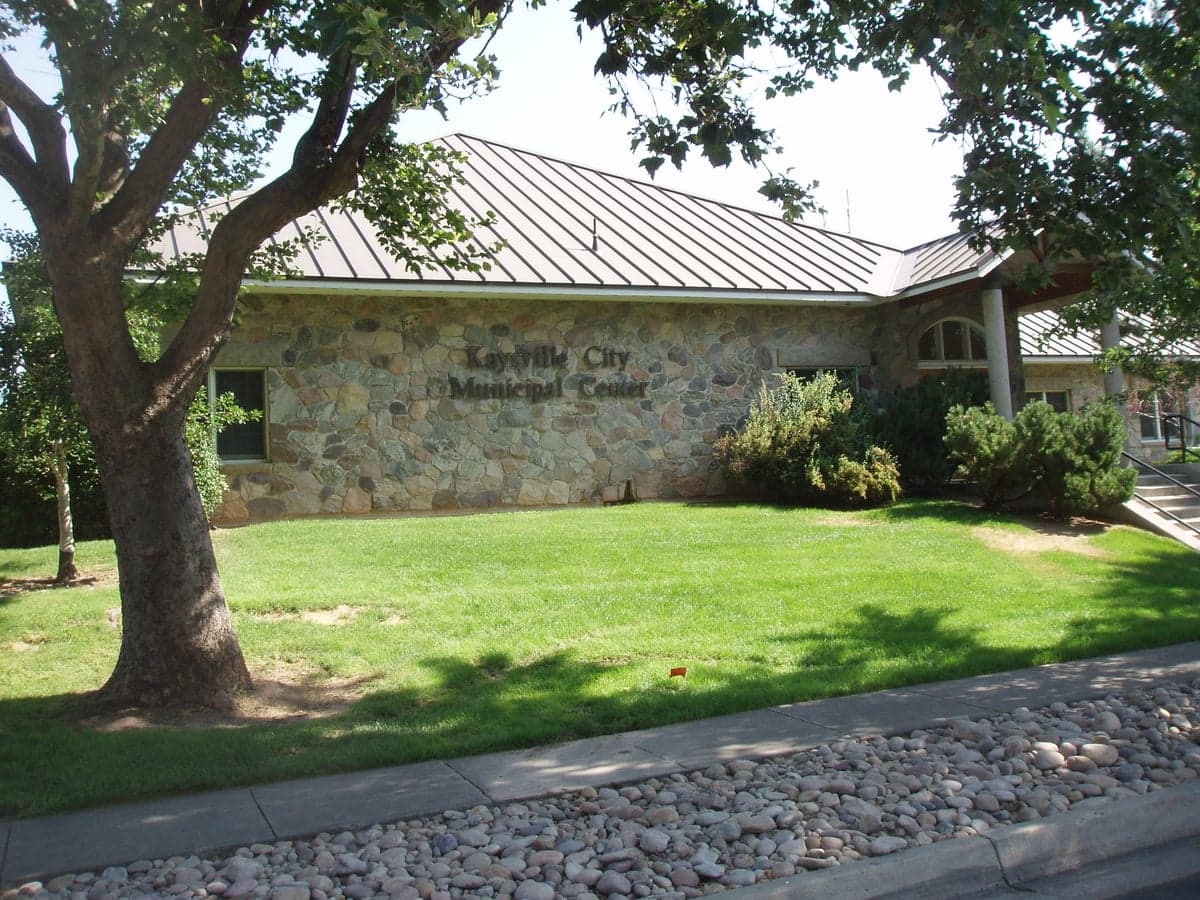
Photo: Wikipedia
Personal Sovereignty in Kaysville, UT
Viable for self-reliance. Generally workable, though some barriers may limit total independence.
What does Personal Sovereignty tell us?
Personal Sovereignty measures your capacity for self-reliance and independence with minimal government friction. Higher scores mean fewer barriers between you and the way you want to live... but it assumes you have the space you need and good neighbors.
What does this tell us?
Personal Sovereignty measures your capacity for self-reliance and independence with minimal government friction. Higher scores mean fewer barriers between you and the way you want to live... but it assumes you have the space you need and good neighbors.
State Policy
Energy independence: Self-sufficient (80% of energy produced in-state)
Personal Liberty
Homesteading

Personal Liberty Analysis
Kaysville, Utah, offers a notably high degree of personal sovereignty compared to most of the United States, largely due to the state's deeply ingrained culture of self-reliance and a legal framework that consistently prioritizes individual rights over government expansion. For those approaching relocation from a survivalist or prepper mindset, this Davis County city sits within a state that actively resists federal overreach, maintains some of the lowest tax burdens in the nation, and enforces strong protections for gun ownership, parental rights, and property use. While no location is a perfect fortress against government encroachment, Kaysville provides a legal and cultural environment where a family or single individual can build a self-sufficient life with far less interference than in coastal or more heavily regulated states.
Tax burden and regulatory posture: How Utah’s fiscal policies protect your autonomy
Utah’s tax structure is a cornerstone of personal sovereignty, and Kaysville residents benefit directly from it. The state imposes a flat income tax rate of 4.55%, with no progressive brackets that penalize higher earnings or savings—a critical factor for anyone building a prepper’s cache of assets. Property taxes in Davis County are moderate, typically ranging from 0.5% to 0.7% of assessed value, and Utah law caps annual increases for primary residences, preventing the kind of tax-driven displacement seen in states like California or New York. There is no state-level sales tax on unprepared food, and the combined state and local sales tax in Kaysville hovers around 6.85%, well below the national average. On the regulatory front, Utah has a strong right-to-work law and consistently ranks among the top states for business freedom, meaning fewer occupational licensing hurdles and less red tape for starting a home-based business, a side hustle, or a small farm operation. The state legislature has also passed preemption laws that limit local governments from enacting stricter regulations than the state—so Kaysville cannot, for example, ban short-term rentals or impose its own gun control ordinances. This preemption is a powerful shield against the kind of patchwork local overreach that erodes freedom in many metro areas.
Self-defense and gun law specifics: What Kaysville allows for armed preparedness
Utah is a constitutional carry state, meaning any law-abiding adult 21 or older can carry a concealed firearm without a permit. Kaysville residents enjoy this right fully, with no additional city-level restrictions. For those who want a permit for reciprocity in other states, Utah’s concealed firearm permit is one of the most widely recognized in the country, honored in over 35 states. The state has a strong "stand your ground" law with no duty to retreat, and castle doctrine protections extend to vehicles and occupied structures. There are no magazine capacity limits, no state-level assault weapon bans, and no waiting periods for firearm purchases. Private sales between individuals are legal without background checks, which is a significant consideration for those who value privacy in their transactions. Utah also has robust preemption laws that explicitly prohibit cities like Kaysville from enacting their own gun ordinances—so you won’t see the kind of local magazine bans or storage requirements that plague cities in blue states. For preppers, the ability to stockpile ammunition without state-level limits and to train on private property without noise restrictions (within reasonable county noise ordinances) makes Kaysville a stronghold for armed self-sufficiency.
Self-reliance and homesteading viability: Lot sizes, zoning, and off-grid feasibility
Kaysville offers a mix of suburban and semi-rural zoning that supports a surprising degree of self-reliance for a city within commuting distance of Salt Lake City. Many residential lots in the older parts of town are 0.25 to 0.5 acres, and some larger parcels exist on the city’s east bench and northern edges. The city’s zoning code allows for backyard chickens, beekeeping, and small livestock (like goats or sheep) on lots of sufficient size, typically with a permit. Vegetable gardens, fruit trees, and rainwater collection are generally unrestricted, though the city does have water rights regulations that limit large-scale irrigation from municipal supplies. Off-grid living is legally challenging within city limits because Kaysville requires connection to municipal water and sewer for habitable structures. However, on unincorporated county land just outside the city—particularly east toward the Wasatch Front or west toward the Great Salt Lake—it is possible to find parcels where well water, septic systems, and solar power are permitted. The state of Utah has relatively favorable laws for solar panel installation and net metering, and there are no state-level bans on rainwater harvesting (though water rights law applies). For serious homesteaders, the nearby communities of Fruit Heights, Farmington, and Morgan County offer larger acreage with fewer restrictions. Kaysville itself is best seen as a base camp: a place with a strong community, good schools, and enough land for a substantial garden and small livestock, while the truly off-grid setup happens on the outskirts.
Personal liberties: Parental rights, medical autonomy, speech, and property protections
Utah is one of the strongest states in the nation for parental rights. The state constitution explicitly recognizes parents as the primary caregivers and decision-makers for their children, and recent legislation has reinforced the right to opt out of public school curriculum, to homeschool without excessive state oversight, and to refuse medical treatments or vaccinations for religious or personal reasons. Kaysville’s school district, Davis School District, has a conservative board that generally respects parental input, though it is a large district with typical bureaucratic challenges. On medical autonomy, Utah has not imposed broad vaccine mandates for adults or children, and the state passed a law in 2023 prohibiting employers from requiring COVID-19 vaccinations as a condition of employment. This extends to government contractors and private businesses, giving individuals more freedom to make their own health decisions. Free speech protections are strong, with no state-level hate speech laws that criminalize political or religious expression, and Kaysville’s local government has not attempted to restrict public comment or assembly. Property rights are protected by Utah’s strict eminent domain laws, which limit the government’s ability to seize land for private development. The state also has a "right to farm" law that protects agricultural operations from nuisance lawsuits, which is relevant for anyone keeping livestock or running a small farm. Overall, the legal climate in Kaysville is one where a family can raise children according to their values, make medical choices without state coercion, and speak their mind without fear of government retaliation.
In the broader context of personal sovereignty, Kaysville ranks among the top-tier locations in the United States for those who prioritize freedom from government overreach. The combination of low taxes, strong gun rights, permissive zoning for self-reliance, and robust protections for parental and medical autonomy creates an environment where a prepared individual or family can live largely on their own terms. While no city is immune to federal overreach or the cultural shifts of the wider society, Kaysville’s legal and cultural DNA is deeply resistant to the kind of top-down control that characterizes many other regions. For the strategic relocator who values sovereignty above convenience, Kaysville represents a solid, defensible choice in a state that has consistently fought to keep government small and individual rights large.

* Values derived from national, state, county, city and local statistics and may differ in a specific area. Last updated: 2026-04-21T09:51:21.000Z
Narrative content on this page is AI-generated and may contain mistakes. Verify any details that matter before acting on them.
ReloMaps may earn a commission from affiliate links at no extra cost to you.

