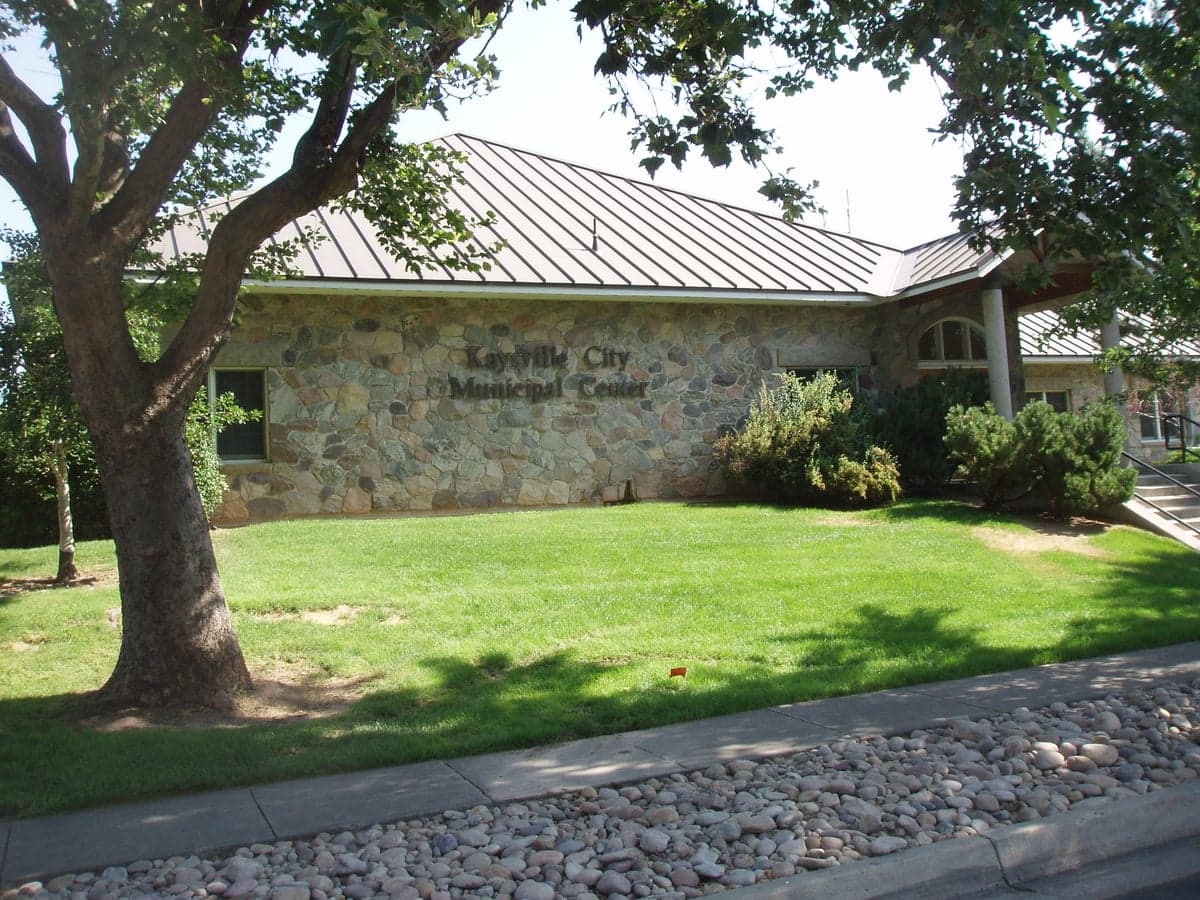
Photo: Wikipedia
Political ClimatePolitical Climate in Kaysville, UT
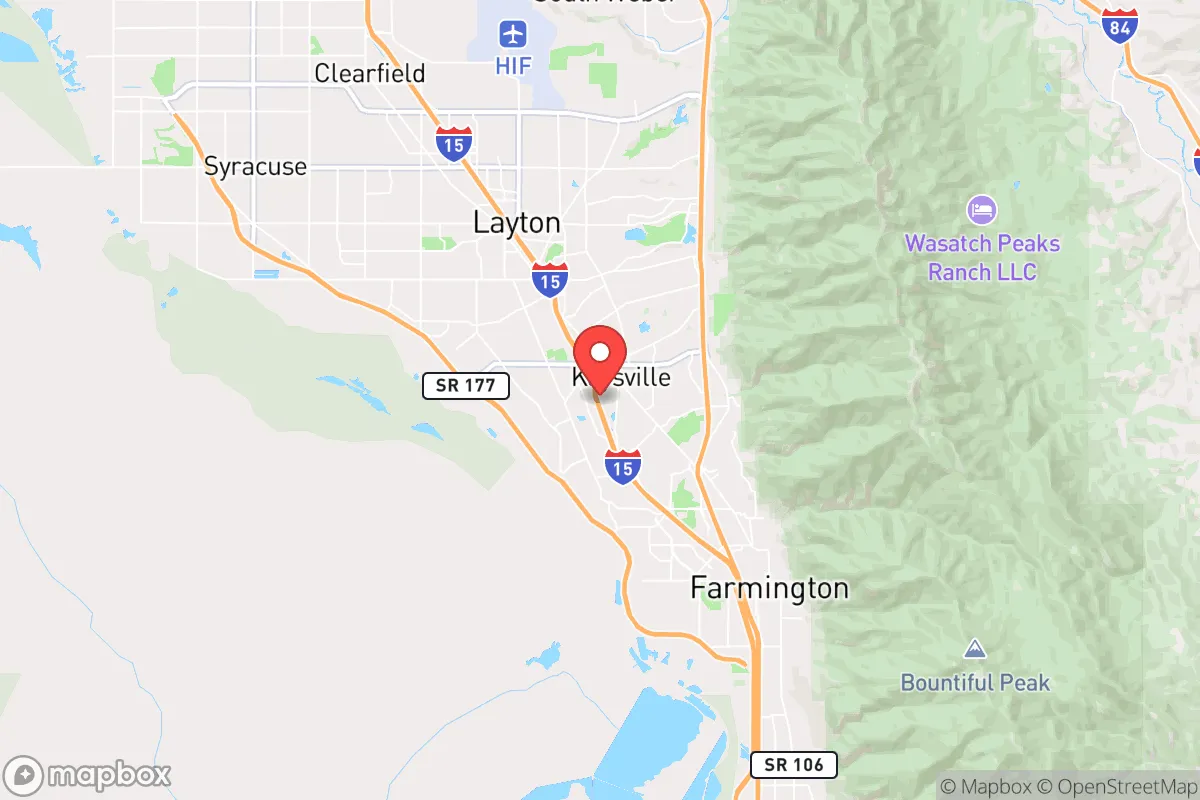
District shown is the primary district for this city’s centroid. Cities may span multiple districts.
Local Political AnalysisPolitical Analysis of Kaysville, UT
Kaysville, Utah, has long been a rock-solid conservative stronghold, and that hasn't changed much, even as the rest of Davis County sees a slow drift. The Cook PVI of R+10 tells you the baseline, but it doesn't capture the full picture: this town still votes like it's 1995, with local elections often decided in the Republican primary. If you're looking at the political trajectory, it's more about holding the line than swinging left, though you can feel the pressure from the Wasatch Front's growing diversity of thought.
How it compares
Drive ten minutes south to Layton or fifteen to Clearfield, and you'll start to see a different vibe—more purple, more willing to entertain progressive ideas on housing and transit. Kaysville, by contrast, feels like a time capsule of traditional Utah values. Neighboring Farmington is similar but has a slightly more polished, corporate Republican feel; Kaysville is grittier, more blue-collar in its conservatism. The real contrast is with Salt Lake City, forty minutes south, where the political climate is practically another country. Here, the county commission and school board races are still dominated by candidates who talk about limited government, Second Amendment rights, and local control—not the social justice language you hear in the urban core.
What this means for residents
For a family or individual who values personal freedoms and wants to keep government out of their business, Kaysville is still a safe harbor. The city council has been pretty good about resisting state-level overreach on things like mask mandates and property rights, though you do see occasional battles over zoning and development that pit "let me do what I want with my land" against "we need more density." The real concern for longtime residents is the creeping influence of progressive ideology in the school district—some curriculum shifts and DEI initiatives have raised eyebrows, and the local elections in 2024 showed a split between those who want to hold the line and those who think we need to "modernize." So far, the traditionalists have held the majority, but it's getting tighter every cycle.
On the cultural side, Kaysville is still a place where the LDS Church's influence is deeply woven into daily life, which means a strong emphasis on community service, self-reliance, and family autonomy. That's a double-edged sword: it keeps the town stable and safe, but it can also create pressure to conform. The policy distinctions that matter most here are the ones that protect local decision-making—like the city's fight to keep its own planning authority rather than cede it to the county, or the pushback against state-level mandates on water usage and housing density. If you're looking for a place where the government still respects your right to live your life without a lot of bureaucratic interference, Kaysville is one of the last bastions along the Wasatch Front. But keep an eye on those school board meetings and city council votes—that's where the real battle for the town's soul is happening right now.

State Political ClimatePolitical Climate in Utah
State Political AnalysisPolitical Environment in the State
Utah is a deeply conservative state, with Republicans holding every statewide office and supermajorities in both legislative chambers, but the political landscape is more nuanced than a simple red-state label suggests. The state has voted Republican in every presidential election since 1968, with margins typically exceeding 20 points, though the 2020 election saw Donald Trump win by 20.5% — a slight dip from 2016’s 18.1% margin in a state where third-party candidates often pull significant votes. Over the last 10-20 years, the dominant coalition has been a blend of traditional Mormon conservatism, libertarian-leaning small-government advocates, and a growing tech-driven suburban electorate, creating a unique political culture that is both reliably red and increasingly wary of national GOP orthodoxy on issues like immigration and federal land control.
Urban vs. rural divide
The political map breaks down along a stark urban-rural axis, with the Wasatch Front — the corridor from Salt Lake City through Provo to Ogden — holding the state’s population and political power. Salt Lake County, home to over 1.1 million people, is the state’s only competitive county, voting for Joe Biden by 7 points in 2020 after backing Hillary Clinton by 5 points in 2016. This urban core is driven by a mix of younger professionals, university students at the University of Utah, and a growing non-Mormon population, making it a blue island in a red sea. In contrast, rural counties like Duchesne, Uintah, and San Juan routinely deliver 80-90% Republican margins, fueled by ranching, mining, and deep skepticism of federal land management. The suburbs — think Draper, Sandy, and Lehi — are the real battlegrounds, where tech workers from Silicon Slopes (the state’s booming tech corridor) lean libertarian on taxes and regulation but are socially moderate, often splitting tickets in local races. The divide isn’t just geographic; it’s cultural, with rural residents feeling increasingly alienated from the Salt Lake City metro’s growing diversity and secularism.
Policy environment
Utah’s policy environment is a mixed bag of conservative priorities and pragmatic compromises. The state has a flat income tax rate of 4.65% (down from 5% in 2023 via SB 59) and no state-level property tax on vehicles, keeping the tax burden low relative to the national average. Regulatory posture is business-friendly, with right-to-work laws and minimal zoning restrictions in most areas, though the state’s alcohol laws remain notoriously strict — you can’t buy beer over 5% ABV in grocery stores, and private clubs still require membership fees for full-strength drinks. Education policy is a flashpoint: the state passed a universal school choice voucher program in 2023 (HB 215), allowing $8,000 per student for private or homeschool expenses, but it faces legal challenges from teachers’ unions. Healthcare is dominated by Intermountain Health, a nonprofit system that keeps costs relatively low, but Medicaid expansion was only partially implemented after a 2018 ballot initiative, with the legislature adding work requirements. Election laws are secure: voter ID is required, same-day registration is allowed, and mail-in voting is universal (all active registered voters get a ballot automatically), a system that has drawn praise from both parties for high turnout and low fraud rates.
Trajectory & freedom
On the freedom front, Utah is a mixed story — expanding liberty in some areas while tightening it in others. Gun rights are strong: the state passed permitless carry in 2021 (HB 60), allowing any law-abiding adult to carry a concealed firearm without a permit, and it has a “stand your ground” law. Parental rights got a boost with the 2023 “Utah Parental Rights in Education” law (HB 261), which requires schools to notify parents of any curriculum involving sexual orientation or gender identity and bans instruction on these topics in K-3 classrooms — a direct response to concerns about government overreach in education. Medical autonomy took a hit with the 2023 ban on gender-affirming care for minors (SB 16), which conservatives see as protecting children from irreversible procedures, but critics call it government intrusion into family decisions. Property rights are generally respected, though the state’s rapid growth has led to zoning battles in cities like St. George and Park City, where local governments have imposed growth caps that some residents see as infringing on their right to develop land. Taxation remains a bright spot: the 2023 income tax cut was paired with a sales tax expansion on services, but overall the state is trending toward lower taxes, not higher.
Civil unrest & political movements
Utah is not known for civil unrest, but there are visible flashpoints. The most significant recent protests were the 2020 Black Lives Matter demonstrations in Salt Lake City, which drew thousands and led to clashes with police, including the toppling of a statue of Brigham Young at the state capitol. On the right, the “Utah Patriot” movement has been active in rural counties, with groups like the Utah Citizens’ Council pushing for nullification of federal land management policies — a long-standing grievance in a state where 63% of land is federally owned. Immigration politics are relatively calm compared to border states, but the 2023 “Utah Immigration Enforcement Act” (HB 469) requires local law enforcement to cooperate with ICE, drawing protests from immigrant advocacy groups in Ogden and West Valley City. Election integrity controversies are minimal, though some rural counties have debated hand-counting ballots after the 2020 election, with Cache County briefly considering a switch before backing down. The most visible political movement is the “Sovereign State” rhetoric from rural commissioners, who regularly threaten to secede from Salt Lake County’s influence — talk, not action, but it reflects deep cultural divides.
Projection
Over the next 5-10 years, Utah is likely to become more politically competitive, but not necessarily more liberal. The key driver is demographic change: the state’s population grew 18% between 2010 and 2020, with most growth in the Wasatch Front suburbs and the St. George area, attracting a mix of out-of-state conservatives (from California and the Pacific Northwest) and younger, more secular residents. The tech boom in Lehi and American Fork is bringing in a libertarian-leaning workforce that cares more about low taxes and housing affordability than social issues, which could push the GOP toward a more moderate stance on land use and education. However, the rural counties are shrinking in relative population, meaning their political influence will wane, while Salt Lake County’s blue trend could make statewide races tighter — expect Republican margins to shrink to 10-15 points by 2030. The biggest wildcard is the LDS Church’s influence, which is slowly declining as the state becomes more diverse; if the church continues to moderate on social issues (it supported the 2020 anti-discrimination law for LGBTQ housing and employment), it could pull the GOP toward the center. For a conservative moving in now, expect a state that remains reliably red but increasingly divided between a libertarian-leaning urban corridor and a traditionalist rural base, with housing affordability and water scarcity becoming the dominant political issues.
For a new resident, the bottom line is this: Utah offers a low-tax, business-friendly environment with strong gun rights and parental control over education, but you’ll need to navigate a growing urban-rural cultural war and a state government that is conservative but not reflexively anti-government. If you’re looking for a place where your personal freedoms are respected — from homeschooling to carrying a firearm — and where the tax burden is light, Utah is a solid bet. Just be prepared for the Wasatch Front to feel increasingly like a purple metro, while the rural counties remain a red fortress. The key is choosing your community wisely: St. George for a retiree-friendly conservative haven, Provo for a family-focused Mormon culture, or Park City if you want a libertarian ski town vibe. The state’s trajectory is toward more competition, not less, but the fundamentals of freedom — low taxes, strong property rights, and limited government — are likely to endure.
* Values derived from national, state, county, city and local statistics and may differ in a specific area. Last updated: 2026-04-21T09:51:21.000Z
Narrative content on this page is AI-generated and may contain mistakes. Verify any details that matter before acting on them.
ReloMaps may earn a commission from affiliate links at no extra cost to you.

