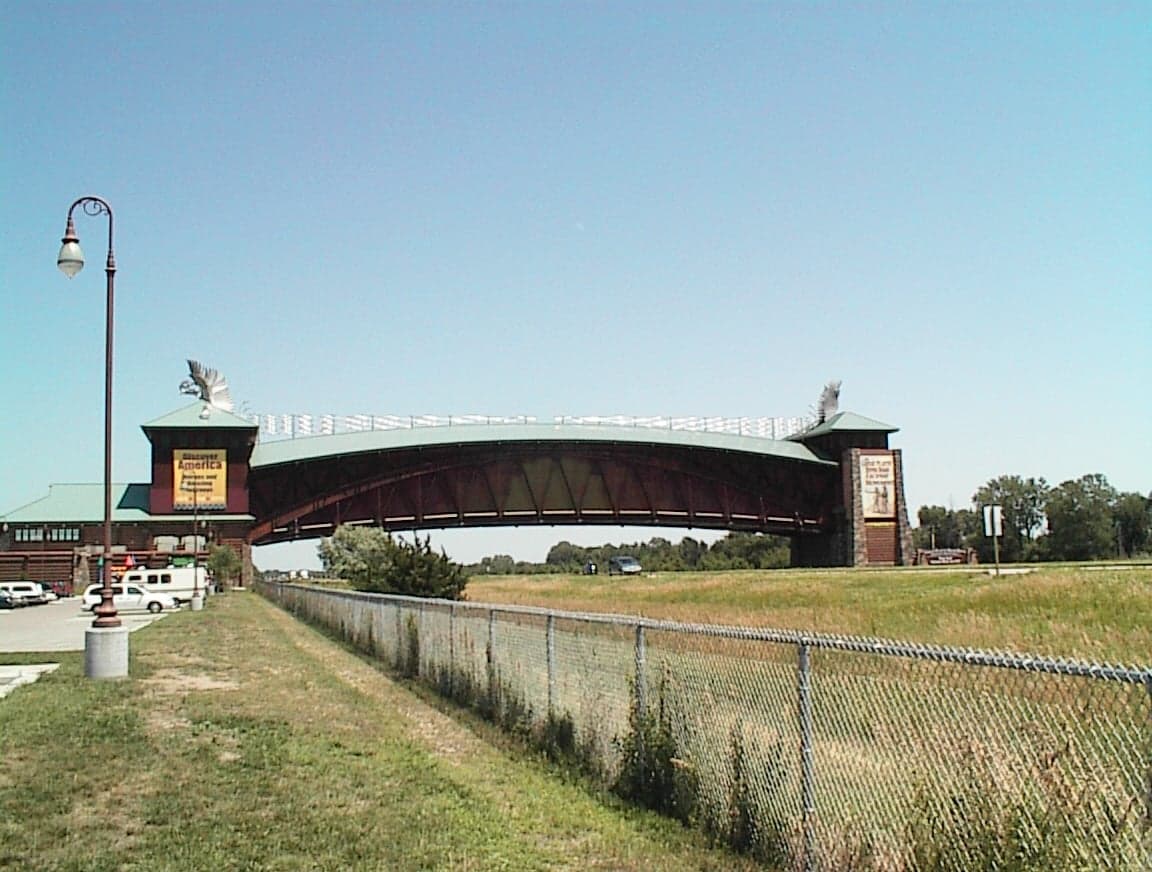
Photo: Wikipedia
Personal Sovereignty in Kearney, NE
Viable for self-reliance. Generally workable, though some barriers may limit total independence.
What does Personal Sovereignty tell us?
Personal Sovereignty measures your capacity for self-reliance and independence with minimal government friction. Higher scores mean fewer barriers between you and the way you want to live... but it assumes you have the space you need and good neighbors.
What does this tell us?
Personal Sovereignty measures your capacity for self-reliance and independence with minimal government friction. Higher scores mean fewer barriers between you and the way you want to live... but it assumes you have the space you need and good neighbors.
State Policy
Energy independence: Importer (35% of energy produced in-state)
Personal Liberty
Homesteading

Personal Liberty Analysis
For the individual or family who views personal sovereignty as the bedrock of a free life, Kearney, Nebraska, offers a notably uncluttered environment where government overreach is more a distant rumor than a daily reality. Nestled in the conservative heart of Buffalo County, this city of roughly 34,000 operates under a state framework that consistently ranks among the most freedom-respecting in the nation, with a low tax burden, minimal regulatory friction, and a legal culture that leans heavily toward individual rights. While no place is a perfect fortress against federal encroachment, Kearney’s practical autonomy—from how you defend your home to how you raise your children—stands in stark contrast to the tightening grip seen in coastal and urban centers. For those assessing relocation through a survivalist or prepper lens, this is a landscape where self-reliance isn’t just tolerated; it’s the expected baseline.
Tax burden and regulatory posture: How Nebraska’s fiscal climate protects your wallet and choices
Nebraska’s tax structure is a mixed bag, but for the sovereignty-minded, the state’s overall posture is far more favorable than high-tax alternatives. The state income tax is a flat 3.51% for 2026, with a top marginal rate of 6.64% on income over roughly $35,000—a rate that, while not the lowest nationally, is significantly less punishing than California’s 13.3% or New York’s 10.9%. Property taxes in Buffalo County are the heavier lift, with effective rates around 1.7% of assessed home value, which is above the national average but partially offset by Nebraska’s lack of a state sales tax on groceries and prescription drugs. The real win for personal sovereignty, however, is the regulatory environment. Nebraska is a right-to-work state, meaning you cannot be forced to join a union as a condition of employment, and its occupational licensing requirements are among the least burdensome in the Midwest. For a prepper or homesteader, this translates to fewer bureaucratic hurdles when starting a side business, building a workshop, or engaging in trades like welding or small-scale food production. The state’s approach to land use is similarly hands-off: Buffalo County has no county-wide zoning for agricultural land, and Kearney’s city zoning is relatively permissive for home-based enterprises, provided they don’t create excessive traffic or noise. Compared to states where environmental regulations can stall a simple fence repair, Kearney’s posture is one of quiet deference to individual initiative.
Self-defense and gun law specifics: What Nebraska’s permitless carry means for your family’s security
For those who view the Second Amendment as a non-negotiable pillar of personal sovereignty, Nebraska is a stronghold. Since 2023, the state has had permitless (constitutional) carry for anyone 21 or older who can legally possess a firearm—no permit, no class, no government permission slip required. This applies to both open and concealed carry, and Kearney’s local law enforcement has publicly stated they will not enforce any federal gun regulations that exceed state law, a stance that aligns with Nebraska’s 2021 Second Amendment Preservation Act. The state also preempts all local gun ordinances, meaning Kearney cannot pass its own bans on magazine capacity, firearm types, or carry locations beyond what state law allows. For the prepper, this is critical: you can keep a rifle in your truck, carry a sidearm while hiking the Platte River trails, and store as many firearms as you wish without fear of local overreach. Stand-your-ground laws are in full effect—no duty to retreat if you are in a place you have a legal right to be—and Nebraska’s castle doctrine explicitly covers your home, vehicle, and occupied structure. The only notable restriction is a 48-hour waiting period for handgun purchases from licensed dealers, but private sales between individuals remain unregulated. For a family concerned about self-defense in an uncertain world, Kearney offers a legal framework that treats your right to protect yourself as inherent, not granted by the state.
Self-reliance and homesteading viability: Lot sizes, zoning, and off-grid feasibility in Buffalo County
Kearney’s practical geography makes it a prime candidate for the homesteader or prepper seeking to reduce dependency on fragile systems. Within city limits, standard residential lots range from one-quarter to one-half acre, but the real opportunity lies in the unincorporated areas of Buffalo County, where you can find parcels of 5 to 40 acres within a 15-minute drive of downtown. Zoning in these rural areas is minimal: no county-wide building codes for agricultural structures, no restrictions on rainwater collection (Nebraska actually encourages it through a state tax credit), and no prohibition on keeping chickens, goats, or even a few head of cattle on parcels over two acres. Off-grid feasibility is high, though not without nuance. Nebraska’s net metering policy allows you to connect solar panels to the grid and sell back excess power, but going fully off-grid requires a permit and adherence to state electrical codes—a bureaucratic step, but not a prohibitive one. Water rights are a more serious consideration: Nebraska follows prior appropriation doctrine, meaning you need a permit for any well that pumps more than 50 gallons per minute for irrigation, but a domestic well for household use (up to 15 acre-feet per year) is generally allowed without a permit. For the serious prepper, the ability to drill a well, install solar, and raise your own food on a few acres without constant government interference is a tangible reality here, unlike in the over-regulated suburbs of the coasts. The local soil is fertile loam, and the growing season (roughly 150 frost-free days) supports a robust garden and small orchard.
Personal liberties: Parental rights, medical autonomy, speech, and property protections
On the broader front of personal liberties, Kearney sits within a state that has actively pushed back against federal overreach in several key areas. Parental rights are strongly protected: Nebraska law requires parental consent for any medical procedure on a minor, including vaccinations and mental health treatment, and the state has passed legislation prohibiting schools from withholding information about a child’s gender identity or medical decisions from parents. This aligns with a growing conservative consensus that the family, not the state, holds primary authority over children. Medical autonomy for adults is less absolute—Nebraska has not passed broad medical freedom legislation like some states—but there are no vaccine mandates for general employment, and the state’s emergency powers law was reformed in 2021 to limit a governor’s ability to shut down businesses or mandate treatments without legislative approval. Free speech protections are robust, with no hate speech laws that criminalize political or religious expression, and property rights are secured by Nebraska’s strong eminent domain protections, which require a public use (not just economic development) for any taking. The local culture in Kearney reinforces these legal protections: the city is home to the University of Nebraska at Kearney, which provides a moderate intellectual counterbalance, but the dominant ethos is one of live-and-let-live conservatism. You will not face social or legal pressure to conform to progressive orthodoxy on speech, family structure, or personal health choices.
In the broader landscape of American personal sovereignty, Kearney, Nebraska, occupies a solid middle tier—not as aggressively libertarian as rural Idaho or Montana, but far more protective of individual rights than the vast majority of the country. The tax burden is moderate, the gun laws are among the most permissive in the Midwest, and the regulatory environment for homesteading and self-reliance is genuinely favorable. The most significant threat to sovereignty here is not local government overreach but the potential for federal preemption in areas like water rights or environmental regulation, which could impact long-term off-grid plans. For the strategic relocator who values the ability to live, work, defend, and raise a family without constant state interference, Kearney offers a rare combination of practical freedom and community stability. It is not a survivalist utopia, but it is a place where a determined individual can build a genuinely autonomous life without having to fight the government every step of the way.

* Values derived from national, state, county, city and local statistics and may differ in a specific area. Last updated: 2026-05-03T20:31:43.000Z
Narrative content on this page is AI-generated and may contain mistakes. Verify any details that matter before acting on them.
ReloMaps may earn a commission from affiliate links at no extra cost to you.

