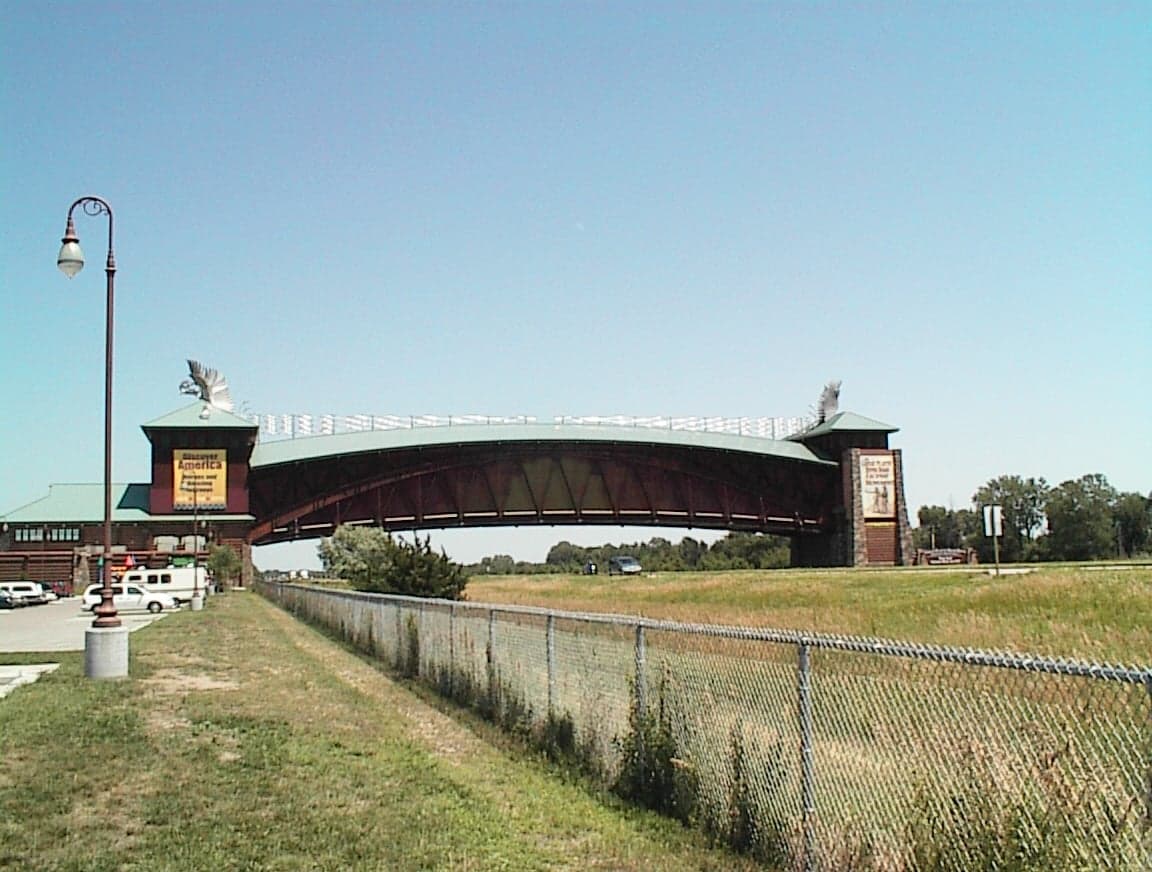
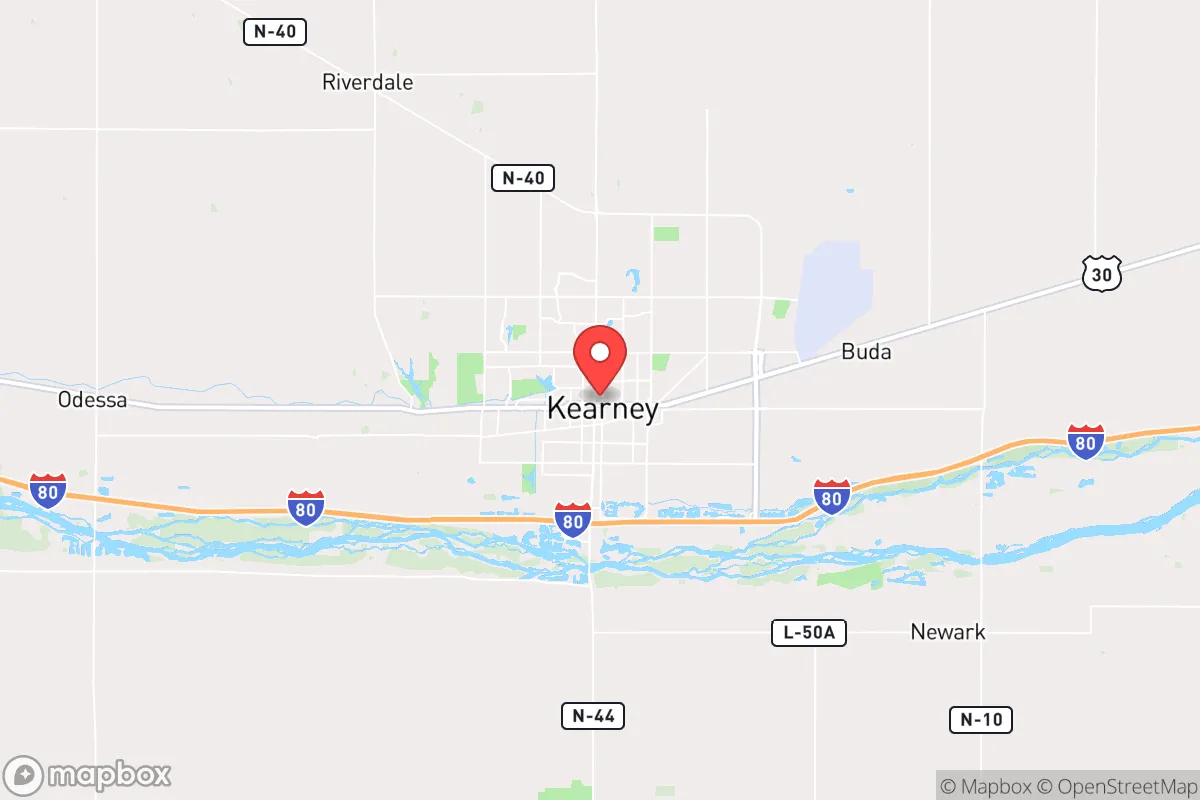
Photo: Wikipedia
Demographics of Kearney, NE
Affluence Level in Kearney, NE
A middle-class area roughly in line with national averages across income, home values, education, and employment.
People of Kearney, NE
The people of Kearney, Nebraska, today number 34,024, forming a predominantly white (82.4%) and college-educated (36.9%) community with a small but growing Hispanic minority (11.2%). The city’s identity is rooted in its role as a regional trade, education, and healthcare hub along the Platte River, anchored by the University of Nebraska at Kearney (UNK) and a strong sense of Midwestern civic pride. Kearney is notably less diverse than the national average, with a foreign-born population of just 2.9%, and its residents tend to be politically and socially conservative, valuing stability, family, and community involvement.
How the city was settled and grew
Kearney’s original population was drawn by the transcontinental railroad and the promise of fertile Platte Valley farmland. The city was formally founded in 1871 as a railroad town on the Union Pacific line, and its early settlers were overwhelmingly white, native-born Americans from the Midwest and Northeast, along with a smaller wave of German and Irish immigrants who worked on the railroad and in agriculture. The historic Downtown Kearney district, centered on Central Avenue, was built by these early merchants and tradesmen, while the Railroad Addition neighborhood near the tracks housed many of the Irish and German laborers. By the early 20th century, Kearney had become a stable, homogeneous community of farmers, shopkeepers, and professionals, with little ethnic or racial diversity. The city’s growth remained modest through the mid-20th century, driven by the expansion of UNK (founded as a state normal school in 1903) and the development of the West Kearney neighborhood, which attracted middle-class families seeking newer housing after World War II.
Modern era (post-1965)
After the 1965 Immigration and Nationality Act, Kearney saw only a trickle of new immigration, unlike larger Nebraska cities such as Omaha or Lincoln. The foreign-born population remains low at 2.9%, and the city’s racial composition has shifted primarily through domestic in-migration and natural increase. The Hispanic population, now 11.2%, grew steadily from the 1990s onward, driven by Mexican and Central American workers recruited by local meatpacking plants and agricultural operations. These families concentrated in the South Kearney area, near the industrial corridor along Highway 30, where affordable housing and proximity to jobs created a modest Hispanic enclave. The East/Southeast Asian population (2.1%) is largely tied to UNK, with faculty and graduate students settling in the University Heights neighborhood near campus. The Black population (1.1%) and Indian subcontinent population (0.2%) remain very small, with no distinct ethnic enclaves. Suburbanization in the post-1965 era pushed white, middle-class families into the North Kearney and Cottonmill subdivisions, reinforcing the city’s overall homogeneity.
The future
Kearney’s population is projected to grow slowly, driven by natural increase and continued domestic migration from rural Nebraska and the Plains states. The Hispanic share is likely to rise gradually, possibly reaching 15-18% by 2040, as younger Hispanic families have higher birth rates and as the meatpacking and service sectors continue to recruit immigrant labor. However, the city shows no signs of rapid diversification: the white population will remain the overwhelming majority, and the foreign-born share is unlikely to exceed 5% in the next decade. Kearney is not tribalizing into distinct ethnic enclaves; rather, the Hispanic community is slowly assimilating into the broader population, with second-generation families moving into mixed neighborhoods like West Kearney and Cottonmill. The East/Southeast Asian and Indian populations will remain small and tied to UNK, with little permanent settlement. The city’s future is one of slow, stable growth, with a demographic profile that will remain overwhelmingly white and Midwestern, though slightly more Hispanic than today.
For someone moving to Kearney now, the city offers a stable, family-oriented community with a strong sense of place and low crime. The population is not undergoing dramatic change, and newcomers—especially those from outside the region—should expect a culturally homogeneous environment where community involvement and conservative values are the norm. The city’s trajectory is one of gradual, modest diversification, not transformation, making it a predictable and safe choice for those seeking a traditional Midwestern lifestyle.

* Values derived from national, state, county, city and local statistics and may differ in a specific area. Last updated: 2026-05-03T20:31:43.000Z
Narrative content on this page is AI-generated and may contain mistakes. Verify any details that matter before acting on them.
ReloMaps may earn a commission from affiliate links at no extra cost to you.

