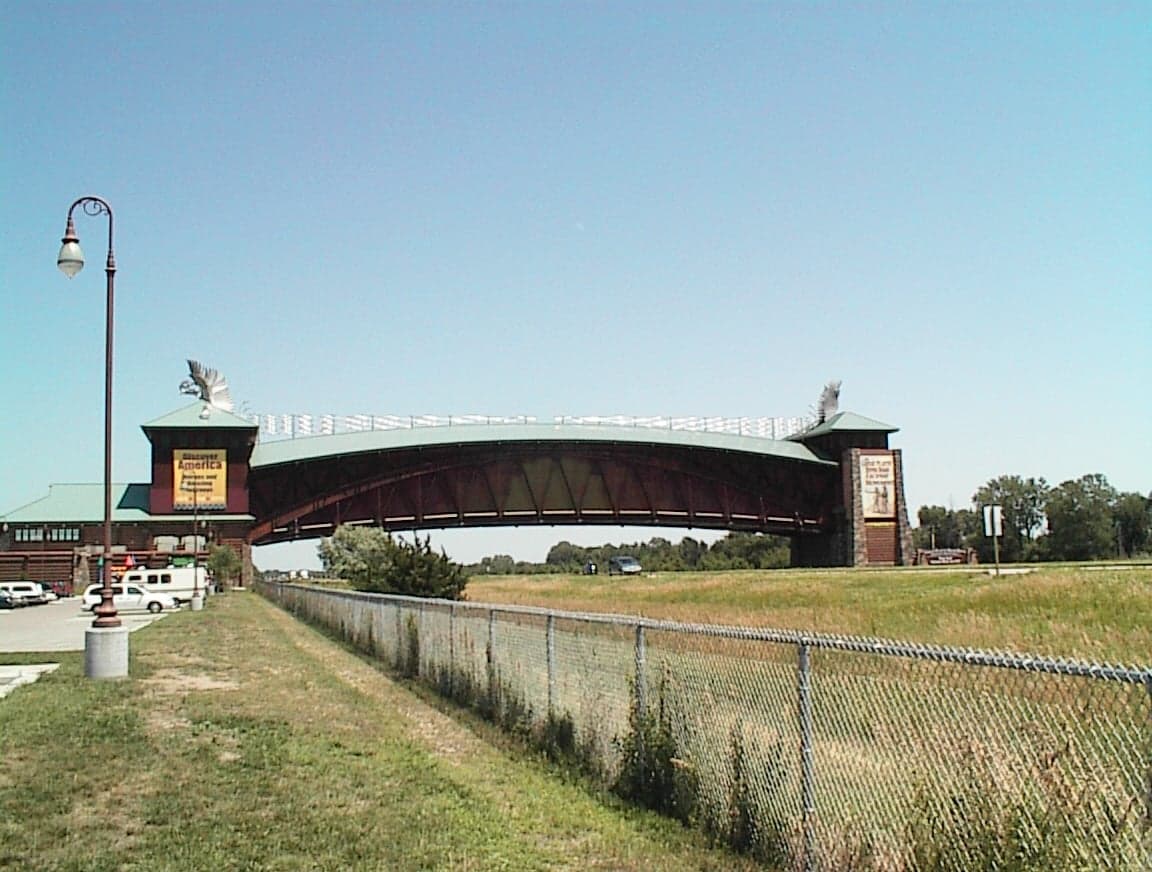
Photo: Wikipedia
Political ClimatePolitical Climate in Kearney, NE
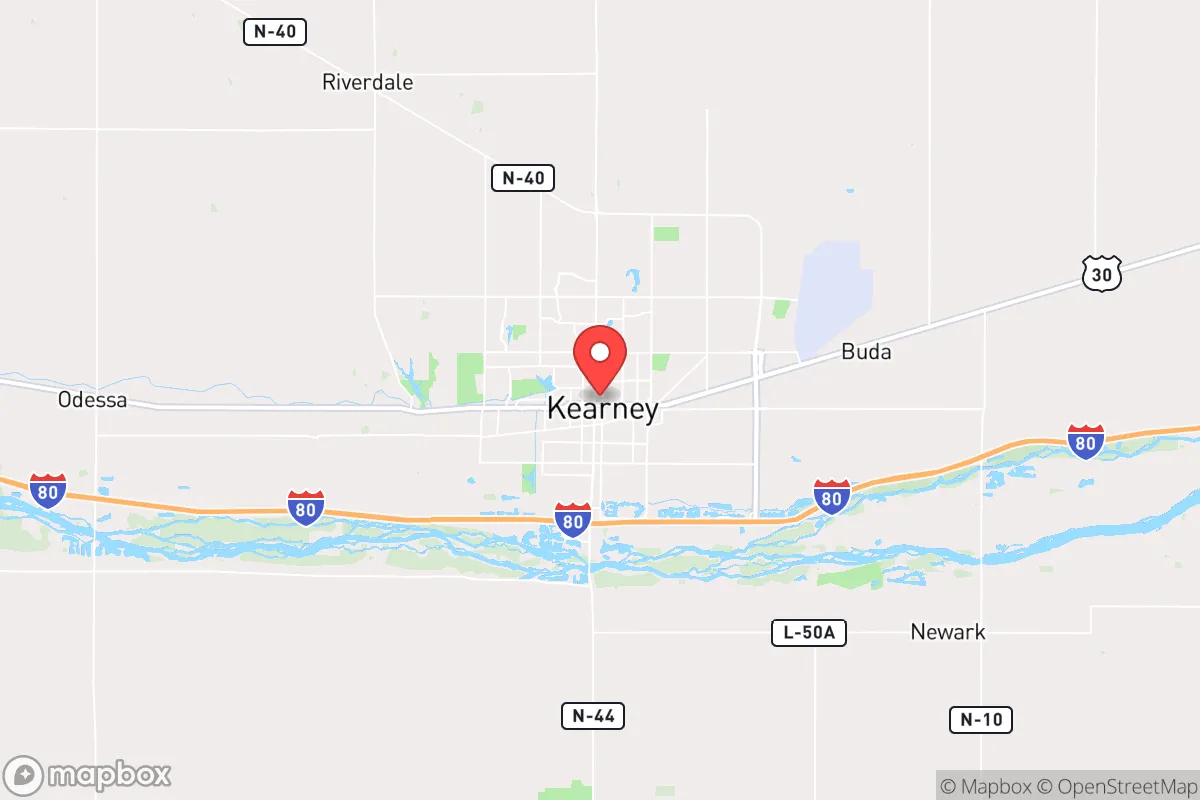
District shown is the primary district for this city’s centroid. Cities may span multiple districts.
Local Political AnalysisPolitical Analysis of Kearney, NE
Kearney, Nebraska, sits deep in solidly conservative territory, with a Cook PVI of R+27 that reflects decades of consistent Republican voting. The city and surrounding Buffalo County have long been a reliable red stronghold, and while the national political winds have shifted in unpredictable ways, Kearney has remained remarkably stable in its leanings. If you look at the presidential results here, you’ll see margins that are rarely close—Trump carried the county by over 30 points in 2020, and that pattern has held for generations. The trajectory isn’t toward any dramatic swing; if anything, the area has become more entrenched in its conservative identity as nearby cities like Lincoln and Omaha have drifted leftward. Kearney feels like a place where the old-school values of self-reliance, limited government, and personal responsibility still hold real weight, and that’s not changing anytime soon.
How it compares
Compared to the rest of Nebraska, Kearney is a standout for its deep red consistency. Drive an hour east to Grand Island, and you’ll find a more mixed political landscape—still conservative overall, but with a growing Hispanic population that’s nudging the area toward a more moderate, sometimes even slightly progressive, tilt on certain local issues. Head two hours east to Lincoln, and you’re in a blue island where the university and state government dominate the culture. Kearney, by contrast, feels insulated from those shifts. The surrounding towns like Gibbon, Shelton, and Ravenna are even more conservative, often voting Republican by 40-point margins or more. The contrast is sharpest when you look at state legislative races: Buffalo County’s district has sent solid conservatives to Lincoln for years, while districts in Lincoln and Omaha have increasingly elected Democrats. For a resident who values limited government and personal freedoms, Kearney offers a political environment that feels like a refuge from the overreach you see in more progressive areas.
What this means for residents
For someone living here, the political climate translates into a government that mostly stays out of your business. Property taxes are a perennial gripe—Nebraska’s reliance on them is a real pain point—but the local city council and county board are generally pro-business and skeptical of new regulations. You won’t see the kind of zoning overhauls or mask mandates that became common in blue cities during the pandemic. The school board here has pushed back against progressive curriculum changes, and the local library has avoided the kind of book-banning controversies that dominate headlines elsewhere—not because of censorship, but because the community simply doesn’t demand those materials. For a resident who sees government overreach as a red flag, Kearney’s hands-off approach is a relief. The biggest concern I hear from longtime neighbors is that as the University of Nebraska at Kearney grows, there’s a slow trickle of more progressive faculty and students moving in, but so far, that hasn’t shifted the local political balance in any meaningful way. The city’s culture still revolves around agriculture, manufacturing, and small business, not activism or protest.
One cultural distinction worth noting is Kearney’s strong sense of community self-reliance. There’s a deep-seated belief here that problems are best solved locally, not by state or federal mandates. The annual Nebraska State Fair rotates through Grand Island, but Kearney hosts its own events like the Buffalo County Fair and the Kearney Hub’s community forums, where the conversation stays grounded in practical concerns—roads, schools, taxes—not ideological battles. If you’re looking for a place where the political climate aligns with a conservative, freedom-first worldview, Kearney delivers without the drama you’d find in more polarized cities. The long-term outlook is stable: as long as the agricultural economy holds and the university doesn’t become a political flashpoint, this area will remain a reliable red haven for years to come.

State Political ClimatePolitical Climate in Nebraska
State Political AnalysisPolitical Environment in the State
Nebraska has long been a reliably conservative state, but it’s not the monolith outsiders often assume. The state’s overall partisan lean is solidly Republican — it hasn’t voted for a Democratic presidential candidate since 1964, and in 2024, Donald Trump carried it by roughly 19 points. But the real story is the growing divide between its two dominant population centers: the eastern, urbanized I-80 corridor anchored by Omaha and Lincoln, and the vast, deeply red rural expanse that covers the rest of the state. Over the past 20 years, that rural vote has become more entrenched and more conservative, while the metro areas have shifted leftward, creating a political tension that defines nearly every statewide debate.
Urban vs. rural divide
The political map of Nebraska is a study in contrasts. Omaha (Douglas County) is the state’s largest city and its most politically competitive area — it voted for Joe Biden in 2020 and has sent a mix of Democrats and Republicans to the legislature. Lincoln (Lancaster County) leans blue as well, driven by the University of Nebraska and state government workers. Together, these two counties account for over half the state’s population, but they are increasingly outvoted by the rest of the state. The rural counties — places like Scottsbluff (Scotts Bluff County), Norfolk (Madison County), and North Platte (Lincoln County) — routinely vote 75-80% Republican. The real flashpoint is the 2nd Congressional District (Omaha metro), which is the only competitive House seat in the state and has flipped between parties in recent cycles. This urban-rural split means that while the state legislature is firmly Republican, the governor’s office and U.S. Senate seats are also reliably red, but the margin of control is narrower than the raw numbers suggest.
Policy environment
Nebraska’s policy environment is broadly conservative, but with some notable exceptions. The state has no personal or corporate income tax on Social Security benefits, and the top individual income tax rate is being phased down to 3.99% by 2027 under LB 754 (2023). Property taxes are a perennial complaint — they’re high relative to the region, and the state relies heavily on them to fund schools. The regulatory posture is business-friendly, with a right-to-work law and no state-level minimum wage above the federal $7.25 (though a 2022 ballot measure raised it to $15 by 2026). On education, Nebraska has a robust school choice movement: LB 753 (2023) created a tax-credit scholarship program for private school tuition, and the state has no common core mandate. Healthcare policy is mixed — the state expanded Medicaid under the Affordable Care Act in 2020 via a ballot initiative, but it also passed a 12-week abortion ban in 2023 (LB 574). Election laws are relatively strict: voter ID is required (passed in 2021, implemented in 2024), and the state has no same-day registration. Nebraska is also one of only two states that splits its electoral votes by congressional district, a quirk that gives the Omaha metro outsized national attention.
Trajectory & freedom
Over the past five years, Nebraska has moved decisively toward expanding personal liberty in several key areas, but not without pushback. On gun rights, the state enacted constitutional carry in 2023 (LB 77), allowing permitless concealed carry for anyone 21 or older. On parental rights, LB 1084 (2023) banned gender-affirming care for minors and restricted classroom instruction on sexual orientation and gender identity — a major win for conservative families. On medical autonomy, the 12-week abortion ban was paired with a separate bill banning telehealth prescriptions for abortion pills, tightening restrictions further. Property rights saw a boost with LB 406 (2022), which limited the use of eminent domain for carbon pipeline projects — a direct response to the controversial Summit Carbon Solutions pipeline that sparked fierce opposition from landowners across the state. However, there are concerns: the state’s reliance on property taxes remains a drag on economic freedom, and the expansion of Medicaid has increased government healthcare spending. Overall, Nebraska is trending more conservative on social and cultural issues, but the fiscal picture is more mixed — tax cuts are happening, but slowly.
Civil unrest & political movements
Nebraska has seen its share of political flashpoints, but they tend to be more organized and less chaotic than in some states. The most visible recent movement has been the pipeline protests — landowners and activists, often from rural conservative areas, have staged large rallies at the state capitol against the Summit Carbon Solutions pipeline, citing property rights violations and eminent domain abuse. This has created an unusual alliance between rural conservatives and environmental groups. On the left, the Women’s March and Planned Parenthood have organized protests against the abortion ban, particularly in Omaha and Lincoln, but these have been smaller and less sustained. Immigration politics are relatively quiet — Nebraska is not a sanctuary state, and local law enforcement cooperates with ICE. There was a brief controversy in 2023 over a bill (LB 535) that would have banned sanctuary cities, but it died in committee. Election integrity has been a low-key issue: the 2020 and 2022 elections saw no major controversies, though some rural counties have pushed for hand-counting ballots. The most visible flashpoint for a new resident would likely be the pipeline debate — it’s a live issue that pits property rights against corporate interests, and it’s not going away.
Projection
Over the next 5-10 years, Nebraska is likely to become more conservative, not less, but the nature of that conservatism will shift. The rural population is aging and shrinking, but the urban growth in Omaha and Lincoln is being driven by younger, more diverse populations that lean left. However, the state’s political structure — a nonpartisan unicameral legislature that is still dominated by Republicans — means that policy will continue to move right on social issues. Expect further tax cuts, especially on property taxes, as the state’s budget surplus allows for it. The pipeline fight will likely be resolved in favor of landowners, given the political momentum. The biggest wild card is in-migration: Nebraska is seeing a modest influx from California and Colorado, but these newcomers tend to be more conservative-leaning than the national average — they’re moving for lower taxes and fewer regulations. If that trend accelerates, the state could become even more red. The Omaha metro will remain the only competitive area, but it’s unlikely to flip the statewide balance. A new resident moving in now should expect a state that is stable, predictable, and increasingly aligned with traditional conservative values — but with a persistent urban-rural tension that keeps things interesting.
Bottom line for a new resident: If you’re looking for a state where your rights are protected, taxes are low and trending lower, and the culture is family-oriented and traditional, Nebraska is a solid bet. You’ll find a government that respects property rights, parental authority, and the Second Amendment. The trade-off is that you’ll be living in a state with a growing urban-liberal minority that will continue to push back — but for now, the conservative majority is holding firm and advancing its agenda. Just be prepared for high property taxes and the occasional pipeline protest. It’s a good place to raise a family, start a business, or retire, as long as you’re comfortable with the pace of life and the political climate.
* Values derived from national, state, county, city and local statistics and may differ in a specific area. Last updated: 2026-05-03T20:31:43.000Z
Narrative content on this page is AI-generated and may contain mistakes. Verify any details that matter before acting on them.
ReloMaps may earn a commission from affiliate links at no extra cost to you.

