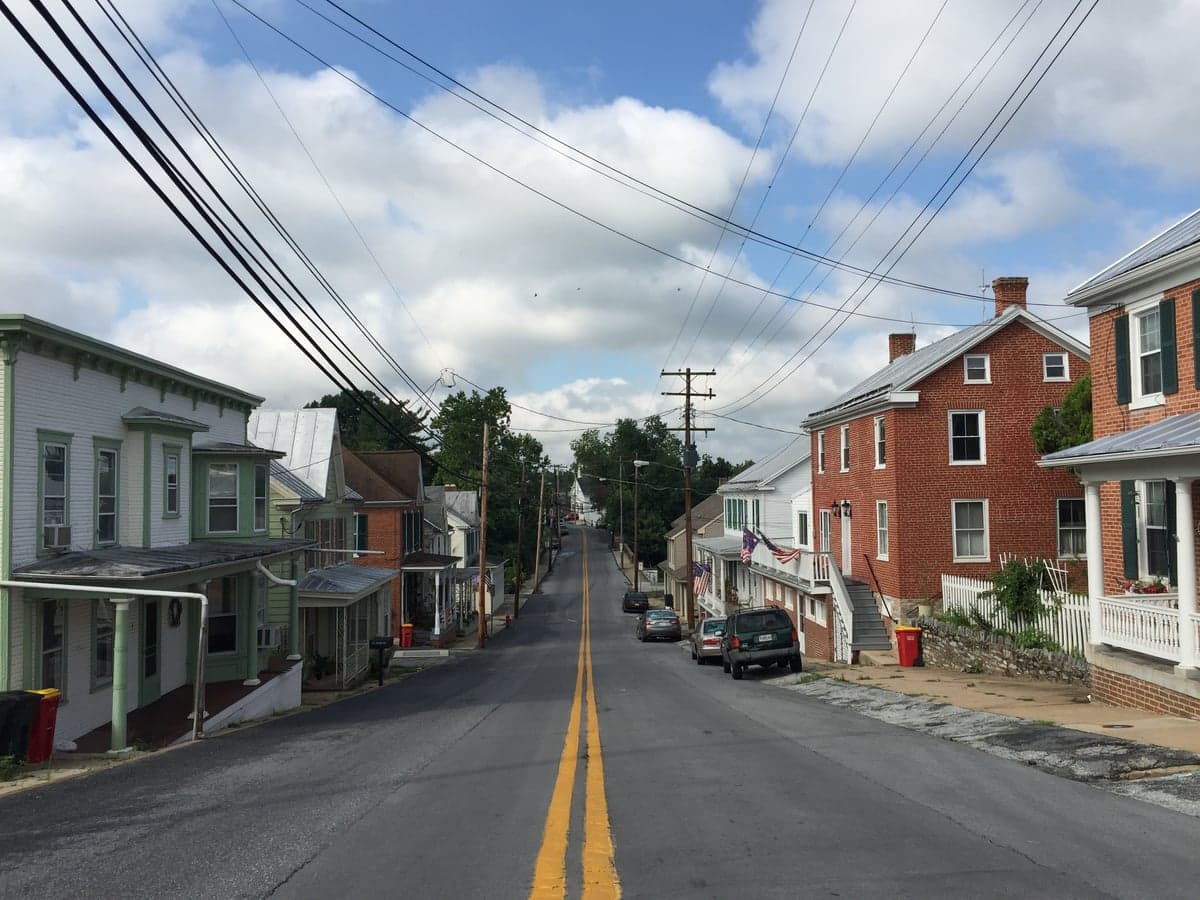
Photo: Wikipedia
Political ClimatePolitical Climate in Keedysville, MD
District shown is the primary district for this city’s centroid. Cities may span multiple districts.
Local Political AnalysisPolitical Analysis of Keedysville, MD
Keedysville, Maryland, sits in a political pocket that’s noticeably more conservative than the rest of the state. While Maryland as a whole carries a Cook PVI of D+17—one of the most reliably Democratic states in the country—Keedysville’s own PVI is D+3, a much tighter lean. That three-point Democratic tilt is almost negligible in practice; in recent presidential elections, the precinct has swung within a few points of even, and local races often see strong Republican showings. The trajectory here is subtle but real: as the broader Washington, D.C. exurbs push westward, Keedysville is seeing a slow influx of more moderate and left-leaning residents, but the town’s agricultural roots and small-town character still anchor it firmly in the center-right.
How it compares
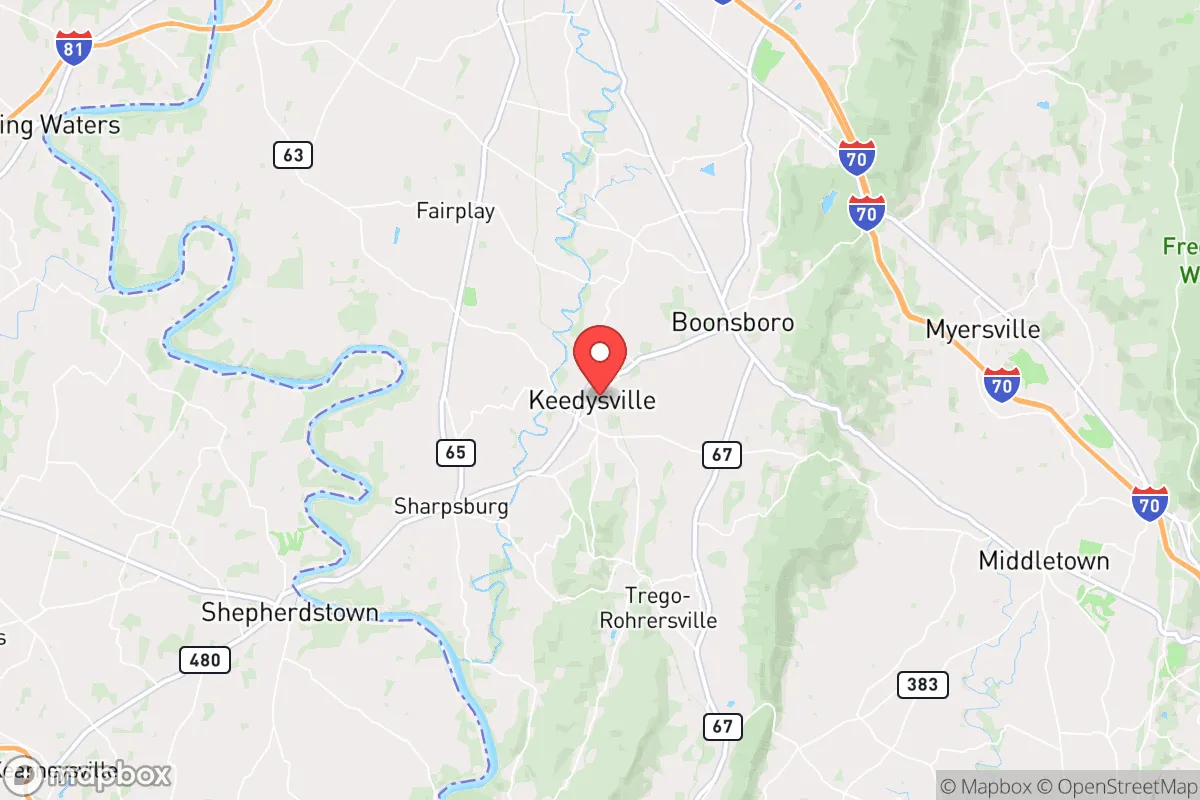
Drive 15 minutes east to Boonsboro or 20 minutes north to Hagerstown, and you’ll find a similar story—pockets of red in a blue state. But Keedysville is distinct because it’s not a Republican stronghold like, say, nearby Sharpsburg, which trends more conservative. Instead, it’s a genuine swing precinct. Compare that to the state average: Maryland’s D+17 PVI is driven by the massive Democratic margins in Montgomery County and Baltimore City. Keedysville, by contrast, feels more like a slice of Western Maryland, where voters are skeptical of one-party rule. In the 2024 election, the Keedysville precinct went about 52% Democratic, while the state overall hit 65% Democratic. That 13-point gap is the real story—it’s not that Keedysville is deeply red, but that it’s a full standard deviation more conservative than its state government.
What this means for residents
For conservative residents, living in Keedysville means your vote carries more weight locally than it would in a deep-blue suburb. You’ll find your views reflected in the town council and county commission, and you won’t feel like a political outlier at the grocery store. But you’ll also live under state laws—like Maryland’s strict gun regulations, progressive tax brackets, and renewable energy mandates—that you likely didn’t vote for. For liberal residents, the dynamic is reversed: you’ll feel aligned with state policy but may find yourself in the minority at community meetings or school board elections. The practical effect is a town where political conversations are more common and more civil than in polarized urban areas. People here tend to know their neighbors’ politics, and it rarely stops them from borrowing a lawnmower or helping with a snowstorm.
Culturally, Keedysville’s political middle ground means you get a mix of both worlds. The annual Keedysville Volunteer Fire Company carnival feels like a classic small-town event, with American flags and local candidates shaking hands. But you’re also close enough to Frederick (20 minutes east) to access its arts scene and progressive energy. The town’s zoning and development debates—like the recent discussions around a proposed housing subdivision—tend to split along practical lines rather than pure party ideology. Longtime residents joke that the biggest political divide isn’t Democrat vs. Republican, but whether you think the town should stay exactly as it was in 1990 or allow a few more sidewalks. That’s the Keedysville way: politics matters, but it rarely defines daily life. If you’re moving here, expect a place where your vote might not always win, but your voice will always be heard.

State Political ClimatePolitical Climate in Maryland
State Political AnalysisPolitical Environment in the State
Maryland is one of the most reliably Democratic states in the country, with a Cook PVI of D+17, meaning it votes about 17 points more Democratic than the national average. The state hasn't voted for a Republican presidential candidate since George H.W. Bush in 1988, and Democrats hold supermajorities in both chambers of the General Assembly. Over the last 10-20 years, the lean has only deepened, driven by explosive growth in the Washington D.C. suburbs and the steady out-migration of conservative-leaning voters from the Baltimore-Washington corridor to places like Pennsylvania, Delaware, and the Eastern Shore. That said, the state is far from a monolith — the rural western counties and the Eastern Shore remain deeply red, and the political reality for a conservative relocating here is one of being a clear minority in state government, but with significant local autonomy in many areas.
Urban vs. rural divide
The political map of Maryland is a textbook case of the urban-rural split. The entire Democratic majority is generated by the Washington D.C. suburbs — Montgomery County and Prince George's County alone cast more than a third of the state's votes and routinely deliver 75-85% Democratic margins. Baltimore City is another deep-blue anchor, though its shrinking population reduces its statewide weight each cycle. The Baltimore suburbs — Baltimore County, Howard County, and Anne Arundel County — are more competitive but still lean Democratic, with Howard County trending bluer as it fills with federal contractors and tech workers. The rural west is a different world: Garrett County and Allegany County in the mountains vote 70%+ Republican, and the Eastern Shore counties like Caroline, Talbot, and Worcester are solidly red. The one notable flip in recent cycles is Frederick County, which was a Republican stronghold as recently as 2010 but has shifted to a competitive toss-up as D.C. exurbs push north and west. For a conservative, the practical takeaway is that your vote for state-level office is essentially symbolic, but your county and local elections can be very competitive — especially in the central and western parts of the state.
Policy environment
Maryland's policy environment is shaped by one-party Democratic control, but the state's fiscal conservatism is stronger than its partisan label suggests. The income tax is progressive, with rates from 2% to 5.75%, and counties add their own piggyback tax (typically 2.5-3.2%), so combined rates can hit 8.95% in Baltimore City and Montgomery County. Property taxes are moderate by Northeast standards, averaging about 1.1% of assessed value, but reassessments happen every three years and can sting. Sales tax is 6%, with no local add-ons. The regulatory posture is business-friendly in the life sciences and cybersecurity sectors — Frederick and Rockville have become hubs for biotech — but small businesses and trades face a thicket of licensing and environmental rules. Education policy is heavily centralized: the state board of education sets curriculum, and the Blueprint for Maryland's Future law (2021) pours billions into public schools with a focus on equity and expanded pre-K. School choice is limited — there are no private school vouchers, and charter schools are few and tightly regulated. Election laws are among the most accessible in the country: no-excuse mail-in voting, same-day registration, early voting for two weeks, and automatic voter registration at the MVA. For a conservative, the policy environment means high taxes and limited school choice, but also stable services, good roads, and a well-funded public university system.
Recent policy direction
The last five years have seen Maryland move decisively left on several fronts, with the General Assembly overriding Republican Governor Larry Hogan's vetoes on a regular basis. On gun and self-defense law, the state passed the Gun Safety Act of 2023, which bans the open carry of firearms in most public places and requires a "good and substantial reason" for a concealed carry permit — a direct response to the Bruen decision. The state also banned "ghost guns" and raised the purchasing age for rifles to 21. On parental and education rights, the Blueprint for Maryland's Future law centralizes curriculum decisions and expands early childhood education, but it also includes provisions for "culturally responsive teaching" that have drawn criticism from conservative parents. The state has not passed a parental rights bill like Florida's, and school boards in Carroll County and Harford County have become flashpoints over library books and gender identity policies. On medical and bodily autonomy, Maryland has codified abortion rights into state law (the Abortion Care Access Act of 2022), expanded Medicaid coverage for gender-affirming care, and passed a shield law protecting providers who serve out-of-state patients. On property rights, the state has tightened rent control in Montgomery County and passed a "just cause" eviction law for the entire state, making it harder for landlords to non-renew tenants. On voting and ballot access, the state expanded mail-in voting permanently after the pandemic and passed the Maryland Voting Rights Act, which requires jurisdictions with a history of discrimination to pre-clear election changes. For a relocator weighing liberties, the direction is clear: the state is expanding access to abortion and gender-affirming care, tightening gun laws, and centralizing education, while leaving local governments some room on property and zoning issues.
Civil unrest & political movements
Maryland has a history of visible political activism, particularly in the Baltimore-Washington corridor. The 2015 Baltimore protests after the death of Freddie Gray were a national flashpoint, and the city still sees periodic demonstrations over policing and economic inequality. On the right, the "Keep Maryland Safe" movement has organized around Second Amendment sanctuary resolutions — over a dozen counties, including Garrett, Allegany, and Carroll, have passed resolutions declaring themselves "Second Amendment sanctuaries," though these are symbolic and have no legal force. Immigration politics are a live issue: Maryland is a sanctuary state, with a 2023 law (the Maryland Values Act) that prohibits state and local law enforcement from cooperating with federal immigration enforcement except in narrow circumstances. This has been a flashpoint in Frederick and Harford County, where local sheriffs have pushed back. Election integrity controversies have been muted compared to other states — Maryland's mail-in voting system ran smoothly in 2020 and 2022, and there has been no major fraud scandal. However, the state's voter rolls have been criticized for being bloated, with more registered voters than eligible adults in some precincts. The most visible political movement a new resident would notice is the "Blueprint" debate — the massive education funding law has sparked protests from both teachers' unions (who want more money) and property tax hawks (who worry about the cost).
Projection
Over the next 5-10 years, Maryland's Democratic lean is likely to deepen, not moderate. The D.C. suburbs are growing faster than the rest of the state, and the in-migration is overwhelmingly from people who work in federal government, tech, and defense — all sectors that lean left. The rural counties are losing population, which reduces their electoral weight. The one wild card is Frederick County, which is growing fast and could become a swing county if enough conservative ex-urbanites move in, but even there, the trend is toward purple, not red. The state's tax burden is unlikely to decrease — the Blueprint for Maryland's Future alone will cost an additional $3.8 billion annually by 2030, and the state has a structural deficit that will require either tax increases or spending cuts. On social policy, expect further movement left: a state-level public option for health insurance, expanded rent control, and tighter environmental regulations on building and development. For a conservative moving in now, the realistic expectation is that you will be in a permanent political minority at the state level, but your county and local government may still reflect your values — especially if you choose Carroll County, Garrett County, or the Eastern Shore. The state is not going to flip, but it is also not going to become California — the moderate Democratic establishment in Annapolis is pragmatic on business and development, and the state's fiscal stability is a genuine asset.
For a new resident, the bottom line is this: Maryland offers a high quality of life with excellent schools, strong infrastructure, and proximity to D.C. and Baltimore, but it comes with high taxes, limited school choice, and a policy environment that is increasingly progressive on social issues. If you are conservative, you will find like-minded communities in the western counties, the Eastern Shore, and parts of the Baltimore exurbs, but you will have little influence over state-level policy. If you are liberal, you will find the state's direction largely aligned with your values, but you will pay for it in taxes and cost of living. The state is stable, well-run, and unlikely to surprise you — but it is also unlikely to change direction anytime soon.
* Values derived from national, state, county, city and local statistics and may differ in a specific area. Last updated: 2026-08-11T03:11:26.000Z
Narrative content on this page is AI-generated and may contain mistakes. Verify any details that matter before acting on them.
ReloMaps may earn a commission from affiliate links at no extra cost to you.

