 Popular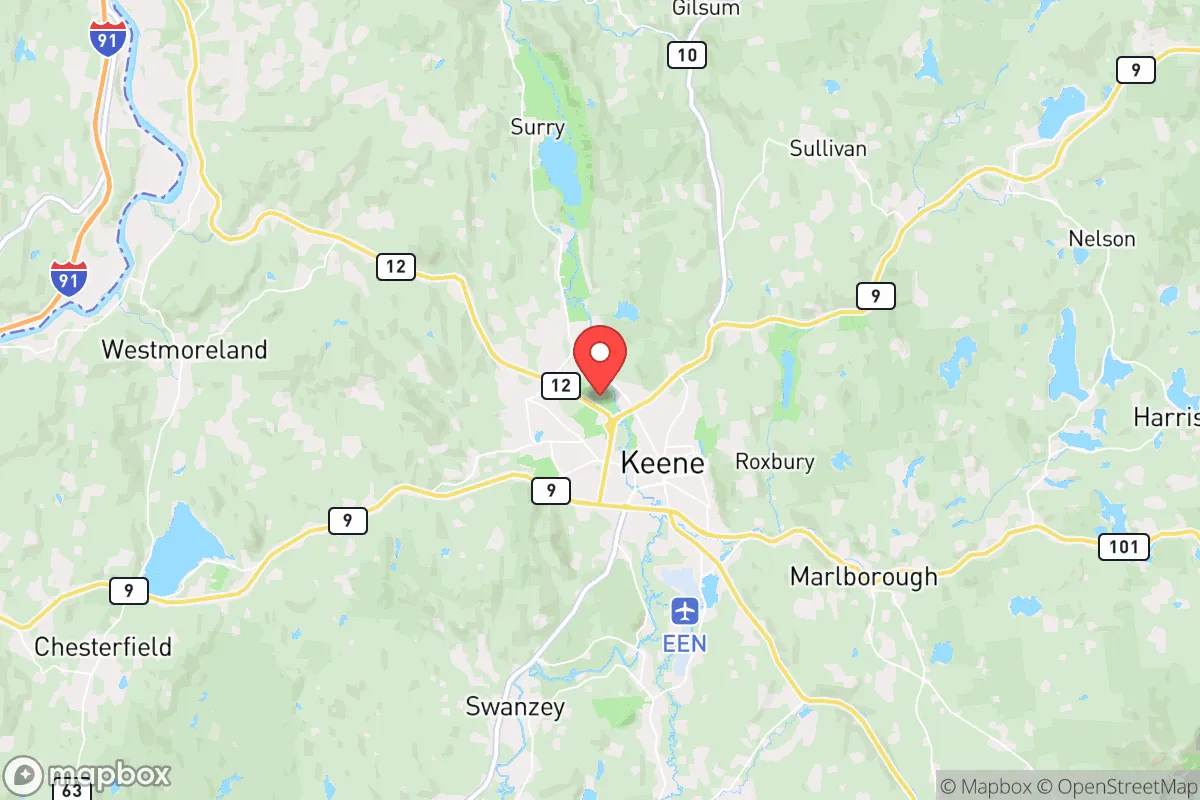
Photo: Wikipedia
Personal Sovereignty in Keene, NH
Viable for self-reliance. Generally workable, though some barriers may limit total independence.
What does Personal Sovereignty tell us?
Personal Sovereignty measures your capacity for self-reliance and independence with minimal government friction. Higher scores mean fewer barriers between you and the way you want to live... but it assumes you have the space you need and good neighbors.
What does this tell us?
Personal Sovereignty measures your capacity for self-reliance and independence with minimal government friction. Higher scores mean fewer barriers between you and the way you want to live... but it assumes you have the space you need and good neighbors.
State Policy
Energy independence: Importer (10% of energy produced in-state)
Personal Liberty
Homesteading

Personal Liberty Analysis
For the liberty-minded individual or family evaluating Keene, New Hampshire, the personal sovereignty environment is among the strongest in the Northeast, but it is not without its local nuances. New Hampshire’s constitutional “Live Free or Die” ethos provides a powerful legal foundation, but Keene’s status as a college town (home to Keene State College) and its left-leaning city council create a tension between state-level freedom and municipal overreach. A prepper or survivalist will find the state’s tax and gun laws exceptionally favorable, but must navigate local zoning and permitting that can complicate off-grid living and property rights. The key strategic question is whether the city’s local governance will erode the state’s broad protections over time.
Tax burden and regulatory posture in Keene and Cheshire County
New Hampshire’s tax structure is a major draw for those seeking to minimize government extraction. There is no state income tax on wages or salaries, no state sales tax, and no capital gains tax. The state also has no estate or inheritance tax, which is critical for passing property and assets to the next generation without state confiscation. However, the trade-off is high property taxes. Keene’s combined property tax rate (city and county) is roughly $25 to $30 per $1,000 of assessed value, among the highest in the state. A $300,000 home will carry an annual tax bill of $7,500 to $9,000. This is a significant recurring cost that directly funds local government, including the school district and municipal services. The regulatory posture at the state level is light: no mandatory vehicle inspections, no state building code for single-family homes (though local codes apply), and no blue laws restricting Sunday commerce. But Keene’s city government has shown a tendency toward progressive regulation, including plastic bag bans and noise ordinances that can affect homesteading activities like generator use or woodworking. For the survivalist, the state’s low income and sales tax burden is a clear win, but the property tax load in Keene is a permanent liability that must be factored into any long-term budget.
Self-defense and gun law specifics in Keene and New Hampshire
New Hampshire is a constitutional carry state, meaning no permit is required to carry a concealed firearm for anyone legally allowed to possess one. This is a bedrock liberty for those who view self-defense as a natural right. Keene itself has no local gun ordinances that exceed state law; the city cannot ban firearms in public parks or impose waiting periods. The state preempts all local firearm regulation, so Keene’s city council cannot pass its own restrictions. There is no state-level magazine capacity limit, no assault weapon ban, and no red flag law as of 2026. The state also has a strong “stand your ground” law with no duty to retreat in any place where a person is lawfully present. For the prepper, this means the legal framework for armed self-defense is as permissive as any in the country. However, Keene’s cultural environment is less gun-friendly than rural Cheshire County. Open carry is legal but may draw unwanted attention from the college population or local law enforcement. The Cheshire County Sheriff’s Office is generally pro-Second Amendment, but the Keene Police Department has a reputation for being more progressive. Practical considerations: there are several gun shops and ranges within a 30-minute drive, and the state’s firearm laws are stable and unlikely to change given the Republican-controlled legislature. For the liberty-minded, this is a top-tier jurisdiction for self-defense rights.
Self-reliance and homesteading viability in Keene’s zoning and land use
Keene is a densely settled city, and that creates immediate constraints for the homesteader. Minimum lot sizes within the city limits are typically 0.25 to 0.5 acres in residential zones, which is insufficient for serious food production or livestock. The city’s zoning code restricts keeping chickens, goats, or bees to specific districts and requires permits. Off-grid living is effectively illegal within city limits: the city requires connection to municipal water and sewer where available, and building codes mandate grid-tied electrical systems for new construction. For the survivalist seeking true self-reliance, Keene itself is a poor choice. The strategic play is to buy land in the surrounding towns of Cheshire County—places like Swanzey, Winchester, or Richmond—where zoning is minimal, lot sizes of 2 to 10 acres are common, and there are no restrictions on rainwater collection, composting toilets, or solar panels. These towns are a 10- to 20-minute drive from Keene’s amenities. The county’s agricultural soils are marginal (mostly rocky, acidic), but with raised beds and hoop houses, a determined homesteader can produce a significant portion of their own food. The state’s right-to-farm laws protect agricultural activities from nuisance lawsuits, which is a critical legal shield. For the prepper, the land is available and affordable (rural lots at $5,000–$15,000 per acre), but the infrastructure—well, septic, driveway—requires significant capital investment. Keene serves as a supply hub, not a homestead location.
Personal liberties in Keene: parental rights, medical autonomy, speech, and property
New Hampshire is one of the strongest states in the nation for parental rights. The state’s “parental bill of rights” law (HB 1431, passed in 2024) requires schools to obtain parental consent before administering any health care or mental health services, and it mandates that parents can opt their children out of any curriculum materials they find objectionable. This is a direct check on government overreach in education. Medical autonomy is also robust: New Hampshire has no state vaccine mandate for adults, and while school vaccine requirements exist, philosophical exemptions are available for all required immunizations. The state does not have a prescription drug monitoring program that is overly intrusive, and there are no state-level mandates for COVID-19 boosters or masks. On speech, New Hampshire has no hate speech laws that criminalize expression, and the state’s right-to-record law allows citizens to film police in public. Property rights are protected by the state’s “right-to-farm” law and a relatively low rate of eminent domain abuse. However, Keene’s local government has attempted to regulate short-term rentals (Airbnb) and has a rental inspection program that some property owners view as overreach. The city also has a “safe storage” ordinance for firearms that was struck down in court but reflects local sentiment. For the liberty-minded, the state-level protections are excellent, but Keene’s municipal government is a persistent threat to expand its regulatory reach. The best defense is to live outside the city limits while using Keene for employment and commerce.
Overall, Keene offers a mixed sovereignty picture. The state of New Hampshire provides a legal environment that is among the most freedom-respecting in the United States—no income tax, constitutional carry, strong parental rights, and minimal business regulation. But Keene itself is a blue dot in a red state, and its local government has shown a willingness to test the limits of state preemption. For the survivalist or prepper, the optimal strategy is to establish a homestead in the surrounding rural towns of Cheshire County, using Keene as a logistical hub for supplies, healthcare, and occasional work. Compared to neighboring states like Vermont (which has magazine bans and vaccine mandates) or Massachusetts (which has near-total gun control and high taxes), Keene’s region is a sanctuary. But compared to states like Texas or Idaho, the property tax burden and local zoning in Keene are significant drawbacks. For those willing to live outside the city limits and accept the high property taxes, the area provides a rare combination of state-level liberty and access to Northeast amenities. The key is to treat Keene as a resource, not a residence.

* Values derived from national, state, county, city and local statistics and may differ in a specific area. Last updated: 2026-05-02T05:42:10.000Z
Narrative content on this page is AI-generated and may contain mistakes. Verify any details that matter before acting on them.
ReloMaps may earn a commission from affiliate links at no extra cost to you.

