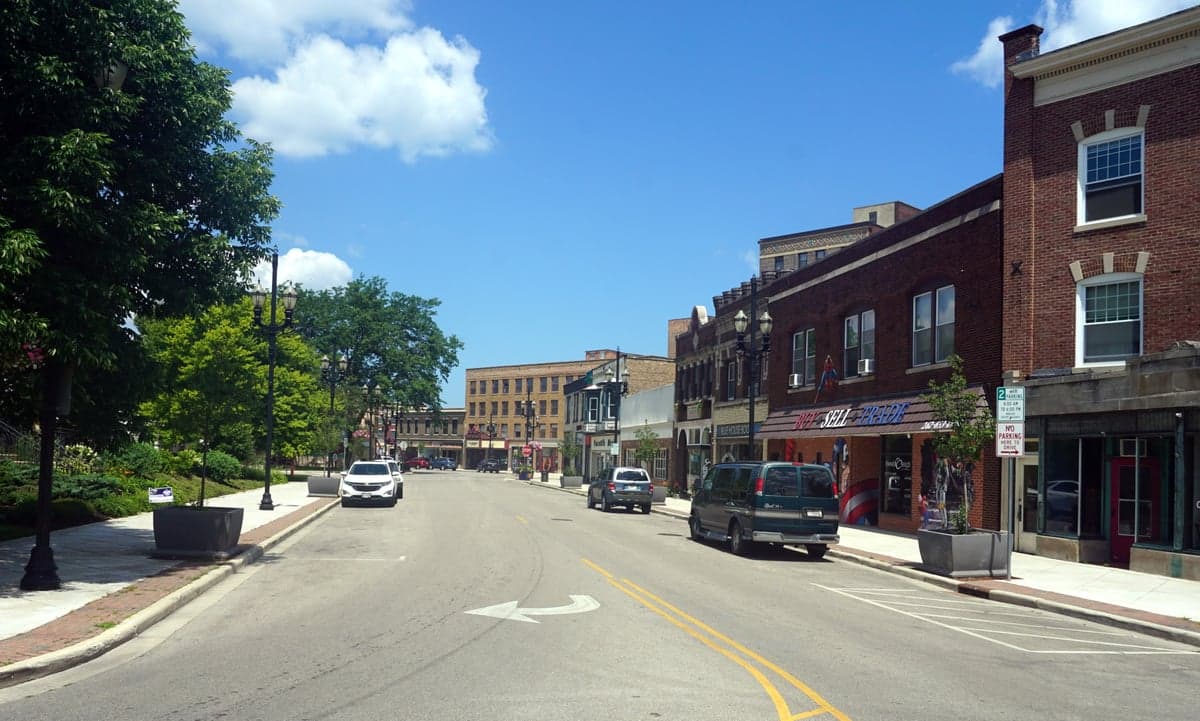
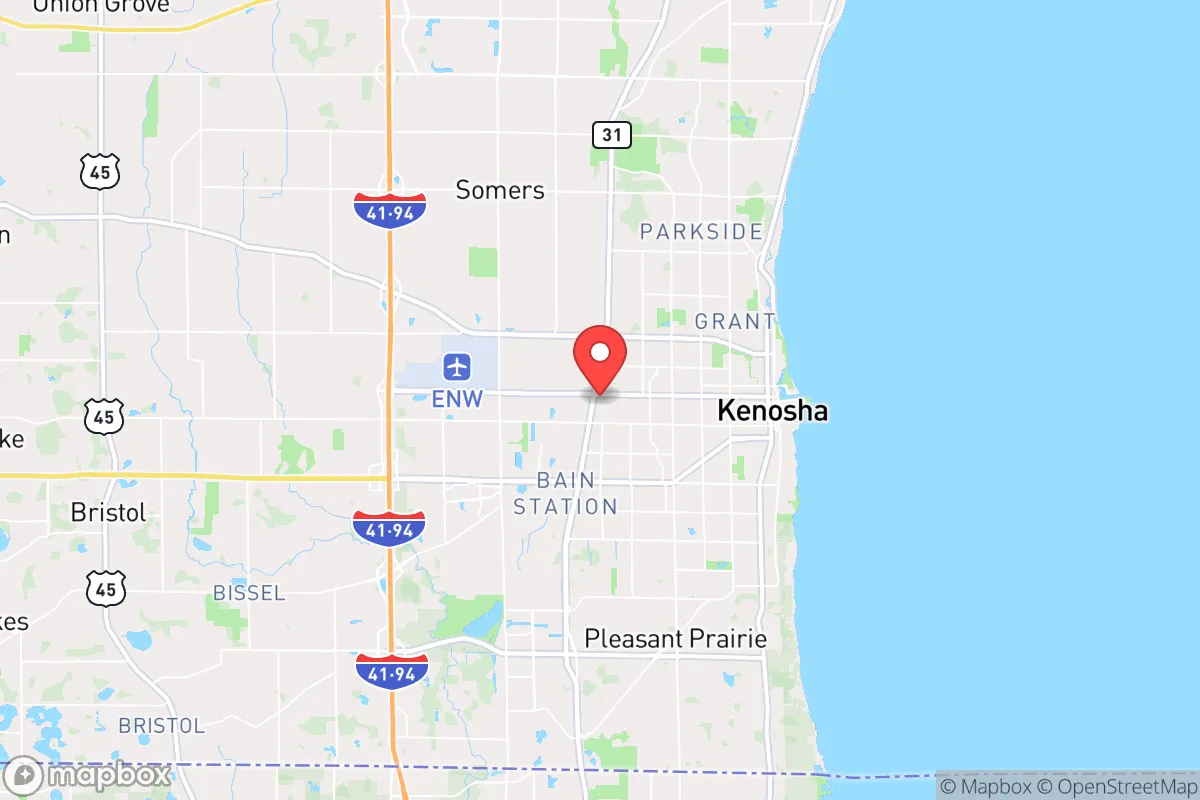
Photo: Wikipedia
Personal Sovereignty in Kenosha, WI
Moderate friction. Expect trade-offs in some aspect of personal liberty and independence.
What does Personal Sovereignty tell us?
Personal Sovereignty measures your capacity for self-reliance and independence with minimal government friction. Higher scores mean fewer barriers between you and the way you want to live... but it assumes you have the space you need and good neighbors.
What does this tell us?
Personal Sovereignty measures your capacity for self-reliance and independence with minimal government friction. Higher scores mean fewer barriers between you and the way you want to live... but it assumes you have the space you need and good neighbors.
State Policy
Energy independence: Importer (15% of energy produced in-state)
Personal Liberty
Homesteading

Personal Liberty Analysis
Kenosha, Wisconsin, offers a notably higher degree of personal sovereignty than many of its Midwestern peers, particularly for those who prioritize autonomy over government convenience. The city’s location on the Illinois border provides a stark contrast: while Illinois has steadily tightened controls on everything from firearms to parental decision-making, Kenosha sits in a state that has, for now, preserved a more hands-off approach to individual liberty. For a single person or a parent evaluating where to plant roots with a survivalist or prepper mindset, Kenosha represents a strategic middle ground—close enough to urban resources but far enough from the regulatory overreach that characterizes Chicago and its suburbs. The local political climate is a mixed bag, with the city itself leaning left but the surrounding county and state government providing a meaningful check on the most aggressive forms of government intrusion.
Tax burden and regulatory posture in Kenosha compared to Illinois
Wisconsin’s tax structure is a significant advantage for anyone seeking to keep more of their own money and reduce dependence on state services. The state’s flat income tax rate of 4.4% (as of 2025) is far simpler and lower than Illinois’s progressive system, which can hit 4.95% on the first dollar and climb higher. Property taxes in Kenosha County are moderate for the region—around 1.8% of assessed value—but the key difference is what you get for that money. Wisconsin has not expanded Medicaid under the Affordable Care Act in the same way Illinois has, meaning less state-level debt and fewer mandates on individuals. The regulatory environment for small businesses and home-based enterprises is notably lighter; Kenosha does not require the same layers of licensing and zoning approvals that plague Cook County. For a prepper running a side business in food preservation, small-scale manufacturing, or remote services, the paperwork burden is manageable. The state’s right-to-work law (enacted in 2015) also means you cannot be forced to join a union as a condition of employment, preserving your freedom to contract on your own terms.
Self-defense rights and Wisconsin gun law specifics
Wisconsin is a shall-issue state for concealed carry, meaning that if you meet basic criteria—no felony record, no domestic violence convictions, and completion of a state-approved training course—the county sheriff must issue your permit. There is no discretionary “good cause” requirement, unlike in states like New York or California. Kenosha County has a strong record of issuing permits quickly, often within 30 days. The state also preempts local gun ordinances, so Kenosha city cannot ban firearms in most public spaces, including parks and streets. Open carry is legal without a permit for anyone legally allowed to possess a firearm. Stand-your-ground laws are in effect; there is no duty to retreat before using deadly force if you are lawfully present and believe it is necessary to prevent death or great bodily harm. For parents, this extends to protecting your home and family—Wisconsin law explicitly allows the use of deadly force against an intruder in your dwelling. Magazine capacity is unrestricted, and there is no state-level assault weapons ban. The only notable restriction is a 48-hour waiting period for handgun purchases, which is minor compared to the 10-day wait in Illinois.
Self-reliance and homesteading viability in Kenosha County
For those serious about self-sufficiency, Kenosha County offers a realistic path that many suburban areas cannot match. Outside the city limits, zoning allows for agricultural and residential use on lots as small as one acre, with many parcels available in the 2-to-5-acre range. The county’s comprehensive plan does not prohibit keeping chickens, goats, or even a small number of livestock on properties of sufficient size, though you will need to check the specific town ordinances (e.g., Bristol, Paris, or Somers). Rainwater collection is legal and unregulated at the state level, though local well permits are required for groundwater. Off-grid solar is feasible; Wisconsin has net metering policies that allow you to sell excess power back to the grid, but there is no state mandate forcing you to connect if you can generate your own. The growing season runs roughly April through October, with fertile loam soil in much of the county—ideal for a serious garden or small orchard. The biggest regulatory hurdle is the state’s requirement for septic systems on any property without municipal sewer, which can cost $10,000–$15,000 to install, but this is a one-time investment in long-term independence. For a prepper, the ability to store food, water, and supplies is not restricted by local fire codes in the same way it would be in a dense urban area.
Personal liberties: parental rights, medical autonomy, and property protections
Wisconsin has maintained a strong tradition of parental rights in education. The state’s open enrollment law allows parents to choose public schools across district lines, and the voucher program (the Wisconsin Parental Choice Program) provides state funding for private school tuition, including religious schools. Homeschooling is straightforward: parents need only file an annual form with the local school district and provide a “sequential” educational program—no state-approved curriculum, no standardized testing mandates, and no home visits. Medical autonomy is more limited than in some Western states; Wisconsin has not legalized medical aid in dying, and vaccine mandates for schoolchildren remain in place (though philosophical exemptions are available for most). However, the state does not have a centralized vaccine database that tracks adults, and there is no state-level mandate for COVID-19 or other adult vaccines. Property rights are robust: Wisconsin is a “Dillon’s Rule” state, meaning local governments have only the powers explicitly granted by the state, which limits the ability of Kenosha city to impose rent control, restrictive short-term rental bans, or overly aggressive code enforcement. The state’s castle doctrine and stand-your-ground laws further reinforce the sanctity of your home and property against government or private intrusion.
Overall, Kenosha ranks as a strong choice for those seeking a balance between personal sovereignty and practical access to jobs, healthcare, and infrastructure. It is not a libertarian paradise—Wisconsin still has a state income tax, and the city of Kenosha itself has a more progressive local government that occasionally tests the limits of state preemption. But compared to Illinois, Minnesota, or the coastal states, the regulatory burden is light, the gun laws are respectful of individual rights, and the ability to live a self-reliant life on a modest piece of land is genuinely achievable. For a single person or a parent looking to preserve their freedom while still being within a two-hour drive of a major metropolitan area (Chicago), Kenosha offers a rare combination of affordability, legal autonomy, and practical self-sufficiency that is increasingly hard to find in the United States.

* Values derived from national, state, county, city and local statistics and may differ in a specific area. Last updated: 2026-04-21T10:14:14.000Z
Narrative content on this page is AI-generated and may contain mistakes. Verify any details that matter before acting on them.
ReloMaps may earn a commission from affiliate links at no extra cost to you.

