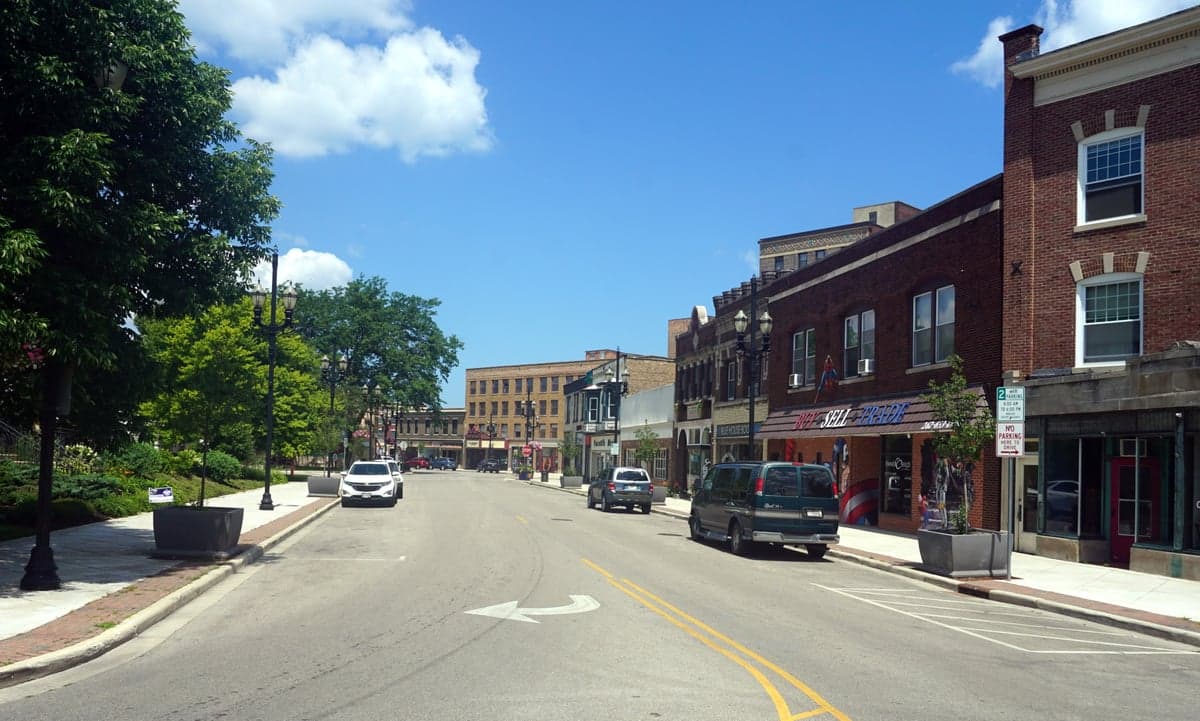
Photo: Wikipedia
Political ClimatePolitical Climate in Kenosha, WI
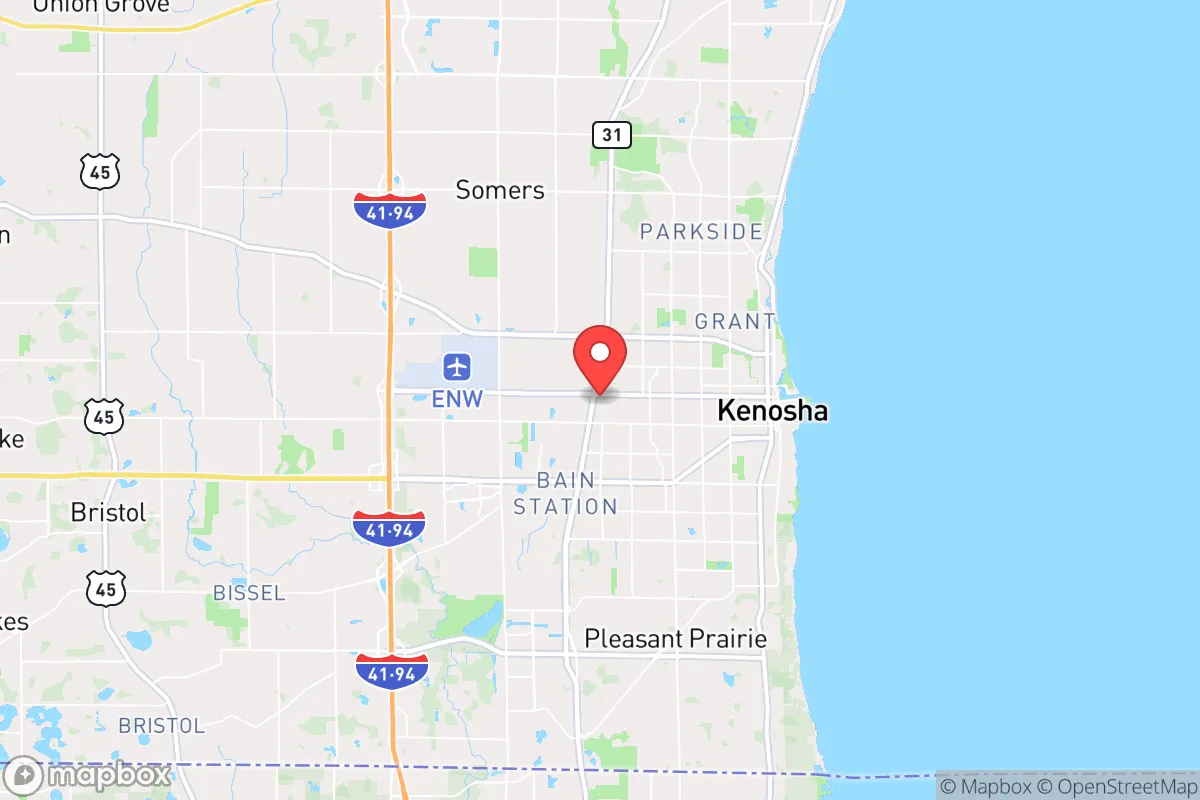
District shown is the primary district for this city’s centroid. Cities may span multiple districts.
Local Political AnalysisPolitical Analysis of Kenosha, WI
Kenosha, Wisconsin, sits in a political tug-of-war that’s gotten a lot more intense over the past decade. The Cook PVI clocks it at R+2, meaning it leans slightly Republican overall, but that number doesn’t capture the real story. If you’ve lived here as long as I have, you remember when this was a reliably blue-collar, union-heavy Democratic stronghold. Now? It’s a true battleground, and the shift toward the right has been real, especially in the outer precincts and surrounding towns like Salem Lakes and Bristol. The city itself still votes blue, but the county is trending red, and that tension is playing out in every local election and school board meeting.
How it compares
Drive ten miles west to Burlington or Waterford, and you’re in deep-red territory—places where the Second Amendment isn’t debated, it’s assumed. Head south into Illinois, and you hit the progressive stronghold of Waukegan and the Chicago suburbs, where taxes and regulations are a whole different beast. Kenosha sits right on that fault line. The contrast is stark: you can live in a neighborhood where your neighbor flies a Trump flag and another flies a Pride flag, and both feel equally entitled to their views. That’s Kenosha. But the concerning part is how fast the progressive agenda has crept in from the south. The city council has seen pushes for defunding the police and laxer zoning laws that invite high-density development, and those fights are getting uglier every cycle.
What this means for residents
For a longtime resident, the biggest red flag is how government overreach has quietly expanded, even in a supposedly purple county. During the 2020 unrest, you saw curfews and emergency orders that felt less about safety and more about control. Then came the COVID mandates—business closures, mask requirements that dragged on, and school shutdowns that left parents with no real choice. The local health department had more power than anyone was comfortable with, and it took a grassroots push to roll some of that back. Property taxes have climbed steadily, and the city’s push for more affordable housing often means higher density and less privacy, all under the banner of “progress.” If you value personal freedom—your right to run a business, send your kid to school without a mask, or keep a firearm in your truck—you’re watching those rights get chipped away, one ordinance at a time.
On the cultural side, Kenosha still has a strong independent streak. The lakefront, the fishing, the car shows—those are the things that hold this place together. But the policy battles are real. The school board has become a war zone over curriculum and parental rights, and the city’s push for more bike lanes and transit-oriented development feels like a playbook imported from Madison or Milwaukee. If the trend continues, Kenosha could tip further left in the city proper, while the county hardens its conservative stance. That split means more gridlock, more lawsuits, and less trust in local government. For now, the best advice I can give is to stay involved, vote in every local election, and keep an eye on who’s running for school board and city council—because that’s where the real fight for your freedoms is happening.

State Political ClimatePolitical Climate in Wisconsin
State Political AnalysisPolitical Environment in the State
Wisconsin is a classic purple state that has been trending red-adjacent in recent cycles, but it remains a fierce battleground where the outcome of any statewide election is often decided by less than a single percentage point. The state’s political DNA is split between the reliably blue, union-heavy Milwaukee metro and Dane County (Madison), and the increasingly red, exurban and rural expanse that covers the rest of the map. Over the last 20 years, the state has shifted from a reliably Democratic stronghold in presidential races to a true toss-up, with Donald Trump carrying it in 2016, Joe Biden flipping it back by just 20,000 votes in 2020, and Trump reclaiming it in 2024 by a similarly razor-thin margin.
Urban vs. rural divide
The political map of Wisconsin is a textbook example of the urban-rural chasm. Milwaukee County, home to the state’s largest city, votes overwhelmingly Democratic — Biden won it by roughly 40 points in 2020 — while the surrounding WOW counties (Waukesha, Ozaukee, Washington) are some of the most reliably Republican suburbs in the Midwest. Waukesha County alone delivered Trump a 25-point margin in 2024. Dane County, anchored by Madison and the University of Wisconsin, is the other deep-blue anchor, voting nearly 75% for Biden. The rest of the state — the Driftless Region in the southwest, the Northwoods, and the Fox Valley cities like Green Bay and Appleton — has been trending red for a decade. The key swing region is the “Blue Wall” counties along Lake Michigan (Brown, Outagamie, Winnebago), which were once reliably Democratic but have shifted right as union membership declined and cultural issues took center stage. The rural-urban split is so stark that a single precinct in Milwaukee can cancel out the votes of an entire rural county.
Policy environment
Wisconsin’s policy environment is a mixed bag for conservatives. The state has a flat income tax of 4.4% (down from 7.65% a decade ago), and property taxes are moderate compared to neighboring Illinois and Minnesota. There is no state inheritance tax. However, the state’s regulatory posture is uneven: it’s a “right-to-work” state (passed in 2015), which has weakened public-sector unions, but environmental regulations on farming and manufacturing can be burdensome. Education policy is a flashpoint: the state has a robust school choice program (the Milwaukee Parental Choice Program is the oldest in the nation), but the Department of Public Instruction is controlled by a liberal superintendent who has pushed critical race theory and gender ideology in curriculum. Healthcare is dominated by two large systems (Aurora and UW Health), and the state expanded Medicaid under Obamacare, which many conservatives view as a federal overreach. Election laws are a perennial fight: voter ID is required, but the state uses widespread drop boxes and allows same-day voter registration, which conservatives argue invites fraud. The Republican-controlled legislature has passed numerous election integrity bills, but Democratic Governor Tony Evers has vetoed every one.
Trajectory & freedom
On the freedom front, Wisconsin is a tale of two trajectories. On the positive side for conservatives, the state passed constitutional carry for firearms in 2011, and there are no state-level red flag laws or waiting periods. The legislature also passed a Parents’ Bill of Rights in 2023, requiring schools to notify parents of curriculum changes involving sexuality and gender identity — though Evers vetoed it. On the negative side, the state has seen a steady erosion of local control: the governor’s emergency powers were expanded during COVID, allowing him to shut down businesses and schools for months without legislative approval, a power that was only partially reined in by the courts. Property rights are generally strong, but the Department of Natural Resources has broad authority over land use, particularly in the Northwoods. The biggest freedom concern for many conservatives is the state’s medical freedom record: Wisconsin never banned vaccine mandates for private employers, and the state health department still pushes mask mandates in schools during outbreaks. The trajectory is mixed — the legislature is pushing back, but the governor’s veto pen is a constant obstacle.
Civil unrest & political movements
Wisconsin has a history of intense political activism, both left and right. The 2011 Act 10 protests against public-sector union reform drew over 100,000 people to the Capitol in Madison, and the 2020 Kenosha riots — sparked by the Jacob Blake shooting — saw businesses burned and two people killed in a confrontation with an armed civilian. The state has a strong grassroots conservative movement, particularly in the WOW counties and the Fox Valley, where groups like the Wisconsin Family Action and the Wisconsin Institute for Law & Liberty are active. Immigration politics are less heated than in border states, but there is growing tension in rural areas over an influx of migrant labor in dairy farming. There are no sanctuary cities in Wisconsin, but Milwaukee and Madison have declared themselves “welcoming cities” and limit cooperation with ICE. Election integrity remains a raw nerve: the 2020 election saw widespread use of private grant money (from the Center for Tech and Civic Life) to fund election administration in Democratic cities, which Republicans view as illegal interference. The 2024 election saw a massive increase in poll watchers and legal challenges, but the results were again extremely close.
Projection
Over the next 5-10 years, Wisconsin is likely to remain a toss-up state, but the demographic trends favor Republicans. The state is growing fastest in the exurban WOW counties and the Fox Valley, while Milwaukee and Dane County are losing population. In-migration from Illinois and Minnesota is bringing some conservative-leaning retirees and remote workers to the Northwoods and Driftless Region. However, the University of Wisconsin system continues to churn out progressive-leaning graduates who often stay in Madison or Milwaukee. The biggest wildcard is the state’s abortion law: a pre-1849 ban was struck down by the courts in 2023, but the issue will likely be on the ballot in 2026 or 2028, which could drive turnout among suburban women. The legislature is likely to remain Republican-controlled through the next redistricting cycle, but the governor’s race in 2026 will be critical — if a Republican wins, expect a wave of conservative legislation on school choice, tax cuts, and election reform. If Evers or another Democrat holds the office, expect continued gridlock and veto battles.
For a conservative considering a move to Wisconsin, the bottom line is this: you’ll find a state where your vote actually matters, where your property rights are generally respected, and where your kids can attend a school of your choice. But you’ll also face a state government that is deeply divided, with a governor who has vetoed nearly every conservative bill that has crossed his desk. The best places to land are the WOW counties (Waukesha, Ozaukee, Washington) or the Fox Valley cities like Appleton and Green Bay, where the local culture and school boards align with conservative values. Avoid Milwaukee and Madison unless you’re prepared for high taxes, progressive policies, and a constant political fight. Wisconsin is a state worth fighting for — but you’ll have to fight.
* Values derived from national, state, county, city and local statistics and may differ in a specific area. Last updated: 2026-04-21T10:14:14.000Z
Narrative content on this page is AI-generated and may contain mistakes. Verify any details that matter before acting on them.
ReloMaps may earn a commission from affiliate links at no extra cost to you.

