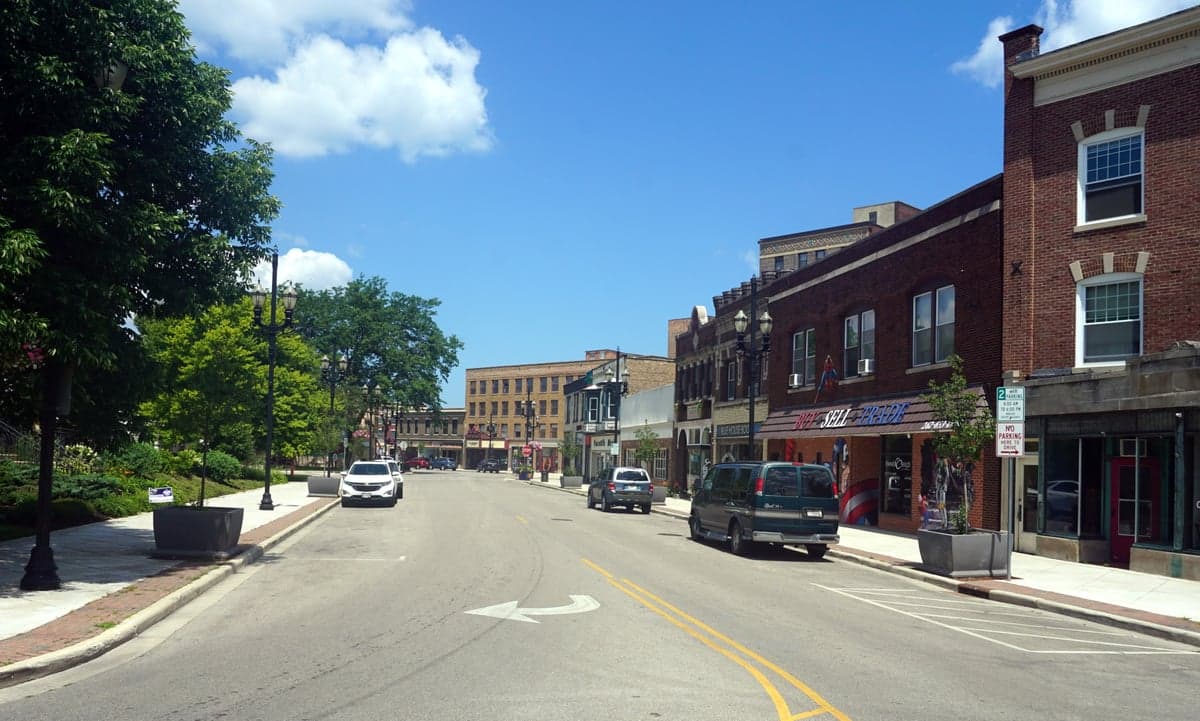
Photo: Wikipedia
Quality of Life in Kenosha, WI
A high quality of life with strong walkability, manageable living costs, healthy neighborhood signals, and solid amenity access.
What does Quality of Life tell us?
Quality of Life blends cost of living, nearby amenities, socioeconomic signals, and neighborhood character. City-level scores represent the whole municipality; individual neighborhoods can differ.
What does this tell us?
Quality of Life blends cost of living, nearby amenities, socioeconomic signals, and neighborhood character. City-level scores represent the whole municipality; individual neighborhoods can differ.
Cost of Living
11% below national average
The Real Cost of Living in Kenosha, WI for 2026
| Tier | Individual | Family (4) |
|---|---|---|
| Survival | $18k | $34k |
| Comfortable | $41k | $60k |
| Luxury | $111k+ | $172k+ |
| Elite (Top 5%) | $130k+ | $202k+ |
114%
The Area Signal
A metric tracking the socioeconomic signals of the area.
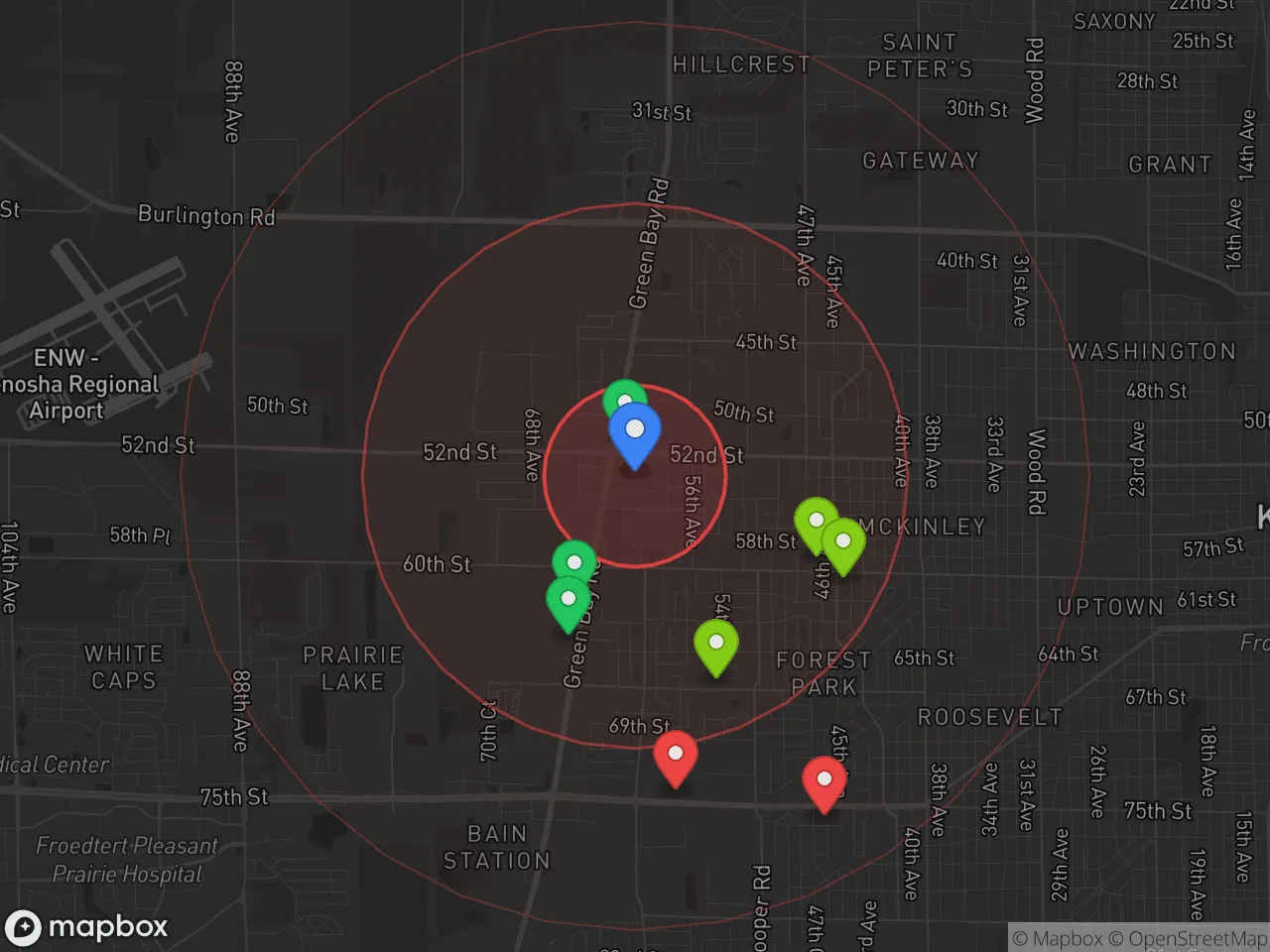
Hobbies
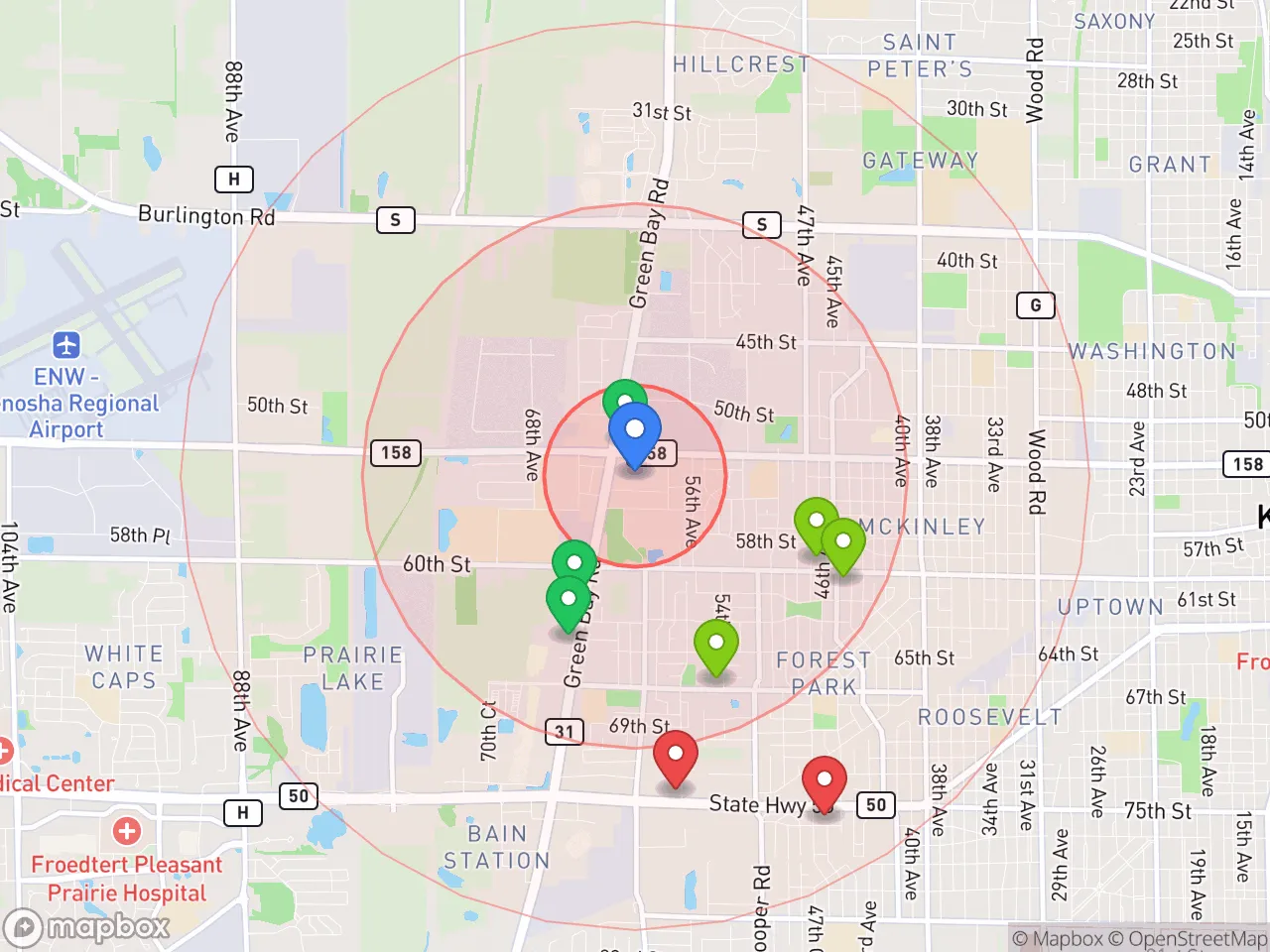
Explore the areaGroceries
8 within 10 miles
Gas
20 within 10 miles
Hospital
15 within 20 miles
Airport
ORD — O'Hare International
Post Office
USPS — Kenosha, WI
Critical Amenities
Quality-of-Life Analysis
Kenosha, Wisconsin, offers a quality of life defined by its accessible cost of living and a demographic mix of young families, long-time blue-collar residents, and Chicago-area transplants seeking more space. With a cost of living index of 89 (11% below the national average), the city provides a tangible financial buffer compared to the pricier Illinois suburbs just across the state line. The population of roughly 100,000 is notably more diverse than many other Wisconsin cities of similar size, with a growing Hispanic and Black population contributing to a community that feels both working-class and increasingly suburban.
How housing costs and affordability compare to Racine and Chicago suburbs
Housing in Kenosha remains a primary draw for affordability. The median home value sits at $210,500, a figure that is roughly half the median price in Lake County, Illinois, just 15 minutes south. Median rent is similarly accessible at $1,137, making it a viable option for renters priced out of the Chicago metro. The average commute of 23.7 minutes is notably shorter than the regional average, though many residents do commute south to jobs in Kenosha's industrial parks or north to Racine. Property taxes in Kenosha County are moderate by Wisconsin standards, but buyers should note that Wisconsin taxes are generally higher than Illinois's, a trade-off for lower home prices. The city's housing stock is a mix of older, well-maintained bungalows and Craftsman homes near the lakefront, with newer subdivisions expanding west toward I-94.
What daily life is like for families: schools, parks, and local amenities
Daily life in Kenosha centers on its lakefront and a surprisingly robust network of public amenities. The Kenosha Unified School District serves the city with several magnet programs, including the Kenosha School of Technology Enhanced Curriculum (KTEC), which draws families from across the area. For recreation, the city maintains over 40 parks, with Petrifying Springs Park offering 350 acres of hiking, disc golf, and a historic golf course. The Kenosha Public Museum and the Civil War Museum provide cultural anchors, while the Kenosha Kingfish minor-league baseball team offers affordable summer entertainment. The downtown area along 56th Street has seen a revival of independent coffee shops and breweries, though the retail landscape remains anchored by big-box stores along 75th Street. The city's rhythm is notably quieter than Racine's, with less nightlife but a stronger sense of neighborhood identity.
Kenosha is best suited for those who prioritize affordable homeownership and a slower pace over urban excitement. Families with young children, remote workers seeking a lower cost of living within striking distance of Chicago (a 60- to 90-minute Metra train ride), and retirees on fixed incomes will find the city's balance of amenities and cost compelling. Those seeking a vibrant nightlife, high-end dining, or a dense urban environment will likely find Kenosha too quiet. The city's recent history has included periods of social tension, but for the majority of residents, daily life is defined by accessible lakefront access, good schools, and a housing market that still allows for a middle-class foothold—a combination increasingly rare in the upper Midwest.

Crime in Kenosha, WI
Generally safer than 71% of comparable U.S. locations.
Violent CrimeViolent Crime Analysis
Property CrimeProperty Crime Analysis
Crime Analysis
Kenosha, Wisconsin, presents a crime profile that demands careful consideration from potential residents. With a violent crime rate of 316.6 incidents per 100,000 residents and a property crime rate of 732.8 per 100,000, the city's safety picture is notably worse than both state and national averages. These figures place Kenosha in a category where proactive safety awareness is essential, particularly given the city's location within the broader Milwaukee metropolitan area, which itself faces significant public safety challenges.
Crime in context
Kenosha's violent crime rate of 316.6 per 100,000 is substantially higher than the national average of approximately 380 per 100,000, but this comparison masks a more troubling local reality. When measured against the Wisconsin state average of roughly 300 per 100,000, Kenosha's rate is elevated. Property crime in Kenosha, at 732.8 per 100,000, also exceeds the national benchmark of around 1,950 per 100,000, but this figure is significantly higher than the Wisconsin state average of approximately 1,500 per 100,000. The city's crime index places it among the more dangerous communities in the state, a fact compounded by its proximity to larger urban centers that experience similar or worse crime dynamics. Readers should be aware that Kenosha County's justice system, like many in progressive-leaning areas of southeastern Wisconsin, has adopted policies that prioritize offender rehabilitation over strict enforcement. This ideological approach, while well-intentioned, often results in shorter sentences, reduced bail requirements, and a higher likelihood of repeat offenses, directly contributing to more criminals remaining on the streets and undermining public safety for law-abiding residents.
What residents experience
Daily life in Kenosha involves navigating a city where property crime is the most common threat. Residents report frequent incidents of vehicle break-ins, package thefts, and burglaries, particularly in neighborhoods near the downtown corridor and along major thoroughfares like 75th Street and Sheridan Road. Violent crime, while less common, is concentrated in specific areas, with aggravated assaults and robberies occurring more often in the city's central and southern districts. The presence of progressive district attorneys and judges in Kenosha County has led to a legal environment where repeat offenders face minimal consequences, eroding the deterrent effect of the justice system. This directly impacts victims, who often see their cases resolved with plea deals or diversion programs rather than meaningful accountability. For families and individuals considering relocation, the practical effect is a heightened need for home security systems, neighborhood watch participation, and vigilance when out after dark.
Neighborhood-level variation is significant. The western and northern parts of Kenosha, including areas near the border with Pleasant Prairie and Bristol, generally experience lower crime rates. In contrast, the downtown area and neighborhoods east of I-94, particularly around the Uptown and Lincoln Park districts, report higher incident numbers. Prospective residents should examine block-level crime maps and consider visiting potential neighborhoods at different times of day to assess safety firsthand. The city's overall safety picture is one where individual vigilance and community engagement are not optional but necessary for maintaining a secure home environment.
* Values derived from national, state, county, city and local statistics and may differ in a specific area. Last updated: 2026-04-21T10:14:14.000Z
Narrative content on this page is AI-generated and may contain mistakes. Verify any details that matter before acting on them.
ReloMaps may earn a commission from affiliate links at no extra cost to you.

