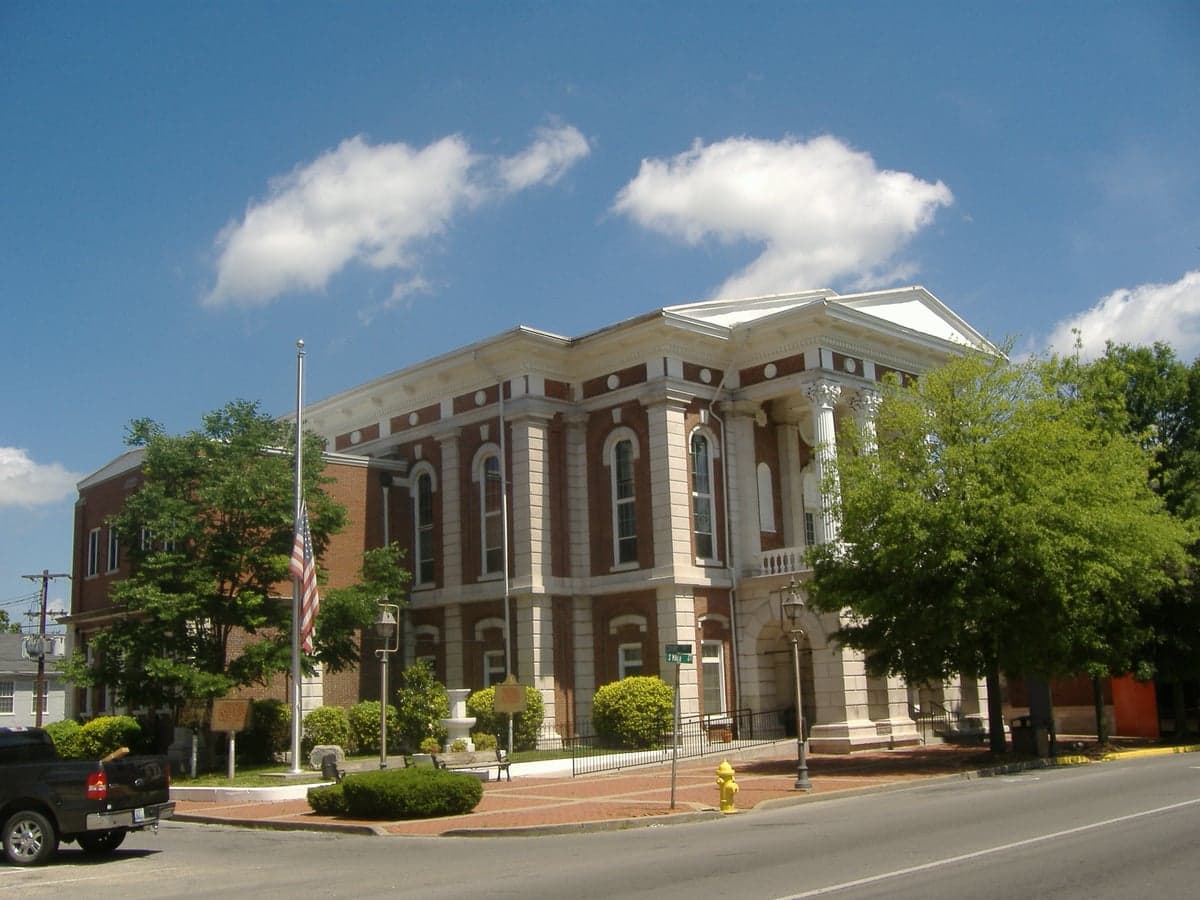

Photo: Wikipedia
Political ClimatePolitical Climate in Christian County
Showing district-level results — no local-only data available.
Local Political AnalysisPolitical Analysis of Christian County
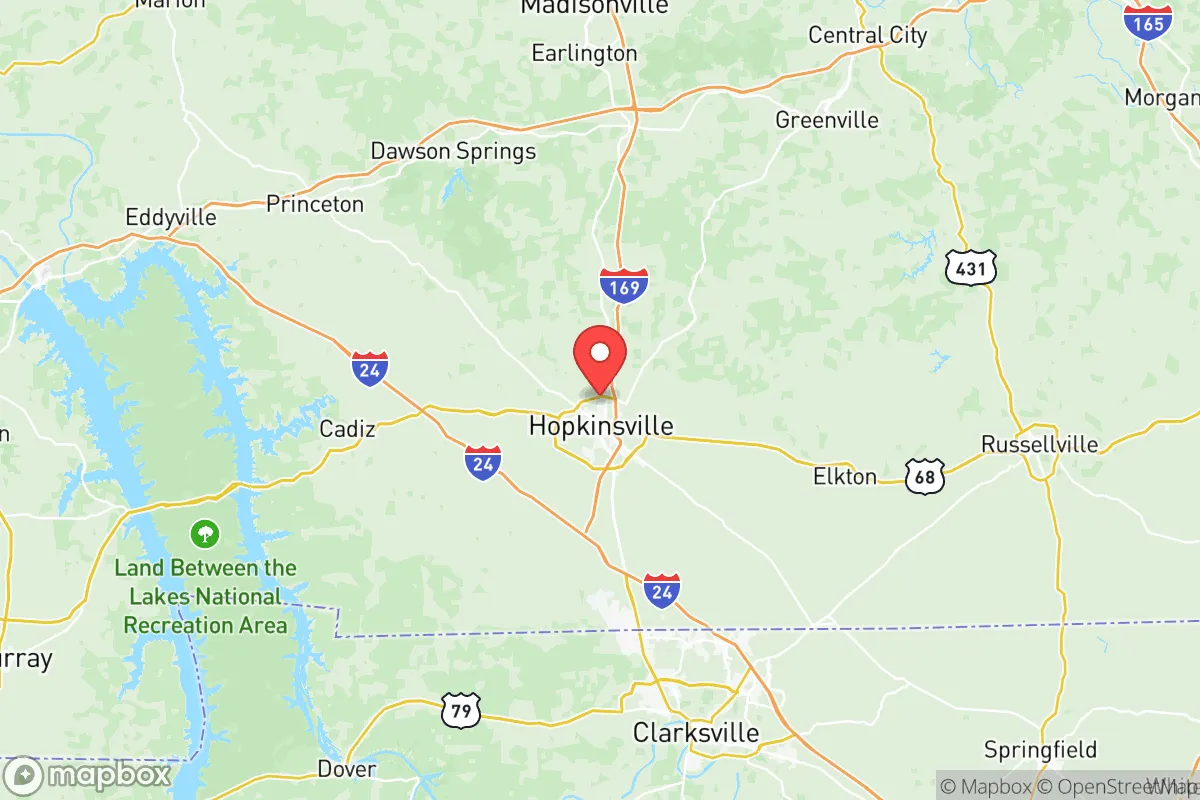
Christian County leans heavily Republican, with a Cook PVI of R+23 that makes it one of the most conservative corners of Kentucky. That’s a solid eight points redder than the state’s overall R+15 rating, and it’s not just a fluke—this area has been trending right for decades. The county seat, Hopkinsville, is where you’ll find most of the population and a bit more political diversity, but even there, the city council and mayor’s office have stayed firmly in conservative hands. The real story, though, is how the smaller towns and rural precincts—places like Oak Grove, Pembroke, and Crofton—anchor the county’s deep-red reputation. Oak Grove, sitting right next to Fort Campbell, has a mix of military families and transplants that can swing a precinct blue in a close race, but overall, the county’s rural heartland keeps things solidly Republican.
How it compares
Compared to Kentucky as a whole, Christian County is noticeably more conservative. The state’s R+15 PVI already puts it in the top tier of red states, but Christian County’s R+23 means it’s pulling even further right than places like Warren County (Bowling Green) or Fayette County (Lexington), which lean more purple. In the 2024 presidential race, Christian County went for the Republican candidate by about 30 points, while the state as a whole was closer to 15. That gap isn’t shrinking—if anything, it’s widening as rural precincts in places like LaFayette and Trenton turn out in higher numbers. The Democratic strongholds are mostly confined to a few precincts in central Hopkinsville and around the Fort Campbell base, where younger, more transient voters sometimes tip the scales. But those pockets are small and getting smaller, as more folks move out to the unincorporated areas where conservative values are the norm.
What this means for residents
For folks living here, the political climate means less government overreach and more local control over things like school boards, zoning, and tax rates. You won’t see the kind of progressive policy experiments that pop up in Louisville or Lexington—no talk of defunding police or radical school curriculum changes. The county’s Republican leadership has kept property taxes low and pushed back against state-level mandates that feel like they’re coming from Frankfort. That said, there’s a growing concern among long-time residents about the influence of out-of-state money and transplants from blue states moving into new developments around Hopkinsville and Oak Grove. They bring different ideas about land use, gun rights, and even how we handle public health—things that used to be settled by common sense, not government edicts. If you value personal freedoms and want to keep the government out of your business, Christian County is still a safe bet, but you’ve got to keep an eye on the local elections to make sure it stays that way.
Culturally, Christian County stands apart from the rest of Kentucky in a few key ways. The presence of Fort Campbell brings a steady stream of military families from all over the country, which adds a layer of diversity you don’t see in more isolated rural counties. That can be a double-edged sword—some of those families bring progressive voting habits, but most are conservative-leaning and value the same things locals do: self-reliance, community, and a no-nonsense approach to governance. Policy-wise, the county has been a leader in pushing back against state-level overreach on issues like vaccine mandates and property rights. The local Republican Party is active and organized, and they’ve kept the county from drifting toward the kind of big-government solutions you see in urban areas. If the trend holds, Christian County will stay a redoubt of conservative values for the foreseeable future, but it’s not immune to the pressures that are reshaping the rest of the country. Keep your head up and your vote counted—that’s how we’ve kept it this way.

State Political ClimatePolitical Climate in Kentucky
State Political AnalysisPolitical Environment in the State
Kentucky is a deeply red state with a Cook PVI of R+15, meaning it votes about 15 points more Republican than the national average in presidential elections. The dominant coalition is a mix of rural conservatives, evangelical Christians, and working-class voters who have shifted rightward over the past two decades, particularly as the Democratic Party lost ground in Appalachia and the Ohio River Valley. While the state voted for Bill Clinton twice in the 1990s, it has not backed a Democrat for president since 1996, and the margin has only widened—Donald Trump won Kentucky by 26 points in 2020 and by over 30 points in 2024. The state legislature has been under Republican supermajority control since 2017, and the governorship flipped back to Democrat Andy Beshear in 2019, but that’s largely a reflection of his personal brand and family name, not a broader blue shift.
Urban vs. rural divide
The political map of Kentucky is a textbook case of urban-rural polarization. The state’s two major metros—Louisville (Jefferson County) and Lexington (Fayette County)—are the only reliably blue areas, and even they are not uniformly progressive. Louisville’s eastern suburbs like Middletown and Prospect lean Republican, while the urban core and West End are heavily Democratic. Lexington is more moderate, with the University of Kentucky campus driving a younger, left-leaning vote, but the surrounding horse farms and exurbs like Georgetown and Nicholasville are solidly red. The real story is the rural expanse: counties like Pike, Floyd, and Knott in eastern Kentucky voted for Trump by 70-80% margins, driven by coal heritage, gun culture, and opposition to environmental regulations. The western part of the state, including the Jackson Purchase region around Paducah and Murray, is also deeply conservative, though with a stronger Baptist influence. The only other notable blue pocket is Covington and Newport in northern Kentucky, which lean Democratic due to their proximity to Cincinnati and a more diverse, suburban workforce. The rest of the state—from Bowling Green to Owensboro to Ashland—is reliably Republican, with the GOP’s strength growing in exurban and rural areas as the Democratic brand has collapsed outside the cities.
Policy environment
Kentucky’s policy environment is aggressively conservative on most fronts. The state has a flat income tax that was cut from 5% to 4% in 2023, with a trigger mechanism to phase it out entirely if revenue targets are met—a clear signal of the legislature’s commitment to limited government. There is no state-level property tax on real estate, though local governments levy their own. The regulatory posture is business-friendly, with right-to-work laws on the books and a tort reform cap on non-economic damages. On education, Kentucky has a robust school choice movement: the legislature passed a charter school law in 2017 (though no charters have opened yet due to funding fights) and created education opportunity accounts in 2021, which allow tax credits for private school scholarships. However, the state’s public school system remains a battleground, with teachers’ unions clashing with the GOP over pension reform and funding. Healthcare is a mixed bag: Kentucky expanded Medicaid under the Affordable Care Act in 2014, and the state’s Medicaid rolls are among the highest per capita, but the legislature has imposed work requirements and premiums for able-bodied adults, which were blocked by courts but signal the direction of travel. Election laws are tight: Kentucky requires a photo ID to vote, has no-excuse absentee voting only for 65+ or disabled, and purges inactive voters from rolls regularly. The state also passed a 2021 law banning ballot drop boxes and limiting early voting to three days, which was upheld in court.
Trajectory & freedom
Kentucky is becoming more free in several key areas, particularly on gun rights, parental rights, and tax policy. In 2019, the legislature passed constitutional carry, allowing permitless concealed carry of firearms, and in 2023 it passed a law prohibiting local governments from enacting gun control measures stricter than state law—a direct preemption of Louisville’s attempts to ban assault weapons. On parental rights, Kentucky enacted a 2022 law requiring schools to notify parents of any changes to a student’s health or mental health services, and in 2023 it passed a ban on gender transition procedures for minors, overriding Governor Beshear’s veto. The state also passed a 2023 law prohibiting the teaching of “divisive concepts” like critical race theory in public schools, though enforcement has been uneven. On medical autonomy, Kentucky has a near-total abortion ban with no exceptions for rape or incest, passed as a trigger law in 2019 and upheld after Roe fell. However, there are concerning trends: the state’s medical marijuana program, legalized in 2023, is heavily regulated and won’t launch until 2025, and the legislature has resisted full recreational legalization. Property rights are strong, with no statewide zoning and low property taxes, but the state’s reliance on coal severance taxes has created fiscal volatility. The biggest freedom concern is the state’s high incarceration rate—Kentucky has one of the highest imprisonment rates in the country, driven by mandatory minimums and a tough-on-crime stance that shows no signs of softening.
Civil unrest & political movements
Kentucky has seen its share of political flashpoints, but they are less frequent and less intense than in many other states. The most notable recent unrest was the 2020 protests in Louisville over the Breonna Taylor shooting, which led to several nights of clashes between demonstrators and police, and the eventual passage of a state law banning no-knock warrants (though it was watered down). The state also saw a 2018 teachers’ strike that shut down schools across the state for several days, protesting pension reform—a rare moment of left-leaning activism that forced the legislature to back down. On the right, the most organized movement is the Kentucky Family Rights Coalition, which has been instrumental in passing parental rights bills and anti-trans legislation. Immigration politics are relatively quiet, as Kentucky has a small foreign-born population (about 4%), but there have been local flashpoints over refugee resettlement in Louisville and Bowling Green, with some counties passing symbolic “sanctuary city” bans. Election integrity controversies flared after 2020, with Republican legislators pushing for tighter voter ID laws and audits, but no major fraud was found. The state has a small but vocal secessionist movement in eastern Kentucky, tied to the “State of Franklin” proposal, but it’s fringe. Overall, the political climate is stable, with most activism channeled through the legislature rather than the streets.
Projection
Over the next 5-10 years, Kentucky will likely become even more conservative, driven by two trends: continued rural outmigration and the influx of conservative retirees and remote workers from blue states. The population is aging and shrinking in eastern Kentucky, while the I-65 corridor from Louisville to Bowling Green is growing, attracting families and businesses from the Midwest and Northeast who are fleeing high taxes and crime. This in-migration is disproportionately Republican-leaning, as Kentucky’s low cost of living and gun-friendly laws appeal to conservatives. The state’s Democratic strongholds—Louisville and Lexington—are growing more slowly and are unlikely to flip the state blue anytime soon, as the rural vote is too lopsided. The biggest wildcard is the governorship: Andy Beshear is term-limited in 2027, and the Republican primary to replace him will be a battle between the establishment and the Trump wing, but the general election will heavily favor the GOP. Expect further tax cuts, expanded school choice, and more preemption of local government authority. The only area where Kentucky might moderate is on marijuana—public support is high, and neighboring states like Ohio and Missouri have legalized, so full recreational legalization is possible by 2030. But on social issues, the state will remain a leader in the conservative movement.
For a new resident, the bottom line is this: Kentucky offers a high degree of personal freedom on guns, taxes, and parental rights, with a government that is generally responsive to conservative values. The trade-offs are a weak public school system in many rural areas, limited healthcare access outside the cities, and a political culture that can feel insular. If you’re looking for a place where your vote actually counts and your values are reflected in law, Kentucky is a solid bet—just be prepared for the fact that the state’s politics are driven by rural and small-town voices, not the urban centers. The trajectory is clear: more red, more freedom, and more alignment with the conservative movement’s priorities.
* Values derived from national, state, county, city and local statistics and may differ in a specific area. Last updated: 2026-05-11T10:29:54.000Z
Narrative content on this page is AI-generated and may contain mistakes. Verify any details that matter before acting on them.
ReloMaps may earn a commission from affiliate links at no extra cost to you.

