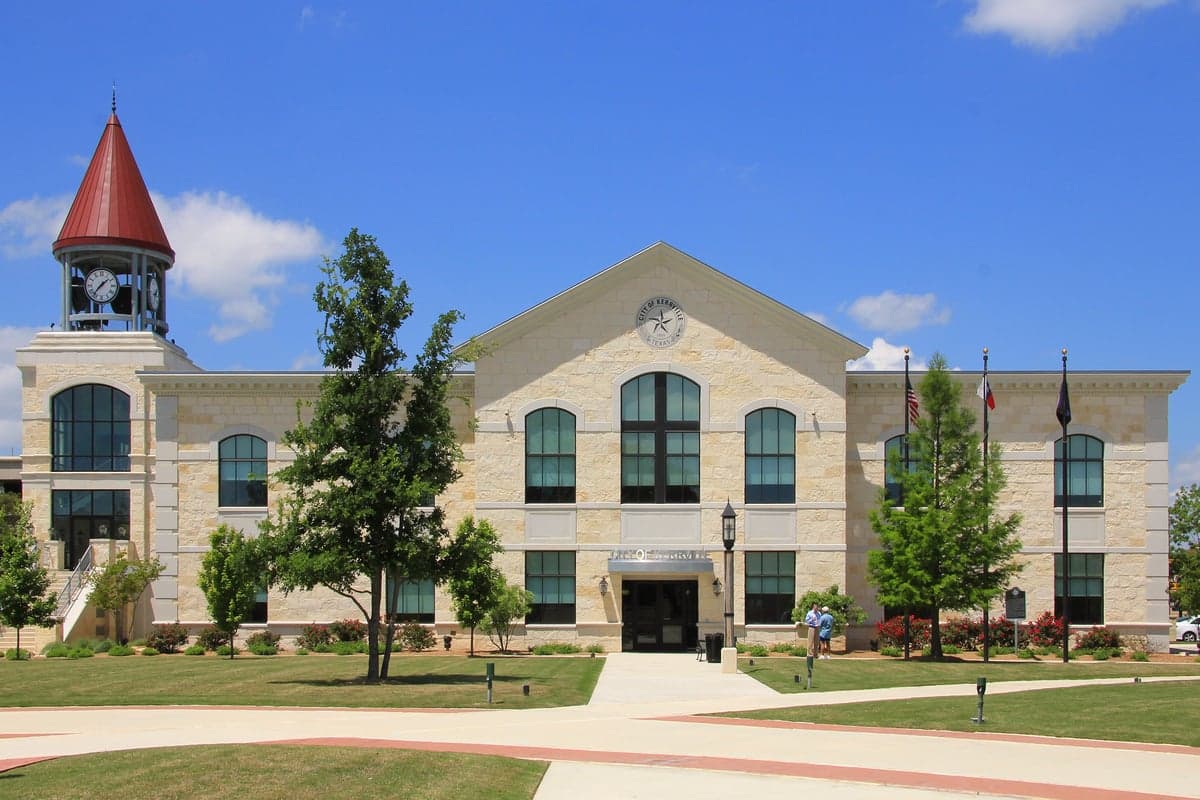
Photo: Wikipedia
Strategic Assessment of Kerrville, TX
Meaningful friction. Expect exposure to either population pressure, blast zones, or natural disaster risk. Consider buying a retreat property.
What does the Strategic Assessment tell us?
Our Strategic Assessment grades tactical survivability of an area. Major population centers, military targets, fallout zones, natural disasters, and border exposure all drive risk — lower exposure means a more defensible position in a crisis.
This is heavily inspired by Joel Skousen's Strategic Relocation book. Highly recommended you checkout the book ($)What does this tell us?
Our Strategic Assessment grades tactical survivability of an area. Major population centers, military targets, fallout zones, natural disasters, and border exposure all drive risk — lower exposure means a more defensible position in a crisis.
This is heavily inspired by Joel Skousen's Strategic Relocation book. Highly recommended you checkout the book ($)Strategic Pillars

Key Distances
Regional Safe Places
Below is our recommended "safe zones" in Texas and the surrounding area based on our strategic heuristics. For most people, it's unrealistic to live in a “safe zone” full-time due to work, family or other personal reasons. They tend to be more rural. However, many of these areas are perfect for second homes and retreat properties that double as a vacation home or even a short-term rental.

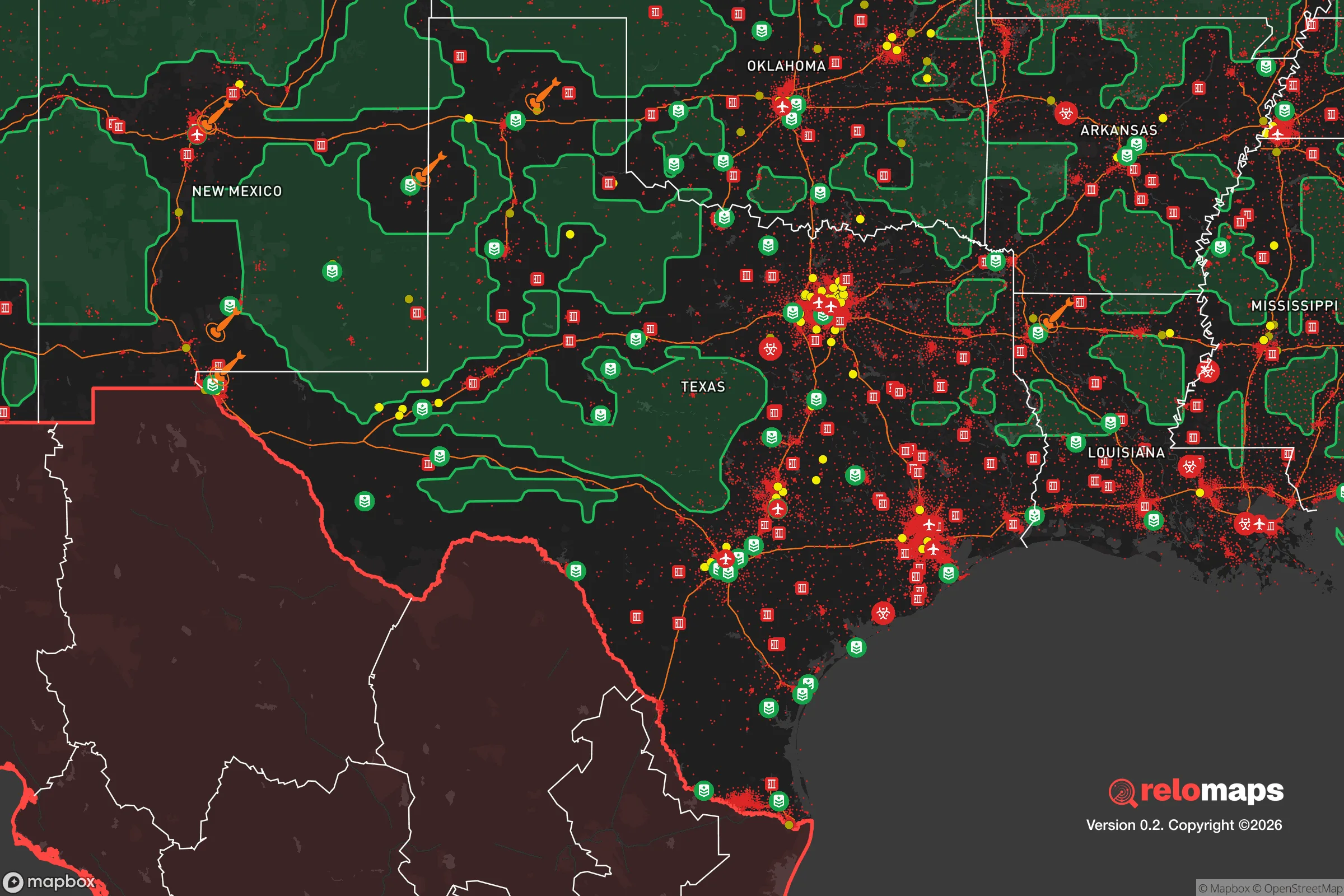


Important Note: For informational purposes only. This does not mean nothing bad ever happens in the green zones. Please use common sense. This is based on public data and modeled with AI. We tried to take a conservative approach but mistakes happen. We update this regularly as new information becomes available.
Solar Generator Recommendations
Backup power matters more here than in safer locations. We've picked three solar generators across budgets and capacity tiers — start with the budget unit if you only need a few essentials, or step up if you want to run a fridge and HVAC for days at a time.

Jackery Portable Power Station Explorer 300
Budget OptionPower on the Go: Weighing only 11 lbs, it's convenient to set up and store with book-sized foldable solar panels

BLUETTI Portable Power Station AC180
Designed for both indoor and outdoor scenarios, AC180 is highly capable as it has a robost capacity and continuous output power.

EF ECOFLOW DELTA Pro Ultra Power Station
Upgraded PickEcoFlow DELTA Pro Ultra is a whole-home energy system designed to grow with your family. Integrated with the Smart Home Panel 2, it scales to meet your evolving energy needs — keeping your home powered, intelligent, and secure through every stage of life.
We earn a commission, at no additional cost to you.
Strategic Assessment Analysis
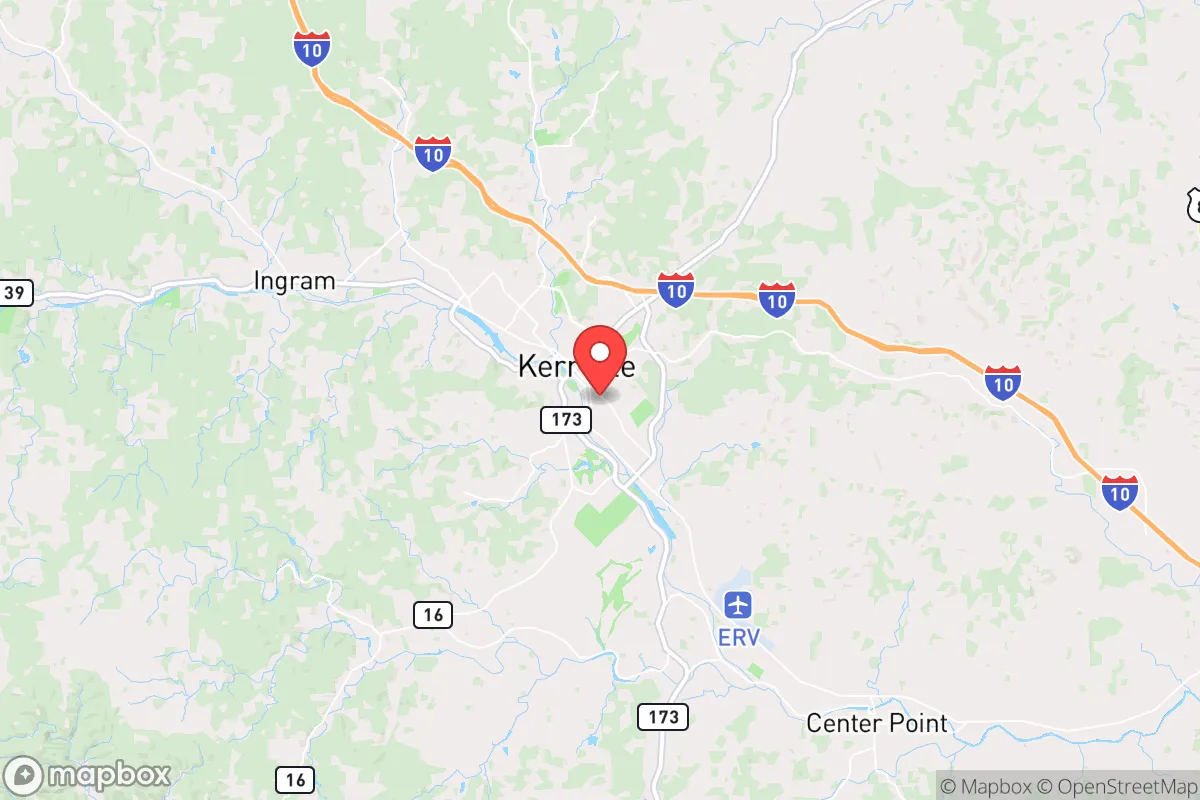
Kerrville, Texas, offers a compelling strategic position for those prioritizing resilience and self-sufficiency in an uncertain future. Nestled in the Texas Hill Country along the Guadalupe River, this city of roughly 24,000 people sits far enough from major metropolitan centers to avoid the immediate fallout of urban collapse, yet close enough to access critical supplies and medical care when needed. Its location—roughly 100 miles west of Austin and 60 miles northwest of San Antonio—places it in a sweet spot for those seeking to balance isolation with practical access, making it a serious candidate for a long-term relocation base in a deteriorating national landscape.
Geographic position and natural advantages for long-term security
Kerrville’s primary strategic asset is its position within the Texas Hill Country, a region defined by limestone hills, spring-fed rivers, and a climate that supports year-round agriculture. The area sits at an elevation of around 1,600 feet, which provides a modest but meaningful buffer against coastal storm surges and the worst of Texas summer heat. The Guadalupe River runs through the heart of town, offering a reliable surface water source—critical for any prepper’s calculus. The surrounding terrain is rugged and sparsely populated, with large tracts of ranchland and national forest (the nearby Kerr Wildlife Management Area and Hill Country State Natural Area) that create natural chokepoints and defensible positions. For a relocator, this means you’re not boxed in by suburban sprawl; you have room to maneuver, to cache supplies, and to establish a remote retreat if needed. The region’s limestone aquifers, like the Trinity and Edwards, also provide groundwater potential, though drilling costs and water rights should be verified before purchase.
Risks, exposures, and proximity to fallout-relevant landmarks
No location is without vulnerabilities, and Kerrville has its share. The most immediate concern is its proximity to two major population centers: San Antonio (about 60 miles southeast) and Austin (100 miles east). In a scenario of civil unrest or mass casualty event, these cities could become sources of refugee flow, resource competition, and secondary violence. Interstate 10 runs directly through Kerrville, a major east-west artery that could turn into a highway of desperation during a crisis. Additionally, the city lies within 150 miles of several military installations—Fort Cavazos (formerly Hood) to the north, Joint Base San Antonio to the south, and Camp Bullis to the southeast. While these bases are not direct targets in a conventional sense, they could become focal points for federal mobilization, martial law, or supply chain disruption. The nearby Kerrville Municipal Airport and the larger San Antonio International Airport are also potential nodes for evacuation or quarantine operations. On the natural disaster front, the Hill Country is prone to flash flooding (the 2015 Memorial Day flood killed two in Kerr County) and occasional wildfires during drought years. The region’s limestone bedrock also means limited groundwater recharge in dry spells, so a multi-year drought could stress local water supplies.
Practical resilience for a relocator: food, water, energy, and defensibility
For the serious prepper, Kerrville’s practical resilience is a mixed bag but leans positive. Water is the strongest suit: the Guadalupe River is perennial, and many rural properties have access to private wells or spring-fed ponds. The city’s municipal water comes from the Guadalupe River and local wells, but a grid-down scenario would require your own storage and filtration—plan for at least 50 gallons per person for a 30-day buffer. Food production is viable: the Hill Country’s growing season runs from March to November, and deer, turkey, and feral hogs are abundant for hunting. Local farmers’ markets and the Kerr County Livestock Show indicate a strong agricultural community, but note that prime farmland is limited by rocky soil—raised beds and greenhouses are the norm. Energy independence is achievable: the region gets over 220 sunny days per year, making solar a solid bet, though tree cover in the hills can reduce panel efficiency. Wind is less reliable here than in West Texas. Natural gas is available in town, but rural properties often rely on propane—stockpile tanks if you can. Defensibility is moderate: the terrain offers natural cover and chokepoints (narrow roads, creek crossings, hilltops), but the town itself is not a fortress. The Kerr County Sheriff’s Office and local volunteer fire departments are well-regarded, but in a prolonged crisis, you’ll need to rely on your own perimeter security and community networks. The local gun culture is strong—Kerrville has multiple gun shops and ranges, and open carry is legal—so you won’t stand out as an outlier. Medical access is a plus: Peterson Regional Medical Center is a 78-bed facility with a Level IV trauma center, adequate for routine emergencies but not for major trauma. For serious care, you’re looking at a 60-minute drive to San Antonio, which is a vulnerability in a mass casualty event. Stock your own trauma kit and antibiotics.
The overall strategic picture for a conservative relocator
Kerrville presents a solid, if not perfect, option for the conservative-minded individual or family looking to weather the coming storms. Its strengths—reliable water, defensible terrain, a like-minded community, and distance from the worst urban chaos—outweigh its weaknesses, which are primarily tied to its proximity to larger cities and major highways. The local economy is anchored by tourism, healthcare, and light manufacturing, meaning it’s not a boomtown that will attract waves of desperate migrants in a downturn. The political culture is deeply conservative: Kerr County voted 78% for Trump in 2020, and the city council and county commissioners are reliably right-leaning. You’ll find churches on every corner, a strong veteran presence (the VA hospital is a major employer), and a general ethos of self-reliance. For a relocator, the key is to buy land outside the city limits—preferably with a well, septic, and solar—and to integrate into the local community before the crisis hits. Kerrville isn’t a bug-out location; it’s a place to build a life that can withstand shocks. If you’re serious about resilience, this is a location worth a hard look. Just don’t expect to be invisible—the Hill Country is small, and your neighbors will notice if you’re not pulling your weight. That’s the trade-off for security.

* Values derived from national, state, county, city and local statistics and may differ in a specific area. Last updated: 2026-05-10T17:53:21.000Z
Narrative content on this page is AI-generated and may contain mistakes. Verify any details that matter before acting on them.
ReloMaps may earn a commission from affiliate links at no extra cost to you.

