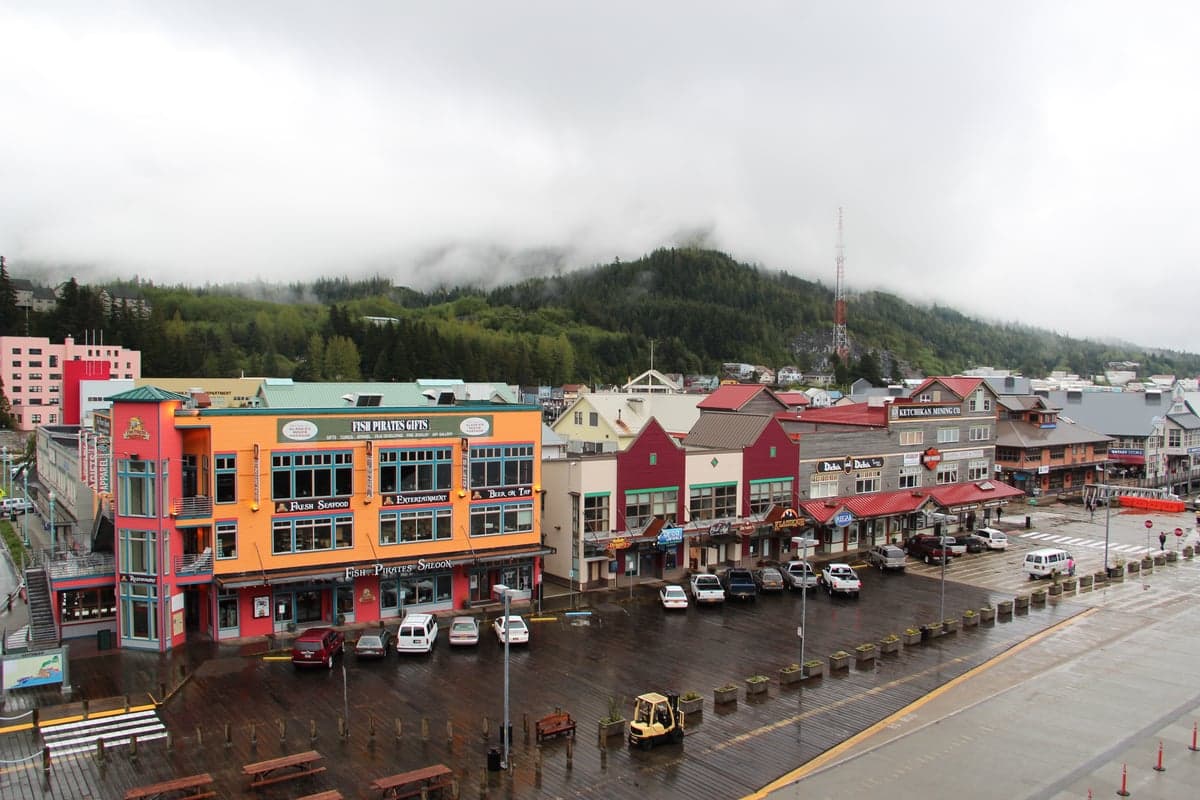
Photo: Wikipedia
Personal Sovereignty in Ketchikan, AK
Viable for self-reliance. Generally workable, though some barriers may limit total independence.
What does Personal Sovereignty tell us?
Personal Sovereignty measures your capacity for self-reliance and independence with minimal government friction. Higher scores mean fewer barriers between you and the way you want to live... but it assumes you have the space you need and good neighbors.
What does this tell us?
Personal Sovereignty measures your capacity for self-reliance and independence with minimal government friction. Higher scores mean fewer barriers between you and the way you want to live... but it assumes you have the space you need and good neighbors.
State Policy
Energy independence: Net exporter (350% of energy produced in-state)
Personal Liberty
Homesteading

Personal Liberty Analysis
Ketchikan, Alaska offers a personal sovereignty environment that stands apart from the Lower 48, but it comes with trade-offs that a survivalist or prepper must weigh carefully. While Alaska’s state constitution explicitly protects individual privacy, firearm rights, and property use, Ketchikan’s remote island geography and municipal ordinances create a unique blend of freedom and constraint. For those seeking to minimize government overreach, this southeast Alaska town provides a buffer from federal encroachment, yet its reliance on state services and limited land availability means you cannot simply disappear into the woods without planning.
Tax burden and regulatory posture in Ketchikan
Alaska’s tax structure is a major draw for those wary of fiscal overreach. There is no state income tax, no state sales tax, and no state property tax—a trifecta rare in the United States. Ketchikan’s municipal government imposes a 6% sales tax on most goods, which funds local services, but this is the only significant tax you will face. Property taxes are levied at the borough level, with rates around 1.2% of assessed value, but the absence of state-level property tax keeps overall burdens low. Regulatory posture is mixed: Alaska’s state government generally favors limited interference in business and land use, but Ketchikan’s city council has enacted zoning codes that restrict certain activities, such as short-term rentals and commercial fishing permits. For a prepper, the key advantage is that Alaska’s Permanent Fund Dividend pays residents an annual check (roughly $1,600 in 2025) simply for living here—a direct rebate against government extraction of wealth. However, the state’s reliance on oil revenue means budget volatility can affect services, so self-reliance remains critical.
Self-defense and gun law specifics in Ketchikan
Alaska is a constitutional carry state, meaning no permit is required to carry a concealed firearm for anyone legally allowed to possess one. Ketchikan does not impose additional local restrictions beyond state law, so you can carry openly or concealed without bureaucratic hurdles. The state preempts local gun ordinances, so city council cannot ban firearms in most public spaces. Stand-your-ground laws apply, and there is no duty to retreat in any place you are lawfully present. For preppers, this means you can defend your home, vehicle, or property without fear of prosecution, provided the threat is reasonable. However, Alaska’s background check system is tied to the federal NICS, so private sales between strangers still require a check through a licensed dealer—a point of friction for those who prefer absolute privacy. Magazine capacity and assault weapon bans do not exist at the state level, so you can stockpile standard-capacity magazines and AR-15s without restriction. The practical reality in Ketchikan: bears and moose are a greater daily threat than human predators, so a sidearm for wildlife is almost mandatory, and the legal framework supports that.
Self-reliance and homesteading viability in Ketchikan
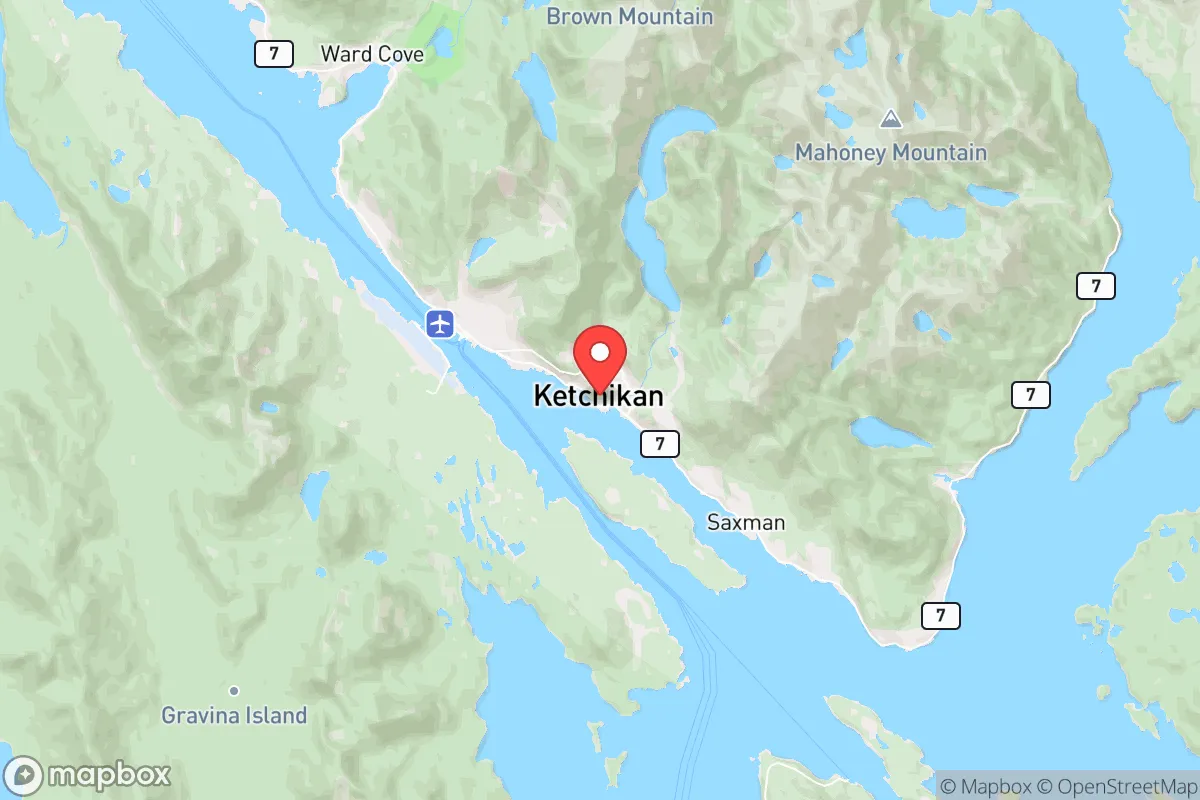
Ketchikan’s geography—an island on the Inside Passage—limits homesteading options compared to interior Alaska. Average lot sizes in the city are small, typically 5,000 to 10,000 square feet, and most residential zones require connection to municipal water and sewer, making off-grid living difficult within city limits. Outside the urban core, in areas like Saxman or along the Tongass Highway, you can find parcels of 1 to 5 acres, but zoning restricts permanent off-grid structures—you must have a septic system approved by the borough and a building permit for any dwelling. True off-grid feasibility is low here because the island’s dense rainforest climate requires reliable power for dehumidification and heating; solar is unreliable due to 200+ days of rain annually, so most off-gridders rely on diesel generators or micro-hydro, which require significant capital. For a prepper, the better play is to buy a small lot with a cabin already connected to grid power, then supplement with a wood stove and rainwater catchment. The Tongass National Forest surrounds Ketchikan, offering public land for hunting, fishing, and foraging, but you cannot homestead on federal land without a permit. The Alaska Homesteading Program ended in 1986, so no free land exists here. Self-reliance in Ketchikan means mastering marine transportation (ferry or floatplane) for supply runs, not subsistence farming.
Personal liberties in Ketchikan: parental rights, medical autonomy, speech, and property
Alaska’s state constitution provides strong protections for personal liberties that resonate with a conservative worldview. Parental rights are explicitly recognized in state law, meaning parents have the final say in their children’s education, medical care, and religious upbringing without state interference unless abuse is proven. Homeschooling is deregulated—no notification or testing requirements for most families—and Ketchikan has a robust homeschool community with co-ops and extracurriculars. Medical autonomy is mixed: Alaska allows broad exemptions from vaccine mandates for religious, medical, or philosophical reasons, and Ketchikan’s hospital (PeaceHealth) generally respects patient choice, but the state does mandate certain childhood vaccines for school attendance unless exempted. Free speech is protected under the Alaska Constitution’s strong free-expression clause, which the state supreme court has interpreted more broadly than the First Amendment, so local ordinances cannot restrict political speech or assembly. Property rights are strong: Alaska’s right-to-farm law protects agricultural activities from nuisance lawsuits, and there is no statewide rent control or forced annexation. However, Ketchikan’s borough government can impose zoning that limits how you use your land, such as banning livestock in residential areas or restricting home-based businesses. For a prepper, the biggest liberty concern is eminent domain: the state has used it for infrastructure projects like the Ketchikan Shipyard expansion, so large landholdings near development zones carry risk.
Overall, Ketchikan offers a sovereignty profile that is strong on tax freedom, gun rights, and parental control, but weak on off-grid homesteading and land availability. Compared to the Lower 48, it ranks in the top tier for personal autonomy—Alaska consistently places in the top 5 states for individual freedom indices—but the island geography and municipal zoning create friction that interior Alaska towns like Fairbanks or Delta Junction do not. For a prepper who values low taxes, constitutional carry, and a community that tolerates self-reliance, Ketchikan is a viable option. For those seeking total independence from government infrastructure, the remote bush or the Mat-Su Valley offers more room to operate. The trade-off is access: Ketchikan’s isolation means you are dependent on marine and air transport for supplies, which is a vulnerability in a crisis. If you can accept that constraint, the personal sovereignty here is real and defensible.

* Values derived from national, state, county, city and local statistics and may differ in a specific area. Last updated: 2026-04-19T19:27:12.000Z
Narrative content on this page is AI-generated and may contain mistakes. Verify any details that matter before acting on them.
ReloMaps may earn a commission from affiliate links at no extra cost to you.

