Photo: Wikipedia
Demographics of Ketchikan, AK
Affluence Level in Ketchikan, AK
A middle-class area roughly in line with national averages across income, home values, education, and employment.
People of Ketchikan, AK
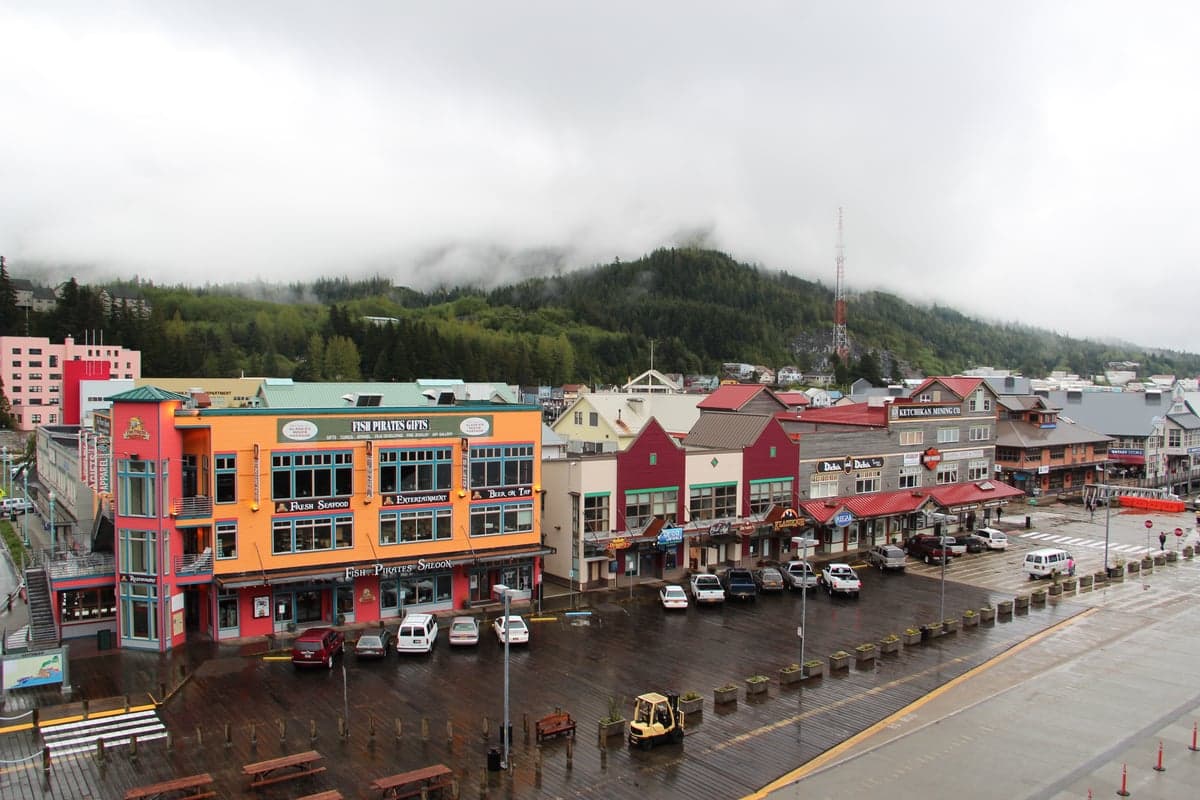
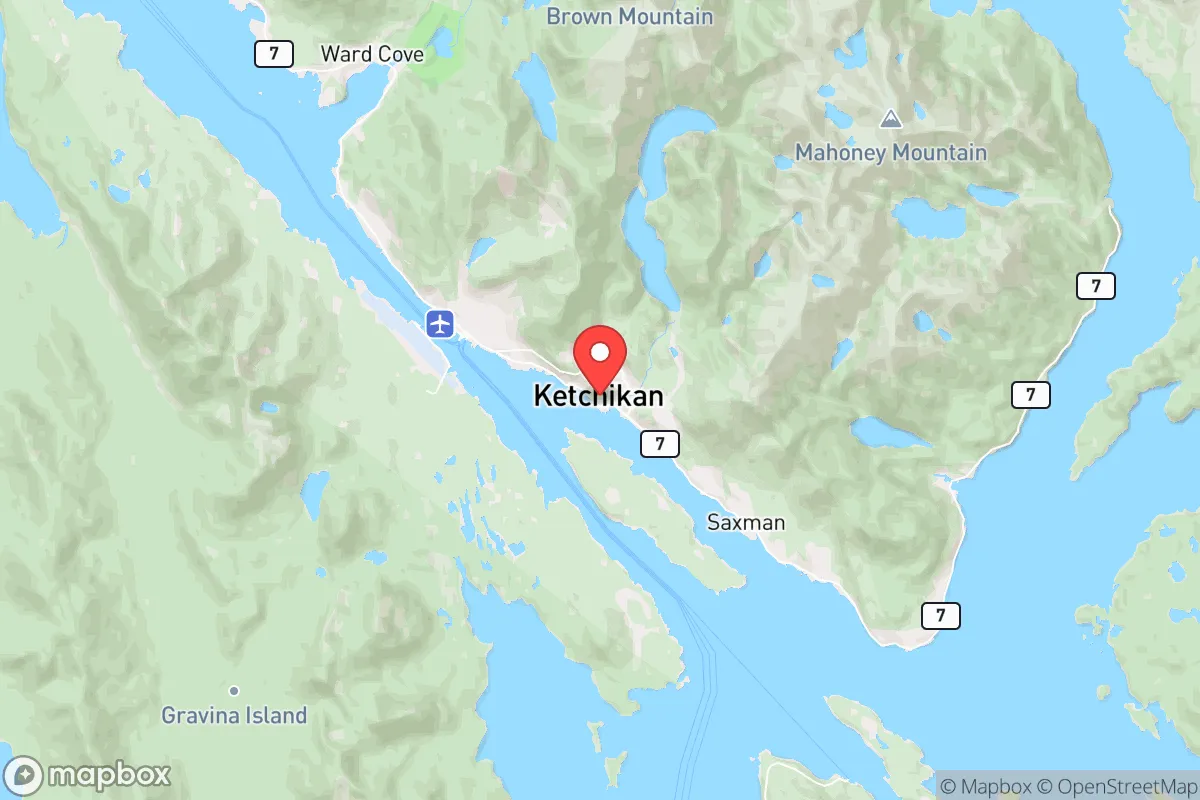
The people of Ketchikan, Alaska today number 8,151, forming a compact, historically rooted community where Native Alaskan heritage and Southeast Asian immigration have created a distinctive demographic profile. The city is 51.0% White, 13.9% East and Southeast Asian, 5.9% Hispanic, and 0.7% Black, with a foreign-born population of 4.0% and a college-educated share of 24.0%. Ketchikan’s identity is shaped by its isolation on Revillagigedo Island, its dependence on fishing and tourism, and a population density that concentrates most residents along a narrow, 12-mile strip of waterfront between the Tongass Narrows and the steep forested mountains.
How the city was settled and grew
Ketchikan’s human history begins with the Tlingit people, who established seasonal fish camps and permanent villages along the Narrows long before European contact. The modern city was founded in 1885, when a cannery was built at the mouth of Ketchikan Creek, drawing a wave of Scandinavian, Irish, and Italian fishermen and cannery workers. The original Tlingit settlement area, now known as Creek Street, became the commercial and social hub, with boardwalks built over the tidal flats. By the early 1900s, the discovery of gold in the nearby Misty Fiords brought a second wave of prospectors and merchants, many of whom settled in the Downtown district, building the wood-frame houses and storefronts that still line the waterfront. The 1920s and 1930s saw the arrival of Japanese and Filipino laborers recruited for the canneries; they formed a small but distinct community in the Water Street area, near the docks. The city’s population peaked at around 14,000 in the 1940s during the World War II military buildup, when the U.S. Army established a base at Ward Cove, north of downtown, drawing workers from across the Lower 48.
Modern era (post-1965)
The 1965 Hart-Cellar Act opened immigration channels that reshaped Ketchikan’s population. The most significant post-1965 wave was from the Philippines and Vietnam, with Filipino families arriving to work in the fishing industry and Vietnamese refugees settling after 1975. These East and Southeast Asian communities concentrated in the Hillside neighborhood, a residential area built on the steep slopes above downtown, and in the North Tongass Highway corridor, where newer subdivisions and mobile home parks offered affordable housing. The Asian share of the population rose from under 5% in 1970 to 13.9% today, with Filipinos forming the largest subgroup. Domestic in-migration during this period was driven by the expansion of the Ketchikan Pulp Mill (closed in 1997) and the growth of the tourism industry, which brought workers from the Pacific Northwest and Midwest. Many of these newcomers settled in Pennock Island and the Saxman area, a Tlingit village just south of the city limits that has maintained a strong Native identity. The White population, which was over 80% in 1970, has declined to 51.0% as younger families have moved to Anchorage or the Lower 48 for jobs and education, while the Native Alaskan share has remained stable at roughly 15-18% (included in the White category in census data).
The future
Ketchikan’s population is aging and slowly declining, with a median age of 42 and a net out-migration of young adults. The East and Southeast Asian communities are plateauing, as second- and third-generation Filipino and Vietnamese families increasingly assimilate into the broader White and Native population, with intermarriage rates above 40%. The Hispanic population, at 5.9%, is growing slowly, driven by a small number of Mexican and Central American workers in the seafood processing plants. The Indian subcontinent population remains tiny at 0.5%, consisting mostly of medical professionals at the PeaceHealth Ketchikan Medical Center. The city is not tribalizing into distinct enclaves; rather, neighborhoods like Hillside and North Tongass are becoming more mixed as older White residents move out and younger Asian and Native families move in. The next 10-20 years will likely see continued population decline to around 7,000-7,500, with the Asian share stabilizing at 12-14% and the White share dropping to 45-48% as the remaining older White cohort passes away. The Native Alaskan population is expected to hold steady, supported by tribal sovereignty and the Saxman community’s cultural institutions.
For someone moving in now, Ketchikan is a place where the population is shrinking but not homogenizing—it is becoming more mixed, with a stable tripartite identity of White, Native, and Asian residents. The city offers a tight-knit, outdoors-oriented lifestyle, but the demographic trends mean that newcomers will find a community that is older, less diverse in age, and increasingly reliant on tourism and government jobs rather than the fishing and timber industries that built it. The practical reality is that housing is scarce and expensive, and the social fabric is shaped by long-standing family networks, making integration a slow process for outsiders.

* Values derived from national, state, county, city and local statistics and may differ in a specific area. Last updated: 2026-04-19T19:27:12.000Z
Narrative content on this page is AI-generated and may contain mistakes. Verify any details that matter before acting on them.
ReloMaps may earn a commission from affiliate links at no extra cost to you.

