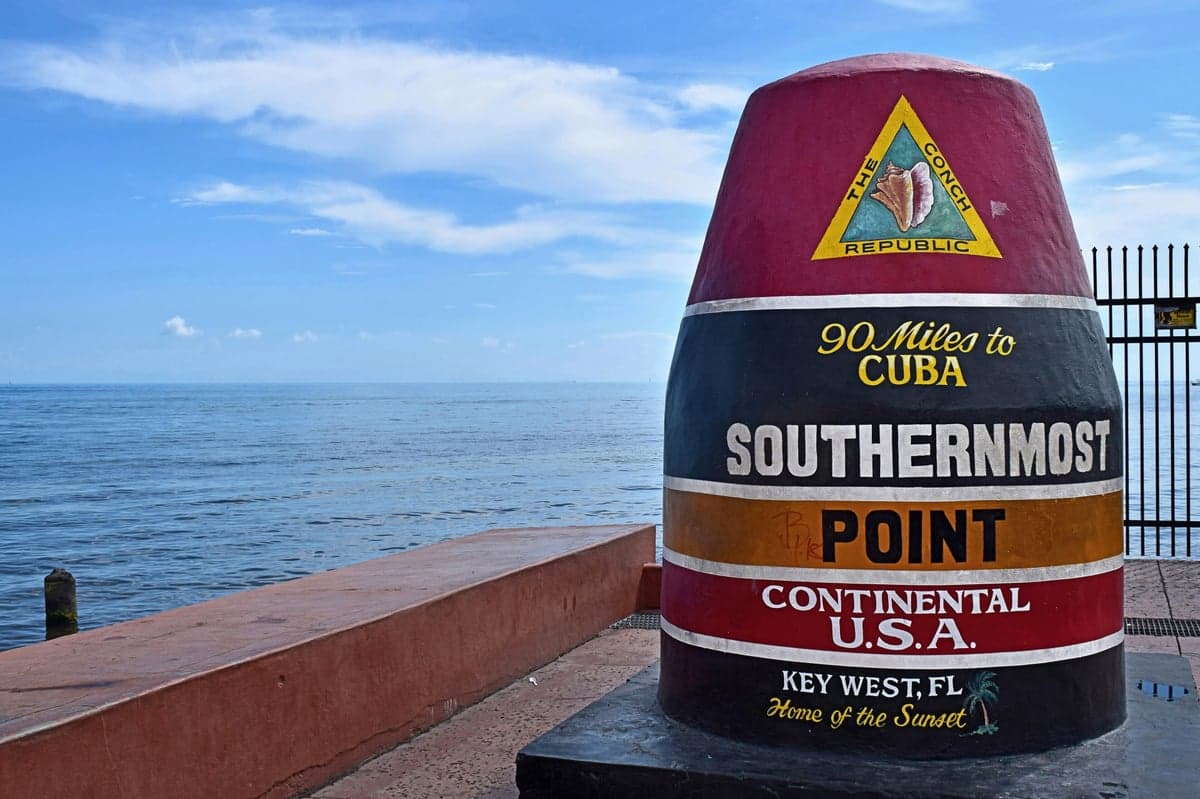
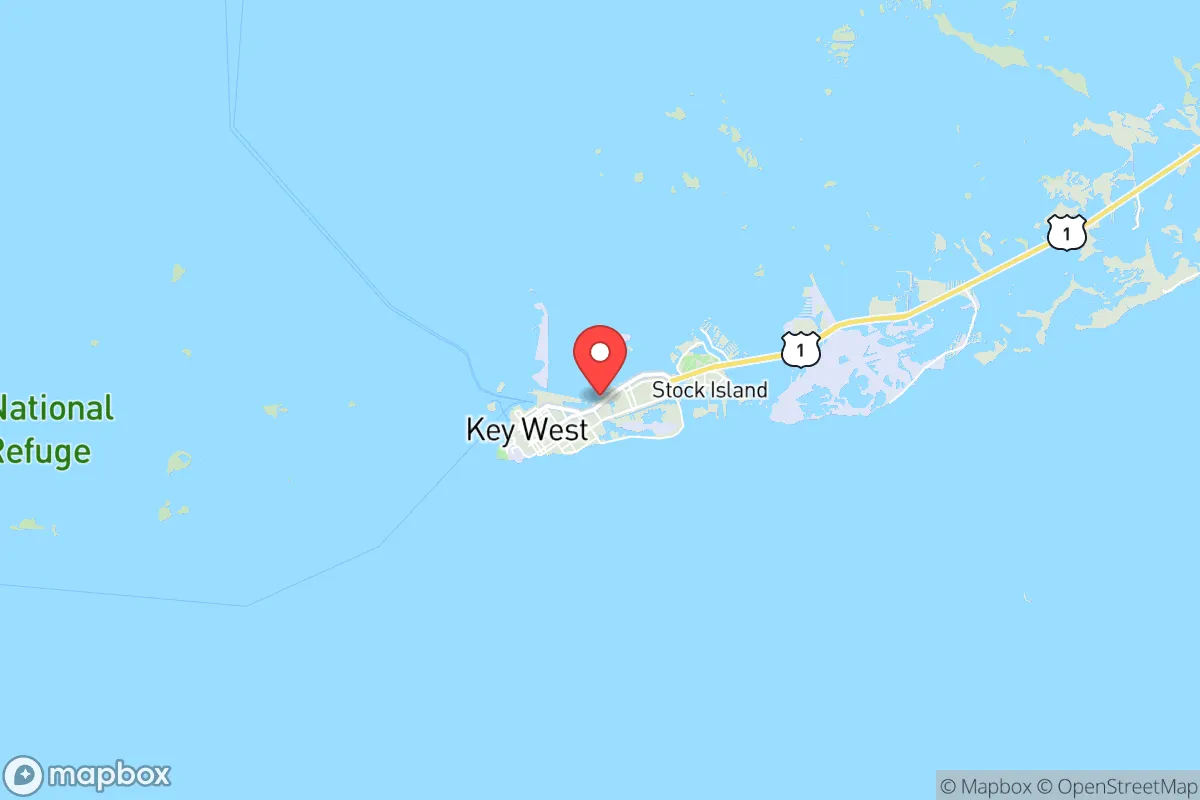
Photo: Wikipedia
Personal Sovereignty in Key West, FL
Viable for self-reliance. Generally workable, though some barriers may limit total independence.
What does Personal Sovereignty tell us?
Personal Sovereignty measures your capacity for self-reliance and independence with minimal government friction. Higher scores mean fewer barriers between you and the way you want to live... but it assumes you have the space you need and good neighbors.
What does this tell us?
Personal Sovereignty measures your capacity for self-reliance and independence with minimal government friction. Higher scores mean fewer barriers between you and the way you want to live... but it assumes you have the space you need and good neighbors.
State Policy
Energy independence: Importer (10% of energy produced in-state)
Personal Liberty
Homesteading

Personal Liberty Analysis
Key West, Florida, presents a complex and often contradictory environment for personal sovereignty. While the island’s geography naturally fosters a degree of isolation and self-reliance, its local governance and unique economic pressures significantly constrain individual autonomy. For the conservative-leaning prepper or survivalist, the city offers a high-risk, high-reward proposition: the potential for a self-sufficient, off-grid lifestyle is severely limited by zoning, cost, and regulatory hurdles, yet the state-level legal framework provides a solid foundation for gun rights, property rights, and tax freedom that is far superior to most of the Northeast or West Coast. The key takeaway is that personal sovereignty in Key West is less about local policy and more about leveraging Florida’s state-level protections while navigating a hyper-local environment that often feels like a progressive enclave.
Tax burden and regulatory posture: How the state’s freedom offsets local costs
Florida’s lack of a state income tax is the single most powerful tool for personal sovereignty in Key West. This means every dollar earned is yours to keep, save, or invest in your own preparedness, rather than being siphoned by state government. The state’s overall tax burden is among the lowest in the nation, ranking 4th lowest according to the Tax Foundation. However, this advantage is partially offset by local realities. Monroe County and the City of Key West impose a combined sales tax rate of 7.5%, which is above the state average and hits every purchase hard, especially on imported goods and building materials. Property taxes, while not exorbitant, are applied to some of the highest real estate values in the state, meaning a modest home can carry a five-figure annual tax bill. The regulatory posture at the local level is decidedly interventionist. Key West has strict building codes, historic preservation rules, and short-term rental bans that limit how you can use your property. For a prepper, this means you cannot simply build a bunker or a large workshop without extensive permitting. The city’s zoning heavily favors tourism and residential density, leaving little room for agricultural or industrial self-sufficiency. The trade-off is clear: you keep more of your income, but you have far less control over your physical property than you would in rural Texas or Montana.
Self-defense and gun law specifics: Florida’s framework in a tourist-heavy zone
Florida is a strong “shall-issue” state for concealed carry, and as of 2023, it became a permitless (constitutional) carry state. This means any law-abiding adult can carry a concealed firearm without a government-issued license. This is a massive win for personal sovereignty, as it removes a bureaucratic barrier to self-defense. Key West, however, is a densely populated tourist destination with a high concentration of bars, restaurants, and public events. While the state law preempts local gun ordinances, the practical reality is that carrying in Key West requires constant situational awareness. The city has a visible police presence, and while they generally respect state preemption, the social climate is not gun-friendly. You will not find the same open-carry culture as in rural Florida. Stand-your-ground laws apply statewide, meaning you have no duty to retreat before using deadly force if you are lawfully present. For a survivalist, this is a critical legal protection. However, the island’s geography means that a “retreat” option is often limited—you cannot simply walk into the woods. The key consideration is that while the legal framework is solid, the environment demands discretion. A prepper should prioritize a reliable concealed carry setup and be prepared for the reality that a self-defense incident in a crowded tourist area will face intense scrutiny, even if legally justified.
Self-reliance and homesteading viability: Lot sizes, zoning, and off-grid feasibility
This is where Key West’s sovereignty profile collapses for the serious prepper. The average lot size in Old Town is a fraction of an acre, often 2,500 to 5,000 square feet. Zoning is overwhelmingly residential and commercial, with virtually no agricultural zoning within city limits. Raising chickens is permitted with a permit, but larger livestock is not. Gardening is possible in small raised beds, but the salt air, poor soil, and intense sun make it a hobby, not a survival strategy. Off-grid feasibility is nearly zero. The city requires connection to municipal water and sewer. Solar panels are allowed but must comply with historic district aesthetics, and battery storage is limited by fire codes. Rainwater harvesting is not prohibited but is impractical due to small roof areas and the need for large cisterns. The cost of land is astronomical—often over $1,000 per square foot—making any attempt at self-sufficient homesteading financially prohibitive. For a prepper, Key West is a location for a bug-out or a retreat, not a primary homestead. The real self-reliance here is financial: you must have a high income or significant savings to weather the cost of living. The island’s isolation means that supply chain disruptions hit hard and fast. A hurricane can cut off the Overseas Highway for days, so a prepper must stockpile food, water, fuel, and medical supplies for at least two weeks, ideally a month. The best strategy is to treat Key West as a base of operations while maintaining a more viable homestead inland, such as in the rural areas of central or north Florida.
Personal liberties: Parental rights, medical autonomy, speech, and property
Florida has become a national leader in protecting parental rights, particularly with the passage of the Parental Rights in Education Act and the expansion of school choice. In Key West, this means parents have more legal leverage to opt their children out of curricula they find objectionable and to direct their education through vouchers or charter schools. This is a significant sovereignty advantage over states like California or New York. Medical autonomy is a mixed bag. Florida has strong protections for religious and conscientious objection to medical treatments, but the state also has a history of aggressive public health mandates, as seen during COVID-19. Key West’s local government was among the most enthusiastic in enforcing mask and vaccine mandates, reflecting a progressive local culture that can clash with state-level liberty. Free speech is protected under the First Amendment, but the social climate in Key West is heavily left-leaning, meaning that expressing conservative or survivalist views can lead to social ostracism or professional consequences. Property rights are strong at the state level, with robust eminent domain protections and a pro-landowner legal system. However, local zoning and historic preservation boards have immense power to dictate what you can do with your property. You cannot build a privacy fence over six feet without a variance, and you cannot paint your house a non-approved color. For a prepper, this means your property is not truly your own—it is subject to the aesthetic whims of a city commission. The overall picture is one of state-level liberty undercut by local control.
In the broader context of American relocation options, Key West offers a unique but narrow slice of personal sovereignty. It is far superior to high-tax, high-regulation states like New York or California, but it falls short of the rural libertarian havens of Idaho, Montana, or New Hampshire. The state-level protections for gun rights, tax freedom, and parental rights are genuine and valuable. However, the local environment—high costs, dense zoning, progressive social pressure, and vulnerability to supply chain disruptions—makes it a poor choice for a full-scale prepper or survivalist homestead. The strategic move is to use Key West as a financial and lifestyle base while maintaining a more sovereign property inland. For the single individual or family who values the ocean lifestyle and is willing to accept the trade-offs, Key West can work, but only if you are financially independent and prepared to navigate a system that is not designed for self-reliance. The island is a beautiful cage, not a fortress.

* Values derived from national, state, county, city and local statistics and may differ in a specific area. Last updated: 2026-05-13T16:54:09.000Z
Narrative content on this page is AI-generated and may contain mistakes. Verify any details that matter before acting on them.
ReloMaps may earn a commission from affiliate links at no extra cost to you.

