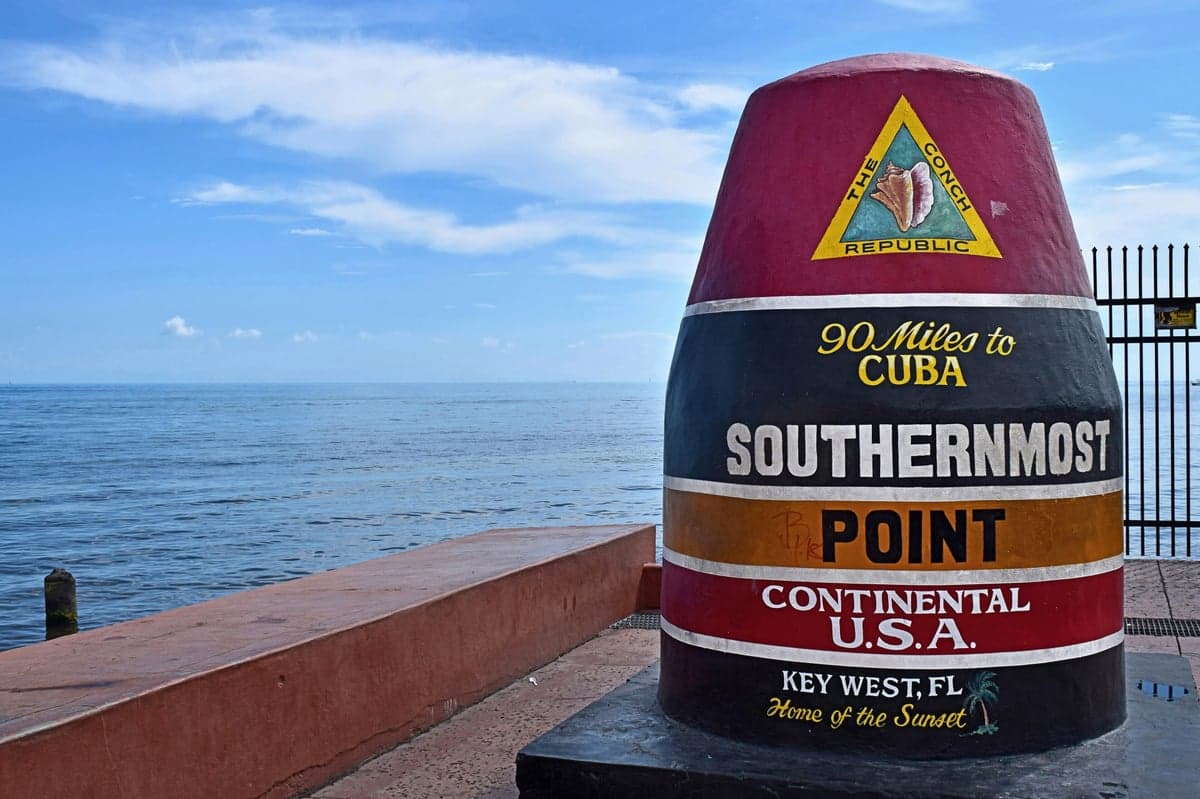
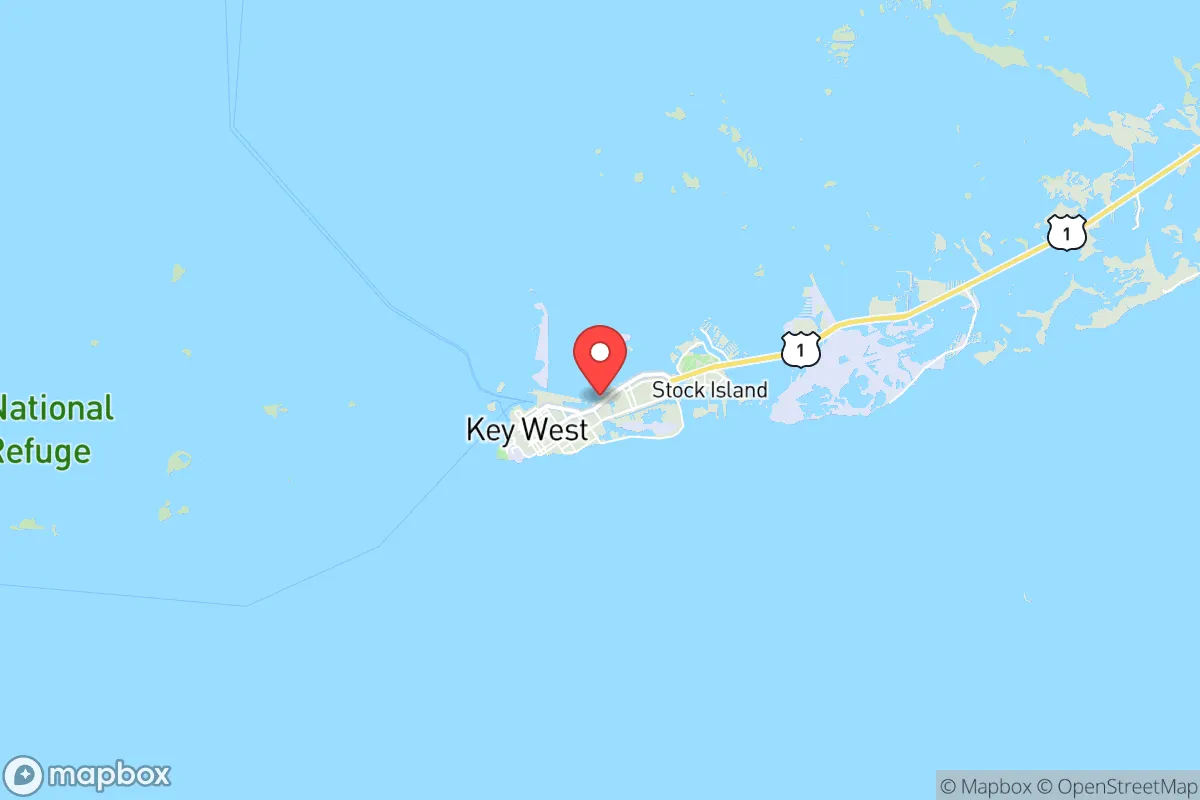
Photo: Wikipedia
Strategic Assessment of Key West, FL
Meaningful friction. Expect exposure to either population pressure, blast zones, or natural disaster risk. Consider buying a retreat property.
What does the Strategic Assessment tell us?
Our Strategic Assessment grades tactical survivability of an area. Major population centers, military targets, fallout zones, natural disasters, and border exposure all drive risk — lower exposure means a more defensible position in a crisis.
This is heavily inspired by Joel Skousen's Strategic Relocation book. Highly recommended you checkout the book ($)What does this tell us?
Our Strategic Assessment grades tactical survivability of an area. Major population centers, military targets, fallout zones, natural disasters, and border exposure all drive risk — lower exposure means a more defensible position in a crisis.
This is heavily inspired by Joel Skousen's Strategic Relocation book. Highly recommended you checkout the book ($)Strategic Pillars

Key Distances
Regional Safe Places
Below is our recommended "safe zones" in Florida and the surrounding area based on our strategic heuristics. For most people, it's unrealistic to live in a “safe zone” full-time due to work, family or other personal reasons. They tend to be more rural. However, many of these areas are perfect for second homes and retreat properties that double as a vacation home or even a short-term rental.

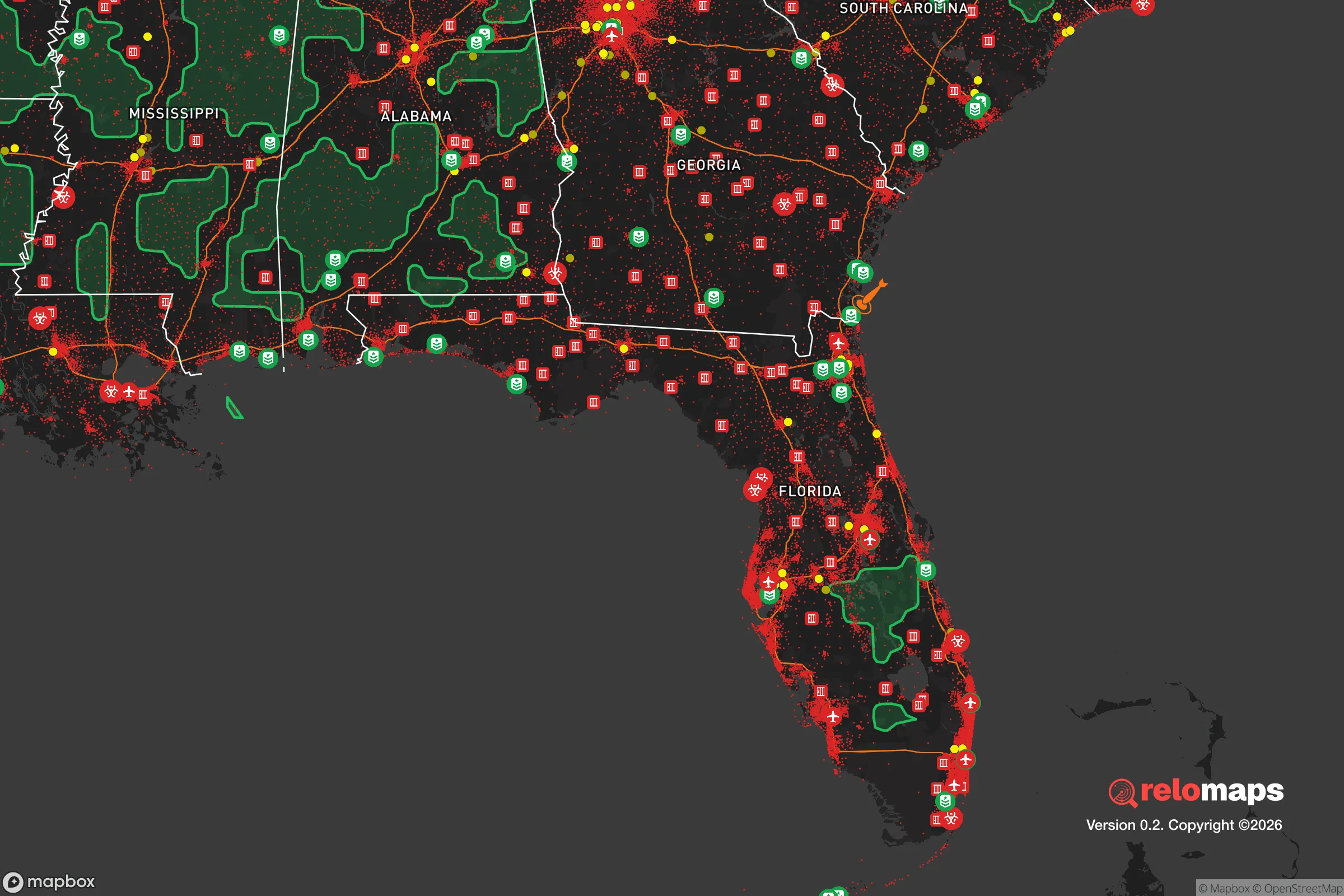


Important Note: For informational purposes only. This does not mean nothing bad ever happens in the green zones. Please use common sense. This is based on public data and modeled with AI. We tried to take a conservative approach but mistakes happen. We update this regularly as new information becomes available.
Solar Generator Recommendations
Backup power matters more here than in safer locations. We've picked three solar generators across budgets and capacity tiers — start with the budget unit if you only need a few essentials, or step up if you want to run a fridge and HVAC for days at a time.

Jackery Portable Power Station Explorer 300
Budget OptionPower on the Go: Weighing only 11 lbs, it's convenient to set up and store with book-sized foldable solar panels

BLUETTI Portable Power Station AC180
Designed for both indoor and outdoor scenarios, AC180 is highly capable as it has a robost capacity and continuous output power.

EF ECOFLOW DELTA Pro Ultra Power Station
Upgraded PickEcoFlow DELTA Pro Ultra is a whole-home energy system designed to grow with your family. Integrated with the Smart Home Panel 2, it scales to meet your evolving energy needs — keeping your home powered, intelligent, and secure through every stage of life.
We earn a commission, at no additional cost to you.
Strategic Assessment Analysis
Key West, Florida, presents a uniquely paradoxical strategic picture for the conservative prepper or survivalist. Its extreme southern location offers a degree of physical and psychological separation from the mainland’s potential flashpoints, but this isolation comes with severe logistical vulnerabilities. For a single individual or family weighing relocation, the island’s resilience is defined by its ability to function as a self-contained outpost, yet its dependence on a single, fragile supply chain and its exposure to catastrophic weather events make it a high-risk, high-reward proposition. The key question isn’t whether Key West is defensible, but whether its advantages outweigh the near-certainty of periodic, total disruption.
Geographic isolation and natural defensive advantages
Key West’s primary strategic asset is its geography. Sitting roughly 150 miles from the Cuban coast and 160 miles from Miami, it is the most isolated incorporated city in the continental United States. This distance from major population centers like Miami-Dade County—a region of over 2.7 million people—provides a natural buffer against the immediate fallout of urban unrest, mass casualty events, or supply chain collapses that would cripple the mainland. The Overseas Highway (U.S. 1) and the Florida Keys Overseas Railroad (now a trail) are the only land connections, creating a natural chokepoint. In a scenario of widespread civil disorder, this single artery could be controlled or severed, effectively turning the Keys into a fortress island. The surrounding shallow waters and mangrove islands also make a large-scale, uninvited approach difficult, offering a tactical advantage for those who know the local waterways. For the prepper, this isolation means that the chaos of a collapsing Miami or a major East Coast port closure would be felt here last, if at all, provided the supply line holds.
Critical risks: hurricane exposure and proximity to fallout-relevant infrastructure
The same geography that provides isolation also creates existential vulnerabilities. Key West’s average elevation is just 5 feet above sea level, making it one of the most hurricane-exposed communities in the nation. A Category 3 or higher storm would not just disrupt life; it would likely render the island uninhabitable for weeks or months, with storm surge potentially submerging large portions of the city. This is not a theoretical risk—Hurricane Irma in 2017 caused a mandatory evacuation of the entire Keys, and the aftermath saw prolonged power outages, water shortages, and a complete breakdown of normal commerce. For a relocator, this means that any prepper strategy must account for a near-annual evacuation or a multi-month period of self-sufficiency. Furthermore, while Key West is far from major nuclear power plants (Turkey Point near Homestead is about 160 miles away), the island’s proximity to the U.S. Naval Air Station Key West and the broader South Florida military complex makes it a potential secondary target in a conflict scenario. The presence of a major naval installation, while providing some security, also places the island on a strategic map. The fallout from a major event in Miami or at the Port of Miami—a critical logistics hub—could also disrupt the supply chain for weeks, even if the island itself is untouched.
Practical resilience: food, water, energy, and defensibility for a relocator
For the individual or family, daily resilience in Key West is a constant, hands-on challenge. The island’s water supply comes from the Florida Keys Aqueduct Authority, which pumps water from wells in Florida City, 130 miles away. This pipeline is vulnerable to both hurricane damage and intentional disruption. A serious prepper would need a robust rainwater catchment system, a desalination unit (solar-powered, ideally), or a pre-arranged water cache. Food security is equally tenuous. The island has limited agricultural capacity—the rocky, salty soil is not conducive to large-scale farming. Most food is trucked in daily. A supply chain interruption of more than 72 hours would empty grocery shelves. A serious prepper would need a deep pantry (3-6 months of non-perishables), a saltwater-capable fishing setup (the surrounding waters are rich in snapper, grouper, and lobster), and knowledge of local foraging (sea grapes, coconuts, and certain mangroves). Energy is a mixed bag. Key West is connected to the mainland grid via a single, vulnerable transmission line. Power outages are common after storms. Solar panels with battery storage are a near-necessity, but they must be hurricane-rated and securely mounted. Defensibility is high for a small, tight-knit group. The island’s layout—a dense, walkable core with narrow streets and limited entry points—makes it easier to secure a neighborhood than a sprawling suburban development. However, the population density (over 25,000 residents in a 7.4-square-mile area) means that a resource shortage could quickly turn neighbors into competitors. The local culture, while generally friendly, is not particularly survivalist-oriented; most residents are service-industry workers or retirees, not preppers. A relocator would need to be self-reliant and low-profile, avoiding drawing attention to their supplies.
The overall strategic picture for Key West is one of a high-risk, high-autonomy outpost. It offers genuine separation from the worst of mainland chaos—a place where a prepared individual could ride out a national-level crisis with minimal outside interference. The trade-off is a near-certainty of periodic, severe disruptions from hurricanes and a complete dependence on a fragile supply chain for basic necessities. For the conservative prepper who values independence, has the resources to build a self-sufficient homestead (solar, water, food storage), and is willing to evacuate or hunker down for weeks at a time, Key West can be a viable redoubt. For anyone expecting a low-maintenance, low-risk relocation, it is a trap. The island rewards the prepared and punishes the complacent. If you can handle the heat, the storms, and the isolation, it’s one of the few places in the Lower 48 where you can truly get away from it all—until the next hurricane reminds you that you can’t get away from nature.

* Values derived from national, state, county, city and local statistics and may differ in a specific area. Last updated: 2026-05-13T16:54:09.000Z
Narrative content on this page is AI-generated and may contain mistakes. Verify any details that matter before acting on them.
ReloMaps may earn a commission from affiliate links at no extra cost to you.

